Taganga's Unpaved Streets
Beyond the main waterfront, the village's roads tell a story of resilience and tradition, often overlooked.
Full story unlocks in the tour
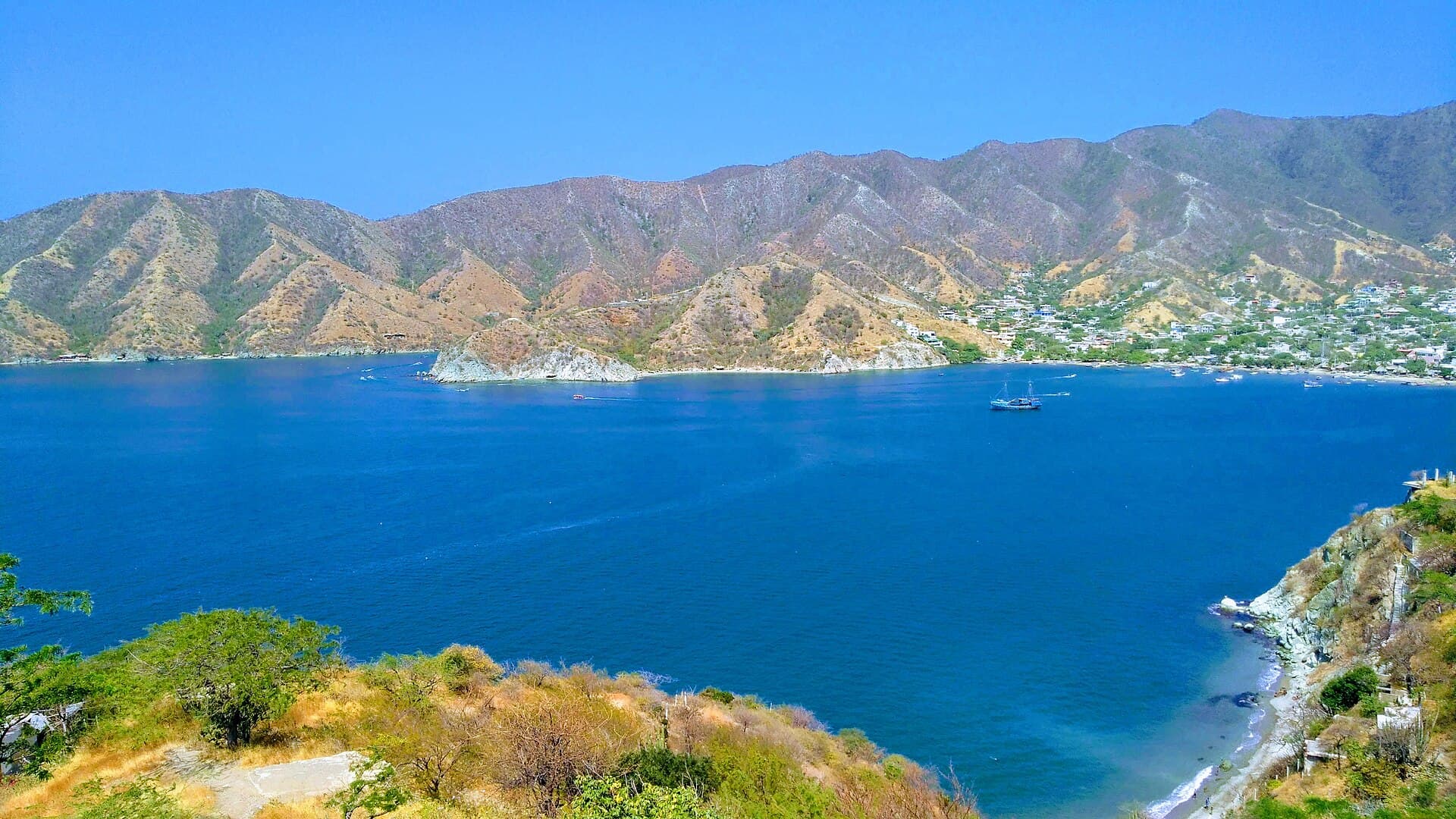 Henrr Pomares / cc0, via Wikimedia Commons
Self-guided audio walking tour of Taganga — GPS route, offline playback, story-driven narration in 32 languages.
“Where the Caribbean's rhythms meet ancient echoes and a sky aflame with color.”
Not the postcards. The stories even locals don't know — whispered in your ear, right where they happened.
Beyond the main waterfront, the village's roads tell a story of resilience and tradition, often overlooked.
The name Taganga itself might hold a clue to the powerful natural forces that shaped its early inhabitants' lives.
Just a short distance from Taganga lies a seemingly ordinary neighborhood in Santa Marta that has produced an extraordinary number of Colombian football stars.
Discover every secret of Taganga
Every address, every reveal in full — in your ear, right where it happened.
You pick your stops. You walk. The voice reveals what the others miss.


Your self-guided audio tour of Taganga is ready — pick your landmarks, choose your language, and start the moment you arrive.
BuyLume has a built-in augmented-reality guide. Hold your phone up and its camera shows the street ahead of you, with a glowing arrow laid over the real view that always points to your next stop — no map to puzzle over, no wrong turns. Like everything in Lume, it works fully offline.
Taganga, a fishing village and corregimiento of Santa Marta, rests on Colombia's Caribbean coast, approximately five kilometers north of Santa Marta. This compact town, with a seafront spanning about eight blocks, is framed by arid mountains covered in natural flora and fauna. Known for its sunsets, diving, and as a gateway to Tayrona National Natural Park, Taganga draws a mix of local and international visitors.
While it has gained a reputation as a lively backpacker hub, particularly for its nightlife and affordable scuba diving, Taganga still retains its identity as a fishing village. Fishermen continue to bring in daily catches, supplying local restaurants with fresh seafood. The village offers a blend of relaxed daytime beach culture and a bustling evening atmosphere, with many opting to enjoy refreshments by the sea wall or directly on the sand.
Visitors often find themselves extending their stays, captivated by the town's particular character and its accessibility to surrounding natural attractions. Despite its growth, Taganga's bohemian spirit is evident in its various murals and the ongoing presence of its traditional fishing roots.
## From Tayrona Ancestry to Colonial Foundation Taganga's story stretches back to pre-Columbian times, inhabited by the Taganga indigenous community, descendants of the Tayrona. These early inhabitants were skilled navigators and fishermen, drawn to the strategic location between the Sierra Nevada de Santa Marta and the Caribbean Sea. Their artisanal fishing techniques and worldview, though impacted by colonization, remain a part of Taganga's collective memory.
In 1525, Rodrigo de Bastidas founded both Santa Marta and Taganga, making them among the oldest colonial settlements in present-day Colombia. Despite being politically absorbed by the colony, Taganga's natural isolation allowed its traditions to persist largely untouched for centuries.
## A Mid-20th Century Transformation Until the 1950s, Taganga remained an isolated fishing village due to the lack of road access to Santa Marta. This isolation fostered distinct cultural aspects compared to the people of Santa Marta. However, the construction of a connecting road in 1953 marked a significant turning point, ending its geographic and cultural seclusion and introducing substantial changes to its social, economic, and cultural organization.
## The Rise of Tourism and its Challenges Tourism as a significant economic activity in Taganga is relatively new, gaining importance over the last 35 years. In 1988, there was only one hotel; today, there are over 50 hotel establishments and more than 100 tourism-related businesses, including restaurants, bars, and diving centers. This growth has transformed Taganga into a globally recognized diving destination.
However, this rapid, often unplanned, development has brought challenges. The traditional fishing economy has seen a decline, giving way to a tourism-focused service sector. In recent decades, Taganga has also faced issues related to increased partying, drug use, and associated crime, leading to a complex reputation. Despite these challenges, many locals are actively working to preserve their ancestral culture and promote a more sustainable future for the village.
Taganga offers a blend of coastal relaxation and adventurous excursions. The main Taganga Beach, while busy, is a central point for activity, shared with the harbor. Here, you can enjoy the sun, have a drink at a beach bar, and savor fresh fish for lunch.
A short 15-minute walk from Taganga Beach, along a trail to the right, leads to Playa Grande. This popular beach provides a great viewpoint over the coastline and features tranquil waters and white sand. Small restaurants behind the beach offer cold beer, oysters, and fried fish.
For those interested in the underwater world, Taganga is a popular spot for scuba diving and snorkeling, with numerous dive centers offering courses and excursions to sites like Isla Aguja, part of Tayrona National Park. The waters around Taganga and Tayrona Park are home to diverse marine life, including corals, sponges, sea turtles, and over 129 species of fish.
Taganga also serves as a convenient launchpad for exploring the wider region. Boats regularly depart from Taganga Beach to various beaches within Tayrona National Park, such as Cabo San Juan and Bahia Concha. Additionally, it's a starting point for treks to Ciudad Perdida (The Lost City). For expansive views of the bay, the Mirador viewpoint on the road towards Santa Marta is a recommended stop.
Taganga experiences hot weather year-round. The best time to visit is during the dry season, from December to March. During these months, the humidity is lower, and a refreshing sea breeze often blows in the afternoons. December and January are particularly popular with Colombian travelers, so expect higher accommodation prices around the holidays. The rainy season typically runs from June to September, bringing higher humidity and potentially stifling temperatures.
Getting to Taganga is straightforward. It is located just five kilometers north of Santa Marta, a short 10 to 15-minute drive. From Santa Marta's historic city center, you can take a taxi for approximately $15,000 COP or a local bus displaying 'Kra 11 Taganga' for about $2,300 COP. The town itself is small and walkable, though moto-taxis are available for quicker transport.
Accommodation options in Taganga cater to various budgets, from hostels to guesthouses and hotels. It's often recommended to stay a bit further back from the main road, especially on weekends, to avoid potential noise from lively nightlife. While Taganga is generally considered safe during the day, caution is advised at night, particularly when walking alone. Stick to well-lit, main areas after dark. It's also wise to be careful when withdrawing money and to avoid carrying valuables.
Taganga in Korean, in Chinese or in Hebrew — and 29 more languages, every stop narrated by a native voice. The widest language range of any self-guided audio tour.
Available in: