Checkpoint Charlie
The familiar guard shack at Checkpoint Charlie is a replica, but the original was far more modest than one might imagine for such a Cold War flashpoint.
Full story unlocks in the tour
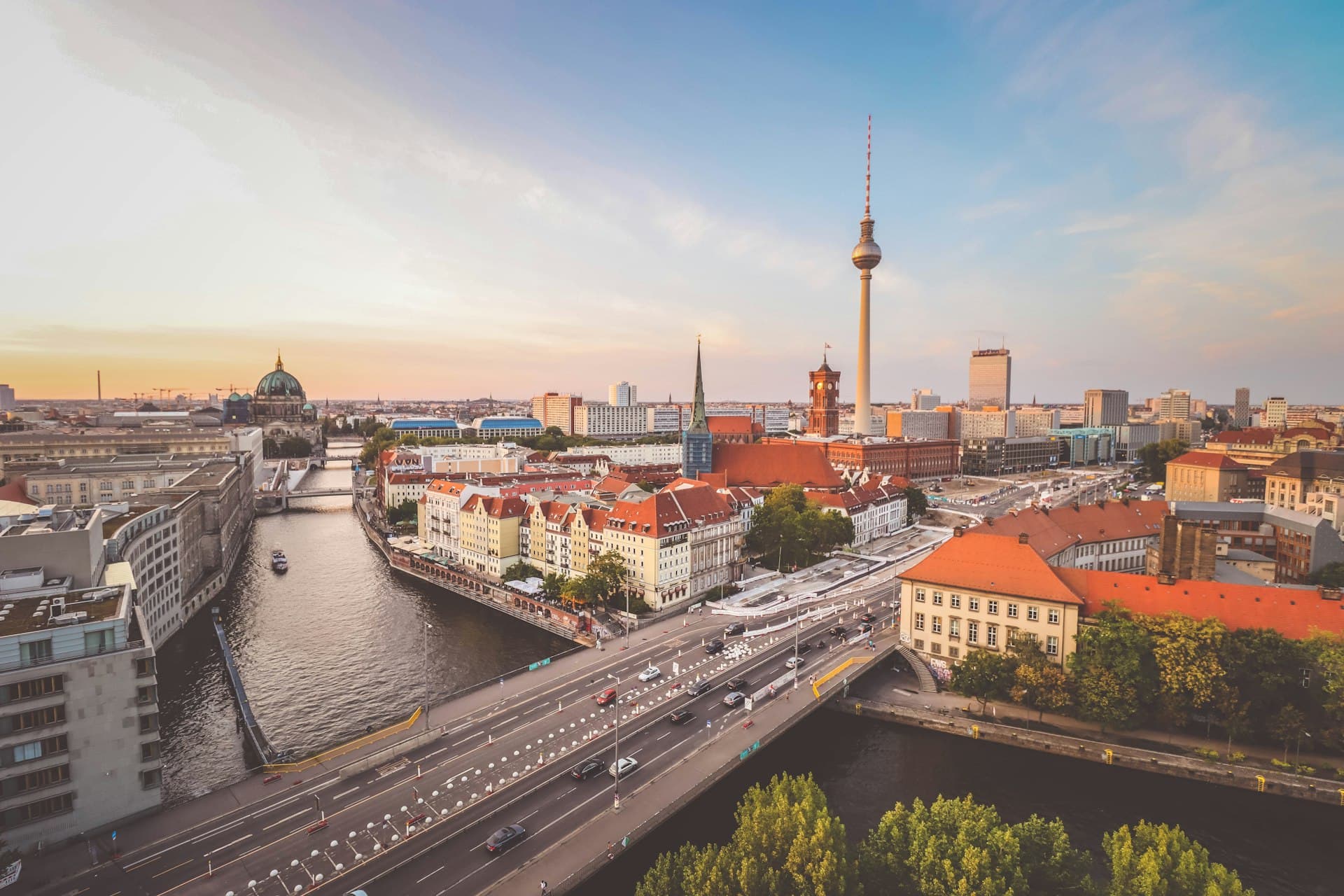 Photo: Florian Wehde / Unsplash
Self-guided audio walking tour of The Berlin Wall & the Cold War — GPS route, offline playback, story-driven narration in 32 languages.
“Walk the fault lines of a divided city, where freedom was a whisper and the Wall stood sentinel.”
Not the postcards. The stories even locals don't know — whispered in your ear, right where they happened.
The familiar guard shack at Checkpoint Charlie is a replica, but the original was far more modest than one might imagine for such a Cold War flashpoint.
This bustling modern square was once a desolate 'death strip' where two walls, not one, defined the boundary.
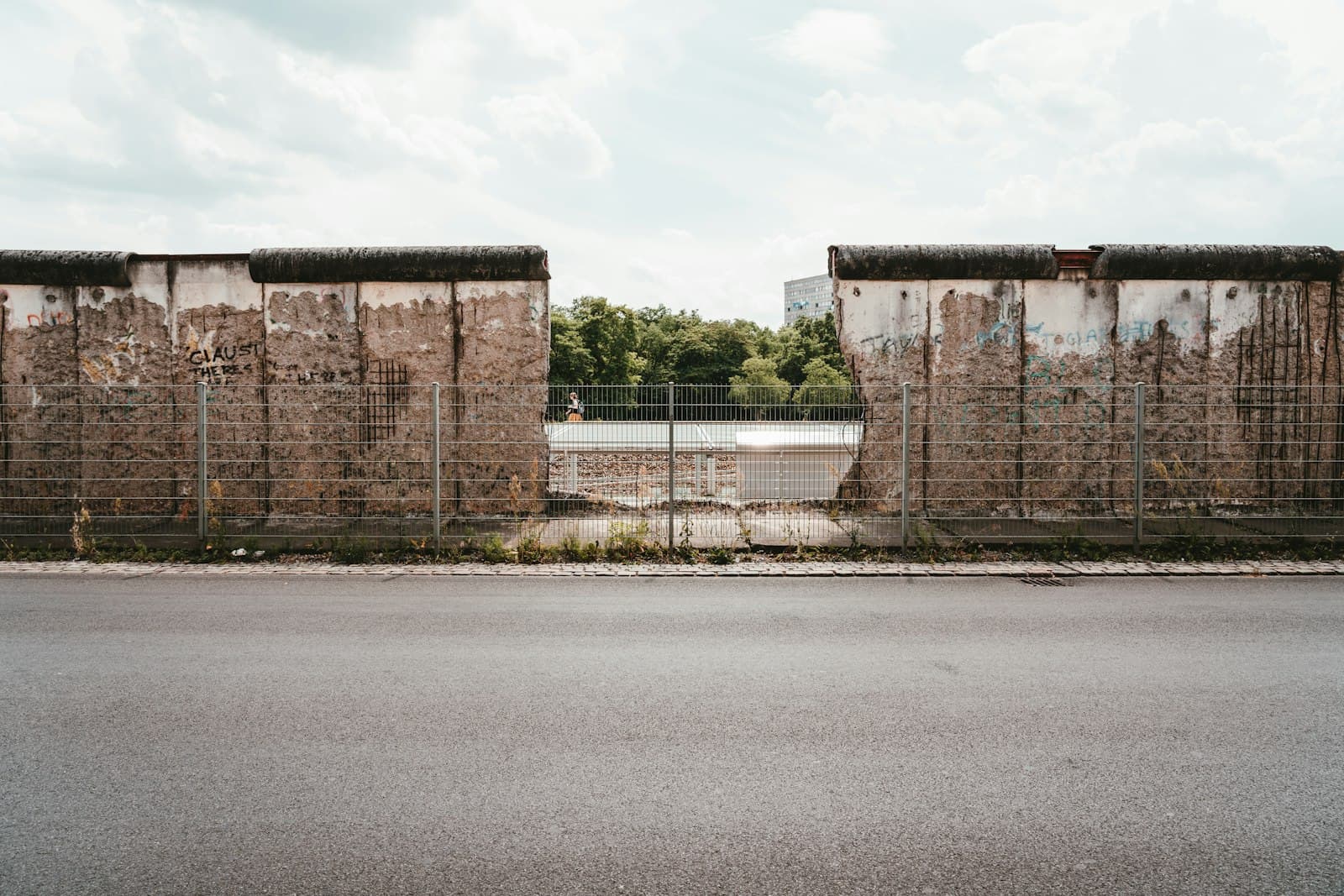
The compelling murals of the East Side Gallery were painted almost immediately after the Wall fell, but their preservation has been a continuous battle.
Discover every secret of The Berlin Wall & the Cold War
Every address, every reveal in full — in your ear, right where it happened.
You pick your stops. You walk. The voice reveals what the others miss.

Your self-guided audio tour of The Berlin Wall & the Cold War is ready — pick your landmarks, choose your language, and start the moment you arrive.
BuyBerlin. The very name evokes echoes of division, resilience, and the dramatic thaw of the Cold War. This walking tour invites you to step onto the streets where history unfolded, where concrete and barbed wire carved a city in two, and where the human spirit ultimately triumphed. We'll trace the physical remnants of the Berlin Wall, not just as a barrier, but as a living testament to the ideological struggle that defined half a century.
Forget the generic tourist paths; this is about understanding the palpable tension, the daring escapes, and the quiet defiance that characterized life on both sides of the Iron Curtain. From the artistic expressions of freedom on the East Side Gallery to the chilling emptiness of the 'death strip,' you'll gain a profound appreciation for Berlin's enduring spirit and the sacrifices made for unity. This isn't just a walk; it's an immersion into a pivotal chapter of modern history.
Following World War II, Germany was divided into four occupation zones, with Berlin, located deep within the Soviet zone, similarly partitioned into four sectors. While movement between sectors was initially relatively free, the stark economic and political differences between capitalist West Berlin and communist East Berlin led to a mass exodus of East Germans seeking a better life in the West. Between 1949 and 1961, approximately 2.5 million people fled East Germany. This 'brain drain' threatened to cripple the East German economy.
On the night of August 12-13, 1961, East German leaders, with Soviet approval, began constructing a barrier of barbed wire and concrete posts, effectively sealing off West Berlin. This initial barrier quickly evolved into the formidable Berlin Wall, a complex system of two walls, watchtowers, anti-vehicle trenches, and a floodlit 'death strip' patrolled by armed guards with orders to shoot escapees. The Wall was 155 kilometers (96 miles) long, encircling all of West Berlin. It became the most potent symbol of the Cold War, a physical manifestation of the Iron Curtain.
The Wall's construction had immediate and devastating consequences, separating families and friends overnight. Bernauer Strasse became a particularly poignant example, where the border ran directly through apartment buildings, leading to desperate escape attempts from windows. Checkpoint Charlie, one of three Allied checkpoints, became the most famous crossing point, designated for foreigners, diplomats, and Allied military personnel. It was the scene of tense standoffs, including a tank confrontation between American and Soviet forces in October 1961.
Despite the immense dangers, many East Germans attempted daring escapes, employing ingenious methods like hot air balloons, tunnels, zip lines, and even modified cars. The Stasi, East Germany's secret police, maintained pervasive surveillance to prevent such attempts and suppress dissent. The Brandenburg Gate, once a symbol of Prussian grandeur, found itself isolated behind the Wall, a stark monument to division.
By the late 1980s, mounting economic problems in East Germany and growing public discontent, fueled by reforms in the Soviet Union, led to mass protests. On November 9, 1989, a mistaken announcement by an East German official about relaxed travel restrictions triggered a spontaneous rush to the border crossings. Border guards, overwhelmed and without clear orders, opened the gates, and East Berliners flooded into West Berlin, marking the joyous fall of the Wall. The official demolition began in June 1990.
Today, while most of the Wall has been dismantled, its memory is meticulously preserved. The East Side Gallery, a 1.3-kilometer section adorned with murals, serves as the world's largest open-air gallery and a powerful symbol of freedom. The Berlin Wall Memorial on Bernauer Strasse offers a comprehensive and moving tribute to the victims and the history of division. The double cobblestone line embedded in the city's streets marks the Wall's former path, a constant reminder of Berlin's extraordinary journey from division to reunification.
This walking tour focuses on the tangible remnants and powerful memorials of the Berlin Wall and the Cold War. You'll begin at the East Side Gallery, an open-air gallery on the longest surviving section of the Wall, where murals tell tales of hope and freedom. From there, trace the path of the former border, marked by the double cobblestone line, a subtle yet profound reminder of the city's division.
Continue to Checkpoint Charlie, the most famous crossing point between East and West, where a replica guard house and informational exhibits evoke the high tensions of the Cold War. Next, experience the solemnity of the Berlin Wall Memorial on Bernauer Strasse, an extensive outdoor exhibition, documentation center, and preserved section of the Wall, offering a deep insight into its impact and the lives affected. Finally, conclude at Potsdamer Platz, a striking example of Berlin's post-Wall transformation, and the Topography of Terror open-air exhibit, which, while focusing on Nazi crimes, sits on a segment of the Wall and connects to the city's later division. The Brandenburg Gate, a powerful symbol of unity, serves as a poignant backdrop to this historical journey.
The best times to undertake this walking tour are during Berlin's shoulder seasons: April to May and September to October. During these months, the weather is pleasant, and the crowds are generally smaller, allowing for a more reflective and comfortable experience at the outdoor sites. Early mornings on weekdays are particularly recommended to avoid peak tourist times, especially at popular spots like the East Side Gallery. While Berlin is accessible year-round, winter can be cold and snowy, making extended outdoor exploration less comfortable.
Wear comfortable walking shoes, as this tour involves a significant amount of walking between sites. Public transportation in Berlin is excellent; utilize the U-Bahn, S-Bahn, and trams to connect between more distant locations. Consider purchasing a Berlin Welcome Card for unlimited public transport and discounts on attractions. Allow at least a full day, or even two half-days, to fully absorb the information and atmosphere at each stop. Many sites, like the East Side Gallery and the outdoor portions of the Berlin Wall Memorial, are free and accessible 24/7. Check opening hours for indoor documentation centers and museums, as these may vary. Carry water and snacks, and be prepared for varying weather conditions. An offline map application on your phone will be invaluable for navigation.
The Berlin Wall & the Cold War in Korean, in Chinese or in Hebrew — and 29 more languages, every stop narrated by a native voice. The widest language range of any self-guided audio tour.
Available in: