Mugumo Gardens
A colossal fig tree in Thika's core once held a prophecy that stirred colonial unease.
Full story unlocks in the tour
 Wikiwand7 / CC BY-SA 4.0, via Wikimedia Commons
Self-guided audio walking tour of Thika — GPS route, offline playback, story-driven narration in 32 languages.
“Where prophecy met progress, and the flame trees still hum.”
Not the postcards. The stories even locals don't know — whispered in your ear, right where they happened.
A colossal fig tree in Thika's core once held a prophecy that stirred colonial unease.
The name of one of Kenya's oldest hotels is a literal signpost from a bygone era.
A seemingly ordinary rise of earth near the Blue Posts Hotel is said to mark a centuries-old battlefield.
Discover every secret of Thika
Every address, every reveal in full — in your ear, right where it happened.
You pick your stops. You walk. The voice reveals what the others miss.


Your self-guided audio tour of Thika is ready — pick your landmarks, choose your language, and start the moment you arrive.
BuyLume has a built-in augmented-reality guide. Hold your phone up and its camera shows the street ahead of you, with a glowing arrow laid over the real view that always points to your next stop — no map to puzzle over, no wrong turns. Like everything in Lume, it works fully offline.
Thika, a bustling industrial town in Kenya's Kiambu County, stretches approximately 42 kilometers northeast of Nairobi, where the Thika and Chania rivers converge. While its skyline may be shaped by factories and water towers, Thika possesses a captivating past that runs far deeper than its industrial facade suggests. It serves as a crucial passage between the capital and the broader Mount Kenya region, making it a significant hub in Central Kenya.
The town's strategic location, fertile volcanic soil, and reliable rainfall drew early settlers and industries, shaping its growth from a frontier outpost to a thriving commercial center. Thika is celebrated for its agricultural processing, particularly pineapples and coffee, which are exported globally. Beyond its economic importance, Thika offers a unique blend of natural splendor, cultural depth, and historical intrigue, inviting visitors to explore its waterfalls, national parks, and the stories etched into its landscape.
Before the arrival of the railway and European settlers, the land around Thika was a dynamic frontier, inhabited predominantly by the Kikuyu people, with interactions from Maasai and Kamba communities. The name 'Thika' itself is rooted in this early history, with theories linking it to the Kikuyu word 'Guthika,' meaning 'to bury'—perhaps a reference to a historic battle between the Maasai and Kikuyu over water resources—or the Maasai word 'Sika,' meaning 'to rub something off an edge.'
European interest in the area grew in the late 19th and early 20th centuries, drawn by the fertile red volcanic soil ideal for agriculture. The Uganda Railway's main line reached the area in December 1901, opening the highlands to settler access. By 1904, commercial coffee plantations were established near Thika, a crop that would define its colonial identity. However, the British colonial administration controversially monopolized coffee growing, prohibiting African farmers from cultivating the lucrative crop on their own land for decades. Sisal was another significant colonial crop, with the first commercial plantation near Thika established in 1904.
Thika's growth was further spurred by the arrival of Asian immigrants from India around 1910, who played a crucial role in establishing small-scale businesses and commercial infrastructure. The town was officially recognized by government gazette in 1924 and elevated to a municipality upon Kenya's independence in 1963. The opening of a canning factory in 1950, which later became part of Del Monte, transformed Thika into a major industrial center for pineapple processing. Today, Thika continues its legacy as an industrial and commercial powerhouse, with diverse industries ranging from food processing to textiles and pharmaceuticals.
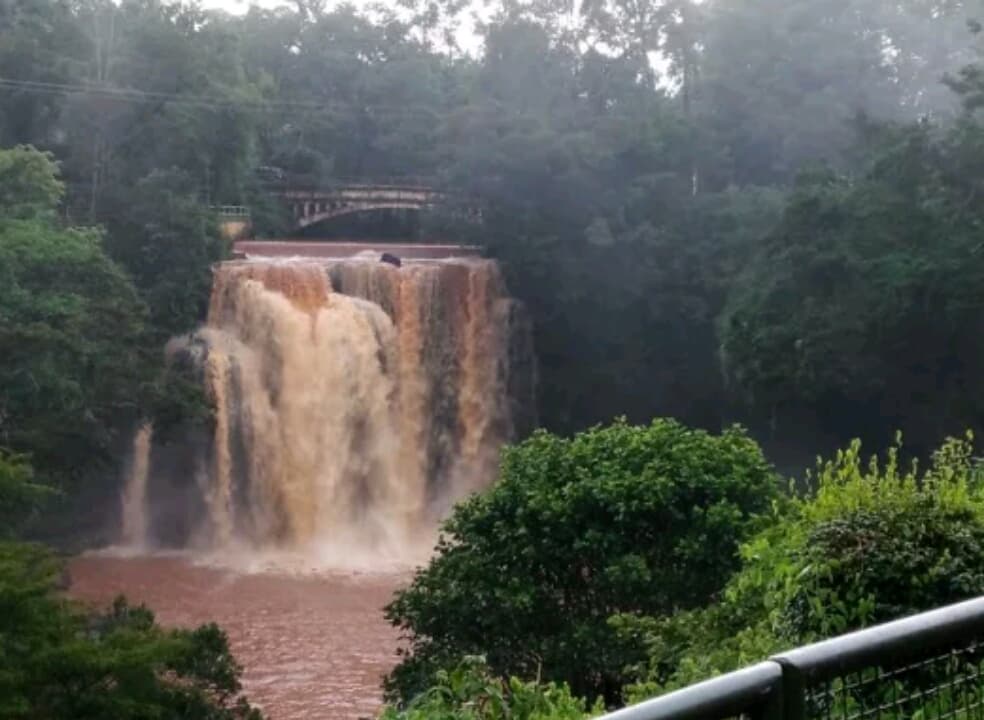
Thika offers a variety of sights, blending natural wonders with historical landmarks and cultural experiences. The Fourteen Falls on the Athi River, a few kilometers from town, are a broad cascade dropping over a 27-meter natural weir, known as Githioro, meaning 'roaring,' by the Kikuyu. You can enjoy boat rides, bird watching, and fishing here. Closer to the town, the Chania Falls at the historic Blue Posts Hotel provide a picturesque setting where the Chania and Thika rivers converge.
For a glimpse into local history and prophecy, visit Mugumo Gardens, where the remnants of a giant fig tree stand. This tree was the site where the revered Kikuyu prophet Mugo wa Kibiro made his extraordinary prediction about the end of British rule. The Thika World War Memorial Park offers a serene space to reflect and honor African soldiers who fought in World War II. You can also explore the Thika Pineapple Monument Park, which celebrates the region's major cash crop. For those interested in agricultural heritage, consider a Del Monte Farm Tour to learn about pineapple processing or a visit to a local coffee or tea farm to understand Kenya's renowned produce.
Nature enthusiasts can venture to Ol Donyo Sabuk National Park, a volcanic hill to the southeast of Thika, offering hiking trails and wildlife viewing opportunities.
The ideal time to visit Thika is during the dry seasons, which stretch from June to October and again from January to February. During these months, the weather is more predictable, with clear skies and comfortable temperatures, making it perfect for outdoor activities and exploring the natural attractions. While July to October offers a peak for general outdoor tourist activities, the period from late January to late March and mid-September to mid-October is best for warm-weather pursuits. The 'long rains' occur from March to May, and 'short rains' in November and December, which can bring lush green landscapes but also potential disruptions to travel.
Thika is easily accessible from Nairobi via the eight-lane Thika Superhighway (A2), with the journey taking approximately 45-60 minutes during off-peak hours. Matatus (public mini-buses) operate regularly from Nairobi's CBD. The town is well-equipped with essential facilities, including supermarkets, banks, and petrol stations, making it a convenient stop for stocking up before heading further into the Mount Kenya region. Phone coverage is reliable throughout the area.
Pack light, breathable clothing for the daytime, as temperatures can be warm, but also bring a light jacket or sweater for cooler evenings. Comfortable walking shoes are essential for exploring the waterfalls and other natural attractions. While generally safe for tourists, it's advisable to remain vigilant, avoid walking alone at night, and use reputable transportation services. Visa requirements depend on your nationality, so check with the Kenyan embassy or consulate beforehand. Recommended vaccinations include yellow fever and typhoid.
Thika in Korean, in Chinese or in Hebrew — and 29 more languages, every stop narrated by a native voice. The widest language range of any self-guided audio tour.
Available in: