The 'Green Hill' (original Tsumeb mine outcrop)
Long before European prospectors arrived, indigenous communities knew of a remarkable 'Green Hill' in the area. What made this hill so distinct?
Full story unlocks in the tour
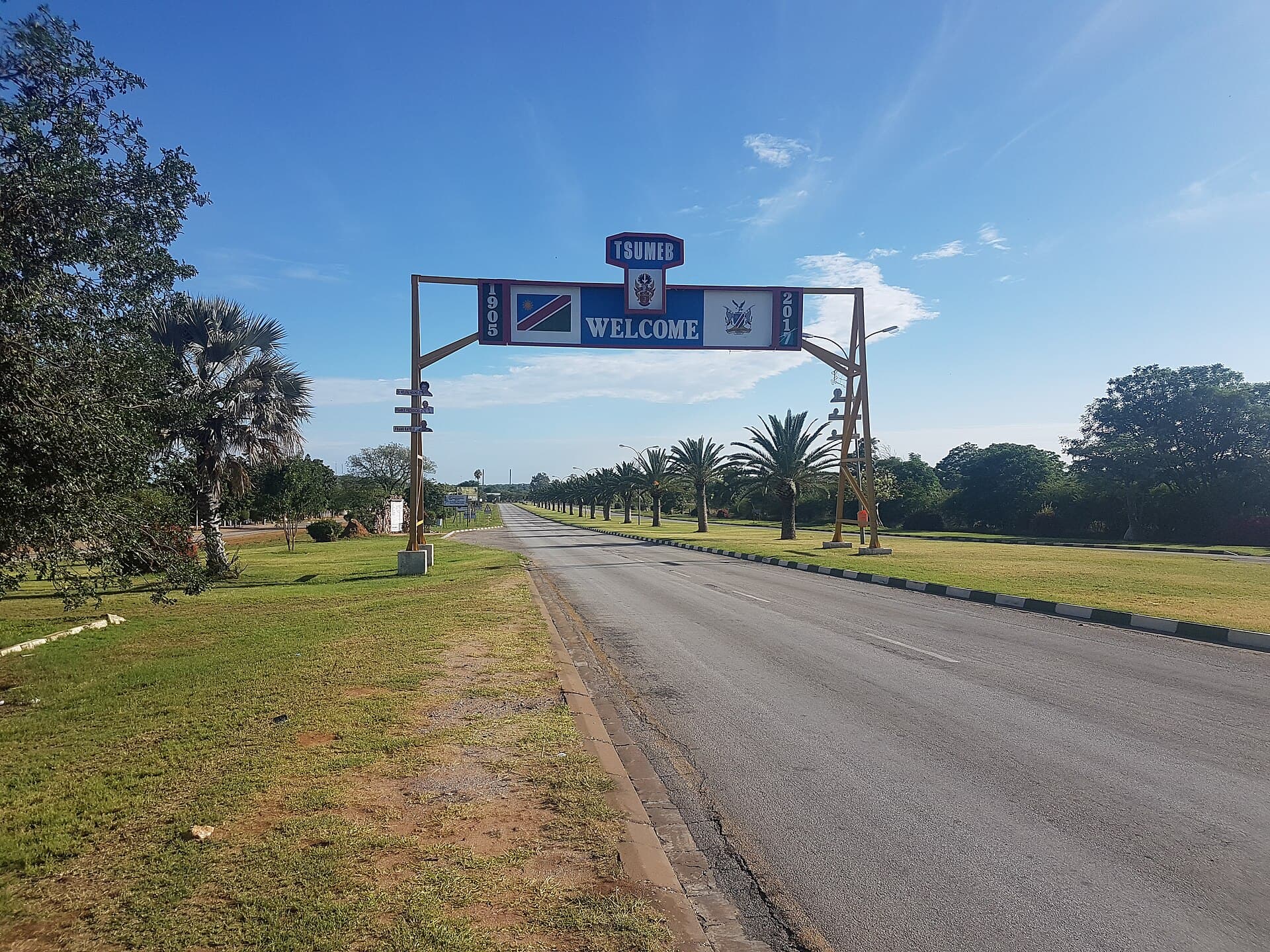 Volly247 / CC BY-SA 4.0, via Wikimedia Commons
Self-guided audio walking tour of Tsumeb — GPS route, offline playback, story-driven narration in 32 languages.
“Where Earth's deep secrets surface, and history echoes in every mineral.”
Not the postcards. The stories even locals don't know — whispered in your ear, right where they happened.
Long before European prospectors arrived, indigenous communities knew of a remarkable 'Green Hill' in the area. What made this hill so distinct?
This seemingly tranquil sinkhole lake holds a dramatic secret from World War I. What did retreating German forces entrust to its depths?
The Tsumeb mine is celebrated for an astonishing variety of minerals, but its geological formation itself is a subject of scientific debate. What makes this ore body so peculiar?
Discover every secret of Tsumeb
Every address, every reveal in full — in your ear, right where it happened.
You pick your stops. You walk. The voice reveals what the others miss.


Your self-guided audio tour of Tsumeb is ready — pick your landmarks, choose your language, and start the moment you arrive.
BuyLume has a built-in augmented-reality guide. Hold your phone up and its camera shows the street ahead of you, with a glowing arrow laid over the real view that always points to your next stop — no map to puzzle over, no wrong turns. Like everything in Lume, it works fully offline.
Tsumeb, often referred to as the 'gateway to the north' of Namibia, is a town with a compelling story etched into its very foundations. Situated in the heart of the Oshikoto Region, this charming settlement is a testament to both geological wonders and a complex colonial past. It serves as a vital hub for travelers venturing towards the iconic Etosha National Park, offering a blend of cultural experiences, historical insights, and natural beauty.
The town's name itself carries a fascinating linguistic heritage, believed to be derived from the Hai//om word 'Tsomsoub,' meaning 'to dig a big hole in the loose ground,' or the Otjiherero word 'Otjisume,' signifying 'place of the frogs,' likely referencing the striking green and brown hues of the copper-stained outcrop that once dominated the area. Tsumeb's identity is inextricably linked to its mining heritage, a legacy that has shaped its development and continues to define its character, even as the lower workings of its famous mine have ceased operation.
Beyond its industrial roots, Tsumeb is a surprisingly green oasis, earning it the moniker 'Garden Town' thanks to its numerous jacaranda trees and flora. This unique blend of a deeply historical mining town, a verdant landscape, and a strategic location makes Tsumeb a captivating stop for those seeking to understand the diverse fabric of Namibia.
The history of Tsumeb stretches back long before European arrival, with indigenous San and Damara tribes recognizing the ore deposits. They knew the area as 'Green Hill' due to the distinctive color of oxidized copper, or malachite, visible on the surface. Early African communities, including the Haiǁom, Ndonga, and Herero, actively mined, smelted, and traded this copper, forming a vital part of their economies. European explorers in the 1880s encountered Africans trading copper ores, eventually tracing these goods back to the 'Green Hill.'
In 1884, South West Africa became a German protectorate, and in 1893, British mining engineer Mathew Rogers was deeply impressed by the Tsumeb deposit. However, it was the German company, Otavi Minen und Eisenbahn Gesellschaft (OMEG), that initiated large-scale mining operations in 1900, officially founding the town in 1905. A crucial development was the construction of a dedicated narrow-gauge railway line from the coast, completed in 1906, which enabled full-scale commercial production and the export of vast quantities of ore.
The Tsumeb mine quickly gained international fame for its extraordinary mineral diversity, producing copper, lead, zinc, silver, and even rare germanium. It is renowned as the type locality for 56 mineral species, meaning these minerals were first identified here. During World War I, as German forces retreated in 1915, they famously dumped weapons and ammunition into the nearby Lake Otjikoto to prevent them from falling into Allied hands. Many of these artifacts have since been recovered and are now displayed in the Tsumeb Museum, which opened in 1975 in the old German Private School building.
After World War I, the mine passed to South African control, operating for decades under Tsumeb Corporation Limited (TCL). The De Wet Shaft was completed in 1953, and in its heyday, the mine produced 300 tonnes of ore per day. However, by the 1990s, with falling copper prices and the exhaustion of the primary ore body, the mine officially closed in 1996. While the deep levels remain flooded, some upper levels have since reopened under Ongopolo Mining. Today, Tsumeb, with a population of around 15,000 to 29,000 people, continues to be a regional center, balancing its mining heritage with its role as a 'gateway to the north' and a 'Garden Town' known for its beautiful jacarandas.
Begin your exploration at the Tsumeb Museum, housed in a historic German school building. Here, you'll delve into the town's profound mining history, marvel at an extensive collection of rare minerals (including those unique to Tsumeb), and discover artifacts from indigenous tribes like the Himba and San. The museum also features recovered weaponry from Lake Otjikoto, offering a tangible link to World War I.
A short drive northwest of Tsumeb leads to Lake Otjikoto, one of Namibia's only two permanent natural lakes. This sinkhole lake, formed by a collapsed cave, is not only scenically striking but also historically significant as the dumping ground for German forces' arms in 1915. While its true depth remains a mystery, it's a site of intrigue and natural beauty.
For a glimpse into local culture and artistry, visit the Tsumeb Arts & Crafts Centre or the Helvi Mpingana Kondombolo Cultural Village. These venues showcase traditional Namibian crafts, from basketry and pottery to fabric design, and offer opportunities to observe artisans at work. The Cultural Village, in particular, provides insights into the lifestyles and traditions of various Namibian tribal communities.
Given Tsumeb's nickname, take a stroll through the town's streets to appreciate its 'Garden Town' status, particularly during spring when the jacarandas are in bloom. While the mine itself is not fully open for public tours, the museum provides a comprehensive understanding of its geological significance and impact on the town.
The best time to visit Tsumeb is during Namibia's dry season, which runs from May to October. During these months, the weather is generally pleasant with mild daytime temperatures, clear skies, and very little rainfall, making it ideal for outdoor activities and exploring the town. Nights can be chilly, especially in June and July, so packing layers is advisable. This period also coincides with prime wildlife viewing in nearby Etosha National Park, as animals congregate around waterholes.
Tsumeb is well-connected and easily accessible. It sits at the intersection of the B1 and C42 highways, making it a convenient stop for those traveling north through Namibia. You can reach Tsumeb by car, or by shared taxis and minibuses from cities like Windhoek and Ondangwa. There are also daily train services between Tsumeb and Ondangwa.
Accommodation options in Tsumeb range from budget-friendly guesthouses to mid-range hotels and lodges. The local currency is the Namibian Dollar (NAD), and South African Rand (ZAR) is also widely accepted. While credit cards are common in hotels and restaurants, it's always a good idea to carry some cash.
English is the official language, so communication should be straightforward, though you may hear Afrikaans, Oshiwambo, and other local languages. Malaria is not a significant concern in Tsumeb, but general health precautions like using insect repellent and drinking bottled water are recommended. Visa requirements vary by nationality, so check with the Namibian embassy or consulate before your trip.
Tsumeb in Korean, in Chinese or in Hebrew — and 29 more languages, every stop narrated by a native voice. The widest language range of any self-guided audio tour.
Available in: