Burg Wels (Château de Wels)
L'empereur Maximilien Ier, figure d'une grande ambition, n'a pas trouvé la mort dans une bataille triomphante, mais dans une pièce tranquille du château de Wels.
L'histoire complète se débloque dans le tour
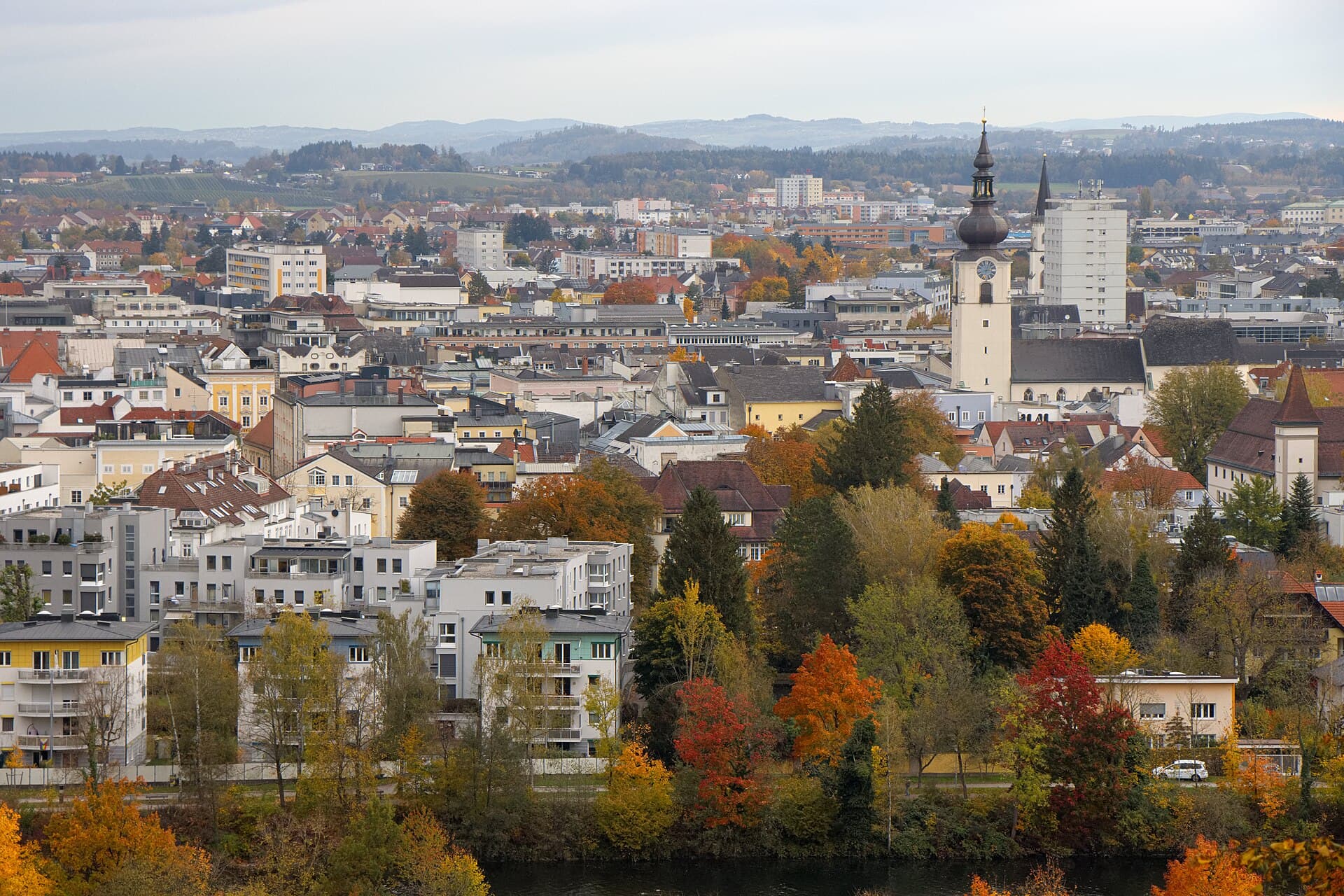 Eweht / CC BY-SA 4.0, via Wikimedia Commons
Visite audio autoguidée de Wels — parcours GPS à pied, lecture hors ligne, narration en 32 langues.
“Là où les voies romaines rencontrent la grâce médiévale, et chaque pierre raconte une histoire.”
Pas les cartes postales. Les histoires que même les habitants ignorent — soufflées à l'oreille, là où elles se sont passées.
L'empereur Maximilien Ier, figure d'une grande ambition, n'a pas trouvé la mort dans une bataille triomphante, mais dans une pièce tranquille du château de Wels.
Sous les cours à arcades de la place principale de Wels se cache un lien avec une figure scandaleuse du passé de Salzbourg.
Un parc paisible de Wels abrite une sculpture en céramique qui reconnaît discrètement un chapitre plus sombre de l'histoire du XXe siècle de la ville.
Découvrez tous les secrets de Wels
Chaque adresse, chaque révélation en entier — dans ton oreille, là où elle s'est passée.
Tu choisis tes lieux. Tu marches. La voix te révèle ce que les autres ignorent.



Votre visite audioguidée de Wels vous attend — choisissez vos lieux, votre langue, et lancez-vous dès votre arrivée.
AcheterLume intègre un guide en réalité augmentée. Levez votre téléphone : sa caméra montre la rue devant vous, avec une flèche lumineuse posée sur l'image réelle qui pointe toujours vers votre prochain arrêt — aucune carte à déchiffrer, aucun mauvais virage. Comme tout dans Lume, ça fonctionne entièrement hors-ligne.
Wels, en Autriche, est une ville où les couches de l'histoire sont visibles à chaque tournant, de ses fondations romaines à son statut de ville marchande médiévale. Située en Haute-Autriche sur la rivière Traun, elle offre un mélange d'architecture historique et de vie moderne. Les racines de la ville remontent à l'ère néolithique, avec des découvertes archéologiques datant d'entre 3500 et 1700 av. J.-C. Elle a ensuite pris de l'importance en tant que ville romaine d'Ovilava, servant de capitale de la province de Noricum.
Aujourd'hui, Wels est la deuxième plus grande ville de Haute-Autriche et la huitième du pays, avec une population de plus de 65 000 habitants. Elle fonctionne comme un important centre de foires commerciales et industriel, ainsi qu'un carrefour de transport. Malgré ses développements modernes, la ville conserve une vieille ville piétonne avec des places historiques et une scène culturelle animée, incluant divers festivals et marchés tout au long de l'année.
L'histoire documentée de Wels commence bien avant les Romains. Des preuves archéologiques attestent d'une implantation dans la région depuis l'ère néolithique, entre 3500 et 1700 av. J.-C., avec des outils découverts près de la rivière Traun. Des cimetières de l'âge du bronze et des artefacts de la période de Halstatt (750-400 av. J.-C.) illustrent davantage son passé ancien.
La ville a acquis une importance significative à l'époque romaine, vers 120 apr. J.-C., lorsqu'elle a reçu les droits de cité romaine sous le nom de Municipium Ovilava. Elle est devenue la capitale de la province de Noricum, administrant une vaste région. Ovilava était une colonie florissante avec des maisons en briques, des bains publics, une arène et un système d'irrigation. Vers 215 apr. J.-C., sous l'empereur Caracalla, elle a été élevée au rang de Colonia Aurelia Antoniana Ovilabis et comptait environ 18 000 habitants. Les Romains ont également construit des murs d'enceinte pour se protéger des menaces tribales.
Pendant le Moyen Âge, Wels a servi de centre commercial mineur. Un événement important fut la bataille de Wels en 943, où les Hongrois furent vaincus par les Bavarois et les Carantaniens. En 1222, sous la famille Babenberger, Wels reçut de nouveau les droits de cité, et un document de 1328 confirme son rôle de lieu de marché important. Ses privilèges économiques et sa situation stratégique sur plusieurs rivières ont contribué à son importance régionale.
L'empereur Maximilien Ier a fréquemment visité Wels et est décédé au château de Wels le 12 janvier 1519. L'hôtel de ville de la ville, remodelé en 1748, présente des détails romans et baroques. Le Ledererturm (Tour des Tanneurs), datant de 1376, est la dernière tour restante des remparts médiévaux.
Le XXe siècle a apporté des défis importants, notamment un sous-camp du camp de concentration de Mauthausen pendant la Seconde Guerre mondiale. Malgré les lourdes destructions pendant la guerre, Wels a réussi à préserver certains de ses bâtiments historiques. En 1964, Wels est devenue une Statutarstadt (ville indépendante) d'Autriche.
Commencez votre exploration sur la Stadtplatz, la place principale de Wels, un espace allongé encadré de bâtiments avec des cours à arcades traditionnelles de la Haute-Autriche. La Ledererturm, une tour du XIVe siècle, se dresse à son extrémité nord, vestige des fortifications médiévales de la ville. La Stadtpfarrkirche, une église paroissiale de style gothique tardif, présente des vitraux du XIVe siècle et un dôme baroque en forme d'oignon.
Découvrez le passé romain de Wels à la Collection archéologique du Stadtmuseum Wels Minoriten, abritée dans un ancien monastère de Minorites. Ici, vous pouvez examiner des artefacts et des mosaïques romaines. Le Burg Wels (Château de Wels), datant à l'origine de 776 après J.-C. et remodelé dans le style gothique tardif sous l'empereur Maximilien Ier, contient maintenant des collections historiques locales et même un musée de la pâtisserie autrichienne. Pour une expérience pratique, le Welios Science Center propose des expositions interactives sur les énergies renouvelables.
Au-delà du cœur historique, le Tiergarten (Zoo de Wels), créé dans les années 1930, offre un cadre de parc avec plus de 100 espèces animales. Profitez d'une promenade ou d'une balade à vélo le long de la rivière Traun, qui offre des sentiers pittoresques et des possibilités de détente.
La meilleure période pour visiter Wels pour les activités par temps chaud et les visites touristiques est de mi-juin à début septembre, lorsque les températures sont agréables, allant de 20°C à 26°C. Juillet est généralement le mois le plus chaud, avec une moyenne maximale de 24°C, et aussi le plus clair en termes de ciel. La fin du printemps (mai à juin) et le début de l'automne (septembre) offrent également un temps doux idéal pour les visites à pied et moins de foule. Wels accueille sa foire annuelle, la Welser Messe, à la fois en automne et au printemps. Pour ceux qui s'intéressent aux marchés de Noël autrichiens traditionnels, décembre est un choix populaire.
Wels est facilement accessible en train, étant un important carrefour ferroviaire sur la ligne principale entre Vienne et Salzbourg. L'aéroport de Linz (LNZ) est l'aéroport le plus proche, à environ 15 kilomètres, avec une liaison ferroviaire de 30 minutes vers Wels. Si vous conduisez, prenez l'autoroute A1 depuis Vienne ou Salzbourg, ou l'A9 depuis Graz. Le centre-ville est en grande partie piétonnier, et un réseau dense de bus urbains dessert la zone. Cependant, sachez que le service de bus est limité le dimanche. Wels est considérée comme une ville très sûre pour les touristes internationaux.
Wels en coréen, en chinois ou en hébreu — et dans 29 autres langues, chaque étape narrée par une voix native. La plus large gamme de langues de tous les audioguides autoguidés.
Disponible en :