Near the Peene River
Imagine a time when coins from Persia, Iraq, and North Africa were common tender along the Peene River.
Full story unlocks in the tour
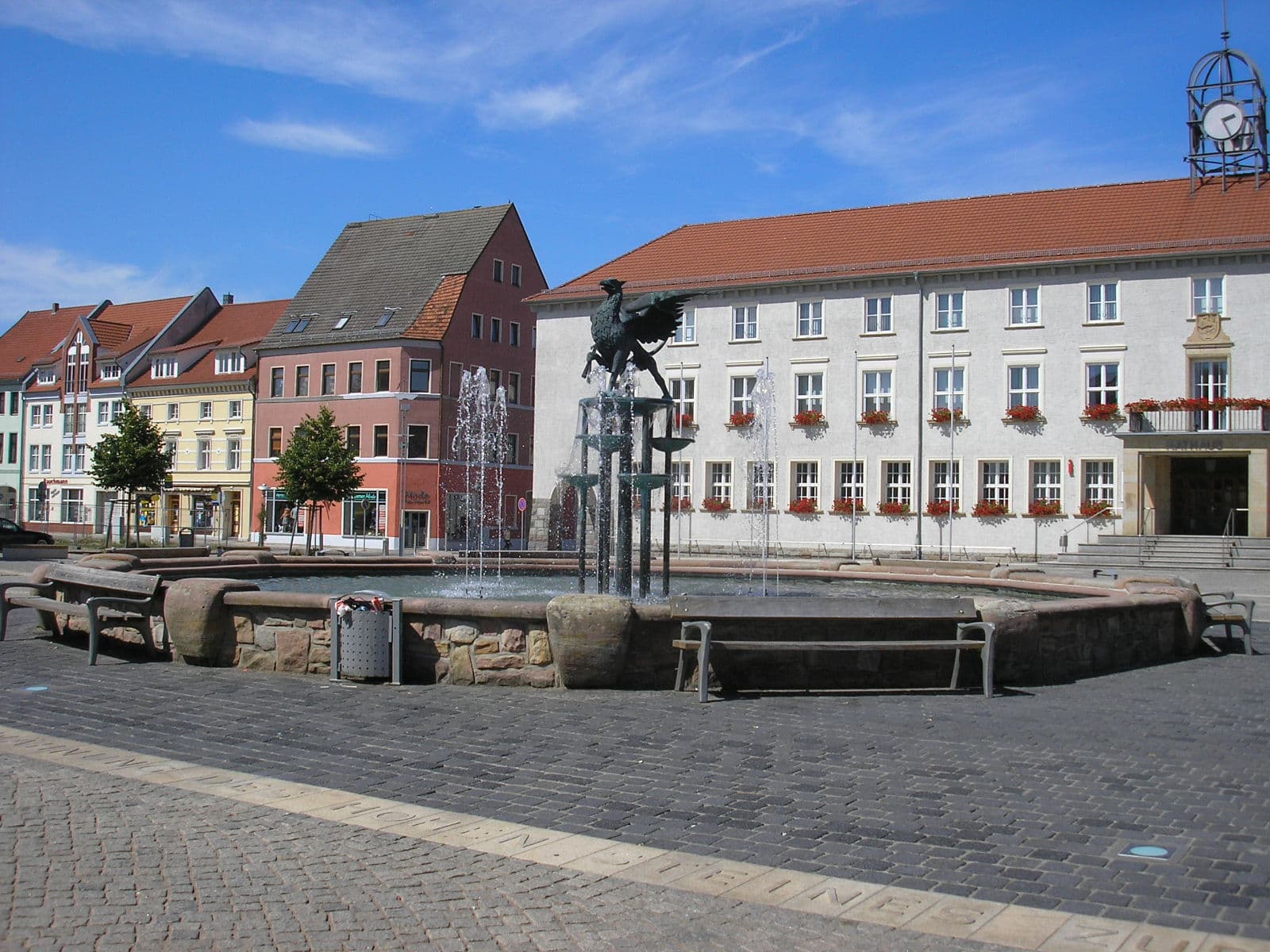 Michael Sander / CC BY-SA 3.0, via Wikimedia Commons
Self-guided audio walking tour of Anklam — GPS route, offline playback, story-driven narration in 32 languages.
“Where the currents of ancient trade met the first whispers of human flight.”
Not the postcards. The stories even locals don't know — whispered in your ear, right where they happened.
Imagine a time when coins from Persia, Iraq, and North Africa were common tender along the Peene River.
This soaring Brick Gothic church, once a beacon of Anklam's medieval prosperity, holds a surprising future.
Anklam endured extensive destruction during World War II, but the precise nature of one early bombing raid is a somber detail often overlooked.
Discover every secret of Anklam
Every address, every reveal in full — in your ear, right where it happened.
You pick your stops. You walk. The voice reveals what the others miss.
Your self-guided audio tour of Anklam is ready — pick your landmarks, choose your language, and start the moment you arrive.
BuyLume has a built-in augmented-reality guide. Hold your phone up and its camera shows the street ahead of you, with a glowing arrow laid over the real view that always points to your next stop — no map to puzzle over, no wrong turns. Like everything in Lume, it works fully offline.
Anklam, a town in the Western Pomerania region of Mecklenburg-Vorpommern, Germany, rests on the banks of the Peene River, just eight kilometers from its mouth in the Kleines Haff, part of the Szczecin Lagoon. Often referred to as the "Gateway to the Island of Usedom," Anklam is a place where medieval narratives, aviation pioneering, and natural beauty converge. With a population of around 12,000 residents, it offers a blend of historical exploration and serene natural escapes.
The town is particularly known as the birthplace of Otto Lilienthal, the visionary aviation pioneer, earning it the moniker "Lilienthalstadt." Beyond its connection to human flight, Anklam carries a Hanseatic past, evident in its Brick Gothic architecture and the stories etched into its ancient buildings. Visitors can delve into centuries of trade and maritime influence, then unwind in the picturesque Peene Valley, sometimes called the "Amazon of the North" for its unspoiled landscapes.
## From Wendish Fortress to Hanseatic Powerhouse Anklam's origins trace back to the early Middle Ages, with an important Scandinavian and Wendish settlement existing near what is now Altes Lager Menzlin. Anklam itself began as an associated Wendish fortress. The town was first documented in 1243, with its name believed to derive from a Slavic term meaning "On the Hill." It gained town status in 1244 and became a member of the influential Hanseatic League in either the same year or 1483, a membership that brought significant prosperity through trade, particularly in herring.
## Wars, Fires, and Rebuilding Anklam's history is marked by repeated destruction and rebuilding due to conflicts and fires. The town suffered severely during the Thirty Years' War (1618–1648), with Swedish and Imperial troops battling over it for two decades. It was occupied by imperial forces from 1627 to 1630, then by Swedish forces, and after the war, became part of Swedish Pomerania in 1648. Further damage occurred during the Seven Years' War (1756–1763), and in 1713, Russian soldiers looted the town.
## The Prussian Era and Industrial Growth In 1815, Sweden ceded its remaining portion of Anklam, and all of Western Pomerania became part of the Prussian province of Pomerania. The 19th century brought industrial development, with Anklam connecting to Berlin and Stettin (Szczecin) by rail. The town became known for manufacturing linen and woolen goods, leather, beer, and soap. Its population grew from 10,739 in 1871 to 14,602 by the turn of the century. The First World War saw the town develop iron foundries and sugar factories, and a military school was established.
## World War II and the Socialist Reconstruction Anklam's military importance made it a target during World War II. The Wehrmacht took over the military school in 1939 and constructed a military prison. The town was almost completely destroyed by several U.S. Air Force bombing raids in 1943 and 1944, and further leveled by advancing Soviet forces in the final days of the war. In February 1945, a German-perpetrated death march of Allied POWs passed through the town. After the war, Anklam became part of East Germany, and much of the town was rebuilt in a uniform socialist style. Following Germany's reunification in 1990, Anklam rejoined the state of Mecklenburg-Vorpommern.
Begin your exploration at the Otto Lilienthal Museum, an award-winning institution dedicated to the pioneering aviator born in Anklam. The museum showcases his flying machines and delves into the history of human flight, offering interactive exhibits that are particularly engaging for families. Next, visit the Steintor (Stone Gate), the tallest Brick Gothic city gate in Pomerania. This medieval landmark houses a museum detailing the history of Anklam and the surrounding Peene Valley.
Consider the impressive Brick Gothic churches. The Church of St. Mary, a 12th-century structure rebuilt in the 15th century, features well-preserved murals from the early 13th century. The Church of St. Nicholas, though still undergoing reconstruction after wartime damage, stands as a testament to the town's Hanseatic past and is slated to become a new cultural center.
For a dose of nature, head to the Peene River. You can take a canoe trip, a solar-boat tour, or a guided moor hike through the Peene Valley, sometimes called the "Amazon of the North" for its rich biodiversity, including white-tailed eagles, beavers, and otters. The Wasserwanderrastplatz Anklam offers berths for boats, camping pitches, and a playground, providing a perfect spot for water enthusiasts. Observe the Gothic Gabled House, an impressive ivy-covered city wall, and the Powder Tower, all remnants of Anklam's medieval fortifications. For a unique perspective, consider a sightseeing flight from the Anklam airfield.
Anklam is enjoyable throughout the year, but the warmer months, from late spring to early autumn (May to September), are ideal for outdoor activities like exploring the Peene Valley by boat or on foot. During autumn, the foliage along the Peene River offers particularly beautiful colors. Indoor attractions like the Otto Lilienthal Museum and the Steintor Museum are excellent choices regardless of the weather.
Anklam is located in northeastern Germany, in the state of Mecklenburg-Vorpommern. The town is connected to the Autobahn 20 coastal highway and has a railway station with national and local services to major German cities like Berlin and Stralsund. Bus services are also available for local and regional travel. The currency used is the Euro (€). German is the official language. The Anklam Tourist Information office, located in the Regional Information and Tourism Centre (RITZ) next to St. Nicholas' Church, provides assistance with accommodations, guided tours, and local information. Many attractions, including the Otto Lilienthal Museum, are walkable from the town center.
Anklam in Korean, in Chinese or in Hebrew — and 29 more languages, every stop narrated by a native voice. The widest language range of any self-guided audio tour.
Available in: