Maryland State House
The Maryland State House guards a secret that profoundly shaped the United States, reaching far beyond Maryland's boundaries.
Full story unlocks in the tour
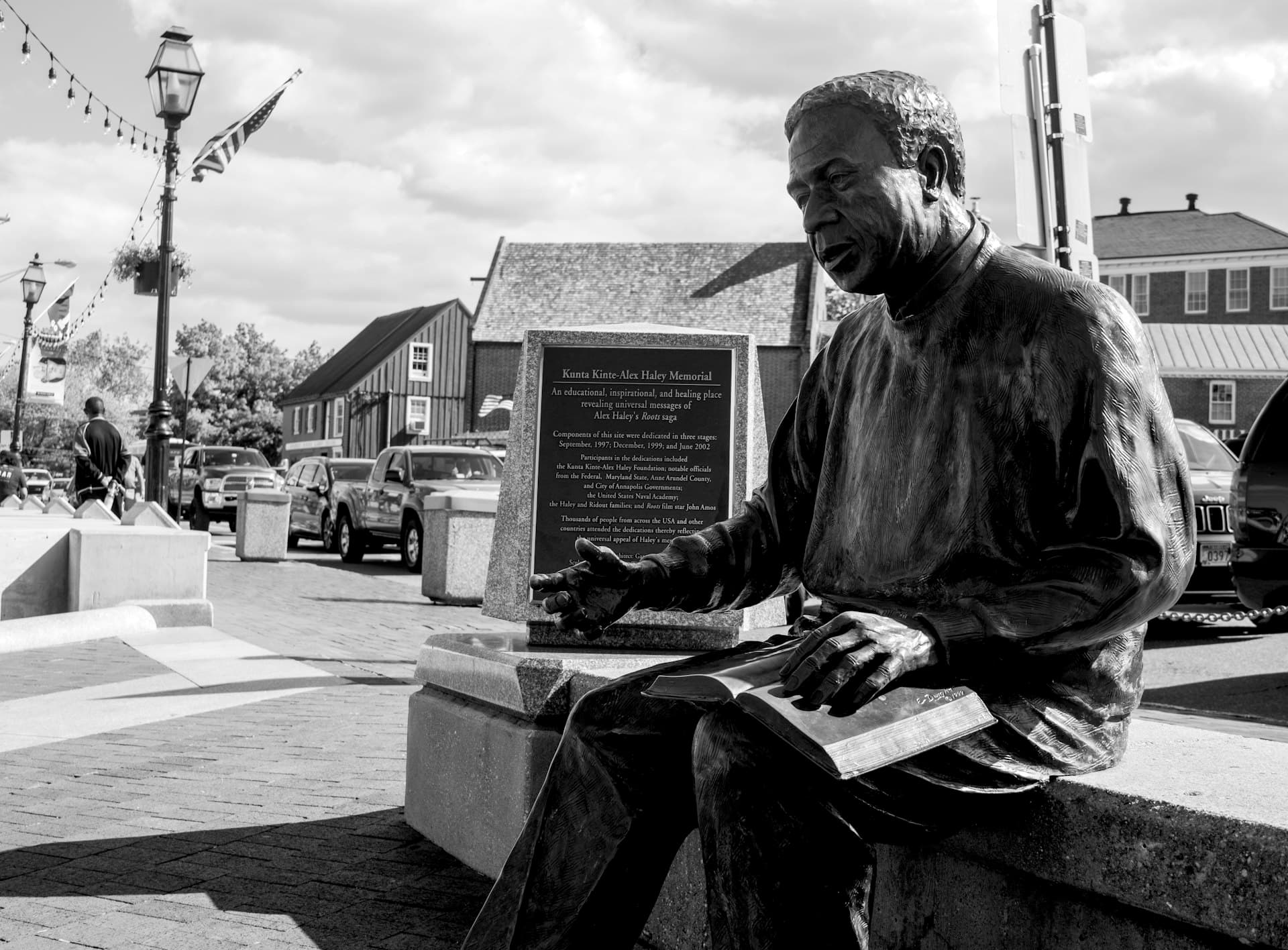 Photo: Edouard TAMBA / Unsplash
Self-guided audio walking tour of Annapolis — GPS route, offline playback, story-driven narration in 32 languages.
“Where brick lanes unfold stories of revolutionaries, and the salty air carries the scent of ages past.”
Not the postcards. The stories even locals don't know — whispered in your ear, right where they happened.
The Maryland State House guards a secret that profoundly shaped the United States, reaching far beyond Maryland's boundaries.
Annapolis's Ego Alley is more than a waterway for vessels; it forms a stage for a distinctive local spectacle.
Beyond its appealing shops, Maryland Avenue holds a surprising link to the city's past, a connection you might literally traverse.
Discover every secret of Annapolis
Every address, every reveal in full — in your ear, right where it happened.
You pick your stops. You walk. The voice reveals what the others miss.
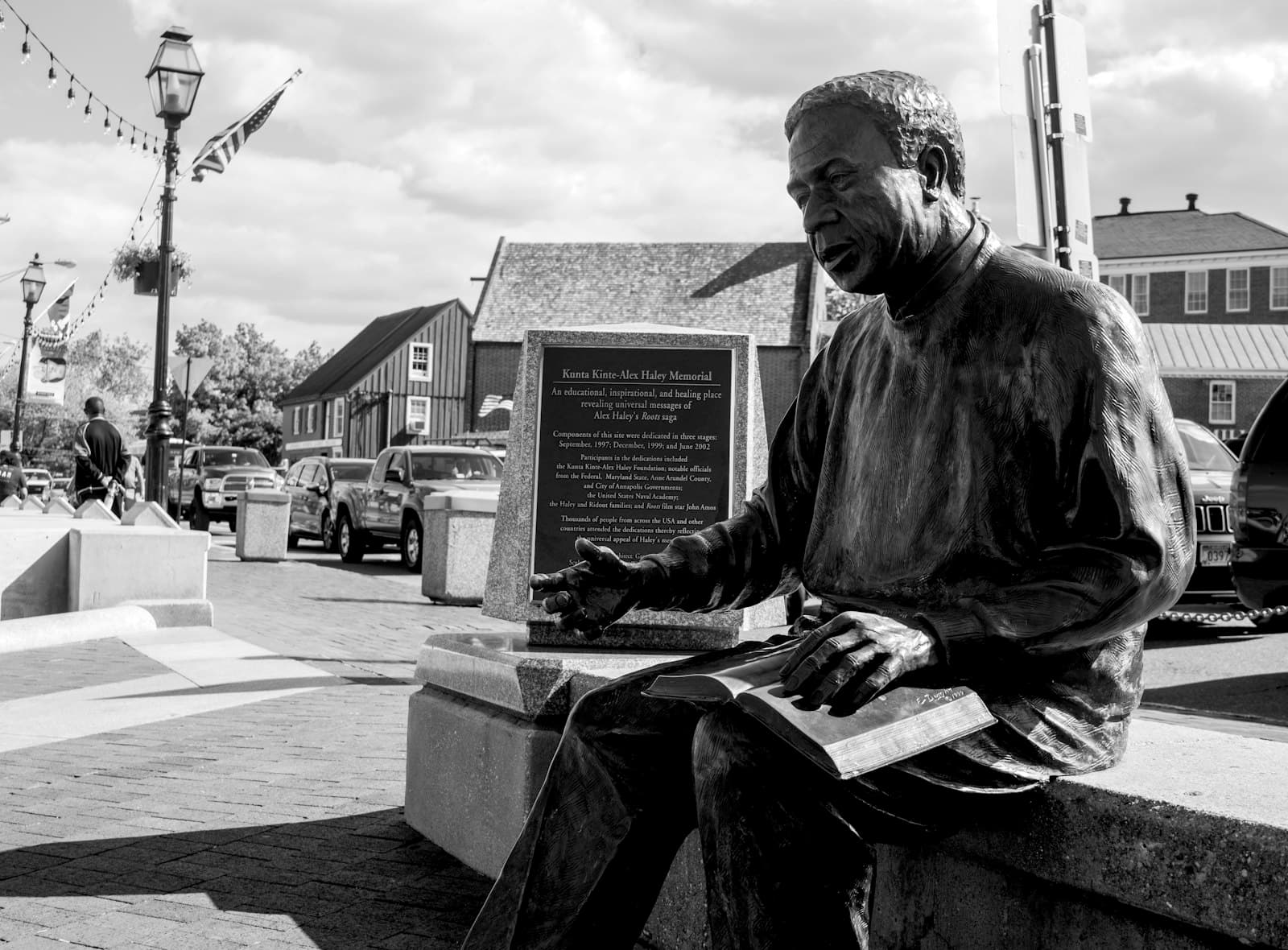
Your self-guided audio tour of Annapolis is ready — pick your landmarks, choose your language, and start the moment you arrive.
BuyLume has a built-in augmented-reality guide. Hold your phone up and its camera shows the street ahead of you, with a glowing arrow laid over the real view that always points to your next stop — no map to puzzle over, no wrong turns. Like everything in Lume, it works fully offline.
Annapolis, the capital of Maryland, is a city where four centuries of human experience converge with the Chesapeake Bay. Established in 1649, it was initially named Providence, then Anne Arundel's Towne, before receiving the name Annapolis in deference to Princess Anne of Denmark and Norway, who would later become Queen Anne of Great Britain. This engaging city, often called 'America's Sailing Capital,' offers a pedestrian-friendly downtown, enduring architecture, and expansive waterfront views.
With its brick-lined thoroughfares and colonial-era structures, Annapolis invites visitors to journey through time. The city's distinctive baroque street plan, conceived by Sir Francis Nicholson, incorporates circles with streets extending outward, lending prominence to edifices such as St. Anne's Episcopal Church and the Maryland State House. From its earliest days, Annapolis was recognized as the 'Athens of America' for its cultural pursuits, social engagements, and intellectual vigor.
Annapolis began as a settlement called Providence in 1649, established by Puritans seeking new lands. It later became Anne Arundel's Towne, named after the wife of Lord Baltimore, proprietor of the colony. In 1694, Royal Governor Francis Nicholson relocated the capital of the Province of Maryland to Anne Arundel's Towne and renamed it Annapolis, after Princess Anne. The city was formally incorporated in 1708 when Princess Anne ascended to the throne as Queen.
Annapolis played a central role in early American history. From November 1783 to August 1784, it functioned as the temporary capital of the United States. During this period, the Maryland State House witnessed momentous events, including George Washington's resignation as commander-in-chief of the Continental Army on December 23, 1783, and the ratification of the Treaty of Paris on January 14, 1784, which formally concluded the Revolutionary War.
The city's historic district, much of which was designated a National Historic Landmark in 1965, contains over 120 18th-century structures, displaying Colonial, Georgian, and Federal architectural styles. Influential figures like William Paca, a signer of the Declaration of Independence, possessed grand residences here that remain standing. The United States Naval Academy, founded in 1845, further solidified Annapolis's connection to maritime and national narratives.
Annapolis presents a varied collection of sights, blending its colonial past with its maritime present. Begin your exploration at the Maryland State House, the oldest state capitol in continuous legislative use in the United States, notable for its substantial wooden dome constructed without nails. Discover the United States Naval Academy, which has educated naval officers since 1845. Guests may tour the grounds, observe the Naval Academy Chapel, and visit the crypt of John Paul Jones.
Walk through the Colonial Annapolis Historic District, a National Historic Landmark, where 18th-century brick structures line the avenues. The William Paca House & Garden, a meticulously restored Georgian mansion, offers a glimpse into colonial existence and features a two-acre walled garden. The Annapolis Maritime Museum provides understanding into the ecology and story of the Chesapeake Bay. For a distinctive experience, embark on a sailing excursion on the Chesapeake Bay or simply observe the vessels in Ego Alley at City Dock. Do not miss Quiet Waters Park for walking paths and vistas of the South River.
The most favorable times to visit Annapolis are during the spring (March to May) and autumn (September to November). Spring brings mild temperatures (20-25°C in April-May) and outdoor celebrations, with the city in full bloom. Autumn offers colorful foliage and pleasant temperatures, ranging from 27°C in September to 15°C in November. Summers (June to August) are popular for sailing and water activities, but can be warm and humid with highs around 30°C. Winters (December to February) are cooler, with average temperatures below 0°C, yet the historic streets retain their holiday allure.
Annapolis is readily accessible and provides various transportation choices. Baltimore/Washington International Thurgood Marshall Airport (BWI) is nearby. Once within the city, the downtown area is very walkable, making it simple to explore historic locations and the waterfront on foot. The Annapolis Circulator is a complimentary shuttle service that loops around downtown, connecting key points. Water taxis are also available for transit between the Annapolis Harbor and Eastport. For those arriving by car, parking is available, though it is often suggested to park and then walk or use local transportation. Accommodations range from historic inns to contemporary hotels, with many choices in the historic district.
Annapolis in Korean, in Chinese or in Hebrew — and 29 more languages, every stop narrated by a native voice. The widest language range of any self-guided audio tour.
Available in: