Mount Forist
Look closely at the profile of Mount Forist, which rises over downtown Berlin, and you might see a familiar shape.
Full story unlocks in the tour
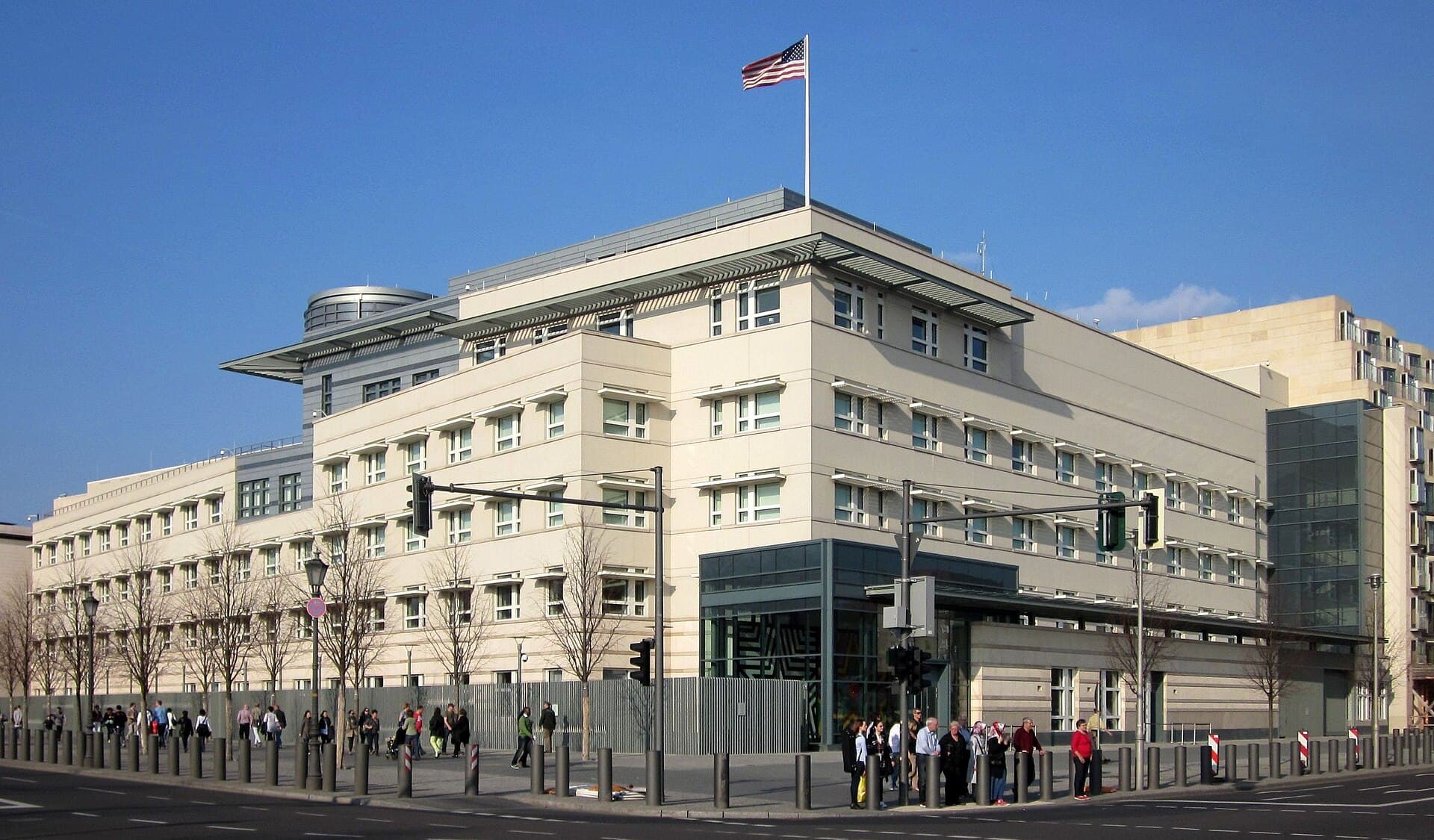 Jörg Zägel / CC BY-SA 3.0, via Wikimedia Commons
Self-guided audio walking tour of Berlin — GPS route, offline playback, story-driven narration in 32 languages.
“Where the mighty Androscoggin meets mountain wilderness and a resilient spirit.”
Not the postcards. The stories even locals don't know — whispered in your ear, right where they happened.
Look closely at the profile of Mount Forist, which rises over downtown Berlin, and you might see a familiar shape.
The oldest standing building in Berlin, once a boarding house for mill workers, is said to have some lingering residents.
In the town's early days, the night sky above Berlin once turned a shocking, inexplicable color.
Discover every secret of Berlin
Every address, every reveal in full — in your ear, right where it happened.
You pick your stops. You walk. The voice reveals what the others miss.


Your self-guided audio tour of Berlin is ready — pick your landmarks, choose your language, and start the moment you arrive.
BuyLume has a built-in augmented-reality guide. Hold your phone up and its camera shows the street ahead of you, with a glowing arrow laid over the real view that always points to your next stop — no map to puzzle over, no wrong turns. Like everything in Lume, it works fully offline.
Berlin, New Hampshire, is a city forged by the raw power of the Androscoggin River and the dense forests of the Great North Woods. Once known as 'The City That Trees Built' for its booming pulp and paper industry, Berlin has a compelling story of resilience and reinvention. Positioned at the northern edge of the majestic White Mountains, it serves as a gateway to an expansive natural playground, offering a blend of industrial heritage and outdoor adventure.
While its industrial zenith has passed, Berlin has embraced its natural surroundings, transforming into a center for outdoor enthusiasts. From ATV trails that crisscross the landscape to serene river activities, the city provides a genuine taste of New England's wild side. It's a place where the sounds of logging camps and bustling mills mingle with the rushing water and rustling leaves, inviting visitors to explore a unique corner of New Hampshire.
## From Maynesborough to Berlin's Industrial Might Berlin's story begins in 1771 with its granting as Maynesborough, though it wasn't truly settled until 1823-1824 by William Sessions and Cyrus Wheeler from Gilead, Maine. With just 65 inhabitants in 1829, the town was reincorporated as Berlin, a name reportedly chosen by new settlers from Berlin, Massachusetts. Its location in a heavily forested region, coupled with the powerful falls on the Androscoggin River, quickly made it a prime spot for logging and wood industries.
By the early 1850s, the H. Winslow & Company had established a significant sawmill at 'Berlin Falls.' The arrival of the St. Lawrence & Atlantic Railroad in 1851 further connected Berlin to broader markets, fueling its growth. In 1868, William Wentworth Brown and Lewis T. Brown took control, renaming the business the Berlin Mills Company. By 1885, Berlin was home to multiple pulp and paper mills, including the Riverside Mill and Forest Fibre Company, becoming a global leader in newsprint production.
## A Melting Pot and a Name Change The booming mill industry created a demand for labor, drawing immigrants from across Europe—Russia, Norway, Finland, Italy, Sweden, Ireland, and Germany—as well as French Canadians from nearby Quebec. This influx of diverse cultures shaped Berlin, with roughly 65% of its residents speaking a variant of New England French, known locally as 'Berlin French.' The city's strong German connection, however, led to a notable change during World War I; the pronunciation of Berlin shifted from 'Ber-LIN' to 'BUR-lin' as a patriotic gesture against Germany.
## Decline and Reimagining The early 20th century marked the peak of Berlin's pulp and paper industry. In 1917, the Berlin Mills Company became the Brown Company, again influenced by anti-German sentiment during World War I. However, the industry eventually faced a long period of decline, leading to job losses and a significant population decrease from its 1930 peak of over 20,000. The last paper mills were demolished in 2008, signaling the end of an era. Today, Berlin is actively reinventing itself, focusing on its natural assets and developing tourism, with recent economic development also including the correctional industry, such as the Northern New Hampshire Correctional Facility built in 1999.
Berlin offers a blend of historical sites and abundant outdoor recreation. Begin at the Northern Forest Heritage Park in the historic Brown House, which provides insights into the region's logging and lumber industries, complete with a replica logging camp and river tours. For those seeking adventure, Jericho Mountain State Park is a premier destination, with 7,500 acres offering miles of ATV and snowmobile trails, hiking, and swimming at Jericho Lake. The park also hosts the annual Jericho ATV Festival in August.
Explore Berlin's downtown to admire historic architecture and visit the Moffett House Museum and Genealogy Center, which delves into Berlin's industrial and sporting past. Observe the Holy Resurrection Orthodox Church, a testament to the city's diverse immigrant heritage. For broad views, drive along Cates Hill and East Milan Road, where you might spot local wildlife. The Androscoggin River itself offers opportunities for fishing, kayaking, canoeing, and scenic drives, with chances to see moose and osprey. In winter, the Nansen Ski Club, North America's oldest, maintains cross-country ski trails in Milan Hill State Park.
The optimal time to visit Berlin for comfortable weather and outdoor activities is from late June to late August. During these summer months, temperatures are warm, humidity is moderate, and sunshine is plentiful, making it ideal for hiking, ATV riding, and river activities. Fall foliage, typically from late September to late October, offers a spectacular display of colors, drawing many visitors to the region. Winter brings cold, snowy conditions, with average annual snowfall around 80-107 inches, making it a prime time for skiing and snowmobiling.
Berlin is located in northern New Hampshire, accessible via New Hampshire State Routes 16 and 110. The nearest interstate highway, I-93, is approximately an hour's drive away. While Berlin offers a sparse suburban feel, most residents own their homes. The city has a full-time police and fire department, and the Androscoggin Valley Hospital is nearby. For dining and shopping, Main Street features locally-owned shops and eateries. The Berlin Public Library and White Mountains Community College are also central amenities. Accommodation options include hotels and vacation rentals, particularly near popular attractions like Jericho Mountain State Park.
Berlin in Korean, in Chinese or in Hebrew — and 29 more languages, every stop narrated by a native voice. The widest language range of any self-guided audio tour.
Available in: