El 'Schipka-Pass' en el Casco Antiguo
Un estrecho pasaje en el casco antiguo de Annweiler, el 'Schipka-Pass', lleva un nombre que parece evocar un conflicto lejano y sangriento.
La historia completa se desbloquea en el tour
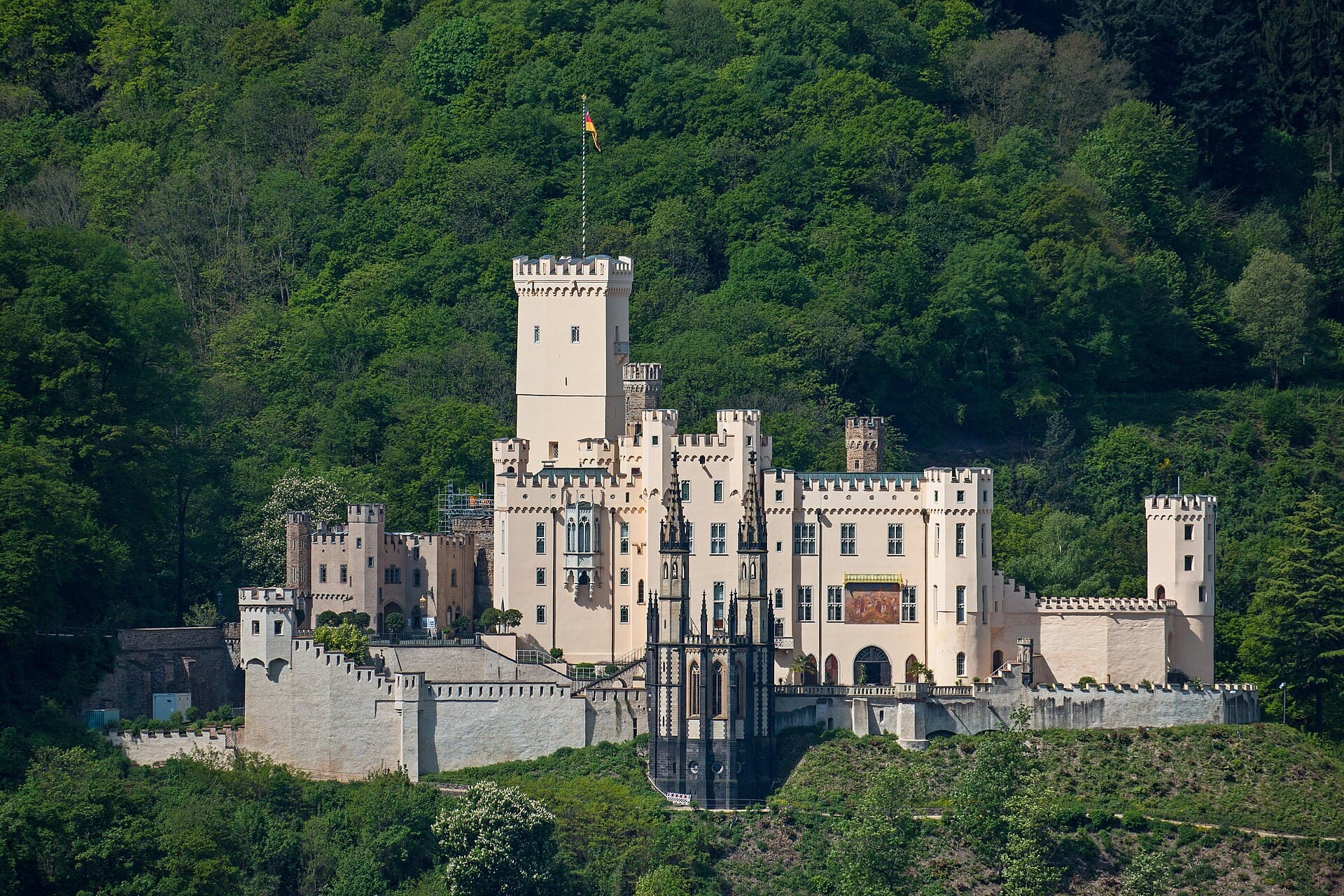 Photo of Koblenz, via Wikimedia Commons
Tour de audio autoguiado de Annweiler — ruta GPS a pie, reproducción offline, narración en 32 idiomas.
“Donde la historia imperial se encuentra con serenos senderos forestales.”
No las postales. Las historias que ni los locales conocen — al oído, justo donde ocurrieron.
Un estrecho pasaje en el casco antiguo de Annweiler, el 'Schipka-Pass', lleva un nombre que parece evocar un conflicto lejano y sangriento.
La actual Rathausplatz, aunque evoca una época anterior, oculta un secreto sobre su verdadera antigüedad y las figuras que adornan su fuente.
El Castillo de Trifels, un monumento a la autoridad imperial, una vez retuvo a un prisionero cuyo nombre resuena mucho más ampliamente que el propio castillo.
Descubre todos los secretos de Annweiler
Cada dirección, cada revelación al completo — a tu oído, justo donde ocurrió.
Eliges tus paradas. Caminas. La voz te revela lo que los demás ignoran.

Tu tour de audioguía por Annweiler te espera — elige tus lugares, tu idioma y empieza al llegar.
ComprarLume incluye una guía de realidad aumentada. Levanta el móvil y su cámara muestra la calle que tienes delante, con una flecha luminosa sobre la imagen real que siempre apunta a tu próxima parada — sin mapas que descifrar, sin giros equivocados. Como todo en Lume, funciona completamente sin conexión.
Annweiler am Trifels, un balneario reconocido por el estado dentro del Bosque del Palatinado, ofrece una convergencia de historia imperial y esplendor natural. Situada en el Valle del Queich, la ciudad está rodeada de frondosos bosques, serenos valles fluviales y pintorescos viñedos, posicionándola como un punto de partida ideal para explorar la naturaleza virgen de la región. El histórico casco antiguo, con sus numerosas casas de entramado de madera y la suave corriente del río Queich, invita a los visitantes a pasear por sus encantadoras callejuelas.
La identidad de la ciudad está inextricablemente ligada al Castillo de Trifels, que se alza majestuosamente sobre la más alta de las tres montañas cónicas que dominan Annweiler. Este antiguo núcleo del imperio Hohenstaufen, junto con las ruinas de Anebos y Scharfenberg (conocidas colectivamente como la 'trinidad de castillos'), crea una silueta dramática contra el cielo. La ubicación estratégica de Annweiler en el Bosque del Palatinado Meridional, dentro del distrito de Südliche Weinstraße, la sitúa convenientemente para aquellos que exploran la región vinícola en general.
Más allá de su importancia histórica, Annweiler am Trifels ofrece un refugio de paz. La ciudad forma parte de la Reserva de la Biosfera Bosque del Palatinado-Vosgos del Norte, ofreciendo un ambiente tranquilo para la recreación. Ya sea atraído por el encanto de los castillos medievales o por el tranquilo abrazo de la naturaleza, Annweiler presenta una experiencia cautivadora.
## De Aldea a Ciudad Imperial Los orígenes de Annweiler se remontan a la Alta Edad Media, documentada por primera vez como una pequeña aldea agrícola, un 'weiler', entre 1116 y 1118. Su destino se ligó estrechamente a la construcción y creciente importancia del Castillo de Trifels, que fue edificado sobre la aldea. Para 1153, se había establecido una iglesia, lo que indicaba el crecimiento de la aldea.
El momento crucial de Annweiler llegó en 1219, cuando el rey Hohenstaufen Federico II le otorgó el fuero de ciudad, convirtiéndola en la segunda ciudad más antigua del Palatinado, superada solo por Espira. Esta elevación a ciudad imperial libre trajo consigo importantes privilegios, incluidos los derechos de mercado y el derecho a acuñar monedas. La ciudad fue fortificada con una muralla, puertas y torres, y varios gremios artesanales florecieron dentro de sus límites.
## La Influencia del Castillo de Trifels El Castillo de Trifels fue el castillo más importante para los emperadores y reyes Staufer durante la Alta Edad Media. Sirvió como depósito de las insignias imperiales del Sacro Imperio Romano Germánico, incluyendo la corona, el cetro y el orbe, réplicas de las cuales se pueden ver hoy en el tesoro del castillo. El castillo también funcionó como prisión estatal, siendo famoso por retener a Ricardo Corazón de León en 1193. El castillo, junto con las ruinas de Anebos y Scharfenberg, forma la 'trinidad de castillos' que define el horizonte sobre Annweiler.
## Artesanía y Resiliencia En el siglo XVII, Annweiler experimentó una afluencia de refugiados religiosos hugonotes de Francia. Estos recién llegados trajeron consigo el oficio de la curtiduría, que moldeó profundamente la arquitectura de la ciudad, particularmente los edificios a lo largo del río Queich. El histórico barrio de los curtidores, con sus antiguas ruedas de molino, sigue siendo una característica distintiva del casco antiguo. A pesar de sufrir graves daños por los bombardeos en diciembre de 1944, el casco antiguo de Annweiler fue cuidadosamente reconstruido en su estilo original, conservando gran parte de su encanto medieval.
## Annweiler en Tiempos Modernos En el siglo XVIII, Annweiler era la más pequeña de las ciudades imperiales. Hasta finales del siglo XVIII, perteneció a Pfalz-Zweibrücken, y durante la República Francesa y el Imperio Napoleónico, sirvió como sede de un cantón y una mairie. Hoy en día, el turismo es un factor económico significativo para Annweiler, que está reconocida como un balneario climático aprobado por el estado. La ciudad sigue celebrando su patrimonio con eventos como el Keschdefeschd (Festival de la Castaña) y las Trifelsserenaden (Serenatas de Trifels), una serie de conciertos clásicos que se celebran en el castillo.
Annweiler am Trifels ofrece una variedad de lugares de interés, principalmente centrados en su pasado medieval y sus alrededores naturales. La atracción más destacada es el Castillo de Trifels, un castillo imperial reconstruido que una vez albergó las insignias imperiales y aprisionó a Ricardo Corazón de León. Los visitantes pueden explorar sus terrenos y disfrutar de amplias vistas del Bosque del Palatinado. El castillo forma parte de la 'trinidad de castillos', que también incluye las ruinas de Anebos y Scharfenberg, visibles desde varios puntos de vista alrededor de la ciudad.
El casco antiguo histórico de Annweiler es una zona encantadora para pasear, caracterizada por sus casas de entramado de madera y el suave fluir del río Queich. El barrio de los curtidores (Gerberviertel) es particularmente pintoresco, con sus antiguas ruedas de molino. La Rathausplatz (Plaza del Ayuntamiento), aunque reconstruida después de los daños de la guerra, conserva una atmósfera atractiva con sus casas porticadas y una fuente que representa oficios históricos. Dentro del ayuntamiento, se pueden ver frescos de Adolf Kessler, que representan eventos históricos relacionados con Annweiler.
Para los interesados en la historia local, el 'Museum unterm Trifels' ofrece una exposición atractiva sobre la historia del Castillo de Trifels, el desarrollo de la ciudad y figuras históricas importantes como Barbarroja y Federico II. El museo se encuentra de forma única en tres edificios de entramado de madera. Más allá de la ciudad, el Bosque del Palatinado circundante ofrece numerosas rutas para practicar senderismo y ciclismo, con impresionantes formaciones rocosas y valles pintorescos.
Annweiler am Trifels es atractiva durante todo el año, pero los meses de verano (mayo a octubre) son particularmente activos. Durante este período, se ofrecen visitas guiadas al centro histórico el primer y tercer domingo de cada mes, y las Trifelsserenaden, conciertos clásicos en el Castillo de Trifels, tienen lugar. El Keschdefeschd (Festival de la Castaña) el primer fin de semana de octubre es un evento importante. La primavera y el otoño ofrecen temperaturas agradables para actividades al aire libre como el senderismo, con abril típicamente viendo temperaturas entre 4°C y 16°C (39°F y 61°F). La belleza natural de la región, especialmente los bosques y viñedos, es particularmente llamativa en otoño.
Annweiler am Trifels se encuentra en el distrito de Südliche Weinstraße de Renania-Palatinado, Alemania, a orillas del río Queich. Está aproximadamente a 12 km al oeste de Landau. Se puede acceder a la ciudad en tren regional, con la estación de Annweiler am Trifels en la línea ferroviaria Landau-Saarbrücken. Si se viaja en coche, Annweiler está en la autopista B10 entre Landau y Pirmasens, a aproximadamente una hora de Saarbrücken y 50 minutos de Karlsruhe.
Para aquellos que planean una visita, la Oficina de Turismo local puede ayudar con visitas guiadas al centro histórico y al Castillo de Trifels, que se pueden organizar para grupos en cualquier momento. Se ofrece una visita guiada al centro histórico de mayo a octubre el 1er y 3er domingo de cada mes, comenzando a las 11:15 a.m. en el museo. La ciudad ofrece varias actividades de ocio, incluyendo minigolf, tenis y una piscina pública en verano.
Annweiler en coreano, en chino o en hebreo — y 29 idiomas más, cada parada narrada por una voz nativa. La mayor variedad de idiomas de cualquier audioguía autoguiada.
Disponible en: