Porte de Brandebourg
L'emblématique Porte de Brandebourg, symbole de paix et d'unité, avait autrefois un passage central restreint.
L'histoire complète se débloque dans le tour
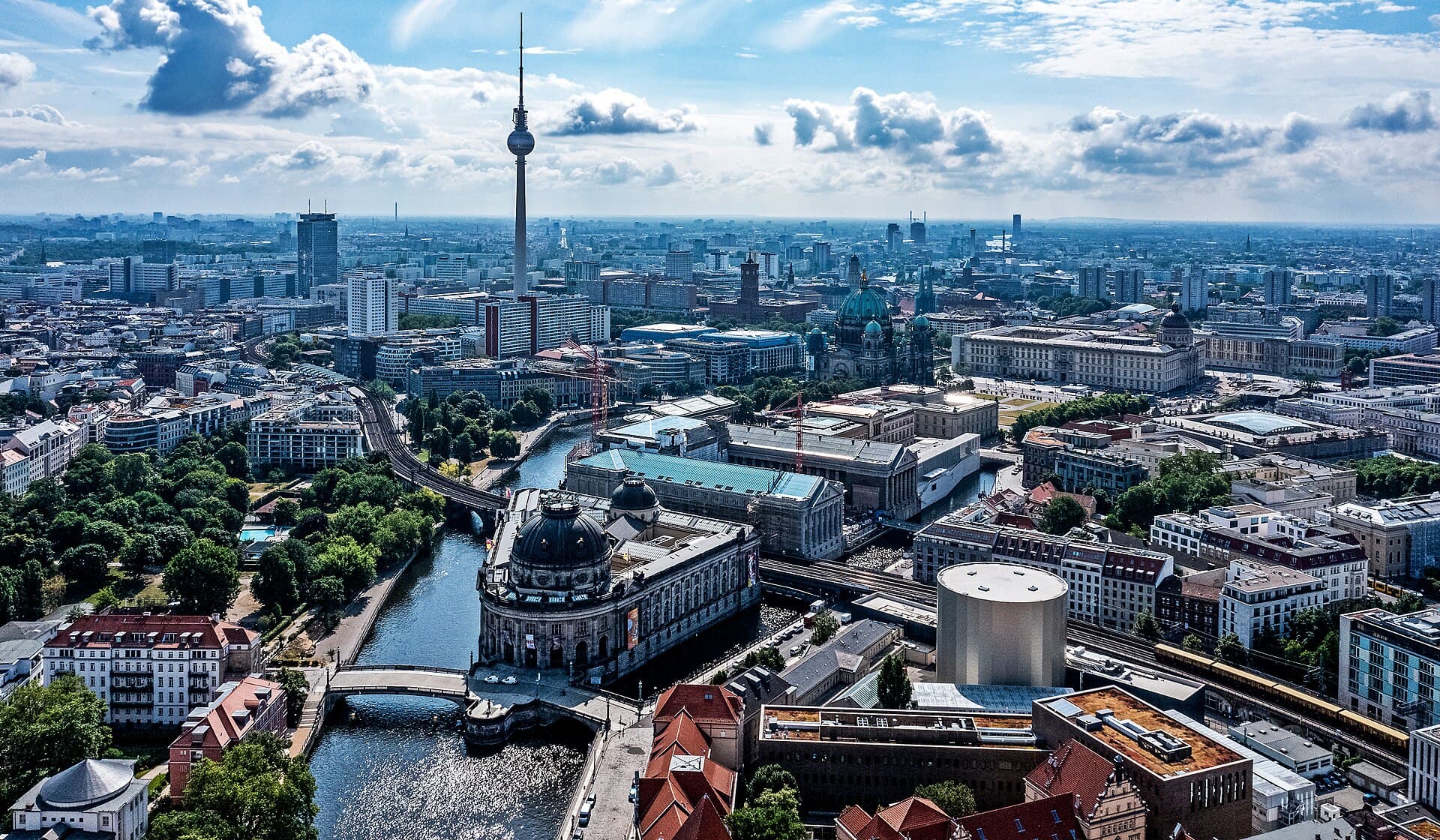 File:Museumsinsel Berlin Juli 2021 1 (cropped).jpg: Kasa Fue derivative work: Georgfotoart / CC BY-SA 4.0, via Wikimedia Commons
Visite audio autoguidée de Berlin — parcours GPS à pied, lecture hors ligne, narration en 32 langues.
“Ville d'échos et de réinventions, Berlin vous invite à parcourir ses strates d'histoire.”
Pas les cartes postales. Les histoires que même les habitants ignorent — soufflées à l'oreille, là où elles se sont passées.
L'emblématique Porte de Brandebourg, symbole de paix et d'unité, avait autrefois un passage central restreint.
Le dôme de verre du Reichstag est une merveille architecturale moderne, dont la transparence recèle une signification symbolique plus profonde.
Le vaste parc urbain de Berlin, le Tiergarten, a jadis servi un tout autre but pour la noblesse prussienne.
Découvrez tous les secrets de Berlin
Chaque adresse, chaque révélation en entier — dans ton oreille, là où elle s'est passée.
Tu choisis tes lieux. Tu marches. La voix te révèle ce que les autres ignorent.


Votre visite audioguidée de Berlin vous attend — choisissez vos lieux, votre langue, et lancez-vous dès votre arrivée.
AcheterLume intègre un guide en réalité augmentée. Levez votre téléphone : sa caméra montre la rue devant vous, avec une flèche lumineuse posée sur l'image réelle qui pointe toujours vers votre prochain arrêt — aucune carte à déchiffrer, aucun mauvais virage. Comme tout dans Lume, ça fonctionne entièrement hors-ligne.
Berlin est une ville qui défie toute catégorisation simple, un lieu où les échos d'un passé tumultueux rencontrent le pouls vibrant de la culture contemporaine. C'est une métropole qui a vu des empires s'élever et tomber, a été divisée et réunie, et s'est constamment réinventée. Du poids solennel de ses mémoriaux à la créativité exubérante de son art de rue, Berlin offre une expérience profonde et captivante à chaque visiteur.
Se promener dans Berlin, c'est traverser des siècles en un seul après-midi. Les grands boulevards prussiens mènent aux vestiges du mur de Berlin, tandis que l'architecture futuriste côtoie des bâtiments historiques méticuleusement restaurés. C'est une ville qui n'hésite pas à aborder son récit complexe, choisissant plutôt de l'intégrer au tissu de la vie quotidienne, invitant à la contemplation et à la conversation à chaque tournant.
## Des colonies médiévales à la capitale impériale Les origines de Berlin remontent à deux colonies marchandes du XIIIe siècle, Berlin et Cölln, situées de part et d'autre de la Spree. La première mention écrite de Cölln date de 1237, suivie de Berlin en 1244. Ces deux villages ont officiellement fusionné en 1307.
Au fil des siècles, l'importance politique et culturelle de Berlin s'est accrue, notamment sous la dynastie des Hohenzollern. Elle est devenue la capitale du margraviat de Brandebourg au XVe siècle, puis du Royaume de Prusse en 1701. Les XVIIIe et XIXe siècles ont vu Berlin prospérer comme centre des Lumières, de l'industrialisation et de l'innovation scientifique. En 1871, Berlin est devenue la capitale du nouvel Empire allemand unifié.
## Le tumultueux XXe siècle Le XXe siècle a apporté d'immenses changements et épreuves à Berlin. La République allemande a été proclamée dans le bâtiment du Reichstag en 1918, marquant la fin de la monarchie allemande. La ville a connu l'ère animée, mais politiquement chargée, de la République de Weimar avant la montée du nazisme en 1933. Berlin a subi d'importants dégâts pendant la Seconde Guerre mondiale, avec des bombardements significatifs à la fin de la guerre. Après 1945, Berlin a été divisée entre les puissances alliées, ce qui a conduit à la construction du mur de Berlin en 1961, séparant physiquement Berlin-Est et Berlin-Ouest. La Porte de Brandebourg, par exemple, se trouvait dans la zone restreinte de Berlin-Est à cette époque.
## Réunification et Berlin moderne La chute du mur de Berlin en 1989 a été un moment charnière, symbolisant la réunification de l'Allemagne. Le gouvernement allemand est revenu à Berlin depuis Bonn, et le bâtiment du Reichstag a subi une reconstruction importante, rouvrant au public en 1999 avec son dôme de verre emblématique. Aujourd'hui, Berlin témoigne de la résilience, une ville qui a affronté son passé et est devenue un centre mondial dynamique pour la culture, la politique et l'innovation.
Aucune visite à Berlin n'est complète sans découvrir la Porte de Brandebourg, un symbole durable de paix et d'unité qui a été témoin de siècles d'histoire allemande. À proximité, le Reichstag, siège du Parlement allemand, offre un impressionnant dôme de verre que les visiteurs peuvent gravir pour des vues panoramiques sur la ville et un aperçu symbolique de la chambre parlementaire en contrebas.
Plongez dans le passé poignant de la ville au Mémorial du mur de Berlin, un puissant rappel de la division et de la réunification éventuelle de la ville. Pour un moment de tranquillité, promenez-vous dans le Tiergarten, un vaste parc urbain qui était autrefois un terrain de chasse royal. Le parc contient également plusieurs sculptures notables, dont la Colonne de la Victoire (Siegessäule).
Explorez l'Île aux Musées, un site classé au patrimoine mondial de l'UNESCO, abritant cinq musées de renommée mondiale, dont le Musée de Pergame et l'Altes Museum. Pour une perspective différente sur l'histoire de Berlin, envisagez une visite de Berliner Unterwelten (Berlin souterrain), qui explore les abris anti-aériens de la Seconde Guerre mondiale et les tunnels utilisés pendant la Guerre Froide. Et pour un aperçu de la scène culinaire du Berlin moderne, assurez-vous de goûter un Döner Kebab, un plat largement considéré comme étant originaire de Berlin au début des années 1970.
La meilleure période pour visiter Berlin se situe généralement entre mai et septembre. Pendant ces mois, le temps est agréable avec des températures modérées et un ensoleillement abondant, idéal pour explorer les attractions extérieures de la ville et profiter des événements en plein air. Juin offre les journées les plus longues et des conditions parfaites avec des températures moyennes supérieures à 21 degrés Celsius. Bien que juillet et août soient également animés, la ville peut parfois connaître un temps désagréablement chaud et humide. Le printemps (mars à mai) et le début de l'automne (septembre et octobre) offrent également un temps doux et moins de foules.
Berlin dispose d'un système de transports en commun étendu et efficace, comprenant le U-Bahn (métro), le S-Bahn (train urbain), les tramways et les bus, ce qui facilite la navigation dans la ville. Envisagez l'achat d'une Berlin WelcomeCard pour des voyages illimités et des réductions sur les attractions. Bien que les cartes de crédit soient largement acceptées, il est toujours bon d'avoir quelques euros pour les petits achats ou les établissements qui peuvent n'accepter que les espèces. Le pourboire est une coutume en Allemagne, généralement autour de 5 à 10 % pour un bon service dans les restaurants. De nombreux musées et attractions populaires, en particulier le dôme du Reichstag, nécessitent une réservation en ligne à l'avance, alors planifiez à l'avance pour garantir vos heures d'entrée souhaitées.
Berlin en coréen, en chinois ou en hébreu — et dans 29 autres langues, chaque étape narrée par une voix native. La plus large gamme de langues de tous les audioguides autoguidés.
Disponible en :