Tierpark Berlin
A polar bear enclosure constructed from the remnants of a national bank.
Full story unlocks in the tour
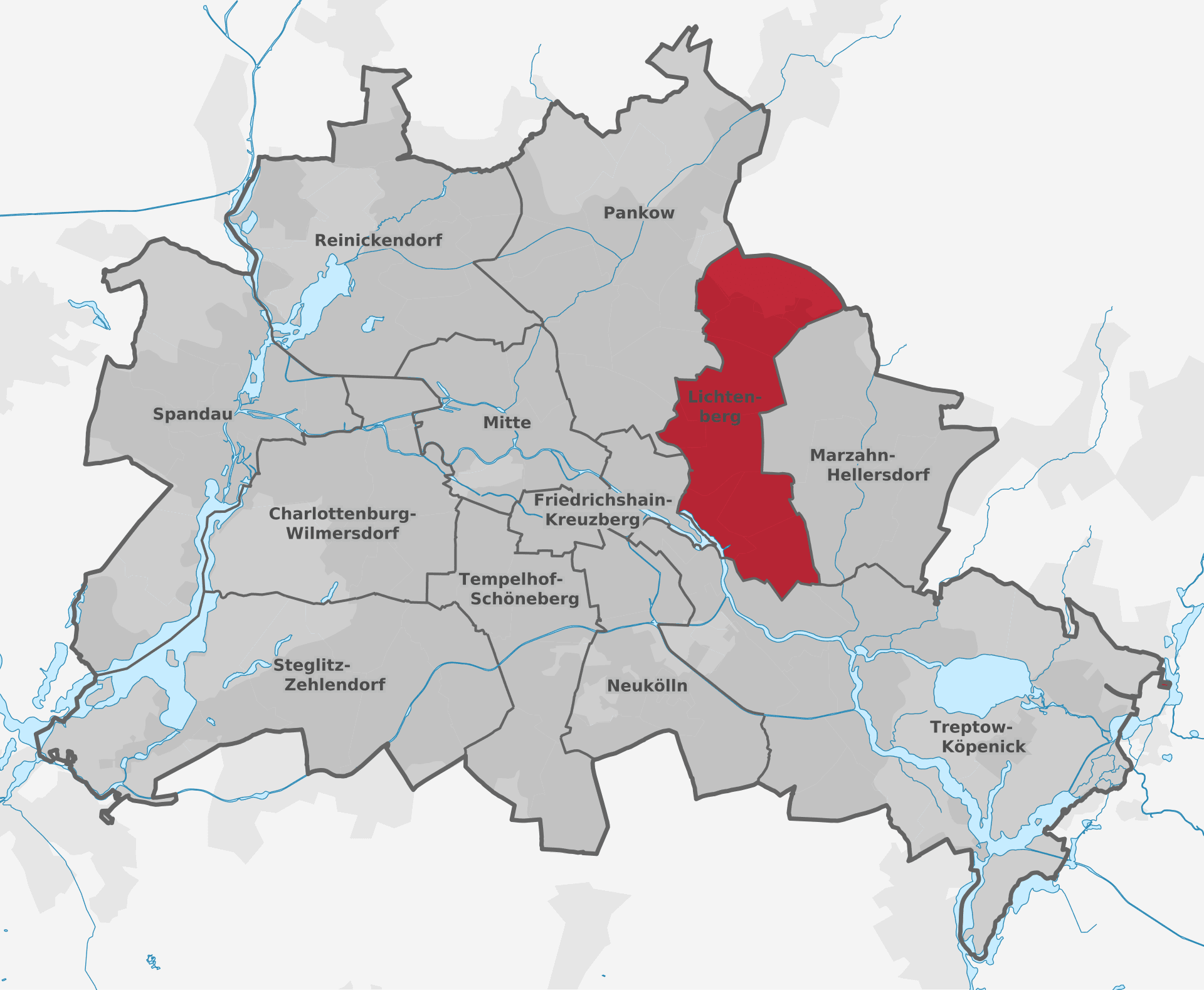 TUBS / Public domain, via Wikimedia Commons
Self-guided audio walking tour of Lichtenberg — GPS route, offline playback, story-driven narration in 32 languages.
“Beyond the Wall: Tracing East Berlin's Untold Stories.”
Not the postcards. The stories even locals don't know — whispered in your ear, right where they happened.
A polar bear enclosure constructed from the remnants of a national bank.
East Germany's secret police, the Stasi, sponsored a rather unusual zoo exhibit.
A piece of a colossal Soviet-era statue found a surprising new form within the zoo.
Discover every secret of Lichtenberg
Every address, every reveal in full — in your ear, right where it happened.
You pick your stops. You walk. The voice reveals what the others miss.
Your self-guided audio tour of Lichtenberg is ready — pick your landmarks, choose your language, and start the moment you arrive.
BuyLume has a built-in augmented-reality guide. Hold your phone up and its camera shows the street ahead of you, with a glowing arrow laid over the real view that always points to your next stop — no map to puzzle over, no wrong turns. Like everything in Lume, it works fully offline.
Lichtenberg, an eastern borough of Berlin, offers a compelling journey through Germany's complex 20th-century history, particularly its Cold War past. Removed from the central tourist circuits, this largely residential area provides a distinct perspective on East German life, characterized by its Soviet-style architecture and expansive housing projects. It's a place where the echoes of a divided city are still palpable, inviting those curious about the former German Democratic Republic (GDR) to explore its unique landmarks and narratives.
Beyond its historical significance, Lichtenberg is a district of unexpected contrasts. It is home to Tierpark Berlin, one of Europe's largest zoological gardens, offering a vast green escape. The area also holds a diverse population, reflected in its varied culinary scene, notably a significant Vietnamese community and the active Dong Xuan Center. For those seeking an authentic, less-traveled side of Berlin, Lichtenberg provides an intriguing blend of solemn history, expansive nature, and lively local culture.
The origins of Lichtenberg trace back to approximately 1230, founded during the German colonization of the Barnim territory. The historic village, often referred to as Alt-Lichtenberg, was first documented in 1288, with its estates acquired by Berlin in 1391. It endured significant hardship during the Thirty Years' War, remaining a small settlement outside Berlin's gates for centuries.
By the late 18th century, Prussian noblemen began building residences here, and in 1815, the Lichtenberg estate became the property of Prussian chancellor Karl August von Hardenberg. The 19th century saw its transformation into a residential area and Berlin suburb, culminating in the erection of a new town hall in 1898 and the granting of town privileges in 1907. However, its independence was short-lived; in 1920, Lichtenberg was incorporated into Greater Berlin.
The post-World War II era profoundly shaped Lichtenberg. During Berlin's partition, it became a crucial part of East Berlin. The district housed the main office of the Soviet Military Administration in Berlin before becoming the headquarters of the Stasi, the East German state security service. The Stasi's presence left an indelible mark, with its former headquarters now serving as the Stasi Museum, and the Berlin-Hohenschönhausen Memorial marking the site of its main remand prison.
In the 1970s, the East German government initiated extensive construction of pre-fabricated high-rise housing estates (Plattenbau) in the eastern part of the borough, significantly altering its landscape. These developments are still a defining characteristic of the area, offering a tangible glimpse into DDR architecture. Lichtenberg also holds the German-Russian Museum, the historical location where the German armed forces formally surrendered on May 8, 1945, marking the end of World War II in Europe.
Lichtenberg offers a compelling itinerary for those interested in 20th-century German history and a different side of Berlin. Begin at the Stasi Museum in Normannenstraße, located in the former headquarters of the East German secret police. Here, you can explore the permanent exhibition, 'State Security in the SED Dictatorship,' and even see the preserved office of Erich Mielke, the last head of the Stasi. A short distance north lies the Berlin-Hohenschönhausen Memorial, a former Stasi prison, offering a somber and important insight into the cruel conditions political prisoners endured.
For a change of pace, immerse yourself in nature at Tierpark Berlin, one of Europe's largest zoos by area. Home to over 6,500 animals from more than 750 species, it's a vast park that also encompasses the historic Friedrichsfelde Palace. Do not miss the Dong Xuan Center, a bustling indoor market that serves as a cultural and culinary hub for Berlin's Vietnamese community, offering a lively array of street food and goods. Explore the charming Kaskelkiez neighborhood, with its old buildings, quiet streets, and small cafes, offering a relaxed and authentic local atmosphere. The German-Russian Museum Berlin-Karlshorst is another significant historical site, marking the unconditional surrender of the German armed forces in 1945.
Lichtenberg can be visited year-round, but the spring (April to May) and autumn (September to October) months offer the most pleasant weather for exploring on foot. The mild temperatures are ideal for wandering through Tierpark Berlin or strolling along Rummelsburg Bay. Summer (June to August) is also a good option, though it can be warmer, and outdoor attractions like the Tierpark will be in full bloom. Winter (November to March) brings colder temperatures, but the indoor museums and cultural centers remain accessible and less crowded.
Lichtenberg is well-connected to central Berlin by public transport. The S-Bahn and U-Bahn (U5 line) networks serve the area, with Lichtenberg station being a key hub. Trams, particularly the M6 and M8 lines, offer an authentic East Berlin experience, as they are more prevalent in the former East. A train journey from Alexanderplatz to Lichtenberg takes approximately 13 minutes.
Accommodation options in Lichtenberg range from hotels to apartments, catering to various budgets. Dining is diverse, with a notable concentration of Asian restaurants, particularly Vietnamese, due to the significant local community. The Dong Xuan Center is a prime spot for traditional Vietnamese street food. You'll also find German-Mediterranean cuisine and traditional German eateries. For an overview of the district, the Museum Lichtenberg in the Stadthaus serves as an excellent starting point, providing information and cultural insights.
Lichtenberg in Korean, in Chinese or in Hebrew — and 29 more languages, every stop narrated by a native voice. The widest language range of any self-guided audio tour.
Available in: