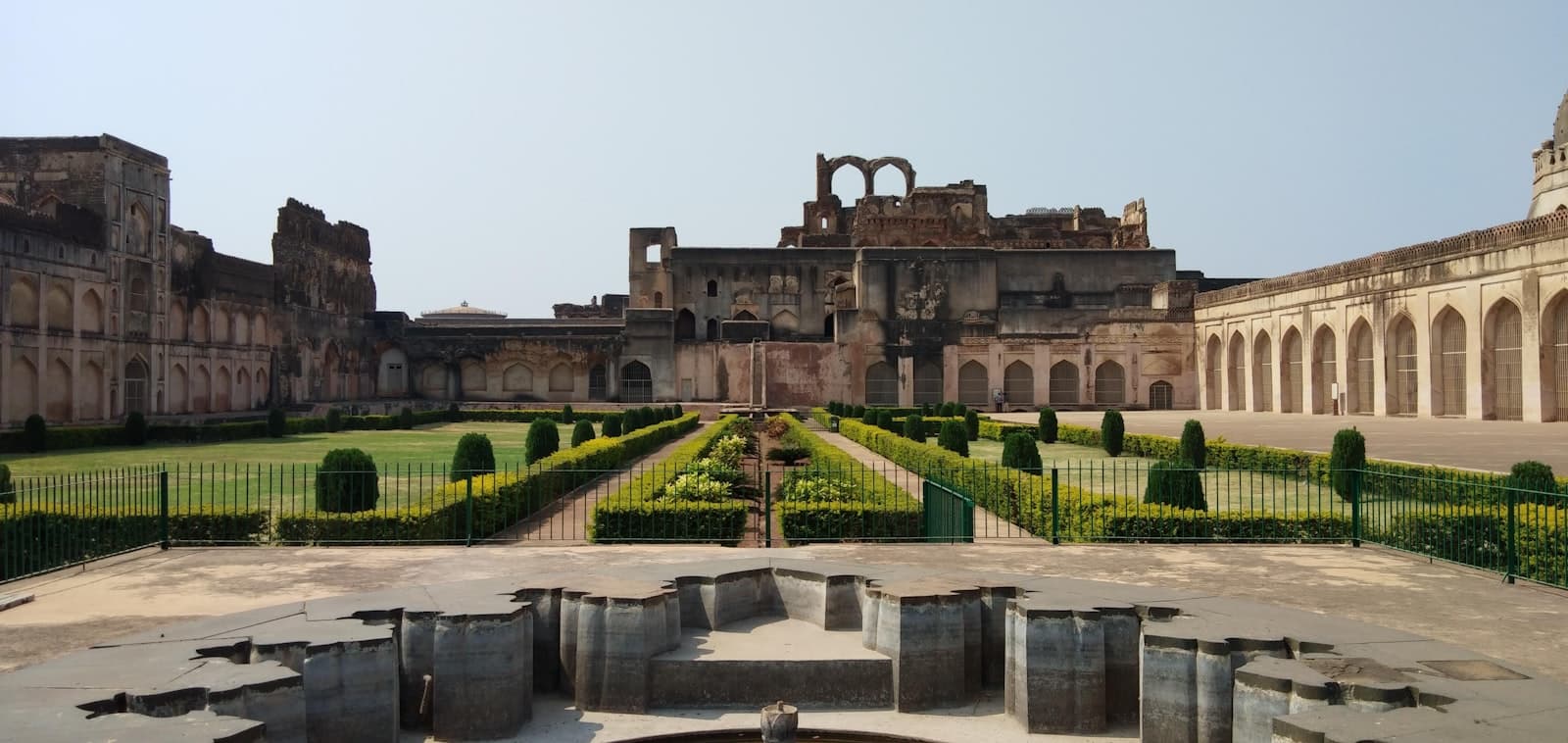
Bidar Fort
Beyond its imposing walls, a palace holds a secret of unique craftsmanship and surprising materials.
Full story unlocks in the tour
 Sunnya343 / CC BY-SA 4.0, via Wikimedia Commons
Self-guided audio walking tour of Bidar — GPS route, offline playback, story-driven narration in 32 languages.
“Where ancient stones echo forgotten empires.”
Not the postcards. The stories even locals don't know — whispered in your ear, right where they happened.
Beyond its imposing walls, a palace holds a secret of unique craftsmanship and surprising materials.
One royal tomb here tells a dramatic tale of a king so unpopular, even nature seemed to condemn him.
This grand medieval university, once a beacon of learning, met a fiery and accidental end.
Discover every secret of Bidar
Every address, every reveal in full — in your ear, right where it happened.
You pick your stops. You walk. The voice reveals what the others miss.


Your self-guided audio tour of Bidar is ready — pick your landmarks, choose your language, and start the moment you arrive.
BuyLume has a built-in augmented-reality guide. Hold your phone up and its camera shows the street ahead of you, with a glowing arrow laid over the real view that always points to your next stop — no map to puzzle over, no wrong turns. Like everything in Lume, it works fully offline.
Situated on the Deccan Plateau in northern Karnataka, Bidar is a city that offers a profound journey into India's medieval past. Unlike more frequented historical sites, Bidar maintains a serene charm, its ancient stones echoing narratives of powerful sultanates and artistic brilliance. The city's strategic location, with its milder climate compared to the surrounding lowlands, made it a coveted capital for various dynasties.
Bidar is a trove for those fascinated by Indo-Islamic architecture, a unique synthesis of Persian and Indian styles. From formidable forts to intricate palaces and revered spiritual sites, each monument tells a part of Bidar's enduring narrative. Beyond its grand structures, Bidar is also the birthplace of Bidriware, an exquisite metal handicraft that continues to be a symbol of its lasting artistic legacy.
The history of Bidar stretches back over two millennia, with traditional tales linking it to Viduranagara of the Mahabharata and the ancient kingdom of Vidarbha. However, Bidar truly rose to prominence in the medieval period. The region first came under the Delhi Sultanate in 1321 with the conquest by Prince Ulugh Khan, who would later become Muhammad bin Tughlaq.
A pivotal moment arrived in 1347 with the establishment of the Bahmani Sultanate. Initially, their capital was Gulbarga, but Sultan Ahmad Shah I, drawn by Bidar's favorable climate and fertile lands, shifted the capital here in 1427. This decision marked the beginning of a golden era for Bidar. The old fort was extensively rebuilt and expanded, transforming into the formidable Bidar Fort, an architectural marvel showcasing Persian influences. During this time, madrasas, mosques, palaces, and gardens flourished, reflecting the dynasty's patronage of art and culture.
One of the most influential figures during the Bahmani rule was Mahmud Gawan, who became prime minister in 1466. A scholar and statesman, he established the renowned Mahmud Gawan Madrasa, a residential university that attracted scholars from across the Islamic world. After the Bahmani Sultanate disintegrated in the late 15th century, Bidar came under the rule of the Barid Shahi dynasty, followed by the Bijapur Sultanate in 1619. The city then fell to the Mughal Empire in 1656 after a 21-day siege by Aurangzeb. In 1724, Bidar became part of the Asaf Jahi Kingdom of the Nizams, and it was eventually integrated into the state of Karnataka after India's independence in 1956.
Begin your exploration at the Bidar Fort, a sprawling 15th-century marvel that blends Persian and Indian architectural styles. Inside, discover the vivid Rangeen Mahal, adorned with intricate tile work and mother-of-pearl inlay, and the Solah Khamba Mosque with its sixteen stone pillars. Do not miss the Gagan Mahal, a royal palace that once housed the royal family.
Just a short distance from the fort are the Bahmani Tombs at Ashtur, grand mausoleums of Bahmani kings featuring impressive stucco work. The Mahmud Gawan Madrasa stands as a testament to medieval learning, its imposing structure still hinting at its past grandeur as a residential university.
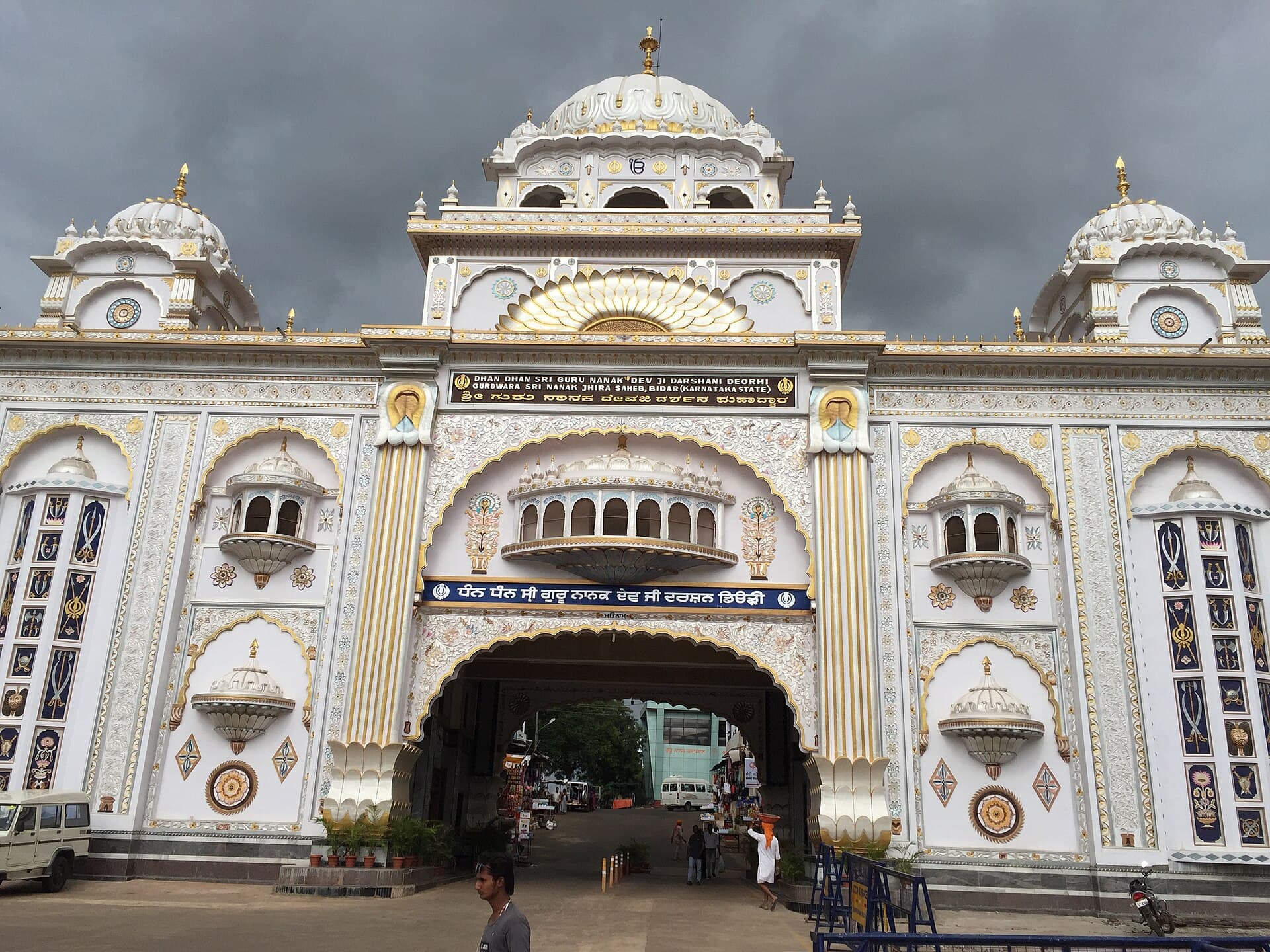
For a unique spiritual experience, visit the Shri Kshetra Jharni Narasimha Temple, a cave temple where devotees wade through water to reach the deity. Another significant religious site is the Gurudwara Nanak Jhira Sahib, a revered Sikh pilgrimage spot known for its miraculous spring.
Take a moment to climb the Chaubara Tower for panoramic views of Bidar city. And no visit to Bidar is complete without exploring the local workshops to witness the creation of Bidriware, the distinctive metal inlay craft for which the city is known.
The ideal time to visit Bidar is during the cooler months, from October to February. Temperatures during this period range from a pleasant 15 to 30 degrees Celsius, making it perfect for sightseeing and outdoor activities. While the monsoon season (June to September) brings lush greenery, it also features moderate to heavy rainfall. Summers (March to June) can be very hot, with temperatures soaring up to 40 degrees Celsius, and are generally considered the off-season.
Bidar is well-connected by various modes of transport. The nearest major airport is Rajiv Gandhi International Airport (HYD) in Hyderabad, approximately 150 km away, with direct flights from major Indian and international cities. Bidar has its own railway station, offering connectivity to cities like Bangalore, Mumbai, and Hyderabad. Regular bus services also connect Bidar to neighboring cities like Hyderabad and Kalaburagi.
Within Bidar, local transport primarily consists of buses and auto-rickshaws. Modest clothing is advised, especially when visiting religious sites. Many monuments close by early evening, so plan your day accordingly. Local guides can significantly enhance your understanding of the city's deep history.
Bidar in Korean, in Chinese or in Hebrew — and 29 more languages, every stop narrated by a native voice. The widest language range of any self-guided audio tour.
Available in: