Fohrenburg Brewery
Bludenz holds a deep connection to beer, yet the local brewery's celebrated product once took an unexpected form.
Full story unlocks in the tour
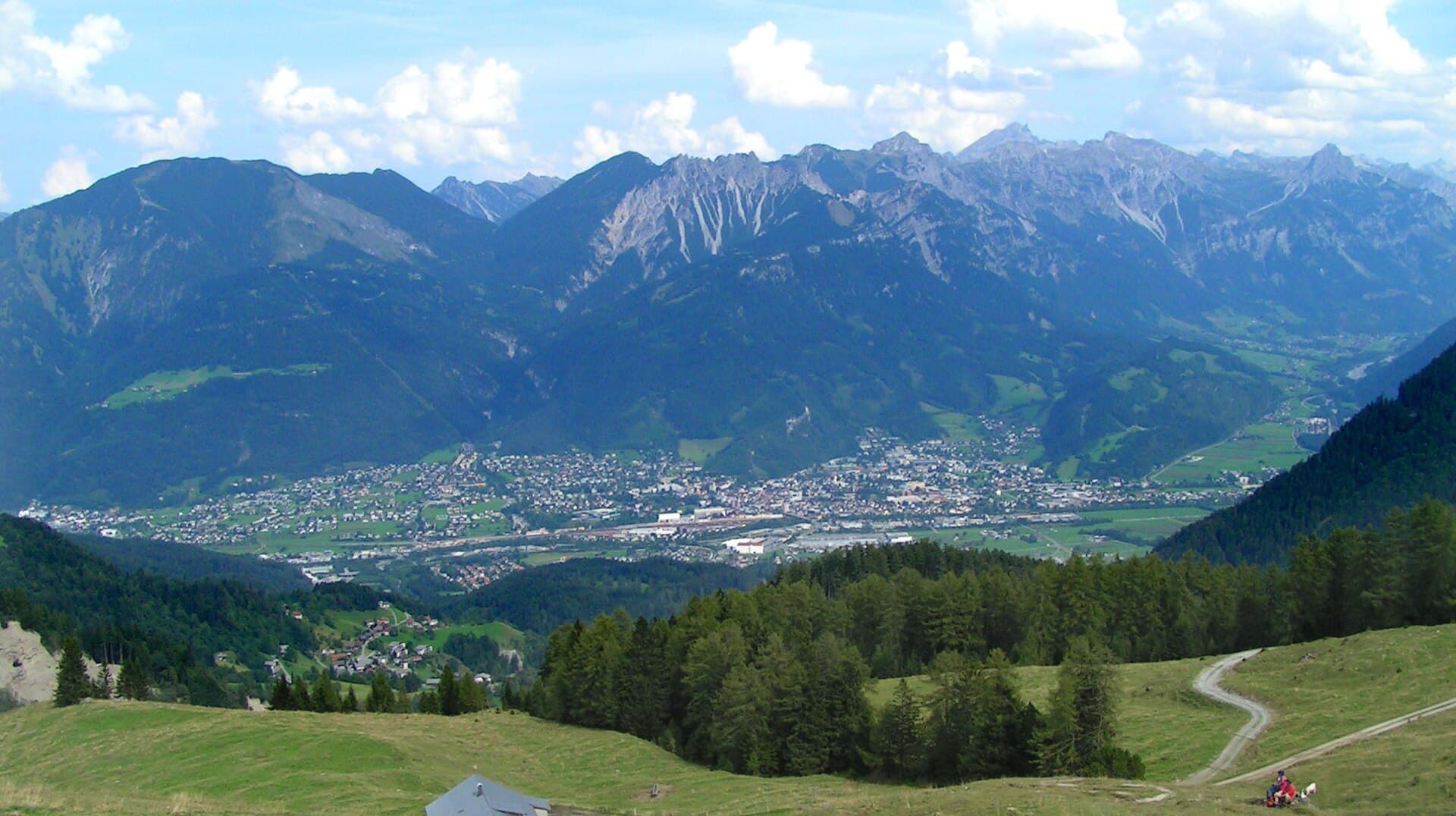 gsigsi / CC BY 2.5, via Wikimedia Commons
Self-guided audio walking tour of Bludenz — GPS route, offline playback, story-driven narration in 32 languages.
“Where the Alps begin their quiet ascent, marked by chocolate and brewing.”
Not the postcards. The stories even locals don't know — whispered in your ear, right where they happened.
Bludenz holds a deep connection to beer, yet the local brewery's celebrated product once took an unexpected form.
This prominent church in Bludenz safeguards a secret within its very foundations, hinting at a much older lineage.
Now a museum and dining establishment, Schattenburg Castle once played an unexpectedly active role in regional conflicts, extending far beyond its defensive walls.
Discover every secret of Bludenz
Every address, every reveal in full — in your ear, right where it happened.
You pick your stops. You walk. The voice reveals what the others miss.


Your self-guided audio tour of Bludenz is ready — pick your landmarks, choose your language, and start the moment you arrive.
BuyLume has a built-in augmented-reality guide. Hold your phone up and its camera shows the street ahead of you, with a glowing arrow laid over the real view that always points to your next stop — no map to puzzle over, no wrong turns. Like everything in Lume, it works fully offline.
Bludenz, an inviting town in the Austrian state of Vorarlberg, rests at the convergence of five valleys, establishing itself as a natural crossroads and a gateway to the grand Alps. Embraced by the Rätikon and Verwall mountains, the town offers a scenic tableau where alpine majesty meets urban quietude. Its strategic position has shaped its narrative, visible in the well-preserved medieval heart and the imposing Schattenburg Castle surveying the town.
Beyond its visual appeal, Bludenz possesses a distinct character, influenced by its industrial legacy, particularly in brewing and chocolate making. A walk through its pedestrianized old town reveals arcaded passages, historic structures, and welcoming squares. It serves as an ideal starting point for exploring Vorarlberg's varied landscapes, from gentle valley strolls to challenging mountain ascents, and provides a tranquil atmosphere away from more bustling tourist hubs.
## From Roman Outpost to Medieval Stronghold Bludenz's story reaches back to Roman times, with archaeological discoveries pointing to a settlement at this strategic intersection. Its name itself is believed to carry Roman origins, possibly derived from 'Pludentia.' However, the town truly began to flourish during the Middle Ages. The first recorded mention of Bludenz dates to 830 AD, but it was in the 13th century that it gained considerable importance with the construction of Schattenburg Castle. Erected by the Counts of Montfort, the castle became a potent emblem of their regional influence.
## Under Habsburg Rule and Economic Growth In 1394, Bludenz, along with the entire Montfort dominion, was sold to the Habsburgs, initiating a long era under Austrian governance. This transfer of authority brought stability and further development to the town. Throughout the 15th and 16th centuries, Bludenz thrived as a market center, benefiting from its location on significant trade routes connecting Italy, Switzerland, and Germany. Guilds prospered, and the town's affluence was reflected in its impressive burgher residences and public edifices.
## Industrial Revolution and Modern Era The 19th and 20th centuries introduced industrialization to Bludenz. The establishment of the Fohrenburg Brewery in 1881 and the Milka chocolate factory in 1901 solidified Bludenz's reputation for quality food and beverage production. These industries not only provided employment but also contributed to the town's identity. Despite the challenges of two World Wars, Bludenz maintained its character and continued to evolve. Today, it remains an important regional center, balancing its industrial inheritance with a growing focus on tourism and safeguarding its profound historical and cultural heritage.
Begin your journey at the Schattenburg Castle, a well-preserved medieval fortress that now houses a museum displaying regional history and a popular castle restaurant. From its battlements, absorb sweeping views of Bludenz and the surrounding valleys. Descend into the Old Town (Altstadt), a pedestrian area distinguished by inviting arcades, historic facades, and pleasant squares like the Kirchplatz. Here, you will find the Mutterkirche St. Laurentius, the town's principal parish church, with its striking Gothic architecture and a history spanning centuries. Do not overlook the Oberes Tor (Upper Gate), one of the last remaining medieval town gates. For a glimpse into local industry, consider a visit to the Fohrenburg Brewery, which offers tours and tastings, or explore the Milka Lädele, a shop dedicated to the celebrated chocolate produced in Bludenz.
Bludenz welcomes visitors throughout the year. Summer (June to September) is perfect for hiking, cycling, and enjoying outdoor gatherings, with agreeable temperatures. Winter (December to March) transforms the area into a snowy wonderland, ideal for skiing and snowboarding in nearby resorts like Brandnertal and Montafon. Spring and autumn provide milder weather, fewer crowds, and beautiful landscapes as nature awakens or prepares for the colder months.
Bludenz is readily accessible by train, with direct connections to major Austrian cities and neighboring countries. The closest international airports are Zurich (ZRH) and Innsbruck (INN), both offering onward train links. Within Bludenz, the town center is compact and best explored on foot. For excursions into the surrounding valleys and mountains, a reliable public bus network is available. Consider acquiring a Brandnertal, Bludenz, Klostertal Guest Card if staying in the region, which often provides complimentary public transport and reductions on attractions. The local currency is the Euro (€), and German is the official language, though English is widely understood in areas frequented by visitors.
Bludenz in Korean, in Chinese or in Hebrew — and 29 more languages, every stop narrated by a native voice. The widest language range of any self-guided audio tour.
Available in: