Basílica del Señor de los Milagros
Le crucifix à l'intérieur de la Basilique est plus qu'un bois sculpté ; sa teinte assombrie raconte une histoire de résilience et de foi profonde.
L'histoire complète se débloque dans le tour
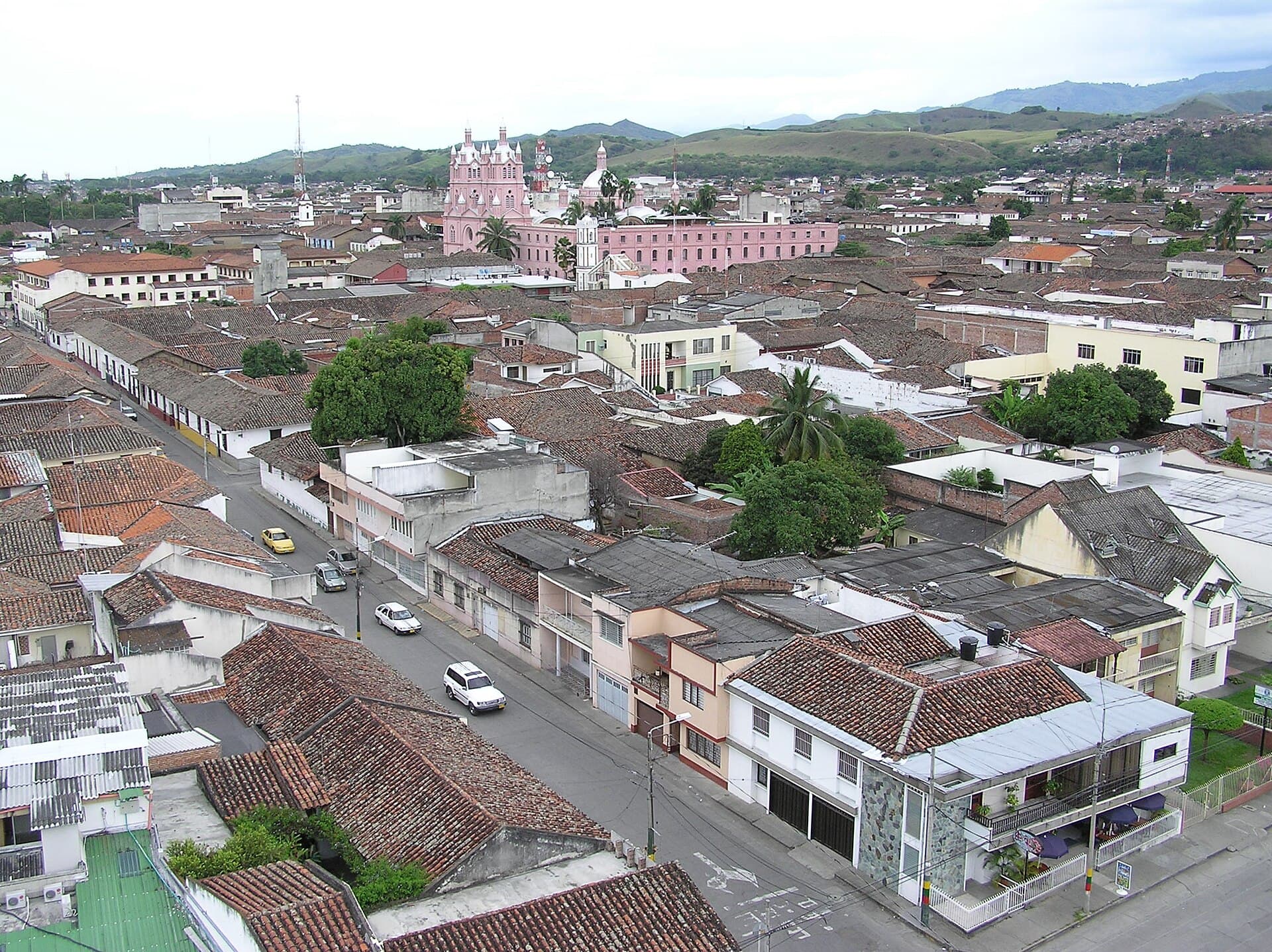 C arango / Public domain, via Wikimedia Commons
Visite audio autoguidée de Buga — parcours GPS à pied, lecture hors ligne, narration en 32 langues.
“Là où la dévotion et un héritage durable convergent dans la Valle del Cauca.”
Pas les cartes postales. Les histoires que même les habitants ignorent — soufflées à l'oreille, là où elles se sont passées.
Le crucifix à l'intérieur de la Basilique est plus qu'un bois sculpté ; sa teinte assombrie raconte une histoire de résilience et de foi profonde.
Buga abrite un phare, une structure inattendue étant donné sa situation intérieure, loin de toute mer.
L'image vénérée du Seigneur des Miracles, centrale à l'identité spirituelle de Buga, n'a pas été façonnée par des mains humaines, mais découverte dans une rivière.
Découvrez tous les secrets de Buga
Chaque adresse, chaque révélation en entier — dans ton oreille, là où elle s'est passée.
Tu choisis tes lieux. Tu marches. La voix te révèle ce que les autres ignorent.


Votre visite audioguidée de Buga vous attend — choisissez vos lieux, votre langue, et lancez-vous dès votre arrivée.
AcheterLume intègre un guide en réalité augmentée. Levez votre téléphone : sa caméra montre la rue devant vous, avec une flèche lumineuse posée sur l'image réelle qui pointe toujours vers votre prochain arrêt — aucune carte à déchiffrer, aucun mauvais virage. Comme tout dans Lume, ça fonctionne entièrement hors-ligne.
Guadalajara de Buga, communément appelée Buga, est une ville du département de Valle del Cauca en Colombie, célébrée pour sa profonde signification spirituelle et son architecture coloniale bien préservée. En tant que l'une des 'Pueblos Patrimonio' (Villes du Patrimoine) désignées de Colombie, Buga offre une évasion tranquille avec un mélange distinctif de foi, d'héritage durable et de splendeur naturelle. Chaque année, des millions de pèlerins se rendent dans la ville pour visiter la Basílica del Señor de los Milagros, une importante église catholique romaine abritant une image miraculeuse du Christ.
Au-delà de son rôle de destination de pèlerinage, le centre historique de Buga invite à l'exploration avec ses rues charmantes, ses maisons traditionnelles et ses places verdoyantes. La ville, avec une population d'environ 117 000 habitants, maintient une atmosphère détendue, permettant aux visiteurs de s'immerger dans le rythme authentique de la vie sud-américaine. Entourée de collines verdoyantes et de plaines fertiles où la canne à sucre et le café sont cultivés, Buga offre également des opportunités d'expériences en plein air au milieu de ses paysages pittoresques.
## Premières Fondations et Époque Coloniale Buga est l'une des plus anciennes villes de Colombie, ses origines remontant au milieu du XVIe siècle. La première colonie, nommée Nueva Jerez de los Caballeros, fut établie vers 1555 par Giraldo Gil de Estupiñán sous la directive du conquistador espagnol Sebastián de Belalcázar. L'emplacement de la ville a changé plusieurs fois avant son établissement définitif entre 1570 et 1573, lorsque le gouverneur Jerónimo de Silva ordonna un déplacement vers son site actuel. Elle fut alors nommée Guadalajara de Buga, honorant à la fois la ville espagnole de Guadalajara et la rivière locale. Pendant la période coloniale, Buga prospéra en tant que centre agricole, notamment pour l'élevage bovin, attirant de nombreuses familles espagnoles aisées à s'installer dans la ville.
## Signification Religieuse et Croissance L'importance religieuse de Buga commença à la fin du XVIe siècle, s'étendant considérablement au XVIIIe siècle. Cela fut largement dû à la découverte miraculeuse du crucifix 'Señor de los Milagros' (Seigneur des Miracles) dans la rivière Guadalajara vers 1580. L'image, censée posséder des propriétés miraculeuses, devint un point focal pour les pèlerins, transformant Buga en une destination de pèlerinage significative. La construction de la Basílica del Señor de los Milagros, une grande église néo-gothique, commença en 1875 et fut inaugurée en 1907 pour abriter cette image vénérée.
## Indépendance et Héritage Moderne Buga a joué un rôle notable dans la lutte pour l'indépendance de la Colombie. Simón Bolívar, 'el libertador', a visité la ville à deux reprises, avec des plaques commémoratives marquant sa présence. En 1884, Buga devint officiellement une municipalité. Plus récemment, en 2013, Buga fut désignée 'Pueblo Patrimonio' (Ville du Patrimoine) par le Ministère de la Culture colombien, reconnaissant son architecture coloniale et républicaine bien préservée. Aujourd'hui, Buga continue d'embrasser sa double identité de centre spirituel et de ville riche en héritage culturel et historique, offrant aux visiteurs un voyage paisible à travers le temps.
L'attraction principale de Buga est la Basílica del Señor de los Milagros, une église catholique romaine proéminente connue pour abriter l'image miraculeuse du Seigneur des Miracles. Son impressionnante architecture néo-gothique, avec sa maçonnerie de briques roses saisissante et ses deux tours à dôme, se distingue des bâtiments coloniaux de la ville. Les visiteurs peuvent explorer l'intérieur de la basilique, un espace de profonde dévotion, et observer le crucifix vénéré exposé au-dessus de l'autel principal.
Adjacent à la basilique, le Museo del Señor de los Milagros offre un aperçu de l'histoire et de la dévotion entourant l'image miraculeuse, avec des expositions allant du XVIIIe siècle à nos jours.
Une promenade dans le centre historique de Buga révèle une architecture coloniale et républicaine bien préservée, avec des rues charmantes, des maisons traditionnelles et des cafés accueillants. Les principaux points de repère incluent la Cathédrale de San Pedro Apóstol et l'Église de Santo Domingo de Guzmán, toutes deux ayant une longue histoire de reconstruction et de restauration. Le Parque José María Cabal, le parc central de la ville, est un endroit agréable pour se détendre à l'ombre des arbres et observer la vie locale. Pour des vues imprenables sur Buga et la Cordillère Occidentale environnante, montez les 134 marches du Monumento El Faro, un phare intérieur distinctif.
Au-delà de la ville, la Réserve Naturelle Laguna de Sonso offre une expérience contrastée avec ses zones humides, sa faune aviaire abondante et des opportunités d'observation des oiseaux et de promenades dans la nature.
Buga connaît un climat constamment chaud et humide tout au long de l'année, avec des températures moyennes fluctuant minimalement entre 18,5°C et 19,2°C (65-67°F). Les maximales diurnes atteignent généralement 21,6°C à 22,6°C (71-73°F), tandis que les minimales nocturnes sont autour de 15,1°C à 16,0°C (59-61°F). Bien que la pluie soit fréquente tout au long de l'année, se produisant souvent presque quotidiennement sous forme d'averses légères ou modérées, il n'y a pas de saison sèche distincte. Les mois avec le moins de précipitations sont généralement janvier (environ 17 mm) et juillet (environ 2,3 pouces), tandis que novembre et mai connaissent des précipitations plus élevées. Les périodes les plus favorables pour les activités par temps chaud sont généralement de début juin à fin septembre et de mi-décembre à fin janvier, lorsque le ciel a tendance à être plus clair. Cependant, Buga est considérée comme une destination toute l'année en raison de ses températures stables.
Buga est facilement accessible en bus depuis les villes voisines comme Cali (environ 1 heure), Pereira (environ 2,5 heures) ou Darién sur le Lago Calima (environ 1 heure). La ville est également à moins d'une heure de route de l'aéroport Alfonso Bonilla Aragón, qui dessert Cali. Une fois à Buga, la plupart des attractions du centre-ville sont facilement accessibles à pied. Des taxis et des bus locaux sont disponibles pour les distances plus longues.
Compte tenu du climat chaud et humide, emportez des vêtements légers et respirants faits de tissus naturels comme le coton ou le lin. Des chaussures de marche confortables sont essentielles pour explorer les rues de la ville et les sites religieux. Comme la pluie est fréquente, une veste imperméable légère ou un parapluie est conseillé. Lors de la visite de la Basilique et d'autres sites religieux, habillez-vous modestement et maintenez une attitude respectueuse, en parlant à voix basse et en évitant la photographie intrusive pendant les services. La monnaie locale est le Peso colombien (COP) ; bien que certains endroits acceptent les cartes de crédit, il est prudent d'avoir de l'argent liquide pour les petits achats.
Buga en coréen, en chinois ou en hébreu — et dans 29 autres langues, chaque étape narrée par une voix native. La plus large gamme de langues de tous les audioguides autoguidés.
Disponible en :