Galeras Volcano
Pasto is built at the foot of one of Colombia's most active volcanoes, but its eruptions once led to a tragic scientific expedition.
Full story unlocks in the tour
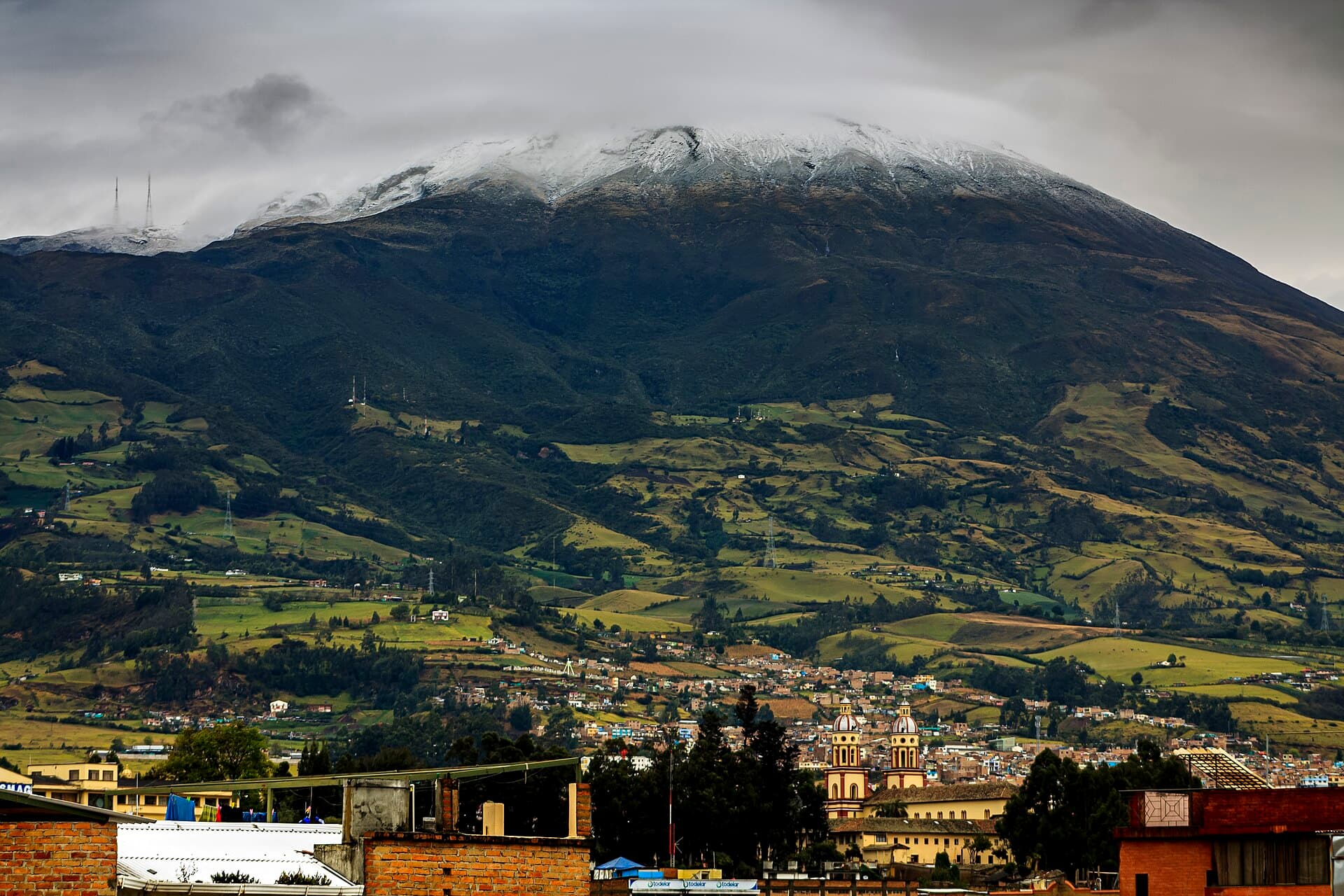 Luis Eduardo White Patiño / CC BY-SA 4.0, via Wikimedia Commons
Self-guided audio walking tour of Pasto — GPS route, offline playback, story-driven narration in 32 languages.
“Where the Andes meet artistry and ancient traditions.”
Not the postcards. The stories even locals don't know — whispered in your ear, right where they happened.
Pasto is built at the foot of one of Colombia's most active volcanoes, but its eruptions once led to a tragic scientific expedition.
In Pasto, a simple 'hello' isn't always enough to be polite.
Beyond its expansive views, this high-Andes lake holds a surprising connection to one of the world's largest rivers.
Discover every secret of Pasto
Every address, every reveal in full — in your ear, right where it happened.
You pick your stops. You walk. The voice reveals what the others miss.


Your self-guided audio tour of Pasto is ready — pick your landmarks, choose your language, and start the moment you arrive.
BuyLume has a built-in augmented-reality guide. Hold your phone up and its camera shows the street ahead of you, with a glowing arrow laid over the real view that always points to your next stop — no map to puzzle over, no wrong turns. Like everything in Lume, it works fully offline.
Pasto, officially known as San Juan de Pasto, is the capital of the Nariño department in southwestern Colombia. Situated in the Atriz Valley, it rests at an elevation of approximately 2,527 meters (8,291 feet) at the base of the active Galeras Volcano. Often referred to as the "Surprise City," Pasto captivates visitors with its distinct blend of indigenous heritage, Spanish colonial influences, and Andean traditions.
This Andean city, home to around 390,000 residents, offers a cooler climate compared to other parts of Colombia due to its high altitude. Pasto has been a significant administrative, cultural, and religious center since colonial times, earning it the nickname "the theological city of Colombia." It is also a hub for artisanal production, especially recognized for its intricate wood carving, embossed leather, and the unique Pasto varnish.
The history of Pasto is a layered narrative, beginning with the indigenous Quillacinga people who inhabited the Atriz Valley. The city's name itself is derived from the Pastos, another indigenous group in the region. While the exact founding date is debated, Spanish conquistadors established the settlement between 1537 and 1539. Sebastián de Belalcázar initially founded Pasto in 1537, and it was later moved to its current location and formally established as "San Juan de Pasto" by Lorenzo de Aldana in 1539.
During the colonial era, Pasto quickly grew into an important cultural and religious center. Its strategic location also made it a vital administrative and commercial hub, controlling traffic between Ecuador and the Cauca Valley. However, this prominence also led to a distinctive political stance during the Wars of Independence against Spain. Pasto became a staunch royalist city, earning it the moniker "The Royal Bastion." This loyalty resulted in numerous conflicts, including the Battle of Bomboná in 1822, where Simón Bolívar's forces met fierce resistance.
Partly due to its royalist past and geographical isolation, Pasto remained somewhat cut off from the rest of Colombia after independence. Earthquakes have unfortunately destroyed some of its architectural heritage over time, though several churches and palaces have been rebuilt in their original styles. Today, Pasto continues to celebrate its complex history, evident in its architecture, traditions, and the enduring spirit of its people.
Pasto's city center is a walkable area with many points of interest. The Plaza de Nariño serves as the city's main square, encircled by administrative buildings and colonial architecture, featuring a statue of independence leader Antonio Nariño. The Pasto Cathedral, also known as the Temple of the Sacred Heart, is a neoclassical red-brick building consecrated in 1920, notable for its detailed interior and a statue of the Sacred Heart of Jesus. Other significant churches include Our Lady of Mercy and the Templo de Cristo Rey.
For a glimpse into local art and traditions, the Taminango Museum of Arts and Traditions is housed in a 17th-century building, one of the city's oldest, and is recognized as a national monument. The Carnaval Museum (Pandiaco Cultural Center) displays the impressive, handcrafted floats from Pasto's celebrated Carnaval de Negros y Blancos.
Beyond the city, Laguna de la Cocha is a volcanic crater lake approximately 20 km away, offering boat rides to La Corota Island, Colombia's smallest national park and a wildlife sanctuary. The lakeside village of El Encano is known for its Swiss-style wooden homes. For a truly iconic experience, the Las Lajas Sanctuary, a neo-Gothic basilica built into a canyon of the Guáitara River, is located about 11 km from the Ecuadorian border.
Pasto experiences relatively consistent, cool temperatures throughout the year due to its high altitude, with average highs between 15 and 18 °C (59.0 and 64.4 °F). The city has a wet climate, with a distinct rainy season from October to May, and November being the wettest month. The drier season runs from June to September, and a shorter dry period occurs from December to February. For warm-weather activities and general outdoor tourism, the best time to visit is from mid-July to early October, with a peak in early September. The Carnaval de Negros y Blancos, a major cultural event, takes place annually from January 2nd to 6th.
The local currency in Pasto is the Colombian Peso (COP). Spanish is the primary language, and while some English may be spoken in larger hotels or with tour agencies, it's advisable to learn basic Spanish phrases or use a translation app. Prepaid SIM cards are readily available from providers like Claro, Movistar, or Tigo.
Pasto is generally considered safe during daylight hours, but discretion is advised when walking alone at night, especially in unfamiliar or poorly lit areas. Taxis are inexpensive and recommended for evening travel. The city's high altitude (around 2,527 meters) means visitors might experience some shortness of breath initially; drinking local fruit teas can help with altitude sickness. The climate is cool and often rainy, so pack layers and a jacket.
Pasto in Korean, in Chinese or in Hebrew — and 29 more languages, every stop narrated by a native voice. The widest language range of any self-guided audio tour.
Available in: