Canmore Engine Bridge
This railway bridge, seemingly an ordinary crossing, holds an unexpected connection to a post-apocalyptic narrative.
Full story unlocks in the tour
 Daniel Patterson / CC BY 3.0, via Wikimedia Commons
Self-guided audio walking tour of Canmore — GPS route, offline playback, story-driven narration in 32 languages.
“Where mountain adventure meets small-town character.”
Not the postcards. The stories even locals don't know — whispered in your ear, right where they happened.
This railway bridge, seemingly an ordinary crossing, holds an unexpected connection to a post-apocalyptic narrative.
The brilliant turquoise waters of Grassi Lakes are a familiar sight, yet few know the story of the individual who made them accessible.
Beyond its Olympic heritage and world-class pathways, this park carries a deeper, industrial past.
Discover every secret of Canmore
Every address, every reveal in full — in your ear, right where it happened.
You pick your stops. You walk. The voice reveals what the others miss.


Your self-guided audio tour of Canmore is ready — pick your landmarks, choose your language, and start the moment you arrive.
BuyLume has a built-in augmented-reality guide. Hold your phone up and its camera shows the street ahead of you, with a glowing arrow laid over the real view that always points to your next stop — no map to puzzle over, no wrong turns. Like everything in Lume, it works fully offline.
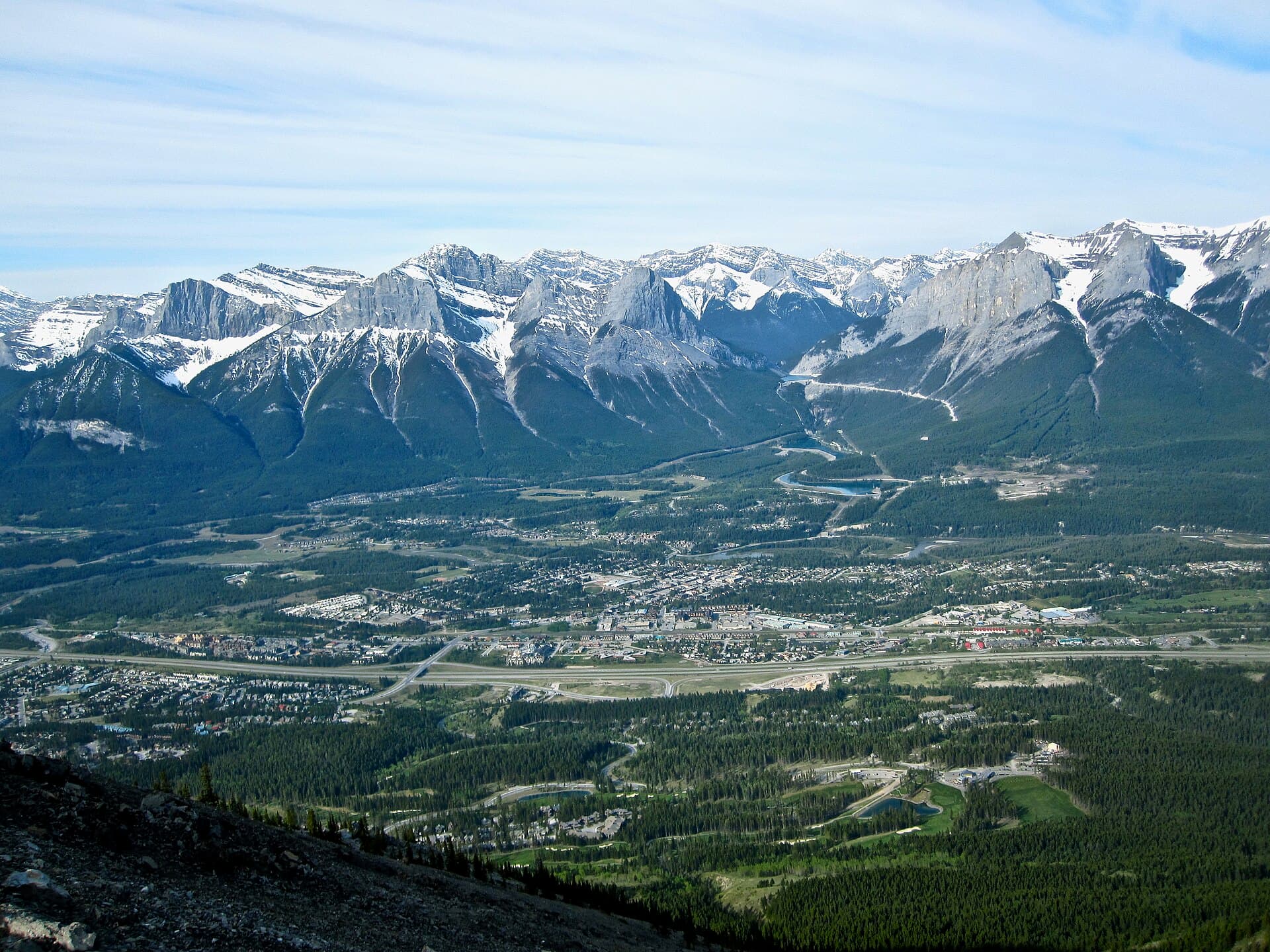
Canmore, Alberta, is a spirited mountain community in the Bow Valley, approximately 81 kilometers west of Calgary and a brief drive from the entrance to Banff National Park. Embraced by the grand peaks of the Canadian Rockies, including the distinctive Three Sisters, Canmore offers a blend of intimate town character and adventurous spirit. It serves as a gateway to Kananaskis Country, providing extensive opportunities for outdoor pursuits throughout the year.
Once a coal mining settlement, Canmore has transformed into a cherished destination for those who appreciate nature and culture. Its evolution was significantly propelled by hosting the Nordic events for the 1988 Calgary Winter Olympics, which established the town as a premier location. Today, Canmore is recognized for its rugged summits, clear rivers, and a wide array of recreational activities, from hiking and cycling to cross-country skiing and dog sledding.
The town maintains a lively atmosphere, centered on an outdoor-driven way of life. Visitors can explore locally-owned establishments, art galleries, and diverse dining options, enjoying a more genuine and less congested experience compared to some of its national park neighbors. Canmore offers a welcoming base for exploring the Canadian Rockies, presenting both demanding adventures and tranquil natural splendor.
Canmore's beginnings trace back to the autumn of 1883 when it was established as a railway town by the Canadian Pacific Railway (CPR). Donald A. Smith, a director of the CPR, formally named the town in 1884 after Malcolm III of Scotland, also known as Canmore, a Gaelic term signifying "Big Chief."
The town's trajectory was largely shaped by the discovery of high-quality semi-anthracite coal in the Cascade Coal Basin, an expansive deposit stretching over 155 square kilometers. In 1886, Queen Victoria granted a coal mining charter, and the No. 1 mine commenced operations in 1887 along Canmore Creek. This coal, known for burning intensely with minimal smoke, was ideal for generating steam, making Canmore a vital supplier for the CPR.
Coal mining became the cornerstone of Canmore's economy, flourishing through the early 20th century. By 1916, miners, including some Ukrainian prisoners from the Banff internment camp, were extracting around 1,100 tons of coal daily. The industry saw a peacetime record of 271,000 tons in 1929, though sales sharply declined during the Great Depression. World War II brought a resurgence in demand, with yearly sales reaching over 340,000 tons by 1944. In the 1950s and 60s, as railways transitioned to diesel and natural gas replaced coal for heating, Canmore Mines Ltd. found new markets in the Japanese steel and chemical industries and began producing coke.
Despite its long existence, the coal mining era in Canmore concluded in 1979 when Canmore Mines Ltd. ceased operations, leaving 120 miners without work. This closure ignited concerns for the town's future. However, Canmore's fortunes dramatically shifted when it was chosen to host the Nordic events for the 1988 Calgary Winter Olympic Games. This pivotal moment transformed Canmore from a coal town into a recognized destination, drawing tourists, developers, and new residents. Since the Olympics, Canmore's population has more than tripled, solidifying its identity as a spirited mountain lifestyle community and a favored hub for outdoor enthusiasts.
Canmore presents a varied array of attractions, blending its natural splendor with recreational opportunities. The Canmore Nordic Centre Provincial Park is a world-class facility, originally constructed for the 1988 Winter Olympics. It features over 100 km of trails for cross-country skiing in winter and mountain biking and hiking in summer. Guests can also enjoy disc golf and trail running here.
For those who enjoy walking, Grassi Lakes offers two exquisite turquoise lakes, reachable via an easy to moderate path that provides views of a waterfall and the surrounding mountains. The Policeman's Creek Boardwalk offers a tranquil, elevated route through wetlands, leading into downtown Canmore. The Canmore Engine Bridge, a historic railway structure, provides expansive views of the Bow River and the notable Ha Ling Peak and Mount Rundle.
Downtown Canmore itself is a lively area with pedestrian-only sections from May to October, featuring distinctive boutiques, art galleries, and diverse restaurants. The Elevation Place is Canmore's contemporary recreation center, housing an 8-lane swimming pool, a climbing wall, fitness rooms, a library, and an art gallery. For sweeping views, consider a half-day ascent up Ha Ling Peak, a challenging climb that rewards with broad vistas of the town and its surroundings.
Canmore is a year-round destination, with each season offering distinct advantages depending on your interests.
Summer (June-August) is the busiest season, marked by warm, sunny days ideal for hiking, biking, canoeing, and festivals. Expect animated streets and full patios.
Fall (September-October) brings cooler temperatures, fewer visitors, and the spectacular golden larch trees, making it perfect for quieter mountain excursions and photography.
Winter (November-early April) transforms Canmore into a snowy landscape, offering world-class skiing, snowboarding, ice climbing, and dog sledding. The Bow Valley generally experiences more moderate winter weather compared to higher elevations.
Spring (April-May) is a transitional season with fewer guests, good value, and opportunities for lower-elevation walks as snow melts and wildlife begins to emerge.
Canmore is readily accessible, situated about an hour's drive west of Calgary International Airport (YYC). Shuttle services are available from Calgary, or you can rent a car for greater flexibility in exploring the broader region. While a vehicle is convenient, Canmore is very walkable, and the ROAM Transit service connects within town and to Banff.
Accommodation options range from economical hotels to luxurious stays and numerous vacation rentals, with downtown offering a high concentration of choices. Canmore has a modern hospital, pharmacies, and grocery stores like Sobeys and SaveWay. You will not find large shopping centers, but rather distinctive, locally-owned establishments.
Remember that if you plan to visit Banff National Park, a park pass is required, though it may be complimentary during specific promotional periods. Be mindful of wildlife, as elk are frequent visitors to town and bears are present on trails; carrying bear spray is advisable.
Canmore in Korean, in Chinese or in Hebrew — and 29 more languages, every stop narrated by a native voice. The widest language range of any self-guided audio tour.
Available in: