Ashford Castle
Before its transformation into a globally recognized luxury hotel, Ashford Castle was owned by a family more celebrated for their brewing empire than for hospitality.
Full story unlocks in the tour
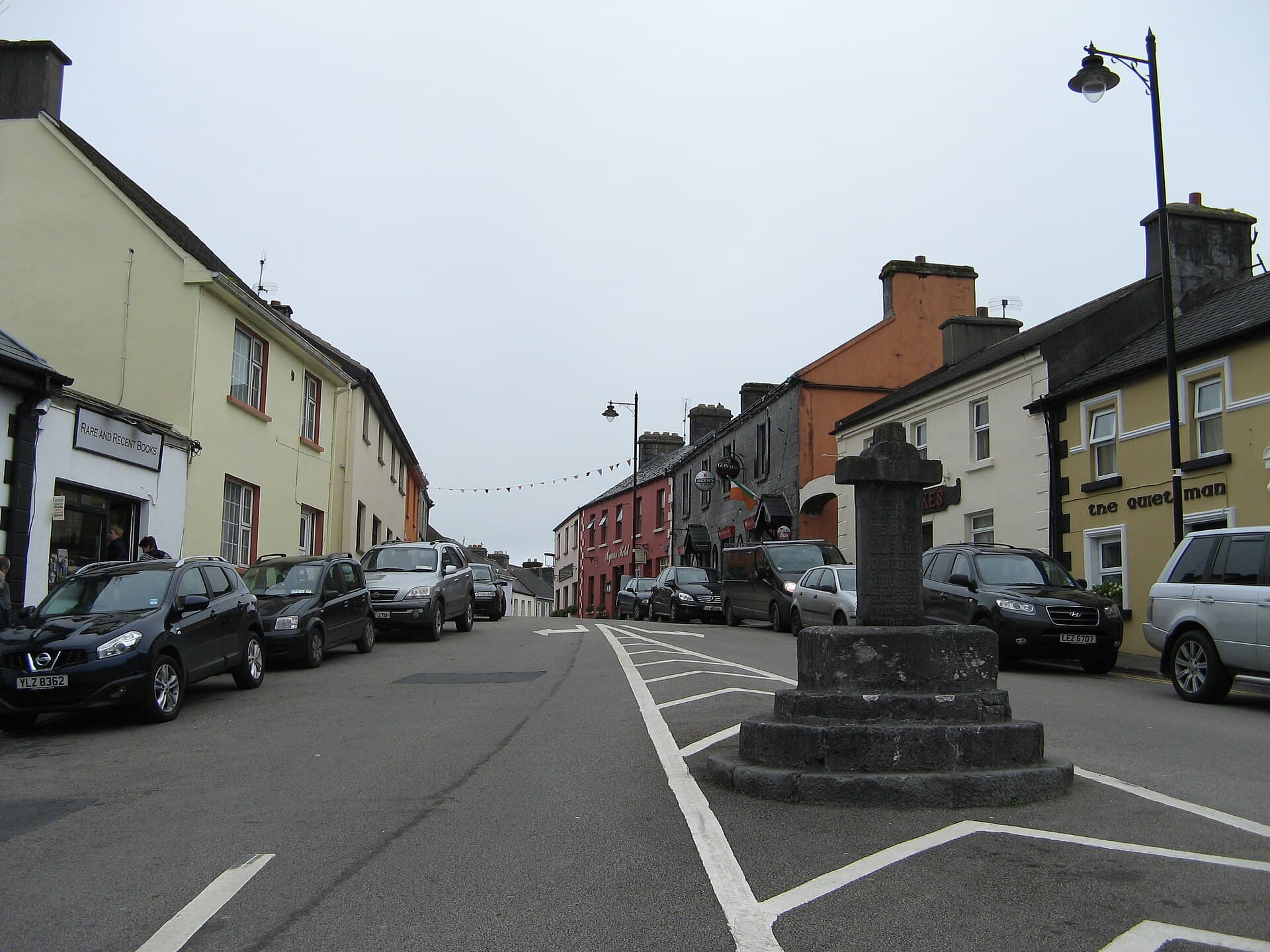 ArséniureDeGallium / CC BY-SA 3.0, via Wikimedia Commons
Self-guided audio walking tour of Cong — GPS route, offline playback, story-driven narration in 32 languages.
“Where ancient stones recount sagas of monks, fortresses, and cinematic dreams.”
Not the postcards. The stories even locals don't know — whispered in your ear, right where they happened.
Before its transformation into a globally recognized luxury hotel, Ashford Castle was owned by a family more celebrated for their brewing empire than for hospitality.
Examine the intricate carvings adorning the arches of Cong Abbey, and you might discern a creature quite unexpected within a medieval Irish monastery.
This charming stone edifice on the river appears to be a whimsical architectural flourish, yet it was ingeniously designed with a practical purpose for the monks of Cong Abbey.
Discover every secret of Cong
Every address, every reveal in full — in your ear, right where it happened.
You pick your stops. You walk. The voice reveals what the others miss.


Your self-guided audio tour of Cong is ready — pick your landmarks, choose your language, and start the moment you arrive.
BuyLume has a built-in augmented-reality guide. Hold your phone up and its camera shows the street ahead of you, with a glowing arrow laid over the real view that always points to your next stop — no map to puzzle over, no wrong turns. Like everything in Lume, it works fully offline.
Cong, a village in County Mayo, Ireland, is a place where history and legend intertwine amidst a landscape of verdant woodlands and shimmering lakes. Situated on an island formed by the River Cong, which disappears and reappears through a subterranean system, the village is a natural marvel. Its scenic setting, dominated by the splendid Ashford Castle and the tranquil remnants of Cong Abbey, has drawn visitors for centuries, from ancient kings to Hollywood luminaries.
Beyond its striking beauty, Cong possesses a quiet allure, a sense of timelessness that invites exploration. The gentle movement of water, the rustle of leaves in venerable trees, and the impressive stone structures narrate stories of monastic life, influential families, and a cinematic romance that captivated audiences globally. It's a destination that encourages leisurely travel, where every path reveals a new vista and every stone holds a story.
## From Monastic Beginnings to Noble Estates Cong's narrative extends far beyond recorded history, with evidence of early settlements around its distinctive water systems. The most significant historical period for Cong commenced in the 6th century with the establishment of a monastery by Saint Feichín. While scant remains of this early foundation endure, it laid the groundwork for the impressive Augustinian Abbey, founded in the early 12th century by Turlough O'Connor, King of Connacht and High King of Ireland. The abbey flourished, becoming a significant hub of learning and craftsmanship, exemplified by the exquisite Cross of Cong.
## The Evolution of Ashford Castle Dominating the landscape, Ashford Castle's origins trace back to 1228, when it was constructed by the Anglo-Norman de Burgo family. Over the centuries, ownership changed hands numerous times, witnessing conflicts and shifts in power. In the 16th century, the Browne family acquired it, later becoming the seat of the Barons Oranmore and Browne. The estate underwent substantial transformations in the 19th century under the ownership of the Guinness family, particularly Benjamin Lee Guinness, who greatly expanded and rebuilt the castle and its surrounding demesne. It was during this period that the castle began to assume the opulent, storybook appearance it largely retains today, eventually transitioning into a luxury hotel in the early 20th century.
## The Legacy of 'The Quiet Man' Cong's most celebrated modern chapter arrived in 1952 with the filming of John Ford's classic movie, 'The Quiet Man', starring John Wayne and Maureen O'Hara. The village itself became a central character, with many of its iconic locations, such as the Cong Abbey grounds, the village streets, and the 'Quiet Man Bridge', immortalized on screen. The film's enduring popularity solidified Cong's place in cinematic history and continues to attract fans from across the globe, eager to follow in the footsteps of Sean Thornton and Mary Kate Danaher. The legacy of 'The Quiet Man' is deeply woven into the fabric of the village, with a dedicated museum and numerous references to the film throughout the area.
Begin your exploration at the magnificent Cong Abbey, a ruined Augustinian monastery dating back to the 12th century. Wander through its impressive arches, admire the intricate stone carvings, and seek out the Monk's Fishing House on the river, a testament to medieval ingenuity.
No visit to Cong is complete without a stroll through the grounds of Ashford Castle. While the castle itself functions as a luxury hotel, its expansive estate offers public walking trails, allowing you to admire the grand architecture and meticulously kept gardens. Consider a visit to the Falconry School for a distinctive experience with birds of prey.
For film enthusiasts, The Quiet Man Museum is a compelling stop, offering a detailed recreation of the White O'Morn cottage interior and a wealth of movie memorabilia. Afterwards, locate the iconic Quiet Man Bridge, where Sean Thornton first saw Mary Kate Danaher.
Explore the village's unique geology by seeking out the various underground river systems and caves, such as Pigeon Hole Cave, where you can observe the disappearing and reappearing waters that characterize the area. Do not overlook the impressive but unfinished Cong Canal, a fascinating example of a grand engineering project thwarted by nature.
Take time to wander the charming village streets, browse local craft shops, and absorb the atmosphere of this truly distinctive Irish village.
The ideal time to visit Cong is during the late spring (May-June) and early autumn (September-October). During these months, the weather is generally temperate, with fewer visitors than in peak summer. The landscapes are alive with spring blossoms or rich autumn colors, providing excellent opportunities for photography and comfortable walking. Summer (July-August) offers the warmest weather and longest daylight hours, but also the largest influx of visitors. Winter can be serene and atmospheric, though many attractions may operate with reduced hours.
Cong is a compact village, easily explored on foot. Parking is available in designated areas within the village. While public transport options directly to Cong are limited, buses connect to nearby larger towns like Galway and Westport, from which you can arrange local transport or taxis. Many visitors opt to rent a car for greater flexibility in exploring the broader Connemara region. Accommodation ranges from luxury at Ashford Castle to charming guesthouses and B&Bs. Dining options include traditional Irish pubs and restaurants offering local cuisine. It is advisable to book accommodation and popular activities, especially during peak season.
Cong in Korean, in Chinese or in Hebrew — and 29 more languages, every stop narrated by a native voice. The widest language range of any self-guided audio tour.
Available in: