Casa de Robert Graves (Ca n'Alluny)
El célebre poeta inglés, que hizo de Deià su hogar durante décadas, observaba un ritual matutino particular antes de comenzar su escritura diaria.
La historia completa se desbloquea en el tour
 Photographed by Adrian Pingstone / Public domain, via Wikimedia Commons
Tour de audio autoguiado de Deià — ruta GPS a pie, reproducción offline, narración en 32 idiomas.
“Donde la Serra de Tramuntana se encuentra con el Mediterráneo, una musa para artistas de todas las épocas.”
No las postales. Las historias que ni los locales conocen — al oído, justo donde ocurrieron.
El célebre poeta inglés, que hizo de Deià su hogar durante décadas, observaba un ritual matutino particular antes de comenzar su escritura diaria.
Este modesto establecimiento local ha acogido reuniones musicales espontáneas con algunas de las figuras más prominentes del rock and roll.
Este opulento hotel, un santuario para celebridades, fue una vez propiedad de un reconocido ejecutivo musical.
Descubre todos los secretos de Deià
Cada dirección, cada revelación al completo — a tu oído, justo donde ocurrió.
Eliges tus paradas. Caminas. La voz te revela lo que los demás ignoran.


Tu tour de audioguía por Deià te espera — elige tus lugares, tu idioma y empieza al llegar.
ComprarLume incluye una guía de realidad aumentada. Levanta el móvil y su cámara muestra la calle que tienes delante, con una flecha luminosa sobre la imagen real que siempre apunta a tu próxima parada — sin mapas que descifrar, sin giros equivocados. Como todo en Lume, funciona completamente sin conexión.
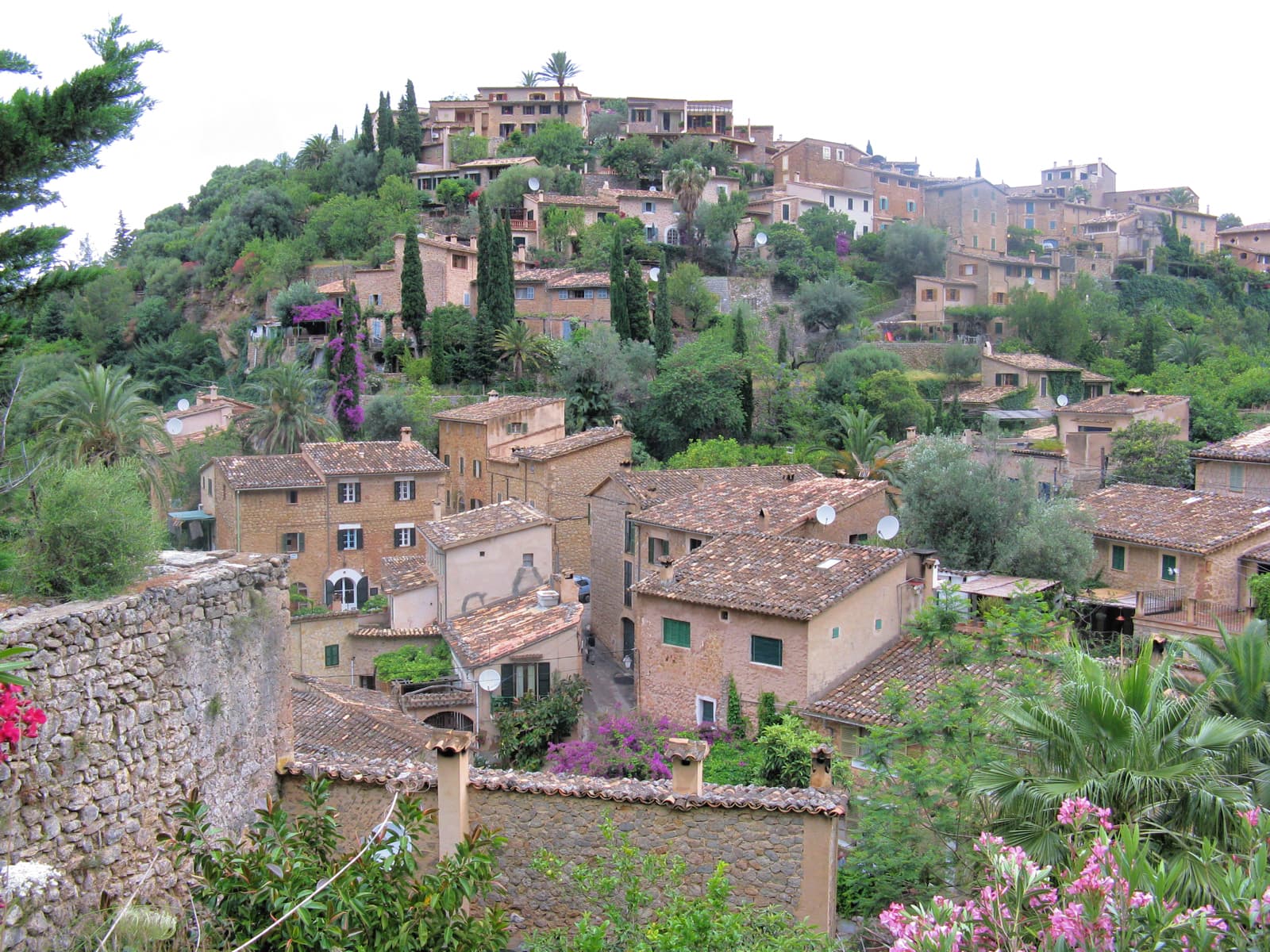
Deià, un pequeño pueblo costero en el extremo noroeste de Mallorca, está enclavado en la Serra de Tramuntana, Patrimonio de la Humanidad por la UNESCO. Esta pintoresca comunidad, con menos de 1.000 residentes, es reconocida por su arquitectura tradicional española y morisca, caracterizada por casas de piedra y estrechos pasadizos. Su paisaje idílico, con olivares y naranjos en acantilados con vistas al Mediterráneo, ha atraído durante mucho tiempo a artistas, escritores y músicos que buscan inspiración y serenidad.
El pueblo mantiene una atmósfera tranquila, invitando a los visitantes a saborear su belleza natural, arte y cocina local. Deià es un lugar donde la naturaleza, la cultura y las tradiciones convergen, ofreciendo un vistazo a la vida isleña antes de la llegada del turismo masivo.
El valle donde se encuentra Deià ha estado habitado desde tiempos prehistóricos, con los primeros colonos residiendo en cuevas en las laderas y utilizando manantiales naturales. El pueblo comenzó a tomar su forma actual durante la era morisca, entre los siglos X y XIII. Los moriscos establecieron un sofisticado sistema de drenaje e irrigación, que sigue en uso hoy en día, y le dieron al pueblo su nombre, 'ad daia', que significa 'aldea'. Este sistema permitió el cultivo de las laderas empinadas, lo que llevó al florecimiento de los olivos.
Tras la conquista cristiana a principios del siglo XIII, Deià fue concedida al Conde de Rosselló como parte de Valldemossa. Monasterios católicos romanos, como Ca l'Abat, Son Rul.lan y Miramar, se construyeron en y alrededor de Deià a principios del siglo XIII. Deià logró la independencia de Valldemossa en 1583. El pueblo se expandió, protegido de los vientos del norte, y se estableció una pequeña comunidad pesquera en Cala Deià. Se erigió una serie de torres de vigilancia fortificadas a lo largo de la costa oeste de Mallorca para alertar contra las incursiones de piratas berberiscos; sus restos aún son visibles hoy en día.
A finales del siglo XIX, comenzaron a llegar visitantes, atraídos por la tranquilidad y la belleza natural. El archiduque austriaco Lluis Salvador, que llegó a Mallorca en 1867, quedó cautivado por la zona y adquirió extensas tierras alrededor de Deià y Valldemossa, implementando esfuerzos de conservación. Creó senderos y miradores, mejorando el atractivo de la región para caminantes y excursionistas.
La reputación de Deià como colonia de artistas se consolidó con la llegada del poeta y novelista inglés Robert Graves en la década de 1930. Residió en Deià hasta su muerte en 1985, utilizando el pueblo como escenario para muchas de sus narrativas y atrayendo a una ola de otros artistas, escritores y músicos. Esta comunidad artística prosperó desde la década de 1950 hasta la de 1980, atraída por la belleza natural y el carácter rústico del pueblo. Figuras notables como Anaïs Nin, que visitó en la década de 1920, y más tarde músicos como Mike Oldfield y miembros de The Rolling Stones, también han encontrado consuelo e inspiración en Deià.
Comience su exploración paseando por las estrechas calles empedradas de Deià, admirando las casas tradicionales de piedra con sus contraventanas de colores. Ascienda a la iglesia parroquial de San Juan Bautista, un edificio del siglo XVII, y visite su cementerio, donde está enterrado Robert Graves. La iglesia se alza sobre una colina, ofreciendo amplias vistas del pueblo y el valle circundante.
Visite Ca n'Alluny, la antigua residencia de Robert Graves, que ahora funciona como museo y centro de estudios literarios. Para los interesados en la historia antigua, el Museo Arqueológico y Centro de Investigación de Deià, ubicado en un molino reconvertido, exhibe descubrimientos de las Baleares. La finca de Son Marroig, que una vez perteneció al archiduque Lluis Salvador, es ahora un museo que presenta artefactos de su vida y alberga el Festival Internacional de Música de Deià. No se pierda el Mirador de Sa Foradada, que ofrece impresionantes vistas al mar y atardeceres memorables.
Para un refrescante baño, diríjase a Cala Deià, una pequeña playa de guijarros con aguas cristalinas, accesible a través de un pintoresco paseo. También hay galerías de arte que exhiben artistas locales e internacionales.
Las temporadas intermedias de primavera (marzo a abril) y otoño (septiembre a octubre/noviembre) son ideales para visitar Deià. Durante estos meses, las temperaturas son agradables, las lluvias son mínimas y el pueblo recibe menos visitantes que en pleno verano. La primavera ofrece un clima templado para actividades al aire libre, con temperaturas máximas promedio entre 17°C y 19°C. El otoño ofrece temperaturas agradables alrededor de 20°C y un impresionante paisaje otoñal. El verano (mayo a octubre) es cálido, con temperaturas que alcanzan aproximadamente los 27°C, adecuado para actividades de playa, pero el estacionamiento puede ser un desafío y las atracciones estar abarrotadas.
Deià se encuentra aproximadamente a 33 kilómetros (20.5 millas) al norte de Palma, la capital de Mallorca. Puede llegar a Deià en coche, taxi o autobús. El autobús L210 conecta Deià con la Estació Intermodal de Palma; el viaje dura entre 45 minutos y una hora y cuesta alrededor de 4.50-5 euros. Un taxi de Palma a Deià cuesta aproximadamente 50 euros.
Si conduce, tenga en cuenta que las carreteras de montaña pueden ser estrechas y el estacionamiento en Deià puede ser difícil, especialmente durante el verano, cuando el pequeño aparcamiento público a menudo se llena. Se recomienda alquilar un coche más pequeño, y si necesita transmisión automática, reserve con mucha antelación. Considere estacionar en el pueblo y caminar hasta Cala Deià, ya que la carretera a la cala es empinada y estrecha.
Deià en coreano, en chino o en hebreo — y 29 idiomas más, cada parada narrada por una voz nativa. La mayor variedad de idiomas de cualquier audioguía autoguiada.
Disponible en: