Collegiate Church of the Assumption of the Blessed Virgin Mary
One of Głogów's most ancient churches quietly testifies to a turbulent past, its ongoing restoration a surprising commitment to enduring origins.
Full story unlocks in the tour
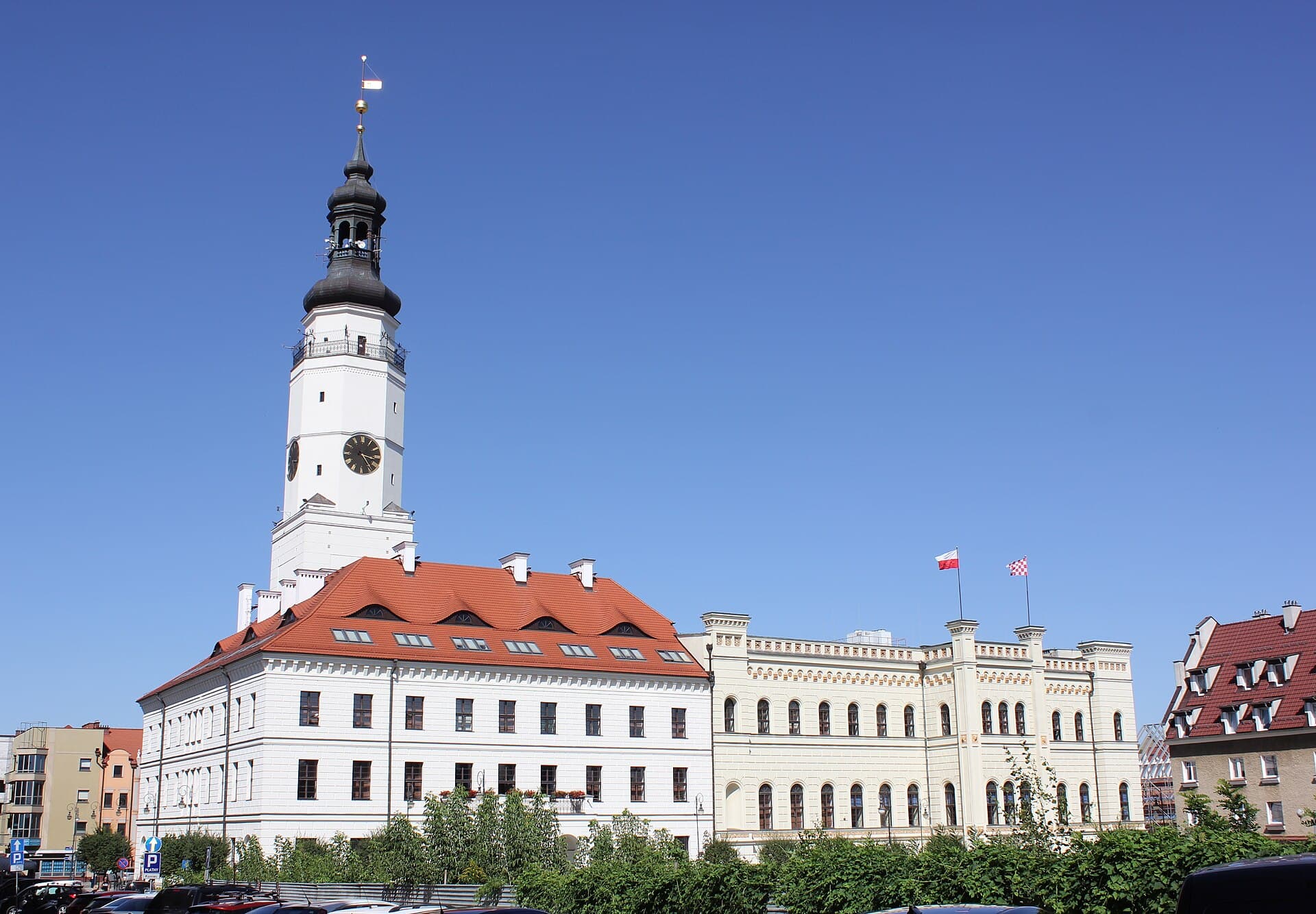 Andrzej Otrębski / CC BY-SA 4.0, via Wikimedia Commons
Self-guided audio walking tour of Głogów — GPS route, offline playback, story-driven narration in 32 languages.
“Głogów: A City Forged in Fire, Reborn with Pink Bridges, and Enduring Through Time.”
Not the postcards. The stories even locals don't know — whispered in your ear, right where they happened.
One of Głogów's most ancient churches quietly testifies to a turbulent past, its ongoing restoration a surprising commitment to enduring origins.
A poignant memorial in Głogów recounts a medieval siege with a harrowing detail, laying bare the brutal realities of 12th-century warfare.
A distinctive bridge in Głogów stands out with an unexpected splash of color, a choice made by the city's own inhabitants.
Discover every secret of Głogów
Every address, every reveal in full — in your ear, right where it happened.
You pick your stops. You walk. The voice reveals what the others miss.


Your self-guided audio tour of Głogów is ready — pick your landmarks, choose your language, and start the moment you arrive.
BuyLume has a built-in augmented-reality guide. Hold your phone up and its camera shows the street ahead of you, with a glowing arrow laid over the real view that always points to your next stop — no map to puzzle over, no wrong turns. Like everything in Lume, it works fully offline.
Głogów, a city in southwestern Poland, stands as a testament to endurance, having risen from near-total destruction in World War II to become a lively center on the Odra River. Pronounced "Gwo-goev," this ancient settlement, whose name derives from the Polish word for "hawthorn," traces its origins back to the Dziadoszanie, an ancient Slavic tribe.
Today, Głogów invites visitors to explore its meticulously reconstructed Old Town, a living chronicle of its complex past. From medieval defensive skirmishes to periods of ducal governance and significant industrial expansion, the city's architecture and monuments narrate a compelling story of survival and renewal.
Głogów's history commences in the 10th century as a defensive settlement established by the West Slavic Dziadoszanie tribe, becoming part of the emerging Polish state under Mieszko I. The first historical mention dates to 1010 in Thietmar of Merseburg's chronicles, noting a siege by King Henry II of Germany. The city gained renown for the pivotal Battle of Głogów in 1109, where Polish forces under Duke Bolesław III Wrymouth successfully defended against Emperor Henry V's German incursions.
Granted city rights in 1253 by Duke Konrad I, Głogów prospered due to its strategic location on trade routes, becoming the capital of its own duchy from 1251 to 1506. Over centuries, it evolved into one of Lower Silesia's largest fortified towns. However, this strategic importance also rendered it a frequent target. It fell under Bohemian, Austrian Habsburg, and Prussian rule at various points, and its fortifications were a constant presence, even being expanded during the Thirty Years' War.
In the early 19th century, Głogów endured the Napoleonic Wars, including a grueling siege by the Sixth Coalition in 1813–14. Paradoxically, its military significance began to wane, and by the early 20th century, citizens successfully campaigned for the demolition of its extensive fortifications, believing they impeded urban growth. The most devastating chapter in Głogów's history unfolded at the end of World War II. Declared a fortress city by Nazi Germany, it suffered a six-week siege by the Soviet Red Army in early 1945, resulting in the near-total destruction of 98% of its buildings.
After the war, the German population was expelled, and Polish settlers arrived to a city in ruins. Głogów's economic recovery began slowly, but a significant turning point arrived in 1967 with the construction of a copper foundry, which remains the largest industrial company in the town and a major world supplier of silver. A systematic reconstruction of the Old Town began in the late 1980s, aiming to restore its historic appearance, a process that continues today.
Begin your exploration at the Castle of the Dukes of Głogów, a reconstructed 13th-century stronghold now housing the Archaeological and Historical Museum, offering insights into the city's past. Nearby, the Collegiate Church of the Assumption of the Blessed Virgin Mary stands as one of Poland's oldest churches, still undergoing restoration after wartime damage. Take a moment at the poignant Głogów Children's Monument in Plac Jana Pawła II, commemorating a dramatic medieval siege.
Stroll through the Old Town, where ongoing reconstruction efforts reveal a blend of historic urban layout and modern flair. Discover fragments of the medieval city walls, offering glimpses into Głogów's past as a fortified town. Cross the distinctive Tolerance Bridge, notable for its unique pink and lilac colors chosen by the city's residents. For sweeping views of the area, ascend the castle tower, also known as the "Hunger Tower."
The ideal time to visit Głogów for general outdoor activities extends from mid-June to early September, with a peak in the second week of August, when temperatures are comfortable and rainfall is moderate. For those seeking fewer crowds and pleasant weather, September is an excellent choice, as temperatures remain mild, and prices begin to decrease after the peak summer season. The warmest months are generally June through August, with average highs around 75°F (24°C) in July.
Głogów is situated in the Lower Silesian Voivodeship and is well-connected by both road and rail. You can reach Głogów by train from Wrocław or Zielona Góra, with the journey from Warsaw taking approximately 4.5 hours by train. Long-distance bus services also connect Głogów to various cities, including international routes. The city center is walkable, with most sights accessible within a kilometer. The local currency is the Polish Złoty (PLN). Polish is the official language, but English may be spoken in areas frequented by visitors.
Głogów in Korean, in Chinese or in Hebrew — and 29 more languages, every stop narrated by a native voice. The widest language range of any self-guided audio tour.
Available in: