Underground Tunnels
Beneath the castle, a vast network of concrete-reinforced tunnels lies unfinished, its true purpose still debated by historians.
Full story unlocks in the tour
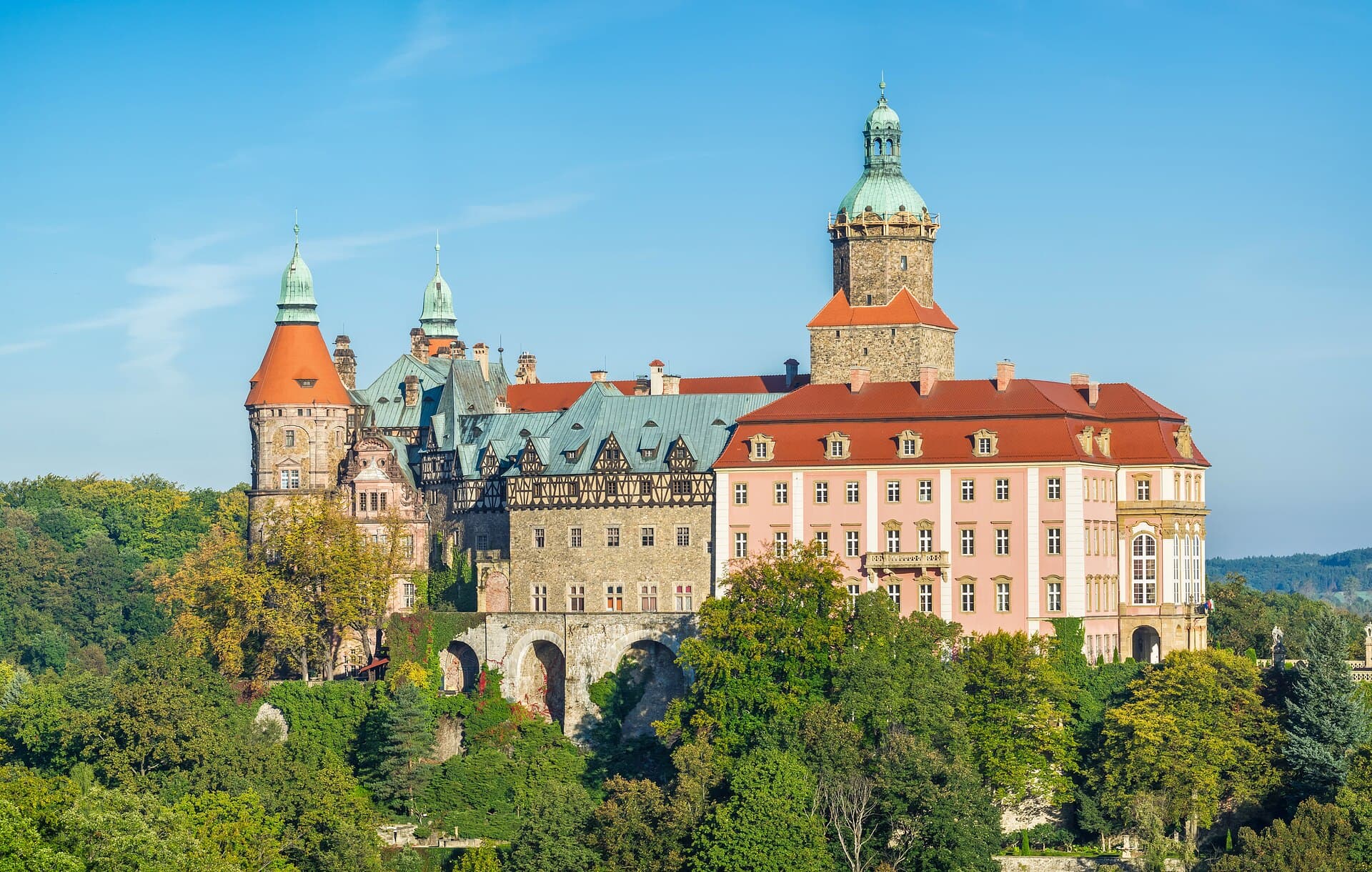 Jar.ciurus / CC BY-SA 3.0 pl, via Wikimedia Commons
Self-guided audio walking tour of Książ — GPS route, offline playback, story-driven narration in 32 languages.
“A castle of aristocratic grandeur, wartime secrets, and enduring mystery.”
Not the postcards. The stories even locals don't know — whispered in your ear, right where they happened.
Beneath the castle, a vast network of concrete-reinforced tunnels lies unfinished, its true purpose still debated by historians.
The castle's most famous resident, an English aristocrat, left behind a legacy of elegance and a poignant story of a bygone era.
A once-impressive collection of over 60,000 volumes vanished during and after World War II, with only fragments ever recovered.
Discover every secret of Książ
Every address, every reveal in full — in your ear, right where it happened.
You pick your stops. You walk. The voice reveals what the others miss.

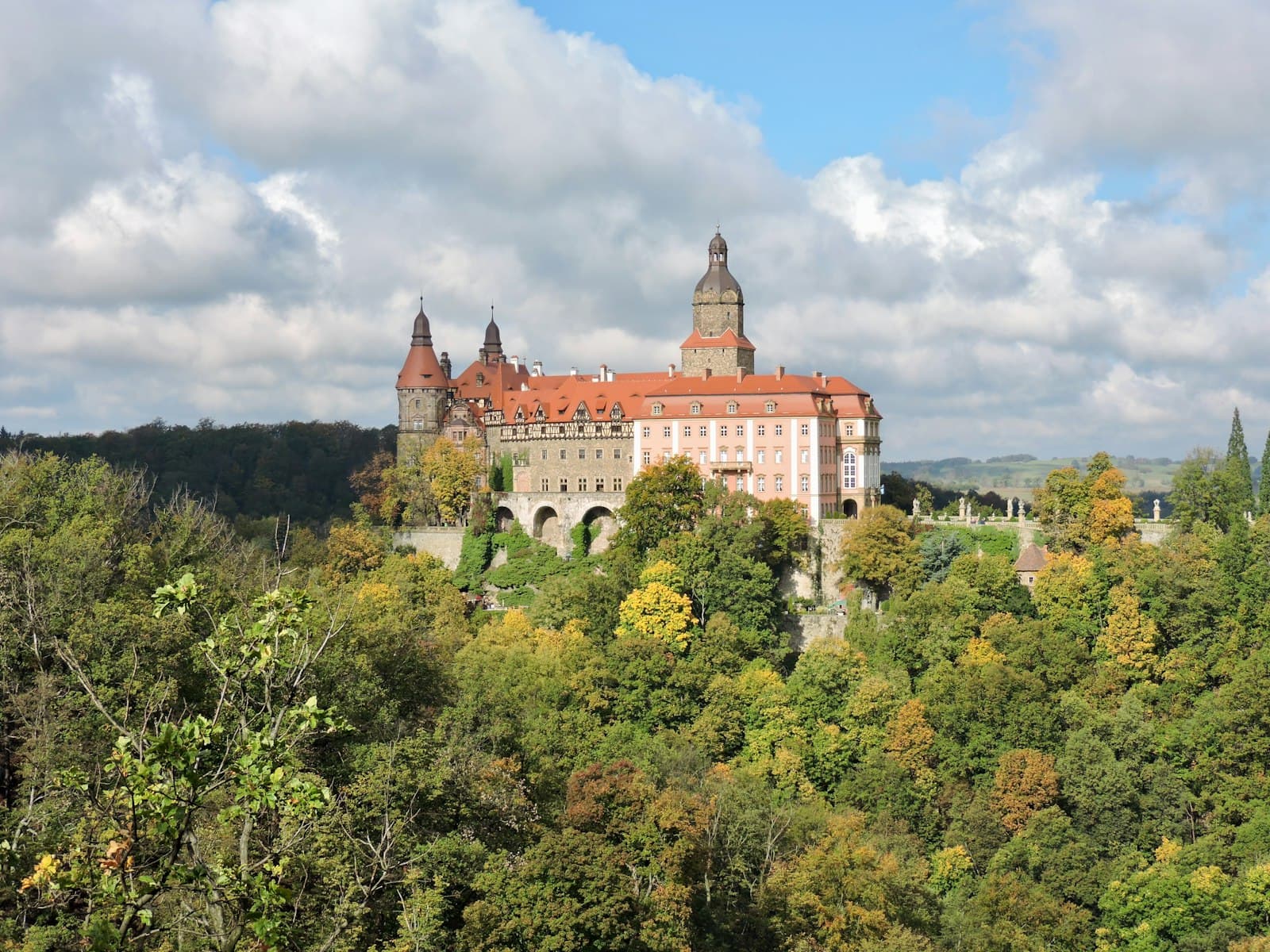
Your self-guided audio tour of Książ is ready — pick your landmarks, choose your language, and start the moment you arrive.
BuyLume has a built-in augmented-reality guide. Hold your phone up and its camera shows the street ahead of you, with a glowing arrow laid over the real view that always points to your next stop — no map to puzzle over, no wrong turns. Like everything in Lume, it works fully offline.
Rising from a steep, wooded crag above the Pełcznica River gorge, Książ Castle in Poland presents a silhouette that blends Bavarian fantasy with medieval fortification. As the third-largest castle in Poland, and the largest in Silesia, it is often referred to as the 'Pearl of Lower Silesia.' This commanding complex of over 400 rooms offers a layered history that is at once aristocratic, romantic, mysterious, and deeply disturbing.
Beyond its architectural grandeur, Książ holds a compelling narrative, from the noble extravagance of the Hochberg family, its owners for over 400 years, to the shadowy undertakings of World War II. Visitors can explore ornate Baroque salons, wander through expansive English-style gardens, and delve into the eerie underground tunnels carved by Nazi forces. Książ Castle is not merely a historical site; it is a journey through centuries of power, intrigue, and unresolved mysteries.
## From Piast Stronghold to Princely Seat Książ Castle's origins trace back to the late 13th century, with the first fortification built between 1288 and 1292 by Prince Bolko I the Strict of Silesia. This strategic stronghold, initially known as Fürstenberg and later Fürstenstein, was designed as the 'Key to Silesia.' After Bolko I's death, the castle passed through various hands, including Bohemian kings and Silesian dukes, often changing ownership due to wars and succession.
## The Hochberg Dynasty and Baroque Splendor In 1509, a new chapter began with the acquisition of Książ by the Hochberg family, one of the wealthiest and most influential dynasties in Central Europe. They held the castle for over four centuries, transforming it from a medieval fortress into a magnificent Renaissance and then Baroque palace. The most intensive period of architectural development occurred in the 17th and early 18th centuries, when the family added the ornate Baroque salons that are still admired today. The castle's characteristic facade, with its blend of Gothic, Baroque, and Neo-Renaissance styles, reflects this long history of continuous expansion and renovation.
## Princess Daisy and the Turn of the Century The late 19th and early 20th centuries saw the castle become the residence of Princess Daisy of Pless, born Mary Theresa Olivia Cornwallis-West, a Welsh aristocrat who married Count Hans Heinrich XV von Hochberg. Her presence brought a new era of glamour and international connections to Książ. During this time, the castle's gardens were converted into an expansive English-style park. However, the family's extravagant lifestyle and the global economic crisis led to mounting debts, and the German government seized the property in 1939.
## World War II and Project Riese The darkest chapter in Książ's history unfolded during World War II when the Nazi authorities confiscated the castle in 1941. It became part of 'Project Riese,' a top-secret construction program aimed at creating a vast underground complex. The Nazis stripped the castle's interiors, destroying many decorative elements in preparation for what was speculated to be a new Führer Headquarters for Adolf Hitler. Thousands of forced laborers and concentration camp prisoners were used to excavate an extensive network of tunnels beneath the castle, a project that remained unfinished at the war's end.
## Post-War Restoration and Modern Day After the Red Army occupied the castle in 1945, much of what remained was looted or destroyed. In the decades that followed, Książ served various administrative purposes under communist authorities. Since the fall of communism, the castle has been owned by the city of Wałbrzych and has undergone extensive restoration, bringing back much of its former splendor. Today, Książ Castle stands as a testament to its complex past, drawing visitors from around the world to explore its beauty and unravel its many mysteries.
Książ Castle offers a diverse range of attractions. Begin your visit by exploring the opulent Baroque salons, including the magnificent Maximilian Hall, which showcases the grandeur of the Hochberg era. Do not miss the newly reconstructed Apartments of Princess Daisy, offering a glimpse into her life at the castle.
Descend into the mysterious underground tunnels, a chilling remnant of Project Riese during World War II. This guided tour reveals the concrete-reinforced corridors and chambers dug by forced laborers, providing a tangible sense of the scale and secrecy of the Nazi operations.
Outside, stroll through the terraced gardens, particularly beautiful when the roses are in bloom in late May and June. The Palm House, a Victorian greenhouse about 2 kilometers from the castle, offers a surprising tropical escape with its exotic plants and lava-lined interior. For panoramic views of the castle and the surrounding Książ Landscape Park, seek out the viewpoint at Punkt Widokowy na Zamek Książ. The ruins of the Old Książ Castle, a short hike away, offer a romantic and historically intriguing diversion.
The best time to visit Książ Castle is during late spring through early autumn (May to September) when the baroque terraces and gardens are in full bloom and the weather is most pleasant. This period also offers the longest opening hours. However, it is also the busiest time, so expect larger crowds, especially on summer weekends. To avoid queues for the popular underground tours, consider visiting on weekdays in the shoulder seasons (May and September). Winter (November to March) offers a quieter, more atmospheric experience, particularly for the castle interiors and tunnels, which maintain a consistent cool temperature year-round.
Książ Castle is located approximately 70 kilometers southwest of Wrocław, a journey that takes about an hour by car. Public transport options include a regional train to Wałbrzych Szczawienko (the closest station, 3-4 km away) or Wałbrzych Miasto, followed by a local bus (number 8 or 12) to the castle. Parking is available at designated areas near the castle complex.
Ticket options vary, from standard castle admission with an audio guide to combined tickets that include the underground tunnels, Palm House, and other attractions. It is advisable to check the castle's official website for current opening hours and to book tickets online in advance, especially for the underground tour, which can sell out during peak season. Wear comfortable, flat shoes due to stairs, cobbles, and potentially damp surfaces, and bring a warm layer for the consistently cool underground tunnels. Large bags and backpacks may need to be left at a cloakroom. Photography for personal use is generally permitted.
Książ in Korean, in Chinese or in Hebrew — and 29 more languages, every stop narrated by a native voice. The widest language range of any self-guided audio tour.
Available in: