The John S. Thompson Bridge
This vital bridge near Grave bears the name of an American soldier, but the story behind its capture during a pivotal World War II operation is more nuanced than a simple victory.
Full story unlocks in the tour
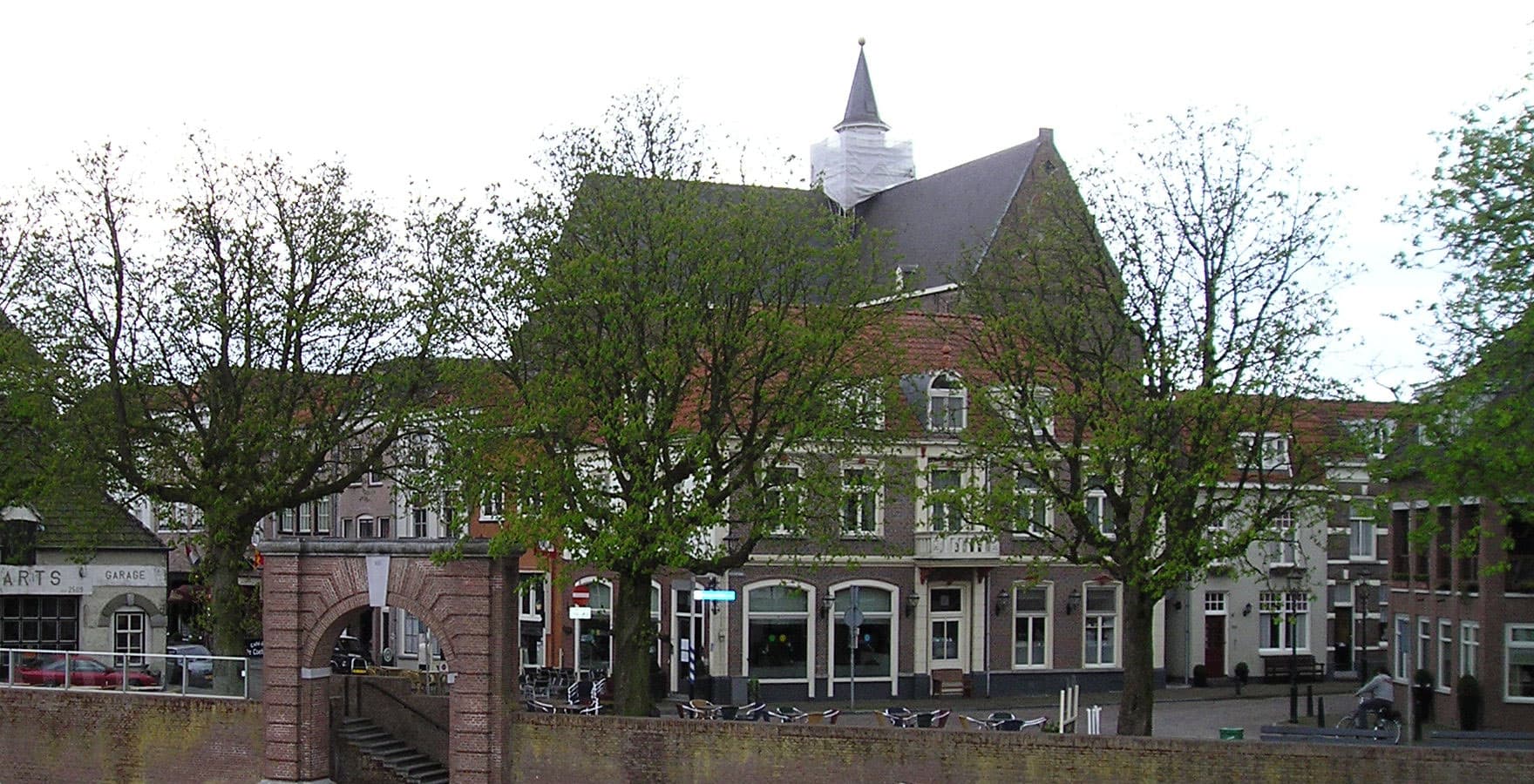 Vincent de Groot - http://www.videgro.net / CC BY-SA 4.0, via Wikimedia Commons
Self-guided audio walking tour of Grave — GPS route, offline playback, story-driven narration in 32 languages.
“Where ancient fortifications echo with enduring spirit.”
Not the postcards. The stories even locals don't know — whispered in your ear, right where they happened.
This vital bridge near Grave bears the name of an American soldier, but the story behind its capture during a pivotal World War II operation is more nuanced than a simple victory.
In a Dutch cemetery, a seemingly impossible act of eternal love transcends strict religious divides, visible in a unique funerary monument.
Unlike many places, finding very old graves in the Netherlands is uncommon, and it's not always due to neglect or natural decay.
Discover every secret of Grave
Every address, every reveal in full — in your ear, right where it happened.
You pick your stops. You walk. The voice reveals what the others miss.


Your self-guided audio tour of Grave is ready — pick your landmarks, choose your language, and start the moment you arrive.
BuyLume has a built-in augmented-reality guide. Hold your phone up and its camera shows the street ahead of you, with a glowing arrow laid over the real view that always points to your next stop — no map to puzzle over, no wrong turns. Like everything in Lume, it works fully offline.
Grave, a historic city in the North Brabant province of the Netherlands, carries its past on its cobbled streets and within its fortified walls. Once its own municipality, Grave is known for its strong historical defenses, a testament to its strategic importance over centuries. In 2022, Grave merged with several other towns to form the larger municipality of Land van Cuijk, but its distinct identity as a fortified city endures.
Walking through Grave's old heart, visitors encounter 17th and 18th-century houses, narrow alleyways, and impressive monuments that evoke a bygone era. The city's location on the Maas River has been crucial to its development, serving as both an ideal trade route since the Middle Ages and a beautiful tourist spot today. Grave is also a proud member of the Dutch Association of Fortified Cities, dedicated to preserving its unique heritage.
The origins of Grave trace back to the 12th century when the lords of Cuijk constructed a castle at the mouth of the river Raam, a strategic point along the Maas River. A settlement grew around this castle, laying the foundation for the city we know today. Grave was granted city rights in 1233, giving it special privileges like holding markets and establishing its own laws.
Over the centuries, Grave endured no fewer than seven major sieges, including occupations and destruction by Spanish and French forces. This turbulent past forged the city's resilient spirit, a sentiment proudly expressed in the Grave anthem: “Time after time, our brave little town re-emerged in freedom.” These historical conflicts, particularly during the Eighty Years' War, saw the town change hands multiple times between Spanish and Anglo-Dutch forces. Grave's role as a fortified city was integral to the Southern Waterline, an important Dutch defense system.
The municipality of Grave was formally established around 1810 during the Napoleonic era, initially encompassing the fortified city and its immediate surroundings. This close link between the town and its municipal administration evolved over time. In 1942, the municipality expanded to include the previously independent towns of Velp and Escharen. Further reclassification in 1994 saw a part of the neighboring municipality of Beers, specifically the parish of Gassel, added to Grave. Most recently, on January 1, 2022, Grave joined with Boxmeer, Cuijk, Mill en Sint Hubert, and Sint Anthonis to form the new, larger municipality of Land van Cuijk.
Begin your exploration at the Hampoort, the old city entrance that remains largely intact and open to visitors. This impressive gate offers a tangible connection to Grave's fortified past. Stroll through the historic city center, where 17th and 18th-century buildings with decorated gables house a variety of specialist local retailers. You'll find everything from art and antiques to delicatessens and unique gifts.
Do not overlook the John S. Thompson Bridge, a significant landmark that spans the Maas River and played a crucial role in Operation Market Garden during World War II. While the city suffered little damage during its liberation, the bridge's story is a powerful one. For expansive views, ascend 'the Kat,' a raised artillery position that offers sweeping vistas over Grave, the Maas River, and the surrounding countryside, including the spires of Old Velp. The Grave City Museum, housed within the Hampoort, provides a deeper dive into the city's compelling history.
The best time to visit Grave for general outdoor activities is from late June to early September, when temperatures are comfortable and skies are clearer. July is typically the warmest month, with an average high of 73°F (23°C), while February is the coldest, averaging 33°F (1°C). Precipitation is highest in December and lowest in April. For a balance of pleasant weather and fewer crowds, consider visiting in June or between September and November, when autumn foliage adds to the scenic beauty. The Netherlands generally experiences a temperate climate with mild summers and moderately cold winters, with rainfall possible year-round.
Grave is part of the larger Land van Cuijk municipality. Tourist information can be found at the Grave Southern Waterline visitor's center, located in the historical town hall. Here, you can access brochures, guides, and book guided walks to learn more about the city's history. Other tourist meeting points are available at Catharinahof (on Koninginnedijk) and Motel Koolen (in Velp), as well as in other towns within the Land van Cuijk region. Public transport connections will link Grave to larger cities, and exploring the compact city center on foot is highly recommended. The local market on Friday mornings adds to the town's unique atmosphere.
Grave in Korean, in Chinese or in Hebrew — and 29 more languages, every stop narrated by a native voice. The widest language range of any self-guided audio tour.
Available in: