Grote Kerk (Grande Église)
Cette église imposante n'a pas toujours été un lieu de culte ; elle a connu une série surprenante de transformations.
L'histoire complète se débloque dans le tour
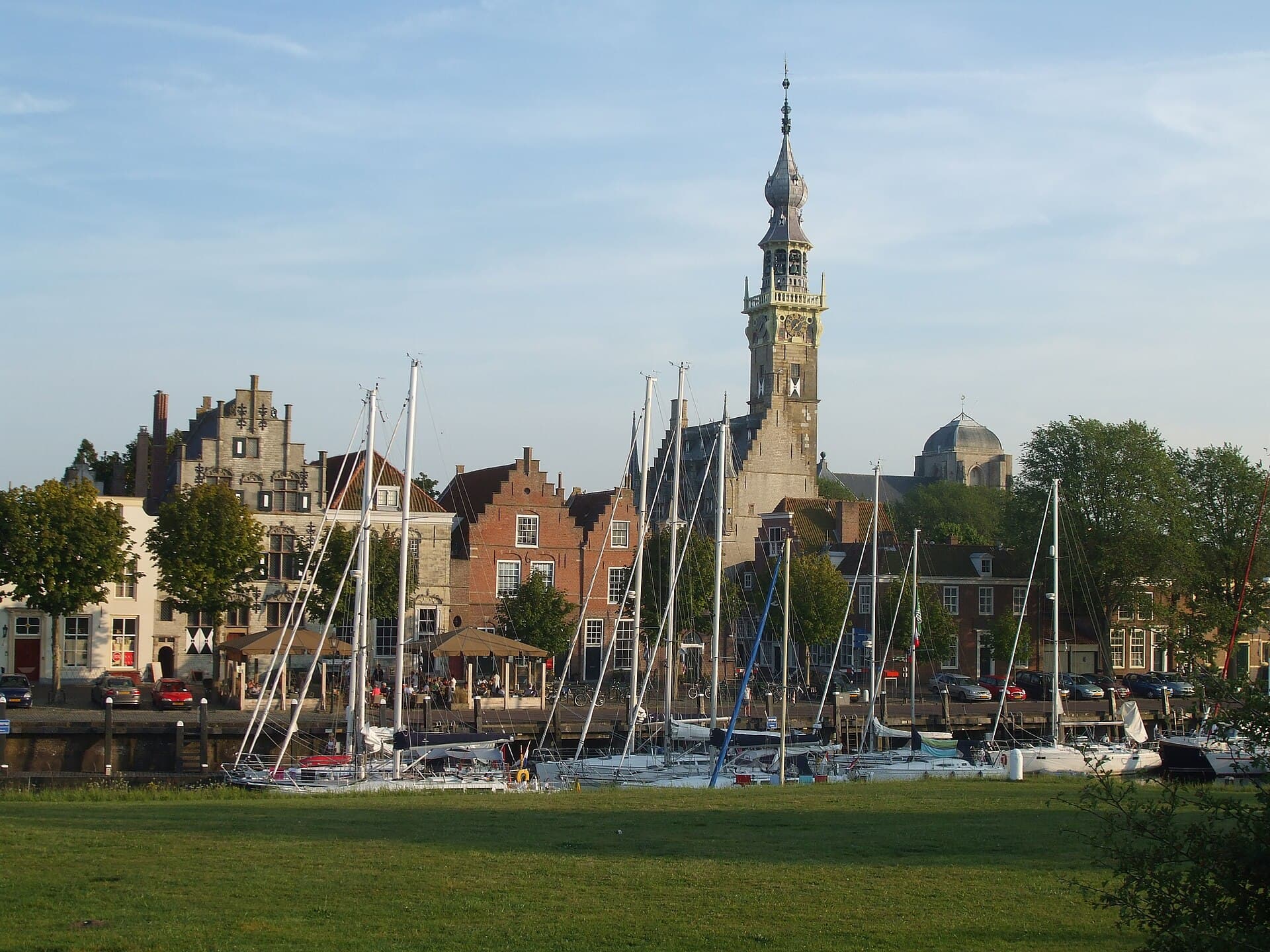 Paul 14 / CC BY-SA 4.0, via Wikimedia Commons
Visite audio autoguidée de Veere — parcours GPS à pied, lecture hors ligne, narration en 32 langues.
“Là où les échos écossais rencontrent la tranquillité néerlandaise sur le Veerse Meer.”
Pas les cartes postales. Les histoires que même les habitants ignorent — soufflées à l'oreille, là où elles se sont passées.
Cette église imposante n'a pas toujours été un lieu de culte ; elle a connu une série surprenante de transformations.
Près de la Grande Église, un monument unique révèle un but surprenant lié au commerce international de Veere.
Deux maisons distinctives sur le quai témoignent d'un lien international séculaire.
Découvrez tous les secrets de Veere
Chaque adresse, chaque révélation en entier — dans ton oreille, là où elle s'est passée.
Tu choisis tes lieux. Tu marches. La voix te révèle ce que les autres ignorent.


Lume intègre un guide en réalité augmentée. Levez votre téléphone : sa caméra montre la rue devant vous, avec une flèche lumineuse posée sur l'image réelle qui pointe toujours vers votre prochain arrêt — aucune carte à déchiffrer, aucun mauvais virage. Comme tout dans Lume, ça fonctionne entièrement hors-ligne.
Veere, une ville pittoresque sur l'île de Walcheren dans la province néerlandaise de Zélande, offre un voyage captivant dans le passé. Autrefois un port médiéval florissant avec des liens étroits avec l'Écosse, ses rues étroites, ses bâtiments historiques et son port de plaisance tranquille invitent aujourd'hui les visiteurs à explorer un riche héritage. L'attrait durable de la ville réside dans son architecture remarquablement préservée, reflétant des siècles de commerce et d'importance stratégique.
Sur les rives du Veerse Meer, un grand lac qui était autrefois un estuaire animé, Veere mélange harmonieusement son histoire maritime avec un environnement paisible et pittoresque. Avec une population d'environ 1 600 habitants, elle offre une évasion sereine, parfaite pour ceux qui cherchent à s'immerger dans la culture néerlandaise, à pratiquer des sports nautiques ou simplement à se détendre au milieu d'une beauté ancienne.
## De Maison de Ferry à Port d'Entrepôt Écossais L'histoire de Veere a commencé modestement en 1281 lorsque le noble Wolfert Ier van Borselen a établi une maison de ferry, donnant son nom à la ville (Veere signifie 'ferry'). En 1355, elle a obtenu les droits de cité, lui permettant d'organiser des marchés, de percevoir des péages et de construire des remparts, se développant rapidement en un centre commercial notable.
Cependant, le véritable âge d'or de Veere est arrivé aux XVe et XVIe siècles, en grande partie grâce à un lien écossais essentiel. En 1444, Wolfert VI van Borselen a épousé la princesse écossaise Maria Stuart, fille du roi Jacques Ier. Cette union royale a solidifié les relations commerciales, menant à ce que Veere devienne le principal port pour la laine écossaise. Le contrat des 'Droits d'Entrepôt', accordé en 1541, a donné à Veere un monopole sur l'importation, le stockage et le commerce des marchandises écossaises aux Pays-Bas, y compris la laine, le charbon, les peaux et le whisky. À son apogée, 50 à 60 navires entraient et sortaient quotidiennement, et sur ses 3 000 habitants, 300 étaient des Écossais, établissant une colonie écossaise florissante avec sa propre chapelle et son propre ministre.
## Guerre, Déclin et Transformation La prospérité a diminué pendant la guerre de Quatre-Vingts Ans avec l'Espagne, alors que l'attention de la ville est passée du commerce à la défense, devenant un port de guerre. Le déclin économique s'est installé, et au XVIIIe siècle, les pêcheurs avaient largement remplacé les marchands. Napoléon Bonaparte a reconnu la valeur stratégique de Veere, renforçant ses fortifications pendant la période française et visitant même la ville deux fois pour les inspecter. Le changement le plus significatif des temps modernes s'est produit en 1961 lorsque l'estuaire a été fermé par une digue, transformant l'accès direct à la mer en le Veerse Meer, un lac intérieur. Cet événement a marqué la fin de Veere en tant que port de pêche mais a inauguré une nouvelle ère en tant que destination touristique populaire et centre de sports nautiques.
Commencez votre exploration à la Grote Kerk (Grande Église), une structure imposante qui domine l'horizon. Montez sa tour émoussée pour des vues imprenables sur Veere, le Veerse Meer et le paysage environnant de la Zélande. Ne manquez pas l'unique Citerne sur le terrain de l'église, un puits du XVIe siècle construit pour les marchands de laine écossais. Promenez-vous le long du Kaai (Quai) pour admirer les Maisons Écossaises, 'Lammeken' et 'In de Struijs', qui font maintenant partie du Museum Veere et offrent un aperçu fascinant du passé commercial de la ville. L'Hôtel de Ville, un magnifique bâtiment du XVe siècle avec un carillon de 48 cloches, abrite également une partie du musée et un point d'information touristique. Marchez sur les remparts séculaires pour des vues panoramiques et pour découvrir les vestiges de son passé défensif, y compris des canons et un tunnel passionnant. Pour un avant-goût du charme local, visitez la Confiserie de Grand-mère pour des bonbons hollandais traditionnels. Le port de plaisance de la ville est maintenant rempli de yachts de plaisance, et les excursions en bateau sur le Veerse Meer sont un moyen populaire d'explorer les îlots inhabités et la beauté naturelle du lac.
La meilleure période pour visiter Veere pour un temps agréable et des activités estivales est de fin juin à début septembre. Pendant ces mois, les températures diurnes moyennes varient de 20°C à 22°C (68°F à 72°F), juillet et août étant les plus chauds. Mai, juin et juillet offrent le plus d'ensoleillement. Bien que le temps puisse être imprévisible, même pendant les mois plus chauds, il est conseillé de s'habiller en plusieurs couches. Le marché historique a lieu tous les mardis en juillet, août et septembre.
Veere est une ville compacte et très agréable à parcourir à pied, la plupart des attractions majeures étant facilement accessibles. La langue officielle est le néerlandais, mais l'anglais est largement compris dans les zones touristiques. La monnaie est l'euro (€), et des distributeurs automatiques de billets sont disponibles, les cartes de crédit étant largement acceptées. Pour ceux qui arrivent en voiture, un parking est disponible à Kanaalweg Westzijde/Mauritsbolwerk, offrant 400 places. Pendant l'été, le stationnement dans le centre-ville près du Veerse Meer peut être payant. Les cyclistes trouveront Veere bien connectée au vaste réseau cyclable de la Zélande. Les options de transport en commun incluent les lignes de bus Connexxion 583 (depuis Westkapelle) ou 584 (depuis Middelburg). Entre mai et septembre, les ferries Zeeuwse Pontjes offrent des traversées panoramiques pour les piétons et les cyclistes.
Veere en coréen, en chinois ou en hébreu — et dans 29 autres langues, chaque étape narrée par une voix native. La plus large gamme de langues de tous les audioguides autoguidés.
Disponible en :