Gyula Castle Chapel
The chapel within Gyula Castle contains a moving, quiet remembrance of a difficult past.
Full story unlocks in the tour
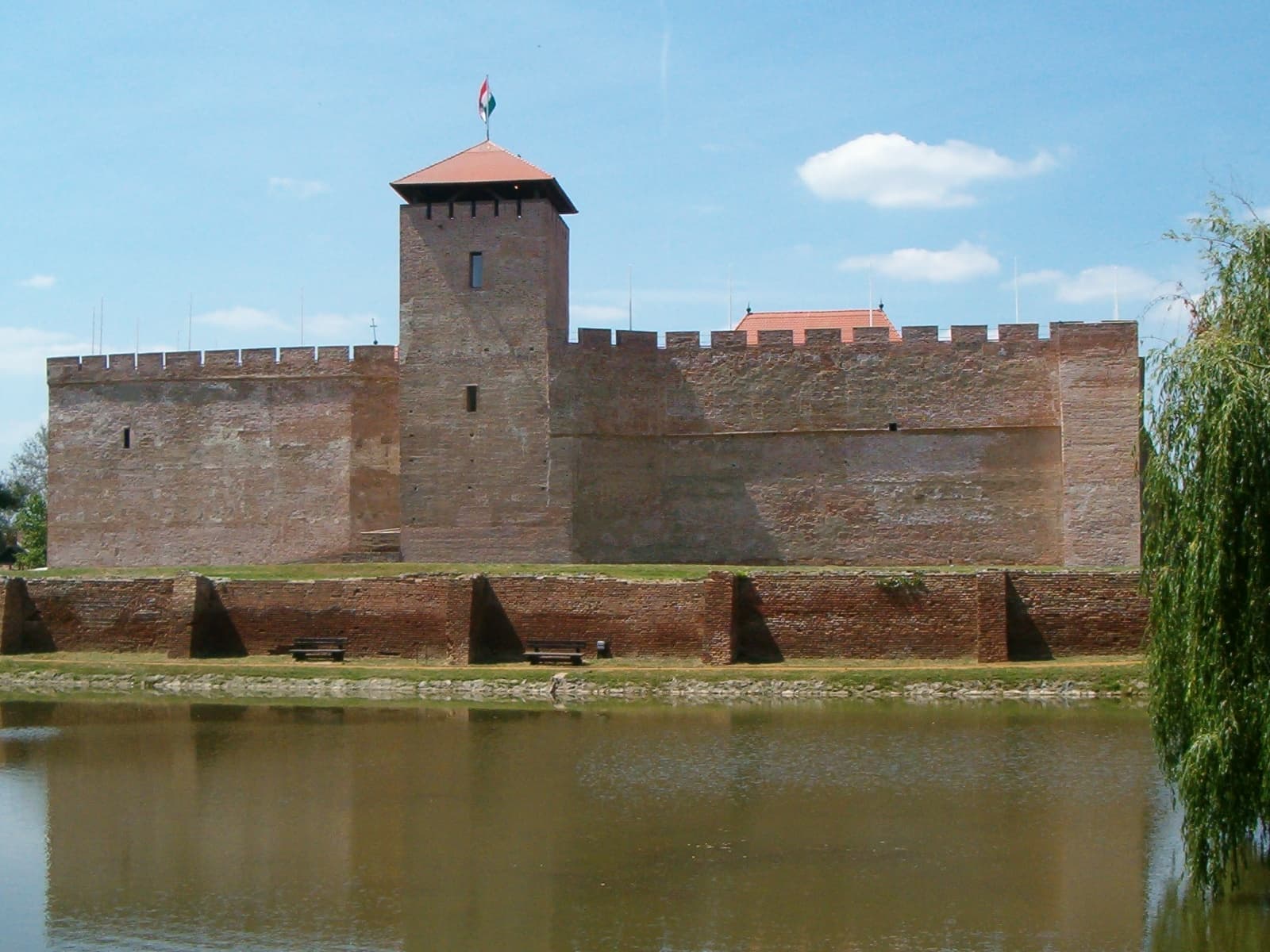 Unknown author / CC BY-SA 2.0, via Wikimedia Commons
Self-guided audio walking tour of Gyula — GPS route, offline playback, story-driven narration in 32 languages.
“Gyula: Where ancient fortitude meets soothing waters.”
Not the postcards. The stories even locals don't know — whispered in your ear, right where they happened.
The chapel within Gyula Castle contains a moving, quiet remembrance of a difficult past.
This cherished confectionery's designation is a bit of a playful misdirection.
Beyond its aristocratic elegance, Almásy Castle reveals an unexpected chapter in its post-war existence.
Discover every secret of Gyula
Every address, every reveal in full — in your ear, right where it happened.
You pick your stops. You walk. The voice reveals what the others miss.


Your self-guided audio tour of Gyula is ready — pick your landmarks, choose your language, and start the moment you arrive.
BuyLume has a built-in augmented-reality guide. Hold your phone up and its camera shows the street ahead of you, with a glowing arrow laid over the real view that always points to your next stop — no map to puzzle over, no wrong turns. Like everything in Lume, it works fully offline.
In the southeastern corner of Hungary, mere kilometers from the Romanian border, Gyula is a town where time-honored stories and restorative waters converge. This delightful settlement offers a blend of medieval legacy and modern well-being. Its compact core, easily explored on foot, features a Gothic brick fortress, an expansive thermal bath complex, and a quaint historical district lined with buildings in soft, inviting hues.
Gyula's distinct character arises from its blend of cultures, shaped by its border location and the Hungarian, German, and Romanian communities that have contributed to its identity over centuries. From the imposing walls of its ancient stronghold to the therapeutic warmth of its thermal springs, Gyula invites visitors to uncover an authentic Hungarian experience, away from the more often-traveled tourist routes.
## Early Beginnings and Medieval Power Gyula's origins can be traced back to a monastery, Gyulamonostora, first mentioned in writing in 1313. By 1332, the surrounding settlement was already known as Gyula. The town's name itself is thought to derive either from a medieval Hungarian warlord, Gyula III, or from a thane named Gyula who established the monastery.
Construction of Gyula Castle, the town's most prominent landmark, began in the 14th century and was completed by the mid-16th century. This Gothic brick fortress was initially owned by the powerful Maróthy family, later passing to John Corvinus, the illegitimate son of King Matthias Corvinus. In the 16th century, Gyula Castle was considered one of Hungary's strongest fortifications, alongside Eger and Szigetvár.
## The Ottoman Siege and Occupation In July 1566, Gyula faced a formidable challenge when a vast Ottoman army, estimated at 27,000–30,000 soldiers, laid siege to the castle. Despite being outnumbered by at least ten to one, the approximately 2,000 Hungarian defenders, led by Captain László Kerecsényi, heroically resisted for an unprecedented 59 to 63 days. The castle ultimately surrendered due to a lack of supplies and an outbreak of dysentery among the occupants, rather than being militarily captured. Gyula then remained under Ottoman occupation for 129 years, a period during which it was known as Göle.
## Liberation and Resettlement Christian forces liberated Gyula on January 18, 1695, after the Ottoman commander agreed to surrender due to a lack of food supplies. The prolonged warfare had severely depopulated the region, with most of the native Hungarian residents having fled. In the early 18th century, landowner János Harruckern initiated a significant resettlement effort, inviting new inhabitants from Germany, Hungary, and Romania to rebuild the town. This influx of diverse populations contributed to Gyula's rich cultural fabric, which is still evident today.
## Modern Development and Tourism Gyula began to develop as a tourist destination in the 20th century. The renowned thermal bath was established in 1942 and significantly expanded in 1959, with the castle undergoing restoration in 1962. Today, Gyula continues to attract visitors with its well-preserved historical sites, including the Almásy Palace, and its excellent thermal spa facilities.
The Gyula Castle is the town's central feature, a 15th-century Gothic brick fortress that stands as the only intact lowland brick castle in Central Europe. Inside, a 24-room museum details centuries of its story, featuring a dungeon, torture room, workshops, a knight's hall, and a chapel. From its lookout tower, visitors can enjoy sweeping views across the Great Hungarian Plain, and on clear days, even glimpse the Bihar Mountains in neighboring Romania.
Next to the castle, the Almásy Palace Visitor Center offers a look into 19th-century aristocratic life and the lives of their servants through interactive exhibitions. The palace, once a noble residence, underwent a beautiful reconstruction completed in 2016.
The Gyula Castle Spa (Gyulai Várfürdő) is a contemporary thermal complex situated within an 8.5-hectare ancient park. It offers 19 pools with 72°C thermal water, recognized for its medicinal properties, and includes an 'AquaPalota' with adventure pools and slides.
Do not overlook the '100-Year-Old Confectionery' (Százéves Cukrászda), the second oldest confectionery in Hungary, operating since 1840. This historic establishment, with its Louis XVI and Empire-style elements, also houses a confectionery museum. Other notable sights include the World Clock in the city center, a revolving globe that displays global time zones and plays melodies hourly, and the Ferenc Erkel Memorial House, dedicated to the composer of the Hungarian national anthem, who was born in Gyula.
The best time to visit Gyula for warm-weather activities is from early June to mid-September, when average daily high temperatures are above 23°C (73°F). July is the warmest month, with an average high of 28°C (82°F) and approximately 9.4 hours of sunshine per day. Spring (March to May) and autumn (September to October) are also excellent times, offering pleasant weather and fewer crowds. While winter can be cold, the thermal baths remain a year-round attraction.
Gyula is located in Békés County, in the southeastern part of Hungary, approximately 5-10 kilometers from the Romanian border. The M44 motorway connects Gyula with Budapest, making the drive about 2.5 hours. Buses and trains also provide connections to other cities, with timetables available online.
The city center is compact and easily walkable, with many attractions within close proximity. Parking is available in designated zones, with tickets purchasable by cash or mobile payment apps. Gyula offers a range of accommodations, from hotels to guesthouses and camping sites. The local currency is the Hungarian Forint (HUF). While Hungarian is the official language, German and Romanian are also spoken due to the town's diverse population.
Gyula in Korean, in Chinese or in Hebrew — and 29 more languages, every stop narrated by a native voice. The widest language range of any self-guided audio tour.
Available in: