Zoo de Sóstó
Le Zoo de Sóstó, un vaste parc animalier, n'a pas toujours abrité des créatures exotiques venues de contrées lointaines.
L'histoire complète se débloque dans le tour
 SNRTZ / CC BY-SA 4.0, via Wikimedia Commons
Visite audio autoguidée de Nyíregyháza — parcours GPS à pied, lecture hors ligne, narration en 32 langues.
“Là où les bouleaux murmurent et les rencontres sauvages se dévoilent.”
Pas les cartes postales. Les histoires que même les habitants ignorent — soufflées à l'oreille, là où elles se sont passées.
Le Zoo de Sóstó, un vaste parc animalier, n'a pas toujours abrité des créatures exotiques venues de contrées lointaines.
Le nom Nyíregyháza est plus qu'une séquence de sons ; c'est une carte linguistique de ses premiers jours.
Un cimetière tranquille à Nyíregyháza porte un témoignage poignant de l'endurance et du chagrin d'une communauté.
Découvrez tous les secrets de Nyíregyháza
Chaque adresse, chaque révélation en entier — dans ton oreille, là où elle s'est passée.
Tu choisis tes lieux. Tu marches. La voix te révèle ce que les autres ignorent.
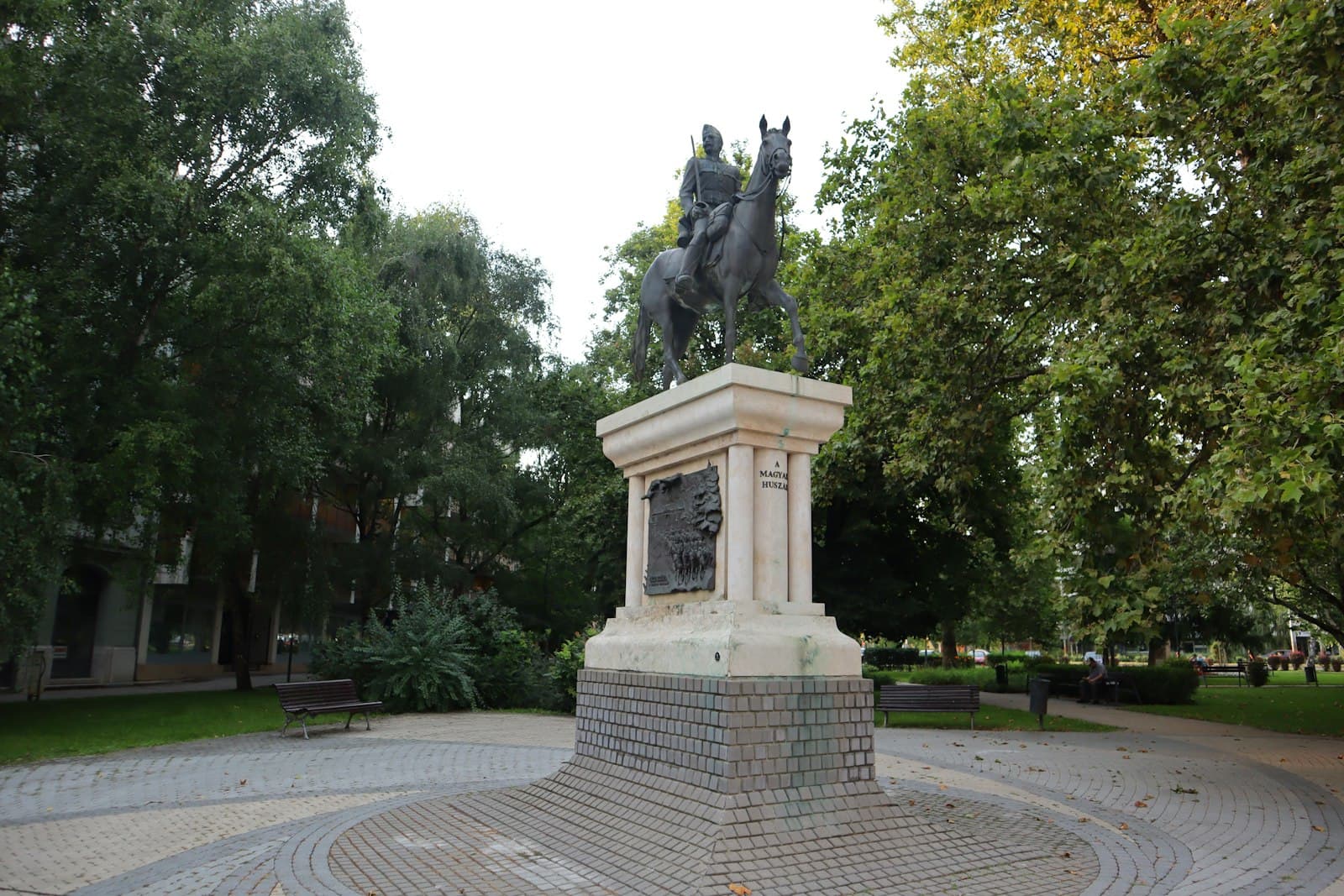
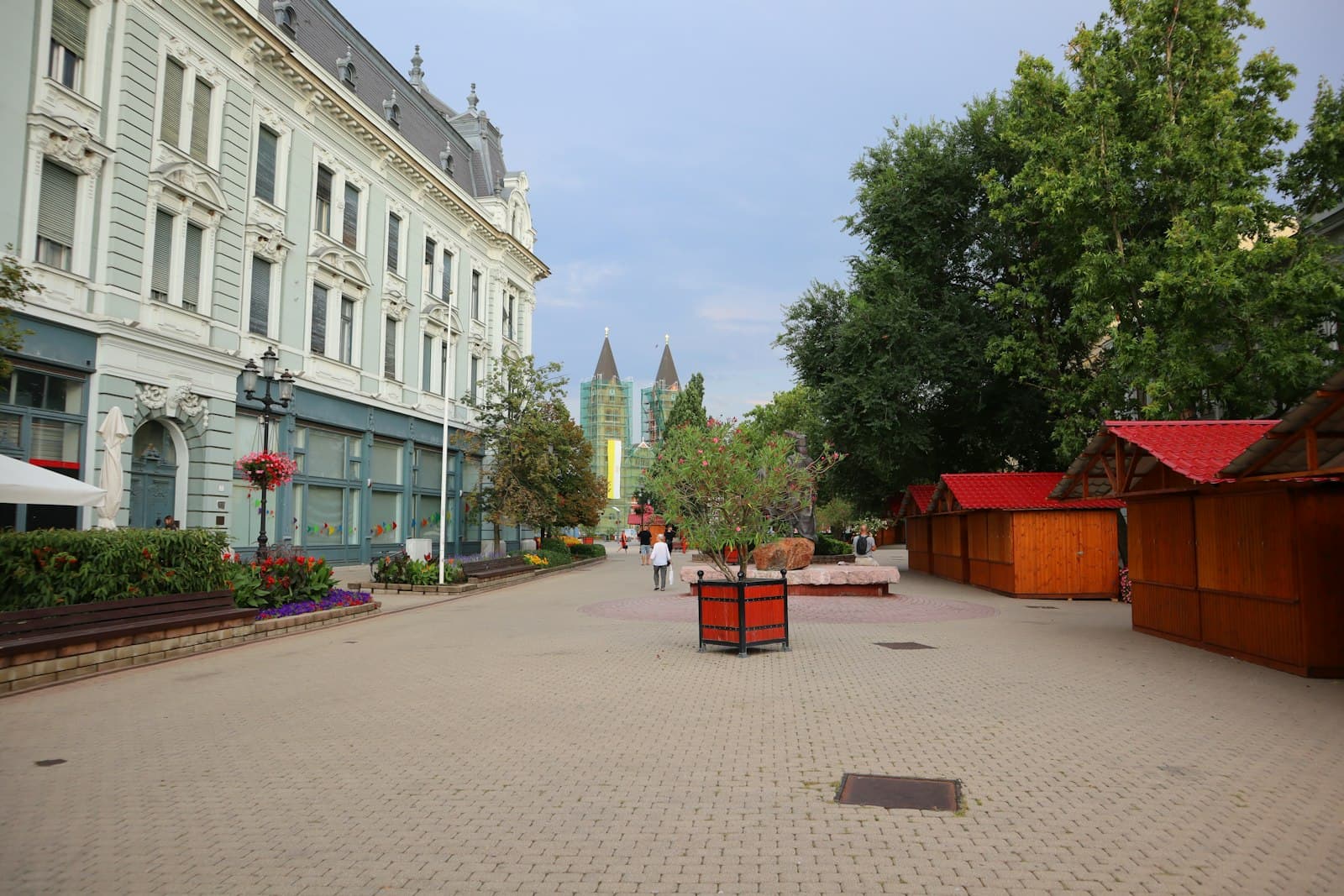
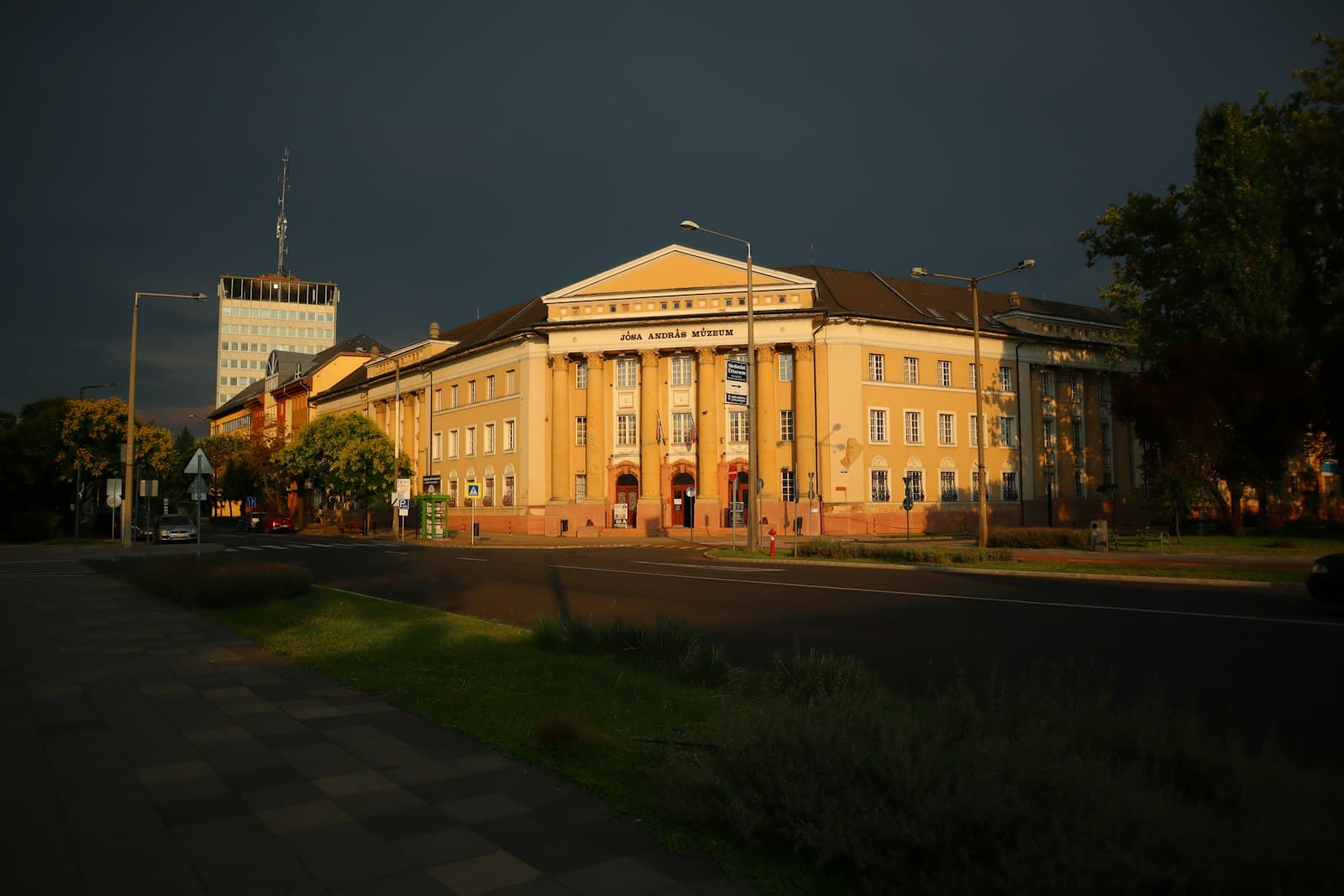
Votre visite audioguidée de Nyíregyháza vous attend — choisissez vos lieux, votre langue, et lancez-vous dès votre arrivée.
AcheterLume intègre un guide en réalité augmentée. Levez votre téléphone : sa caméra montre la rue devant vous, avec une flèche lumineuse posée sur l'image réelle qui pointe toujours vers votre prochain arrêt — aucune carte à déchiffrer, aucun mauvais virage. Comme tout dans Lume, ça fonctionne entièrement hors-ligne.
Nyíregyháza, la capitale dynamique du comté de Szabolcs-Szatmár-Bereg dans le nord-est de la Hongrie, présente une fusion captivante d'histoire, de culture et de splendeur naturelle. Septième ville de Hongrie par sa taille, elle fonctionne comme un centre économique et culturel notable dans la région de la Grande Plaine du Nord. Son nom, un écho attrayant de ses origines, se traduit par « église de bouleau », reflétant les bouleaux qui ornaient autrefois le paysage et l'église érigée ici au XIIIe siècle.
L'attrait de la ville s'étend au-delà de son cœur historique jusqu'à la zone de loisirs voisine de Sóstó, une destination prisée dotée d'un zoo réputé, de bains thermaux et d'un musée en plein air. Nyíregyháza est souvent considérée comme une « porte de l'Est », témoignage de sa position stratégique près des frontières ukrainienne et roumaine. Que vous soyez attiré par son passé durable, sa scène culturelle florissante ou ses impressionnantes attractions naturelles, Nyíregyháza promet une expérience hongroise singulière.
Les visiteurs découvriront une ville qui a continuellement évolué depuis le XVIIIe siècle, façonnant son caractère actuel avec un mélange de bâtiments historiques, d'espaces verdoyants et d'équipements contemporains. Du centre-ville animé à la sereine forêt de Sóstó, Nyíregyháza invite à l'exploration et à la découverte à chaque tournant.
Le récit de Nyíregyháza commence au début du Moyen Âge, avec sa première mention écrite en 1209 simplement comme « Nyír », signifiant « bouleau » en hongrois, un clin d'œil aux abondants bouleaux de la région. L'ajout de « egyház » (église) en 1236, suite à la construction d'une église locale, a complété son nom distinctif : « église de bouleau ». Pendant des siècles, elle est restée une modeste colonie, avec environ 400 habitants au XVe siècle.
Le XVIe siècle a apporté une période de grave déclin. Pendant la domination ottomane, Nyíregyháza fut largement dévastée et désertée, disparaissant pratiquement des cartes. Sa résurgence commença progressivement au milieu du XVIIe siècle avec le retour des premiers colons. Un moment charnière arriva en 1753 lorsque le comte Ferenc Károlyi invita des colons slovaques, connus sous le nom de « Tirpaks », à s'installer en masse. Leur diligence a alimenté un développement agricole et une expansion démographique significatifs.
En 1786, Nyíregyháza a officiellement obtenu le statut de ville, ainsi que le droit précieux d'organiser quatre foires annuelles, consolidant son rôle de centre commercial régional. Le XIXe siècle a marqué une ère d'établissement économique et culturel accéléré. Au début du siècle, la ville a accompli un exploit remarquable : elle a acheté son indépendance à ses seigneurs féodaux, les familles Dessewffy et Károlyi, obtenant une plus grande autonomie. L'arrivée du chemin de fer en 1858 a été un événement transformateur, reliant Nyíregyháza aux grands centres et stimulant l'industrialisation. En 1876, elle est devenue le centre administratif du comté de Szabolcs, cimentant son statut de plaque tournante politique et économique clé dans le nord-est de la Hongrie.
Le tournant du XXe siècle, souvent appelé l'« Âge d'or », a été témoin d'un boom de la construction, laissant à la ville de nombreux bâtiments de style éclectique et Sécession reconnaissables, tels que l'Hôtel de ville et l'Hôtel Korona. Cependant, le XXe siècle a également apporté d'immenses difficultés, y compris la décimation de sa communauté juive pendant l'Holocauste. Depuis les années 1960, Nyíregyháza a connu une expansion et un développement continus, devenant l'une des villes les plus prospères de Hongrie et un centre important pour l'éducation et le tourisme.
Nyíregyháza offre une collection variée d'attractions, répondant à des intérêts divers. Un lieu à visiter est le Zoo de Sóstó, également connu sous le nom de Nyíregyházi Állatpark, constamment classé parmi les meilleurs zoos d'Europe. S'étendant sur 30 hectares dans une forêt de chênes, il abrite plus de 500 espèces et 5 000 animaux, organisés par continent, permettant aux visiteurs de « faire le tour de la Terre ». Les zones notables incluent le Monde de Glace, l'Océanarium avec son tunnel en verre pour l'observation des requins, et des espaces interactifs comme la Forêt des Lémuriens.
Adjacent au zoo, la zone de loisirs de Sóstó abrite le Spa et parc d'attractions Aquarius, offrant des eaux thermales, des toboggans, des piscines et des services de bien-être toute l'année. Le Village-musée de Sóstó offre un aperçu captivant de la vie villageoise hongroise traditionnelle de la fin du XIXe siècle, avec des bâtiments originaux et des démonstrations d'artisans. La zone comprend également le lac salé médicinal, le lac Sóstó, prisé pour la baignade en été et le patinage sur glace en hiver.
Dans le centre-ville, les trésors architecturaux de la fin du XIXe et du début du XXe siècle sont abondants. L'Hôtel de ville (Városháza), une merveille éclectique, et le distinctif Hôtel Korona (Korona Szálló) en sont des exemples marquants. Le Musée András Jósa présente l'histoire, l'ethnographie et l'art de la région, y compris des découvertes archéologiques et des costumes folkloriques. Pour une soirée culturelle, le Théâtre Móricz Zsigmond présente diverses représentations.
Nyíregyháza connaît un climat continental humide avec des saisons distinctes. Les périodes les plus agréables pour visiter sont les mois d'été (fin mai à mi-septembre) et le début de l'automne, lorsque les températures sont chaudes et stables, idéales pour les activités de plein air. Les températures diurnes moyennes en été varient de 22°C à 30°C. Le printemps (avril et mai) offre des températures plus douces entre 15°C et 18°C, avec une flore en fleurs et des foules modérées, ce qui en fait une saison intermédiaire confortable. Les hivers sont frais, avec des températures moyennes en janvier d'environ -1°C à -3°C et des chutes de neige régulières, créant un cadre pittoresque, surtout autour de Sóstó. Les bains thermaux de Sóstó restent une attraction chaude toute l'année.
La monnaie officielle à Nyíregyháza, et dans toute la Hongrie, est le Forint hongrois (HUF). Bien que de nombreux habitants parlent anglais, en particulier dans les zones touristiques, apprendre quelques phrases hongroises de base peut enrichir votre expérience. Lorsque vous dînez au restaurant, un pourboire d'environ 10 % est habituel si le service n'est pas déjà inclus.
Nyíregyháza est bien desservie par le train, avec des trains InterCity réguliers depuis Budapest prenant environ 2,5 à 3 heures. L'aéroport principal le plus proche est Debrecen (DEB), à environ 60 kilomètres, avec des liaisons en bus et en taxi vers Nyíregyháza. L'aéroport international de Budapest est une autre option, offrant des services directs de train et de bus. Dans la ville, les transports en commun se font principalement en bus, avec un vaste réseau de 48 lignes. La ligne de bus n°8 est particulièrement utile pour se déplacer entre le centre-ville, la gare et la zone de loisirs de Sóstó. Les billets peuvent être achetés à l'avance dans les kiosques ou auprès du chauffeur à un coût légèrement plus élevé, et doivent être validés en montant par la porte avant. Le vélo est également une option pratique, car la ville est adaptée aux cyclistes. Le stationnement dans la zone de Sóstó, y compris au zoo et au spa Aquarius, est généralement gratuit.
Nyíregyháza en coréen, en chinois ou en hébreu — et dans 29 autres langues, chaque étape narrée par une voix native. La plus large gamme de langues de tous les audioguides autoguidés.
Disponible en :