The name Hódmezővásárhely
The city's name is quite a mouthful, and its origins tell a story of ancient wetlands and medieval commerce.
Full story unlocks in the tour
 Unknown author / CC BY-SA 3.0, via Wikimedia Commons
Self-guided audio walking tour of Hódmezővásárhely — GPS route, offline playback, story-driven narration in 32 languages.
“Where the Great Plain echoes with beavers, markets, and enduring artistry.”
Not the postcards. The stories even locals don't know — whispered in your ear, right where they happened.
The city's name is quite a mouthful, and its origins tell a story of ancient wetlands and medieval commerce.
Hódmezővásárhely was once a hub for a particular craft, with each part of town developing its own unique style.
A specific museum in Hódmezővásárhely offers a singular perspective on a significant period of Hungarian history, focusing on individual experiences.
Discover every secret of Hódmezővásárhely
Every address, every reveal in full — in your ear, right where it happened.
You pick your stops. You walk. The voice reveals what the others miss.
Your self-guided audio tour of Hódmezővásárhely is ready — pick your landmarks, choose your language, and start the moment you arrive.
BuyLume has a built-in augmented-reality guide. Hold your phone up and its camera shows the street ahead of you, with a glowing arrow laid over the real view that always points to your next stop — no map to puzzle over, no wrong turns. Like everything in Lume, it works fully offline.
Hódmezővásárhely, a city with county rights in southeastern Hungary, rests on the Great Hungarian Plain where the Békés-Csanádi Ridge meets the clay grassland of the Tisza River. Encompassing one of Hungary's largest administrative areas, it stands as a significant educational, economic, cultural, and artistic nucleus in the South Plain region. The city's name, meaning 'Beaver-field-marketplace,' reflects its historical ties to the Tisza River's beavers and its long-standing role as a center of commerce.
Known for its quiet atmosphere and authentic Hungarian culture, Hódmezővásárhely provides a peaceful alternative to more bustling cities. Its cultural foundations run deep, with distinctive folk art, pottery traditions, and an active artistic life that has drawn creators for decades. The city is also a member of Cittaslow International, a network of cities dedicated to preserving local values and ensuring a pleasant quality of life.
Beyond its cultural offerings, Hódmezővásárhely is recognized for its thermal water resources, which supply local baths and attract visitors, particularly in the summer months. Recent infrastructural developments have reshaped the city's appearance, while its dedication to cultural and artistic flourishing continues to grow.
## From Prehistory to Market Town Evidence suggests human settlement in the Hódmezővásárhely area dates back to prehistoric ages, with nearly six-thousand-year-old fossil assemblages discovered nearby. The region was historically surrounded by Hód-tó (Beaver Lake) and its associated water system, with the population relying on fishing, trade, and agriculture.
The present-day city of Hódmezővásárhely developed in the 15th century through the merger of several smaller villages, including Hód, Vásárhely, Tarján, and Ábrány. It was first mentioned as a market town, or vásárhely, in 1437, benefiting from its location along the road connecting Csongrád to Csanád, which fostered trade, especially in livestock.
## Ottoman Occupation and Recovery In the 16th century, the region, including Hódmezővásárhely, fell under Ottoman control. The area suffered significant devastation during the Turkish offensive in 1566 and remained occupied for approximately 150 years. Following the expulsion of the Turks, a slow repopulation began in the late 17th and early 18th centuries, and the Károlyi family acquired ownership of the town in 1722.
## 19th and 20th Century Developments Hódmezővásárhely played a notable role in Hungary's fight for freedom in 1848–49, with Lajos Kossuth visiting the town in October 1848. By the 19th century, it had become one of the most populous and important agricultural centers on the Great Hungarian Plain. A major fire in 1834 caused significant damage to the town's buildings and infrastructure. The city was also a center for agrarian socialist movements in the late 19th century, including the 1894 'Szántó Kovács János' uprising.
In the late 1960s, large factories were established, leading to full employment, though the industry later proved inefficient. After the political transition in 1990, Hódmezővásárhely became a municipal town with county rank. The city has since focused on creating a pleasant living environment, preserving traditional values, and promoting cultural and artistic life. In 1997, the Council of Europe recognized Hódmezővásárhely's achievements in development, environmental protection, and international cooperation by awarding it the European Flag of Honour.
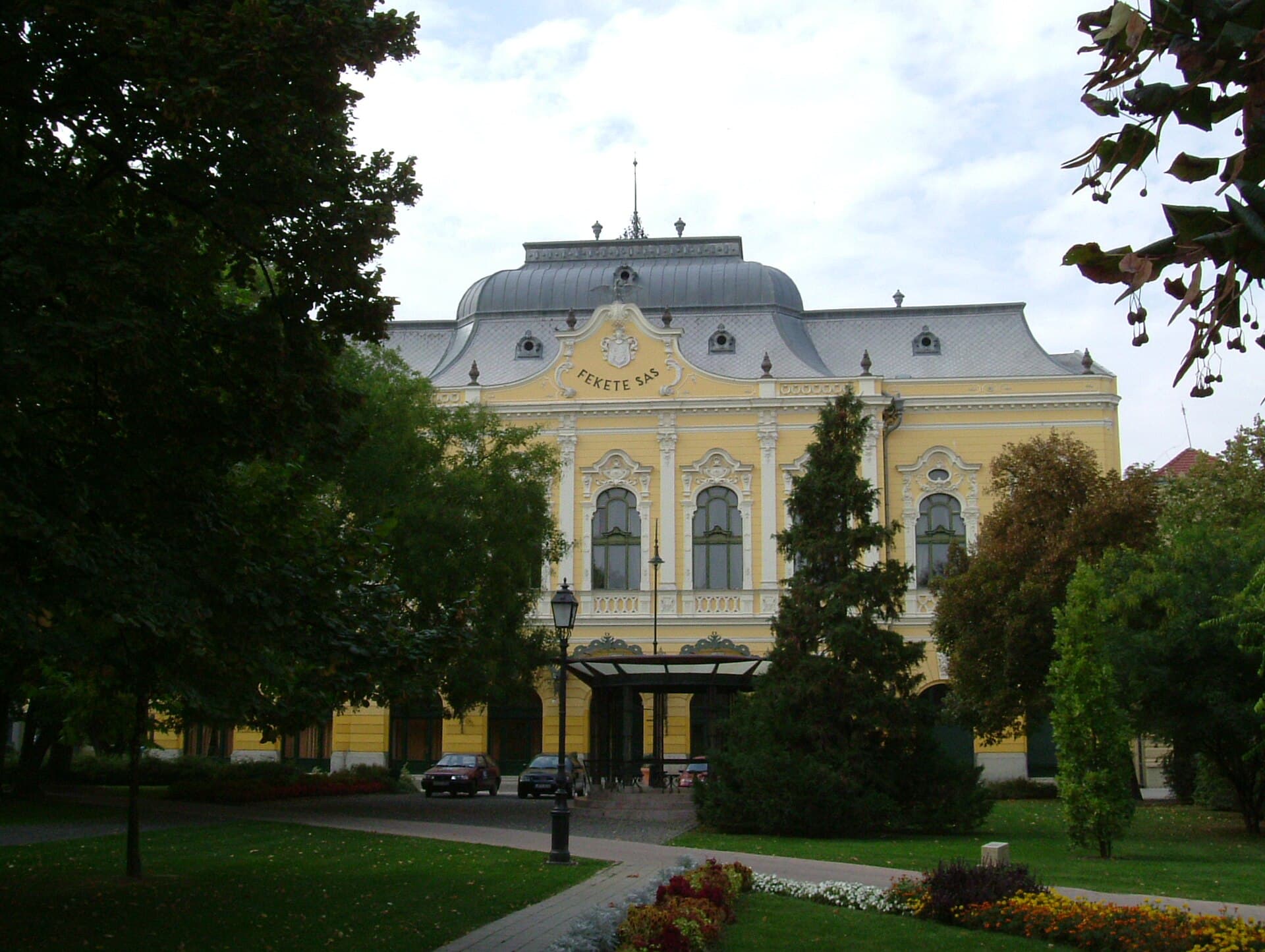
Begin your exploration in Kossuth Square (Kossuth tér), the city's main central square, ideal for a leisurely walk and admiring the surrounding 19th and early 20th-century architecture, including the Town Hall and the Hotel Fekete Sas. From the 50-meter-high tower of the Town Hall, you can enjoy sweeping views of the main square and the city.
For a deeper dive into local history and art, visit the Tornyai János Museum, which houses a collection of ethnographic, archaeological, local history, and fine art objects. The Alföld Gallery, also part of the museum, hosts the paintings of János Tornyai and the nationally important Autumn Exhibition, held annually since 1954. The Emlékpont Museum offers a singular perspective on Hungary's socialist era from 1945 to 1990, showcasing its impact on the lives of Hódmezővásárhely residents.
Discover the city's pottery heritage at the Belvárosi Fazekasház (Downtown Pottery House), where you can see exhibitions and workshops. The Papi Windmill, a folk monument built in 1891, offers a glimpse into traditional milling practices. For relaxation, the Török Sándor Bath and Swimming Pool provides thermal pools known for their therapeutic properties. Religious landmarks include the Reformed Great Church and St. Stephen's Catholic Church, both offering architectural and spiritual interest. The Synagogue, built between 1852 and 1857, is another significant architectural and historical site.
The most pleasant weather in Hódmezővásárhely occurs during April, May, June, July, August, September, and October, with temperatures typically ranging from 18°C to 30°C (64°F to 86°F). For general outdoor activities, late May to mid-September is considered the best time, with a peak in the third week of August. The summer months offer warmer temperatures, while spring and autumn provide comfortable weather with fewer crowds. July is the sunniest month, with approximately 9.4 hours of sunshine per day.
The official currency of Hungary, and therefore Hódmezővásárhely, is the Hungarian Forint (HUF), symbolized as Ft. While Hungary is a member of the European Union, it has not adopted the Euro, so it's advisable to carry Forints, especially outside of major tourist areas. You can exchange currency at various locations in the city.
Hódmezővásárhely is well-connected by public transport. A tram-train system, fully operational since November 2021, provides a direct, transfer-free connection between Hódmezővásárhely and Szeged city centers. Bus services also operate frequently between Hódmezővásárhely and Szeged, with a journey time of about 34 minutes. For travel to Budapest, direct trains are available, taking approximately 3 hours and 42 minutes, or you can take a bus, which takes about 2 hours and 35 minutes.
Many of the city's attractions, including its architecture, public spaces, and cultural heritage, can be enjoyed without an entry fee. Strolling through the city center, visiting Kossuth Square, and exploring various public monuments and parks are all free activities.
Hódmezővásárhely in Korean, in Chinese or in Hebrew — and 29 more languages, every stop narrated by a native voice. The widest language range of any self-guided audio tour.
Available in: