Before Haleiwa became a celebrated surf town, it was a luxurious escape for Honolulu's elite, with a grand hotel at its core. What became of this opulent retreat?
Eric Guinther / CC BY-SA 3.0, via Wikimedia CommonsHaleiwa
Self-guided audio walking tour of Haleiwa — GPS route, offline playback, story-driven narration in 32 languages.
“Where the Pacific swells into legends and the land remembers its sugarcane past.”
Haleiwa, as no one tells it.
Not the postcards. The stories even locals don't know — whispered in your ear, right where they happened.
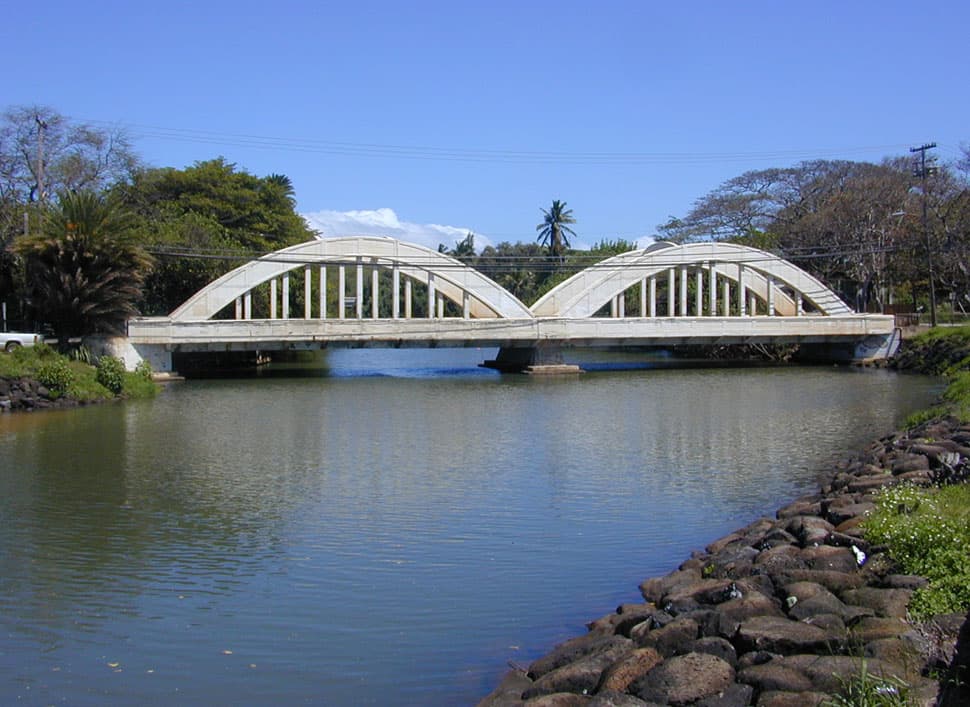
The distinctive Rainbow Bridge is more than just a picturesque landmark; it's a local tradition, though not one officially sanctioned. What secret activity draws people to its arches?
Haleiwa's past is deeply rooted in the sugar industry, and remnants of this era still stand. What became of the once-bustling Waialua Sugar Mill?
Discover every secret of Haleiwa
Every address, every reveal in full — in your ear, right where it happened.
You pick your stops. You walk. The voice reveals what the others miss.

How long do you have in Haleiwa?
Your self-guided audio tour of Haleiwa is ready — pick your landmarks, choose your language, and start the moment you arrive.
BuyThe story of Haleiwa
Haleiwa, on Oahu's North Shore, embodies the quintessential Hawaiian surf culture while holding fast to its plantation-era roots. As the 'Gateway to the North Shore,' it's a place where the pace slows, and the spirit of aloha is palpable. Wooden storefronts, art galleries, and surf shops line the main street, inviting visitors to explore a unique blend of history, art, and outdoor adventure.
Beyond the surf scene, Haleiwa offers a glimpse into Hawaii's agricultural past, with historic buildings reflecting its sugar plantation heritage. The town's commitment to preserving its unique character is evident in its designation as a Historic, Cultural, and Scenic District, ensuring that new developments maintain its distinctive architectural style. Whether drawn by the legendary waves, the local art, or the relaxed atmosphere, Haleiwa provides a fulfilling and unhurried experience that feels a world away from the bustle of Honolulu.
From Ancient Settlements to Sugar Plantations
The area now known as Haleiwa and Waialua was initially settled by Native Hawaiians around 1100 A.D., who cultivated crops like taro and cane sugar in the fertile land with natural springs. The district of Waialua, meaning 'two waters,' was abundant in resources, making it a favored residence for ali'i (chiefs) who designated lands for agriculture, aquaculture, and habitation.
The arrival of Europeans in the early 1800s introduced new farming practices, leading to the growth of the local economy. In 1832, American missionaries John and Ursula Emerson founded the first Christian church in Haleiwa, known today as the Queen Liliuokalani Church.
The Sugar Era and the Haleiwa Hotel
A pivotal moment in Haleiwa's history came with the establishment of the Waialua Agricultural Company in 1898, later known as Waialua Sugar. The sugar industry transformed the town, attracting a diverse influx of workers from Korea, Portugal, Japan, Sweden, Norway, and the Philippines, who, alongside native Hawaiians, shaped Haleiwa's rich cultural blend. Plantation camps, worker housing, and infrastructure development turned Haleiwa into a thriving community.
In 1898, businessman Benjamin Dillingham opened the Haleiwa Hotel, a Victorian-style resort that quickly became a popular destination for affluent visitors from Honolulu. To facilitate travel, a railway line was introduced in 1888, connecting Haleiwa to other parts of the island and offering a two-hour journey from Honolulu directly to the hotel's doorstep. The hotel, which translated to 'beautiful home' at its opening, closed its doors in 1943 and was demolished a decade later.
The Rise of Surf Culture and Preservation
Although the town's economy faced fluctuations, the 1950s marked a turning point when surfers discovered the powerful waves of the North Shore, transforming Haleiwa into a global surf capital. Today, Haleiwa is recognized for its relaxed surf culture, surf shops, and famous breaks like Waimea Bay, Pipeline, and Sunset Beach.
In 1984, the City and County of Honolulu designated Haleiwa a Historic, Cultural, and Scenic District. This designation ensures that new construction adheres to a design plan reflecting the town's territorial and plantation-era architecture, preserving its unique character and historic appeal. Many of these historic buildings still stand, housing shops, galleries, and eateries, allowing visitors to experience Haleiwa's storied past alongside its lively present.
Begin your exploration at the distinctive Anahulu Stream Bridge, affectionately known as the Rainbow Bridge. This double-arched concrete bridge, built in 1921, marks the northern entrance to Old Haleiwa Town and offers sweeping views of the stream and harbor. It's a popular spot for photography, paddleboarding, kayaking, and even bridge jumping into the refreshing waters below.
Stroll through Historic Haleiwa Town itself, where wooden storefronts from the early 1900s house a variety of local shops, art galleries, and boutiques. The Haleiwa Store Lots is a charming collection of restored historic buildings that offer a glimpse into the town's past while providing modern comforts. Seek out the Queen Liliuokalani Church, established in 1832, with its enduring building and early graveyard.
For beach lovers and surfers, Haleiwa offers several beach parks. Pua'ena Beach Park is ideal for beginner surfers. Haleiwa Beach Park provides facilities like showers and picnic tables, while Ali'i Beach is known for its beauty and volleyball court. Take a moment to spot sea turtles in the Anahulu River, especially in the evenings.
Haleiwa enjoys a warm, tropical climate year-round, with temperatures typically ranging from the mid-70s to mid-80s Fahrenheit. Trade winds provide a refreshing breeze, making the heat manageable.
The winter months (roughly October to April) are known for the North Shore's legendary large waves, attracting surfers and spectators to competitions. This period can be busier with more visitors and traffic. Summer (late May to early October) offers calmer ocean conditions, perfect for swimming, snorkeling, and other warm-weather activities. While winters bring more rain, it contributes to the lush green landscapes, and the sun often makes an appearance even on rainy days. Early mornings or late afternoons are ideal for avoiding crowds at beaches and enjoying sunrises or sunsets.
Haleiwa is located on Oahu's North Shore, approximately 35 miles (56 km) northwest of Honolulu, about an hour's drive without traffic. Renting a car is highly recommended for exploring the North Shore. Traffic can be heavy, especially during winter surf season and holidays, so consider leaving early in the morning or later in the afternoon to avoid gridlock. If heading back towards Waikiki or Ko Olina, aim to leave by 2:30 PM to avoid peak traffic.
Parking is generally available, even when the town is crowded. Pack light, comfortable summer clothing, and remember essentials like reef-safe sunscreen, a hat, and sunglasses. While lifeguards are present at most North Shore beaches, only Ali'i Beach Park in Haleiwa has a lifeguard on site, so always check local surf reports and be cautious of high surf.
Haleiwa offers a variety of dining options, from famous shrimp trucks to local restaurants. Some establishments may close before or around 5 PM, so plan accordingly if there's a specific spot you wish to visit.
- What is Haleiwa known for?
- Haleiwa is primarily known as the 'Gateway to the North Shore' and a world-renowned surfing destination, celebrated for its powerful winter waves and relaxed surf culture. It's also recognized for its historic plantation-era architecture, local art galleries, boutique shops, and delicious food, particularly shrimp and poke bowls.
- How do you pronounce Haleiwa?
- Haleiwa is pronounced 'hah-lay-EE-wah.'
- What does the name Haleiwa mean?
- The name Haleiwa is derived from Hawaiian words 'hale' (house) and 'iwa' (frigate bird), translating to 'house of the frigate bird.' Figuratively, it can also mean 'home of attractive people.'
- Is Haleiwa crowded?
- Haleiwa can be crowded, especially during winter holidays, summer vacations, and spring break, largely due to surf competitions and general tourism. Traffic to and from Haleiwa can also be heavy during peak times.
- What are some popular activities in Haleiwa?
- Popular activities in Haleiwa include surfing, paddleboarding or kayaking on the Anahulu River, exploring historic Haleiwa Town's shops and art galleries, visiting local beaches like Pua'ena Beach Park, and enjoying local food trucks and restaurants.
- Are there any annual events in Haleiwa?
- Yes, Haleiwa hosts events such as the Haleiwa Arts Festival, an annual non-profit event showcasing local artists, music, and dance. Various local markets, like the Haleiwa Farmers Market at Waimea Valley, also occur regularly.