Domkirkeodden (Cathedral Ruins)
Hamar's medieval cathedral met a fiery end, but its remains are now protected by a structure so striking it has been called one of the world's most beautiful museums.
Full story unlocks in the tour
 Bjørn Christian Tørrissen / CC BY-SA 4.0, via Wikimedia Commons
Self-guided audio walking tour of Hamar — GPS route, offline playback, story-driven narration in 32 languages.
“Where Viking echoes meet Olympic spirit on Norway's largest lake.”
Not the postcards. The stories even locals don't know — whispered in your ear, right where they happened.
Hamar's medieval cathedral met a fiery end, but its remains are now protected by a structure so striking it has been called one of the world's most beautiful museums.
Hamar's Olympic ice arena isn't just for skating; it regularly hosts an unexpected annual gathering for thousands of tech-savvy youth.
You can leap for free from what is known as Norway's most expensive diving platform.
Discover every secret of Hamar
Every address, every reveal in full — in your ear, right where it happened.
You pick your stops. You walk. The voice reveals what the others miss.


Your self-guided audio tour of Hamar is ready — pick your landmarks, choose your language, and start the moment you arrive.
BuyLume has a built-in augmented-reality guide. Hold your phone up and its camera shows the street ahead of you, with a glowing arrow laid over the real view that always points to your next stop — no map to puzzle over, no wrong turns. Like everything in Lume, it works fully offline.
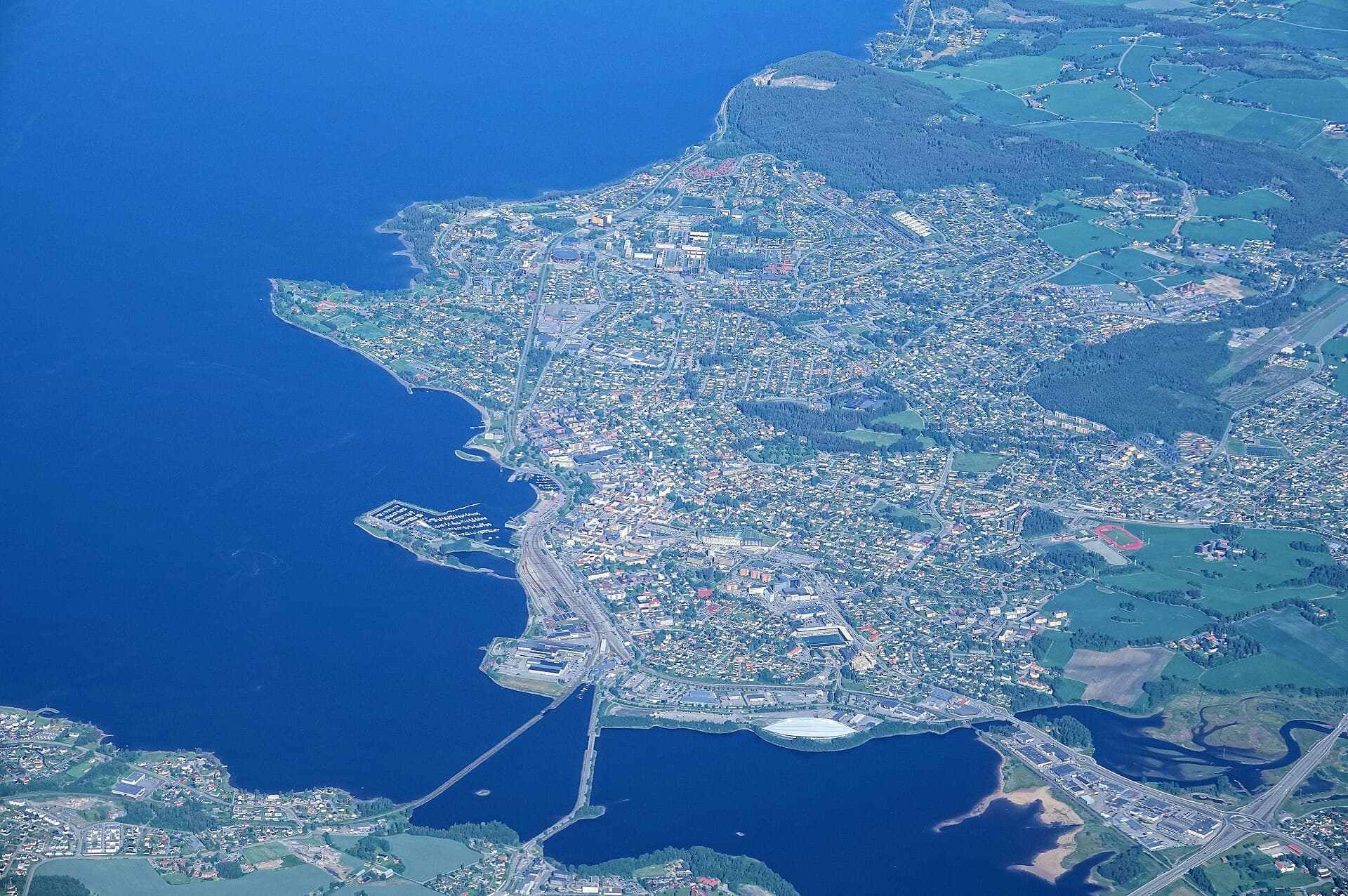
Hamar, a city on the eastern shore of Lake Mjøsa, Norway's largest lake, presents a captivating blend of deep historical roots and modern vitality. Once a significant medieval center, it now thrives as a cultural and technological hub in the Innlandet region. The city's scenic waterfront, framed by the reflective waters of Mjøsa and surrounding farmlands, offers a tranquil charm that belies its dramatic past.
Visitors to Hamar can explore ancient ruins encased in striking contemporary architecture, cruise on a historic paddle steamer, and experience world-class sporting venues. It's a place where Viking echoes resonate alongside Olympic spirit, providing a unique Norwegian experience that combines natural beauty with fascinating cultural insights.
Hamar's history stretches back to the early Middle Ages, with archaeological evidence suggesting settlements existed in this resource-rich area long before the 12th century. The city's official founding date is 1152, when papal legate Nicholas Breakspear (who would later become Pope Adrian IV, the only English Pope) established a bishop's see here. This decision transformed Hamar into a vital religious and political center, organized around its cathedral and bishop's manor.
The medieval city flourished, becoming a hub for trade, education, and culture. It included a monastery, a cathedral school, and a hospital, and was even known for its fragrant apple orchards. However, the Reformation in the 16th century brought significant changes, leading to the abolition of the Catholic diocese and the city's gradual loss of influence. The final blow came in 1567 during the Northern Seven Years' War, when Swedish forces attacked and largely destroyed the medieval cathedral and burned the town, leaving it largely abandoned for centuries.
Modern Hamar began its rebirth in the 19th century. After decades of discussion, the city was re-established and granted city status in 1849. The introduction of steamboats on Lake Mjøsa played a role in sparking renewed interest in the area. The new Hamar quickly developed, and in 1863, it was decided to re-establish Hamar as a bishopric, leading to the consecration of the current Hamar Cathedral in 1866. In more recent history, Hamar gained international recognition by hosting figure skating, short track, and speed skating events during the 1994 Winter Olympics, solidifying its reputation as a significant sporting city.
Begin your exploration at Domkirkeodden, a unique museum complex where the ruins of the medieval Hamar Cathedral are dramatically preserved within a protective glass structure. This 'Glass Cathedral' offers incredible acoustics and a tangible connection to Hamar's past.
Next, visit the Norwegian Railway Museum (Norsk Jernbanemuseum), Norway's oldest technology museum. It's an engaging experience for all ages, featuring historical locomotives, vintage station memorabilia, and a railway park where you can even ride a train.
Consider the Vikingskipet Arena, an architectural marvel shaped like an upturned Viking ship. Constructed for the 1994 Winter Olympics, it remains a prominent venue for sports and events.
For a leisurely experience, take a cruise on the DS Skibladner, the world's oldest operating paddle steamer, across Lake Mjøsa. Enjoy the lakeside promenade and the Koigen beach area, where you can relax, swim, or even leap from the famous (and free) diving platform.
Art enthusiasts should consider the Kirsten Flagstad Museum, dedicated to the renowned opera singer born in Hamar. For those interested in local produce and farm life, explore the surrounding fertile agricultural lands and farm shops.
The best time to visit Hamar for warm-weather activities is from late June to mid-August. During these months, expect average daily highs between 14°C and 23°C, with July being the warmest. This period offers the longest daylight hours and is ideal for enjoying Lake Mjøsa and outdoor pursuits. Early autumn (September) also offers pleasant temperatures and beautiful fall foliage, with fewer crowds.
Hamar is approximately 126 km (78 miles) north of Oslo. It's easily accessible by train, with hourly services from Oslo and direct connections from Oslo Airport, Trondheim, and Lillehammer. The train journey from Oslo takes about 75 minutes. If driving, the E6 highway from Oslo takes approximately 90 minutes.
Within Hamar, cycling is a popular way to get around during warmer months due to the well-developed network of bike paths and relatively flat terrain. Public transport is available, though taxis can be expensive. Accommodation options range from hotels close to the downtown area and train station, such as Thon Hotel Victoria, to those geared towards conferences near Vikingskipet, like Scandic Hamar.
Hamar in Korean, in Chinese or in Hebrew — and 29 more languages, every stop narrated by a native voice. The widest language range of any self-guided audio tour.
Available in: