Hamina's street plan
Hamina's layout is so distinctive, it shares a rare architectural kinship with only one other town in Europe.
Full story unlocks in the tour
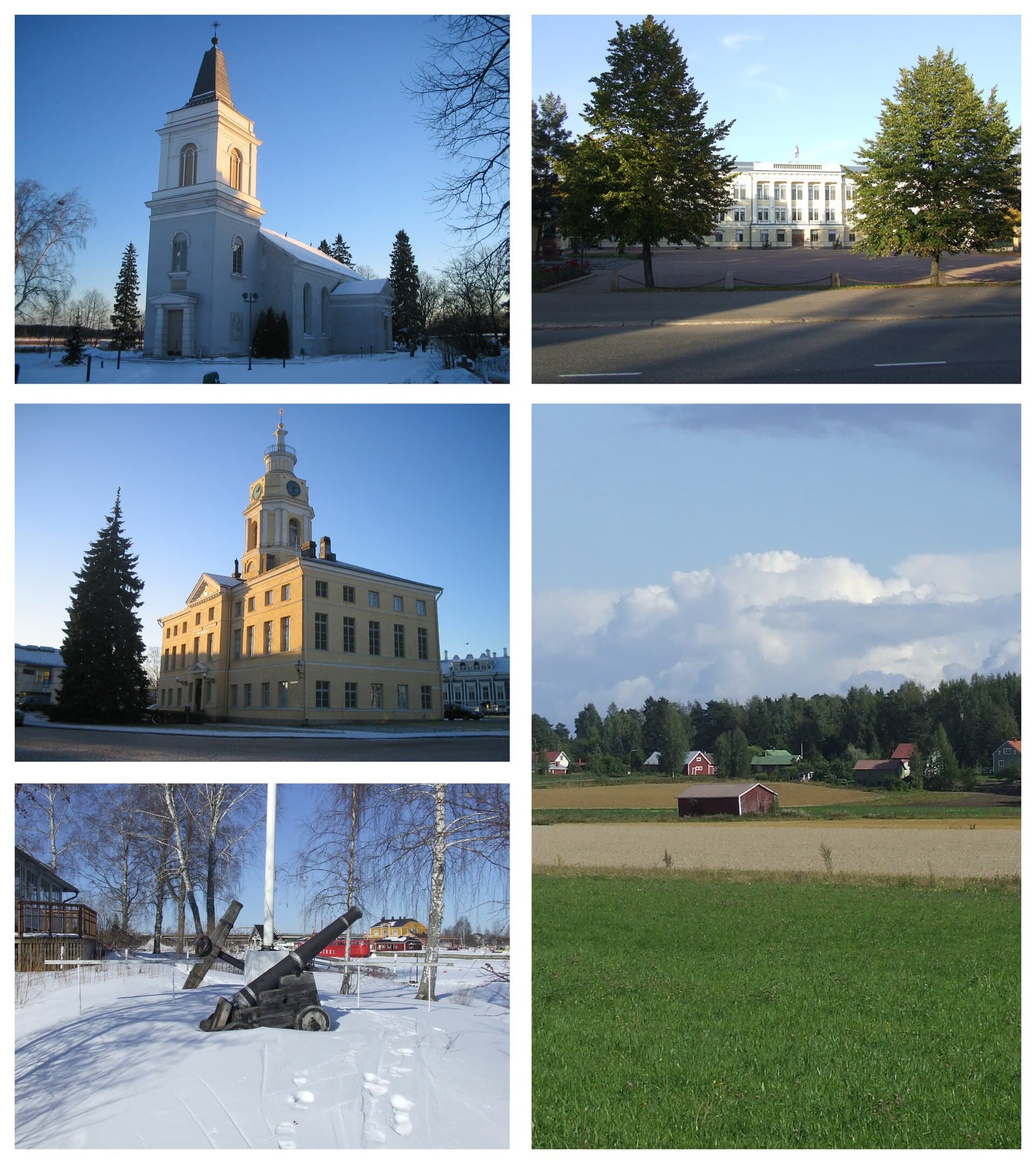 Niera / CC BY-SA 4.0, via Wikimedia Commons
Self-guided audio walking tour of Hamina — GPS route, offline playback, story-driven narration in 32 languages.
“Where Renaissance geometry meets Finnish fortitude.”
Not the postcards. The stories even locals don't know — whispered in your ear, right where they happened.
Hamina's layout is so distinctive, it shares a rare architectural kinship with only one other town in Europe.
Beneath Hamina's main event arena lies a network of brick vaults designed for a much more explosive purpose.
This Finnish church has a surprising connection to Napoleon's final resting place.
Discover every secret of Hamina
Every address, every reveal in full — in your ear, right where it happened.
You pick your stops. You walk. The voice reveals what the others miss.

Your self-guided audio tour of Hamina is ready — pick your landmarks, choose your language, and start the moment you arrive.
BuyLume has a built-in augmented-reality guide. Hold your phone up and its camera shows the street ahead of you, with a glowing arrow laid over the real view that always points to your next stop — no map to puzzle over, no wrong turns. Like everything in Lume, it works fully offline.
Hamina, a captivating coastal town in southeastern Finland, offers a journey through centuries of strategic importance and unique urban planning. It stands out with its rare circular city plan, a deliberate design influenced by Italian Renaissance ideals, where streets radiate from a central Town Hall Square and are encompassed by a star-shaped fortress. This distinctive layout makes Hamina one of only two such fortress towns in Europe, the other being Palmanova in Italy.
Beyond its striking geometry, Hamina is a city alive with stories, having served as a border stronghold between Sweden and Russia for centuries. Its past is etched into the colorful wooden houses, historic churches, and robust fortifications that invite exploration. From grand military music festivals to tranquil walks along ancient ramparts, Hamina offers a blend of cultural vibrancy and serene historical reflection.
## From Medieval Trading Post to Star Fortress Hamina's origins trace back to the medieval merchant town of Vehkalahti, which was granted city status in 1653 as Vehkalahden Uusikaupunki. Its location on the border between Sweden and Russia made it a crucial trading hub. However, this strategic position also made it vulnerable, and the town was destroyed by Russian troops during the Great Northern War in the early 18th century.
Following its destruction, the Swedes rebuilt Hamina as a military center, initiating the construction of its star-shaped fortress in 1722. This ambitious project, designed by Swedish General Axel von Löwen, drew inspiration from 16th-century Italian Renaissance fortress towns like Palmanova, resulting in Hamina's distinctive circular and radial street plan. The fortress was designed with six bastions, each named after Finnish towns with fortifications.
Despite these efforts, the half-built fortress was captured by Russia during the Russo-Swedish War of 1741–1743. Under Russian rule, Hamina became a frontier town and its fortifications were modernized and expanded, housing a garrison for nearly two centuries. The 19th century saw Hamina flourish as a multilingual cultural hub, where French, German, Swedish, Finnish, and Russian were spoken, reflecting its position as a crossroads between East and West. The city's importance diminished after Finland became an autonomous Grand Duchy within the Russian Empire in 1809.
In the 20th century, Hamina continued its military legacy with the establishment of the Reserve Officer School in 1920, a few years after Finland gained independence. Today, the city embraces its past, with its well-preserved fortress and unique urban design drawing visitors from around the world.
Begin your exploration at the Hamina Town Hall, a neoclassical building by Carl Ludvig Engel, standing at the very center of the circular street plan. From here, the radial streets lead you to other key sights. Discover the Hamina Fortress, a star-shaped bastion fortress with six bastions, each named after Finnish towns. Walk the Fortress Path, a 4.5-kilometer trail along the ramparts, offering views of the city and its historic buildings. The Hamina Bastion, the largest of the fortress bastions, now serves as an international event arena, with its mysterious 58 brick casemates open for exploration.
Visit the Orthodox Church of Saints Peter & Paul, designed by Louis Visconti with Byzantine features and an onion dome. Nearby, the St. Mary's Church, originally medieval, features a neoclassical exterior by Carl Ludvig Engel after an 1821 fire. The Hamina City Museum offers insights into the city's past, including the room where Catherine the Great and Gustav III met. Do not miss the Lippupuisto (Flag Park), home to the world's tallest flagpole. For art enthusiasts, the Town Hall also houses murals by the beloved Finnish artist Tove Jansson.
The best time to visit Hamina for warm-weather activities and outdoor festivals is from late June to mid-August, when temperatures are comfortable, averaging around 70°F (21°C) in July. During this period, the city comes alive with events like the Hamina Tattoo, an international military music festival held in July. The long daylight hours of the Finnish summer also provide ample opportunity for exploration. For those interested in winter activities and snowscapes, December to March offers snowy conditions, though temperatures are much colder. Autumn (September-October) brings beautiful foliage, while spring (April-May) sees the defrosting and blossoming of forests.
Hamina is easily accessible by bus, with frequent connections from Helsinki (approximately 1.5 hours) and nearby Kotka (under 30 minutes). While Hamina does not have its own airport, Lappeenranta Airport (LPP) is about 74 km away, and Helsinki Airport (HEL) offers more international connections. The city center is compact and walkable, especially the old town within the fortress walls. Bicycle sharing systems are also available. Accommodation options within Hamina's center are limited, with Spa Hotel Hamina being a primary choice; more options can be found in nearby Kotka. Finnish culture values honesty, equality, and respect for others, with a strong emphasis on peace and quiet, particularly during evening hours.
Hamina in Korean, in Chinese or in Hebrew — and 29 more languages, every stop narrated by a native voice. The widest language range of any self-guided audio tour.
Available in: