Millennium Bridge
This sleek pedestrian bridge didn't just get destroyed by Death Eaters on screen; it had a real-life wobble problem that earned it a rather fitting nickname.
Full story unlocks in the tour
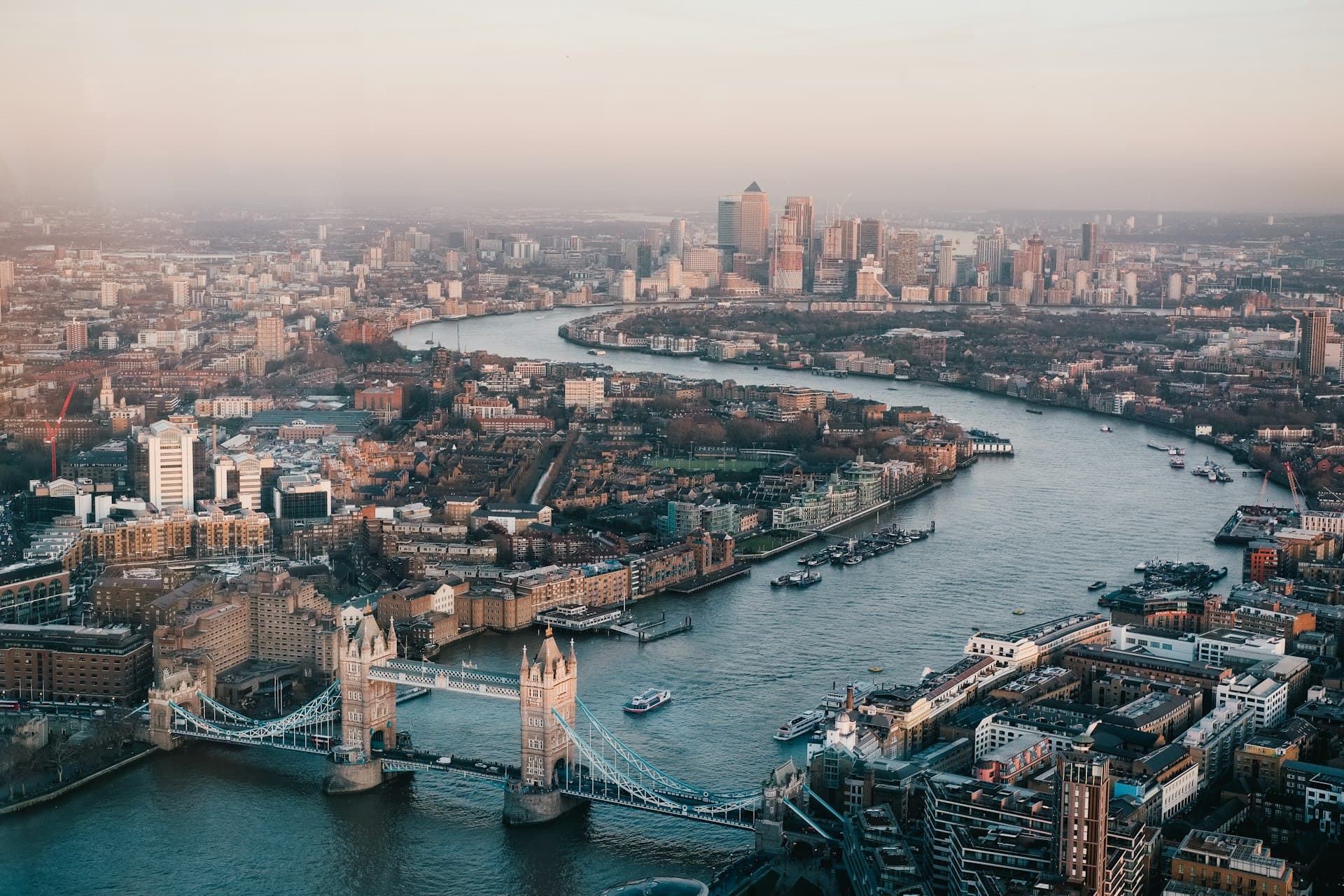 Photo: Benjamin Davies / Unsplash
Self-guided audio walking tour of Harry Potter's London — GPS route, offline playback, story-driven narration in 32 languages.
“Walk the Muggle streets where magic unfolded.”
Not the postcards. The stories even locals don't know — whispered in your ear, right where they happened.
This sleek pedestrian bridge didn't just get destroyed by Death Eaters on screen; it had a real-life wobble problem that earned it a rather fitting nickname.
The blue door leading to the Leaky Cauldron in the first film isn't a magical pub in reality, but it has housed a rather mundane business.
Leaky Cauldron's entrance moved for a darker film, and the reason involved a very large, very purple mode of transport.
Discover every secret of Harry Potter's London
Every address, every reveal in full — in your ear, right where it happened.
You pick your stops. You walk. The voice reveals what the others miss.
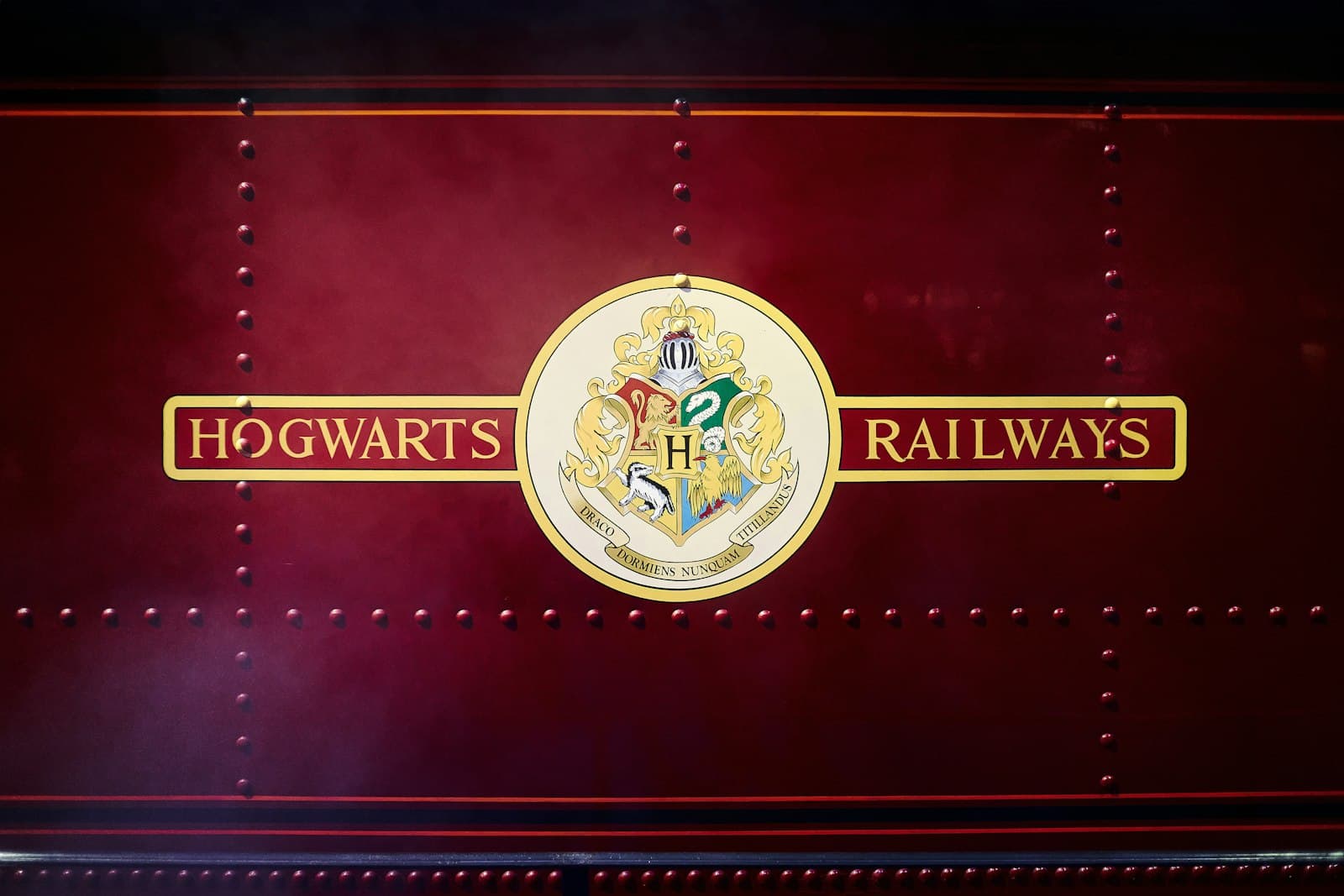
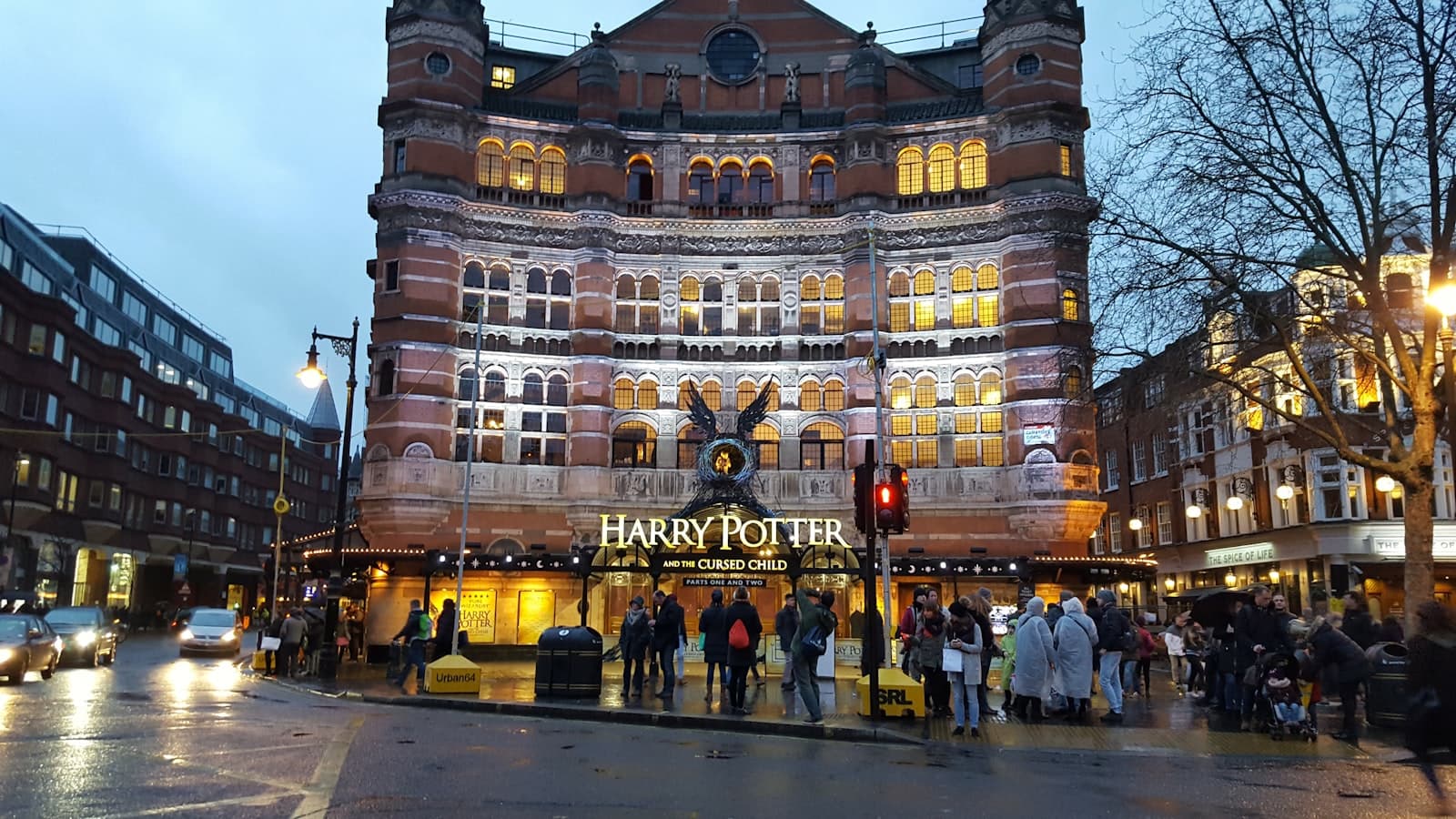
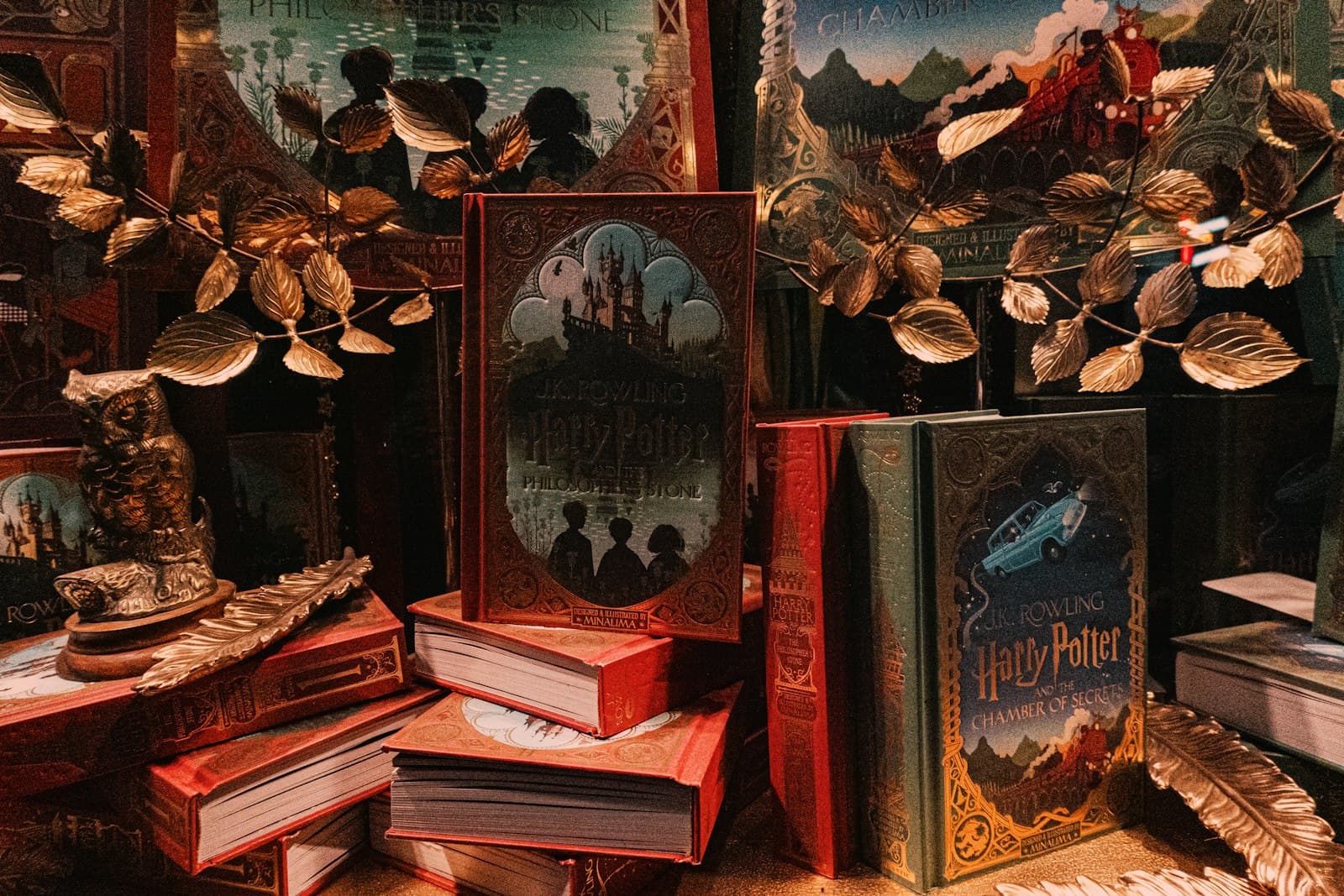
Your self-guided audio tour of Harry Potter's London is ready — pick your landmarks, choose your language, and start the moment you arrive.
BuyLume has a built-in augmented-reality guide. Hold your phone up and its camera shows the street ahead of you, with a glowing arrow laid over the real view that always points to your next stop — no map to puzzle over, no wrong turns. Like everything in Lume, it works fully offline.
Step into the wizarding world without needing a Portkey. This self-guided audio walk takes you through central London, revealing the real-life locations that brought J.K. Rowling's magical universe to the silver screen. From lively markets that doubled as Diagon Alley to the grand halls of Gringotts, you'll discover the Muggle facades behind some of the most iconic scenes in the Harry Potter films.
This isn't a studio tour; it's an exploration of London through a magical lens, uncovering the subtle and sometimes surprising ways the city's architecture and atmosphere were woven into Harry's story. Prepare to see familiar landmarks with new eyes, as you trace the footsteps of Harry, Hermione, and Ron through the very streets where their adventures unfolded.
The story of Harry Potter's London is a tale of imagination meeting reality. When the film adaptations of J.K. Rowling's beloved books began, filmmakers sought out locations across the UK that could embody the whimsical, mysterious, and sometimes dark corners of the wizarding world. London, with its enduring character and diverse architecture, proved to be a rich source.
Early in the series, locations like Leadenhall Market were chosen for their Victorian charm, providing the perfect backdrop for the lively, concealed alleyways of Diagon Alley and the entrance to the Leaky Cauldron in Harry Potter and the Philosopher's Stone. As the films progressed and the stories grew darker, the production team often sought out locations that reflected this shift. Borough Market, with its grittier, more atmospheric railway arches, became the new entrance to the Leaky Cauldron for Harry Potter and the Prisoner of Azkaban, accommodating the memorable Knight Bus scene.
Iconic London landmarks were also drafted into service. The Millennium Bridge, a modern pedestrian crossing over the Thames, became a dramatic casualty in Harry Potter and the Half-Blood Prince, destroyed by Death Eaters in a striking display of dark magic. King's Cross Station, a pivotal location in the books as the departure point for the Hogwarts Express, was faithfully represented, with the famous Platform 9¾ becoming a real-world photo opportunity for fans.
Even diplomatic buildings played a role. Australia House, the High Commission of Australia, lent its magnificent Beaux-Arts interior to Gringotts Wizarding Bank, providing the awe-inspiring setting for Harry's first foray into the wizarding economy. Residential squares like Claremont Square inspired the secretive 12 Grimmauld Place, while the imposing architecture of Great Scotland Yard stood in for the Ministry of Magic's visitor entrance. These diverse locations, from lively public spaces to grand, stately buildings, collectively stitched together the magical fabric of Harry Potter's London, allowing fans to experience the magic in the very heart of the Muggle world.
Your journey begins at the Millennium Bridge, where you can walk across the pedestrian bridge that Death Eaters dramatically destroyed in Harry Potter and the Half-Blood Prince. Next, immerse yourself in the Victorian grandeur of Leadenhall Market, which served as the exterior for Diagon Alley and the original entrance to the Leaky Cauldron in Harry Potter and the Philosopher's Stone. Seek out the blue door on Bull's Head Passage. A short walk leads to Borough Market, where a flower shop on Stoney Street became the grungier entrance to the Leaky Cauldron in Harry Potter and the Prisoner of Azkaban.
Journey north to King's Cross Station, the iconic departure point for the Hogwarts Express. Here, you'll find the famous Platform 9¾ photo opportunity with a luggage trolley disappearing into the wall, and the official Harry Potter Shop. Nearby, the Gothic Revival architecture of St Pancras Renaissance Hotel stood in for the exterior of King's Cross in Harry Potter and the Chamber of Secrets. Continue to Claremont Square, the residential square that inspired and was used for the exterior shots of 12 Grimmauld Place, the headquarters of the Order of the Phoenix. Finally, head to Great Scotland Yard, which portrayed the visitor's entrance to the Ministry of Magic, and Piccadilly Circus, where Harry, Ron, and Hermione apparated into the bustling West End in Harry Potter and the Deathly Hallows: Part 1.
London's Harry Potter locations are accessible year-round. Weekdays, particularly mornings, generally offer fewer crowds, especially at popular spots like Platform 9¾. However, visiting during school holidays or festive periods can be particularly lively, with many fans dressed in wizarding attire at King's Cross. Be aware that Australia House, home to the Gringotts interior, is a working embassy and its interior is generally only viewable on weekdays.
This walking tour is best done on foot, with comfortable shoes. London's public transport, particularly the Underground (Tube), will be essential for covering longer distances between clusters of locations. Consider purchasing an Oyster card or using contactless payment for seamless travel. Many locations are free to visit, as they are public streets and building exteriors. While photography is generally permitted, be mindful of private property and crowds, especially at King's Cross. Allow ample time for queues at Platform 9¾ if you wish to take a photo with the trolley.
Harry Potter's London in Korean, in Chinese or in Hebrew — and 29 more languages, every stop narrated by a native voice. The widest language range of any self-guided audio tour.
Available in: