Durward Street (formerly Buck's Row)
The first canonical victim of Jack the Ripper was discovered here, but initial reports missed a crucial detail.
Full story unlocks in the tour
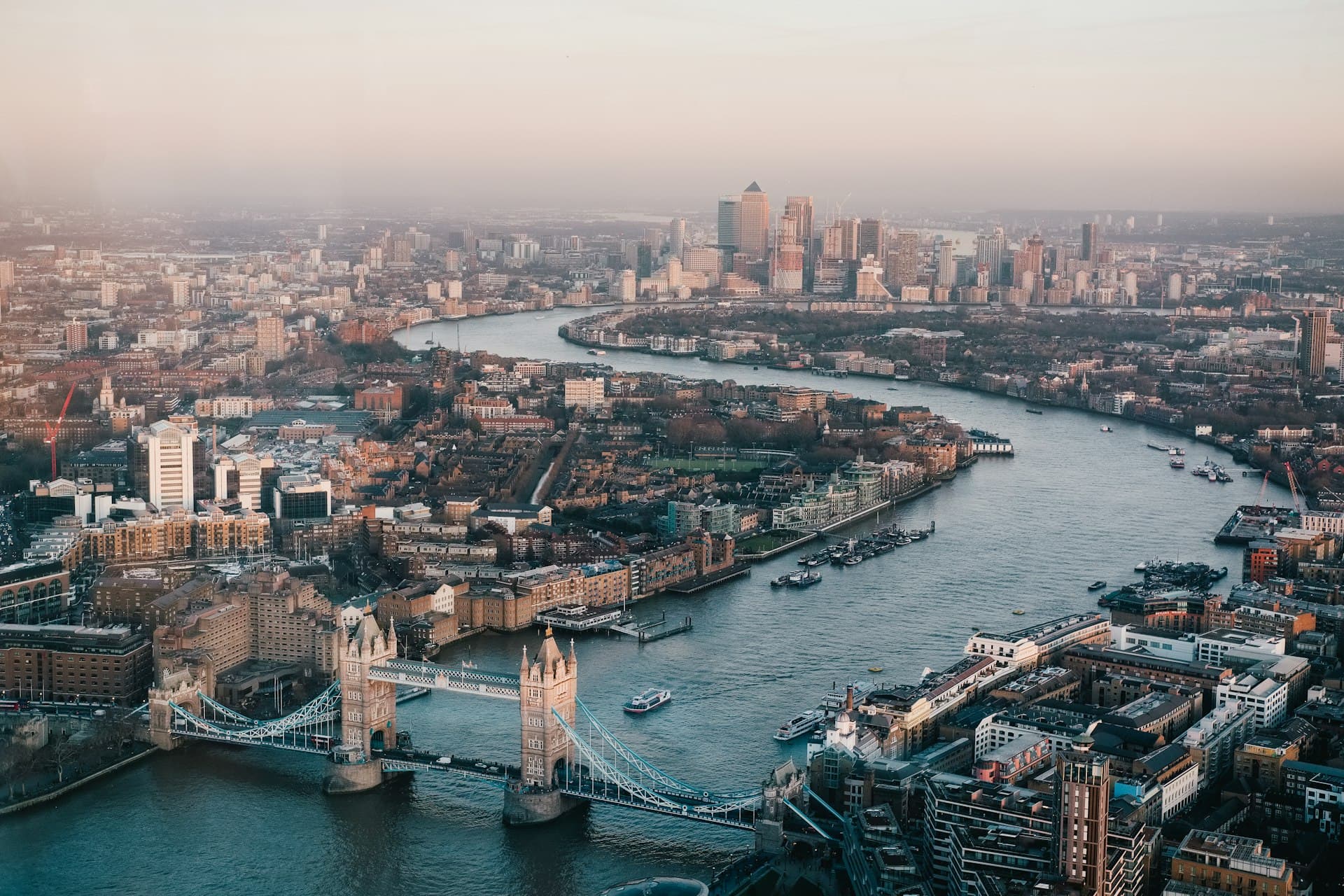 Photo: Benjamin Davies / Unsplash
Self-guided audio walking tour of Jack the Ripper's Whitechapel — GPS route, offline playback, story-driven narration in 32 languages.
“Walk the gaslit streets where history's most elusive killer stalked the shadows.”
Not the postcards. The stories even locals don't know — whispered in your ear, right where they happened.
The first canonical victim of Jack the Ripper was discovered here, but initial reports missed a crucial detail.
The second victim's murder here holds a chilling detail about a neighbor's inaction.
This murder scene was the only one to occur within the City of London, leading to a unique police response.
Discover every secret of Jack the Ripper's Whitechapel
Every address, every reveal in full — in your ear, right where it happened.
You pick your stops. You walk. The voice reveals what the others miss.

Your self-guided audio tour of Jack the Ripper's Whitechapel is ready — pick your landmarks, choose your language, and start the moment you arrive.
BuyLume has a built-in augmented-reality guide. Hold your phone up and its camera shows the street ahead of you, with a glowing arrow laid over the real view that always points to your next stop — no map to puzzle over, no wrong turns. Like everything in Lume, it works fully offline.
Step into the haunting echoes of 1888 Whitechapel, a district in London's East End forever etched in history by the shadow of an unknown killer. This self-guided audio walk invites you to traverse the very streets where Jack the Ripper committed his infamous murders, offering a sober and historically grounded exploration of the events that gripped Victorian London. Beyond the sensationalism, this tour peels back the layers of time to reveal the harsh realities of life in a poverty-stricken East End, where desperation and resilience coexisted amidst the gaslit alleys and crowded tenements.
As you walk, you'll encounter the surviving architecture and street layouts that would have been chillingly familiar to both the victims and their elusive attacker. This isn't a tour designed for gore, but rather for a profound understanding of the social conditions, the police investigation, and the enduring mystery that continues to fascinate. It's an opportunity to connect with a pivotal moment in criminal history, to ponder the lives lost, and to consider the profound impact these unsolved crimes had on a city already grappling with immense social change.
In 1888, Whitechapel stood in stark contrast to the grandeur often associated with Victorian London. Just a short distance east of the opulent City of London, it was a district of crushing poverty, overcrowding, and desperate lives. Charles Booth's poverty maps of the era colored much of Whitechapel in shades indicating 'very poor' and 'semi-criminal' populations. Housing was severely overcrowded, with entire families often sharing a single room, and multiple families crammed into buildings designed for one. Ventilation was poor, natural light was scarce, and privacy was almost non-existent. Common lodging houses, or 'doss houses,' were central to the survival economy, offering a bed for fourpence a night, or even a place to sleep sitting upright, supported by a rope, for less.
Sanitation was abysmal; modern sewerage systems were incomplete, leading to waste accumulation in courts and alleyways. Contaminated water, coupled with overcrowding and malnutrition, fueled outbreaks of diseases like tuberculosis, typhoid, and cholera. Child mortality rates were shockingly high, with two out of every ten children dying before the age of five. The air was often thick with a heavy coal smoke haze.
Employment was unstable and often brutal, with many residents working in casual or 'sweated' labor like tailoring, boot making, or dock work, characterized by long hours and minimal pay. Women, facing even fewer options, often turned to casual prostitution to afford food or a bed. The Metropolitan Police estimated around 1,200 women worked as prostitutes in Whitechapel in October 1888. This economic vulnerability is crucial to understanding the lives of the Ripper's victims, who were not random passers-by but women navigating extreme poverty. The district was also a melting pot of nationalities and cultures, a first stopping point for immigrants, particularly Jewish refugees fleeing persecution in Eastern Europe and Russia, which contributed to both a lively community and social tensions.
The Jack the Ripper murders, occurring between August and November 1888, sent shockwaves through Whitechapel and beyond. The brutal nature of the crimes – victims found with their throats cut and bodies mutilated – created an atmosphere of genuine terror. Women were afraid to walk the streets alone, and vigilance committees were formed by local residents. The press coverage was unprecedented, with newspapers worldwide reporting every development. The killer's identity remains unknown, leading to over 100 suspects and countless theories, from local criminals to members of the royal family.
This walk focuses on the exteriors and public streets that retain a tangible link to the 1888 Whitechapel murders. You'll begin on Durward Street, formerly Buck's Row, where Mary Ann Nichols, the first canonical victim, was discovered. Though some modern buildings stand, the general layout and the presence of the old Board School offer a sense of the past.
Next, explore Hanbury Street, the site of Annie Chapman's murder. While 29 Hanbury Street, where her body was found, was demolished for a brewery, the remaining Victorian buildings on the south side and the street's character still evoke the era.
Mitre Square is a key stop, being the only canonical murder site within the City of London. Though it has seen some redevelopment, the square's footprint and surrounding passages, like St James's Passage (formerly Church Passage), remain.
Henriques Street, once Berner Street, is where Elizabeth Stride's body was found in Dutfield's Yard. The yard itself is gone, replaced by a primary school, but the street's narrowness and the surrounding architecture hint at its former appearance.
Gunthorpe Street, formerly George Yard, is a particularly evocative spot. This cobbled alleyway, accessed via an archway next to the White Hart pub, offers a strong sense of Victorian Whitechapel and was the site of Martha Tabram's murder.
Pass the frontage of The Ten Bells pub, a historic establishment directly connected to the victims. Finally, observe Christ Church Spitalfields, a magnificent architectural landmark that would have overlooked the impoverished streets, serving as a powerful visual contrast to the grim realities of the East End.
The Whitechapel area can be visited year-round. For the most atmospheric experience, consider walking in the late afternoon or early evening as dusk settles, when the streetlights begin to cast long shadows, evoking the gaslit streets of 1888. Weekdays might offer a slightly less crowded experience than weekends. London's weather is unpredictable, so check forecasts and dress accordingly.
Wear comfortable walking shoes, as this tour involves significant walking on city streets, including some cobbled areas. The route is generally flat and accessible. While Whitechapel and Spitalfields are now lively and safe areas, it's always wise to be aware of your surroundings, especially if walking in the evening. Public transport links are excellent, with Whitechapel and Aldgate East Underground stations serving the area, making it easy to reach the starting point and depart. Consider bringing a portable charger for your phone, as using an audio guide and GPS can drain battery. There are numerous cafes and pubs along the route for refreshments.
Jack the Ripper's Whitechapel in Korean, in Chinese or in Hebrew — and 29 more languages, every stop narrated by a native voice. The widest language range of any self-guided audio tour.
Available in: