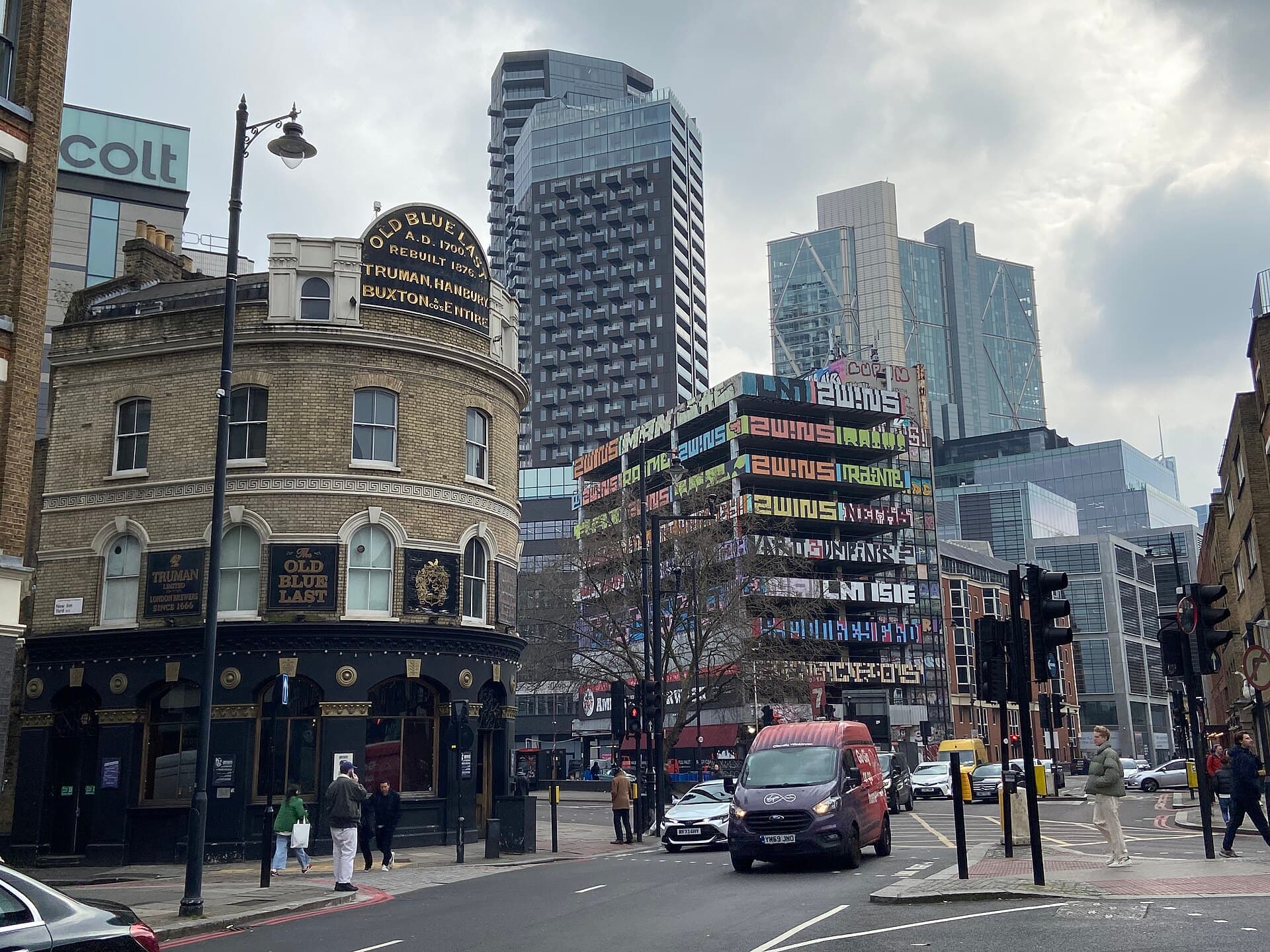
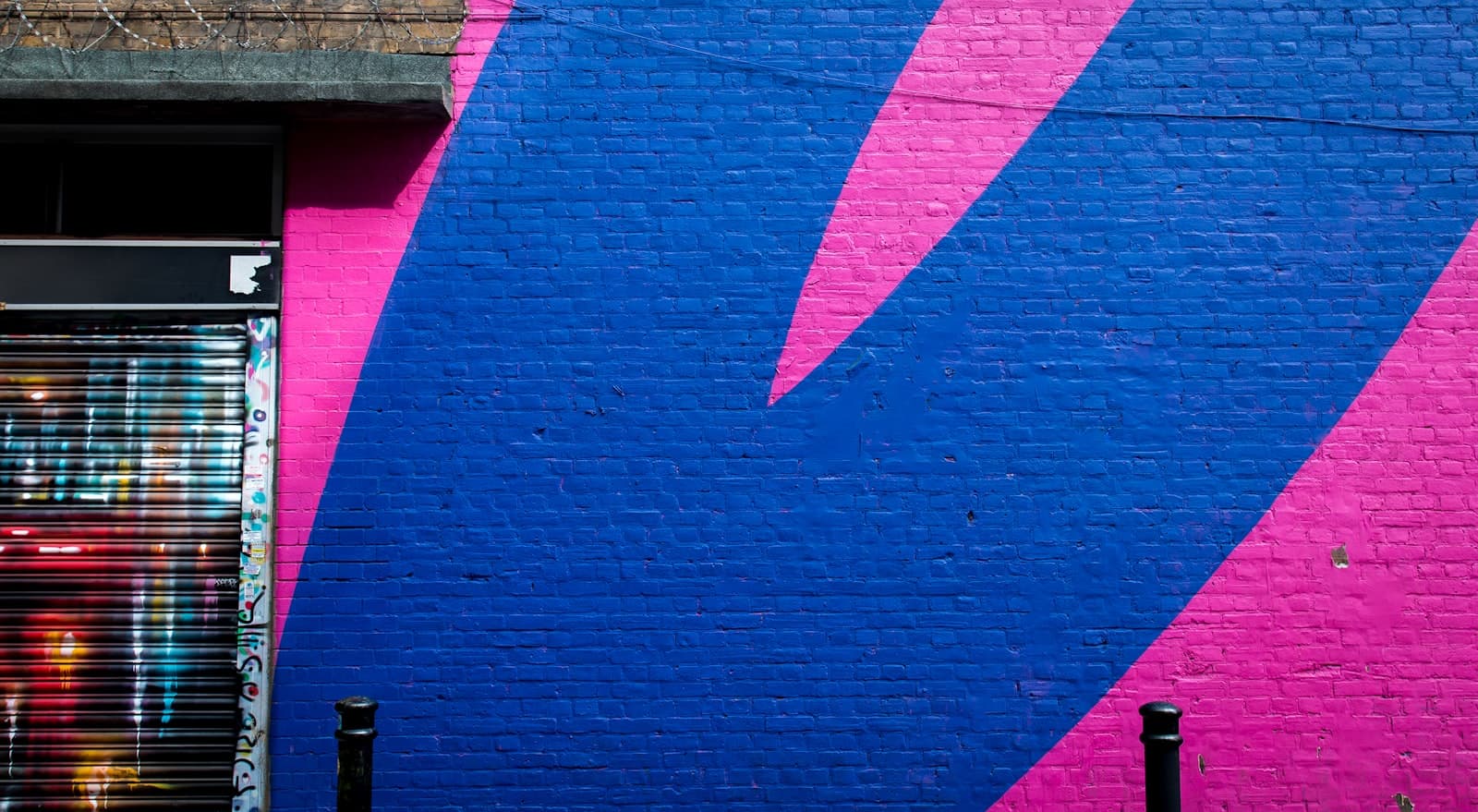
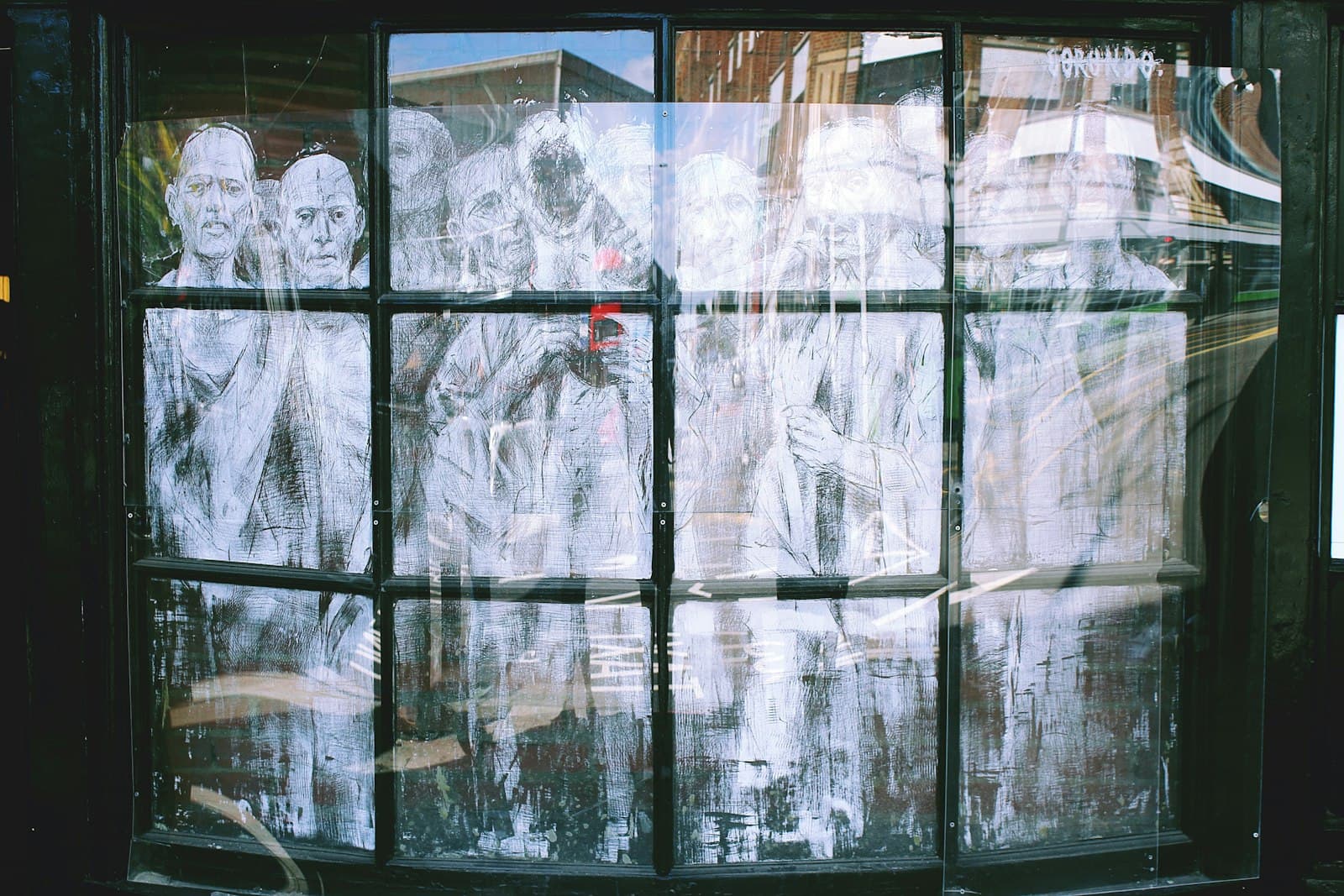
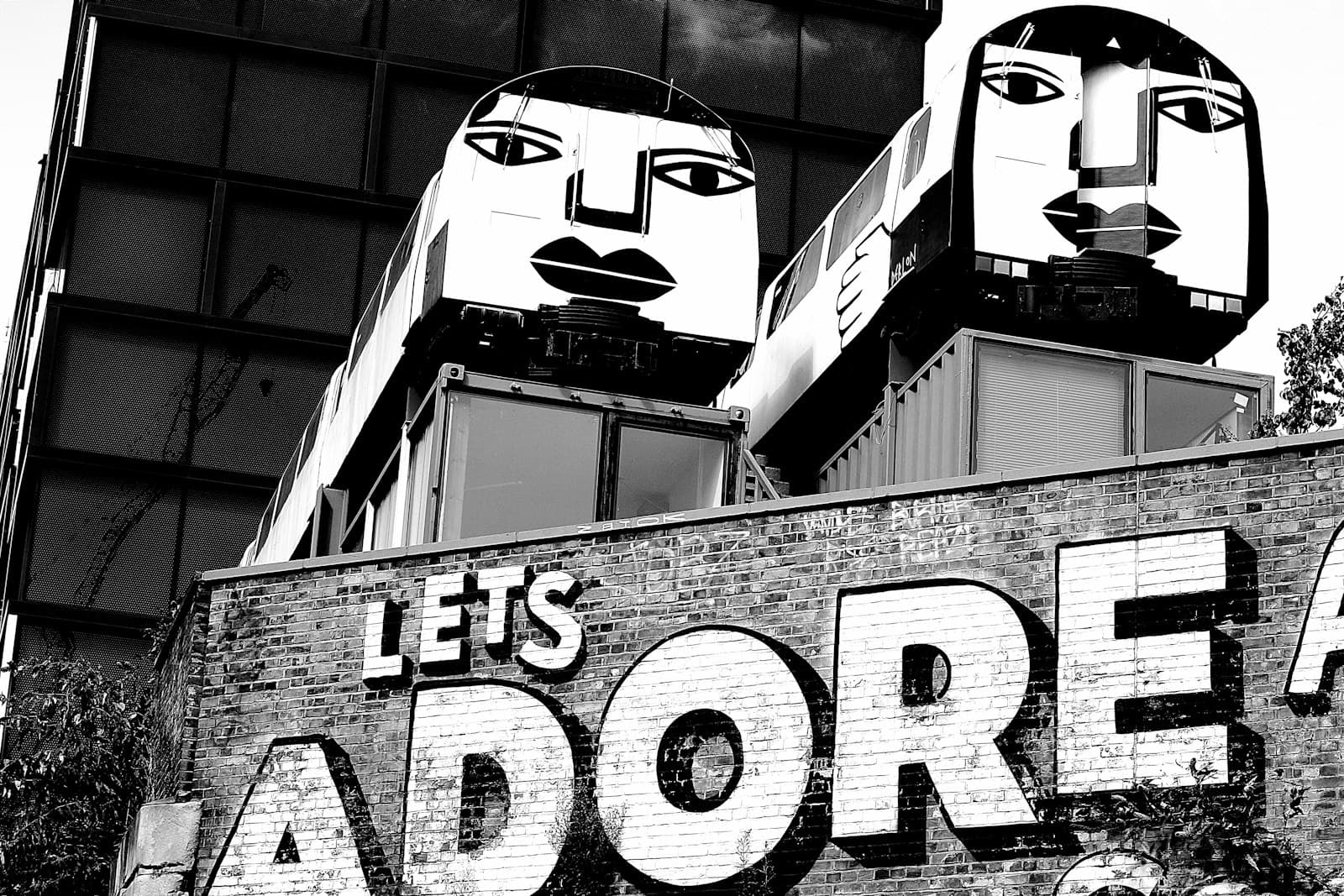
Shoreditch Street Art, United KingdomDanielMichaelPerry / CC BY 4.0, via Wikimedia Commons
GB

Shoreditch Street Art

Self-guided audio walking tour of Shoreditch Street Art — GPS route, offline playback, story-driven narration in 32 languages.

The city's walls speak: uncover Shoreditch's evolving street art narratives.

The secrets of Shoreditch Street Art

Shoreditch Street Art, as no one tells it.

Not the postcards. The stories even locals don't know — whispered in your ear, right where they happened.

3 secrets below. Many more wait inside the tour.
Rivington Street

One of Banksy's earliest and most impactful London pieces is not just a stencil on a wall, but a direct challenge to the very idea of what constitutes art and who decides where it belongs.

Full story unlocks in the tour
Star Yard

This unassuming alleyway off Brick Lane is a living, breathing canvas that transforms almost daily, a testament to the ephemeral nature of street art.

Full story unlocks in the tour
Fashion Street

Beyond the striking murals, the shop shutters on Fashion Street tell a colourful story of their own, best appreciated when the street is quiet.

Full story unlocks in the tour
The full tour

Discover every secret of Shoreditch Street Art

Every address, every reveal in full — in your ear, right where it happened.

Get the key to Shoreditch Street Art

You pick your stops. You walk. The voice reveals what the others miss.

Choose your time

How long do you have in Shoreditch Street Art?

Your self-guided audio tour of Shoreditch Street Art is ready — pick your landmarks, choose your language, and start the moment you arrive.

Buy
About Shoreditch Street Art

The story of Shoreditch Street Art

Shoreditch and Brick Lane in East London offer an unparalleled open-air gallery experience, a constantly evolving landscape of murals, graffiti, and street art. This isn't a static collection behind velvet ropes; it's a dynamic, living exhibition where pieces can appear and disappear overnight, reflecting the pulse of the city and the artists who shape it.

Once an industrial area marked by empty warehouses and factories, Shoreditch attracted artists seeking affordable spaces in the 1980s and 90s. This creative influx transformed the district into a hub for urban expression, where walls became canvases for political statements, intricate portraits, and bold typography. A walk through these streets is a journey through a compelling archive of contemporary street art, where every corner promises a new discovery.

History

The Accidental Gallery: Shoreditch's Artistic Evolution

Shoreditch's journey to becoming a global street art capital began not with grand artistic visions, but with economic decline. For much of the 20th century, it was a working-class industrial neighborhood, sustained by textile and furniture trades. However, the 1970s and 80s saw these industries collapse, leaving behind a landscape of derelict factories, empty warehouses, and vacant lots.

The ensuing fall in rents created an unexpected opportunity. By the early 1990s, artists, drawn by the inexpensive space, began to move into the area around Old Street and Brick Lane, forming a loose community of studios, squats, and makeshift galleries. While graffiti had been present in London since the 1970s, influenced by New York's hip-hop scene, what emerged in Shoreditch was different. It was less about simple tagging and more about image-making, political expression, and the deliberate occupation of public space.

A pivotal moment arrived in the late 1990s and early 2000s with the appearance of Banksy's early works. His stencils, often carrying political commentary, demonstrated that street art could be more than just vandalism; it could function as genuine art. This helped to legitimize the art form, and from the mid-2000s onward, Shoreditch began attracting artists from around the world. The walls of Shoreditch transformed into a living archive, constantly changing as new artists arrived and old pieces were painted over or replaced. This continuous cycle of creation and renewal is what makes the area so compelling, ensuring that no two visits are ever quite the same.

What to see

The Shoreditch street art walk encompasses a collection of urban canvases. Begin around Brick Lane, a central hub where murals and graffiti constantly change, with notable concentrations between Buxton Street and Bethnal Green Road, particularly under the railway bridge. Explore its side streets and courtyards, such as Hanbury Street, home to Belgian artist ROA's monumental crane, a piece informally protected by local residents. Look for works by artists like Ben Eine, known for his distinctive typographic murals, and Jimmy C, celebrated for his pointillist portraits.

Rivington Street is a key stop, featuring surviving Banksy work, including the 'Designated Graffiti Area', protected behind Perspex. The Village Underground wall on Great Eastern Street is a prominent mural site, often showcasing large-scale works. Continue to Fashion Street, where colourful shop shutters add to the artistic display, and Redchurch Street, known for both commissioned works and smaller, often ephemeral pieces. Do not miss Star Yard, a dynamic alleyway where art frequently changes. The areas around Shoreditch High Street and Great Eastern Street also offer a continuous display of diverse pieces, including large murals and unexpected installations like graffiti-covered tube trains.

When to visit

Shoreditch street art can be explored at any time of day or year. However, visiting in the early morning or late afternoon offers optimal lighting for photography and fewer crowds. Weekends, especially Sundays, bring the added energy of Brick Lane's markets, but also more foot traffic.

Practical

This self-guided walk is best done on foot, allowing you to explore at your own pace and discover unexpected pieces. The route is flat and easy to navigate. Wear comfortable walking shoes and bring a camera to capture the ever-changing art. Public transport connections are excellent: start near Shoreditch High Street Overground station, or Old Street, Liverpool Street, or Aldgate East tube stations are all within walking distance. Allow at least 2-3 hours to fully absorb the art and atmosphere, factoring in time for browsing shops or grabbing a bite. Remember to look up, down, and around corners, as some of the most compelling pieces are not immediately obvious.

Good to know
What kind of street art can I expect to see?
You'll encounter a wide variety of styles, including large-scale murals, intricate stencils, paste-ups, tags, stickers, and even some three-dimensional installations. Artists from around the world contribute, making for a diverse and constantly evolving visual experience.
Is it legal for artists to paint on these walls?
The legality varies. While some murals are commissioned or created with explicit permission from property owners, much of the street art in Shoreditch originates as unsanctioned graffiti. The area has a long history of tolerating and even celebrating this form of expression, though pieces can be painted over or removed.
How often does the street art change?
The art in Shoreditch is constantly changing. Some pieces have stood for a decade, while others disappear overnight, replaced by new creations. This transient nature is a key part of the area's appeal, ensuring that no two visits are ever the same.
Are there any specific artists I should look out for?
Absolutely! Keep an eye out for works by internationally recognized artists like Banksy (though his pieces are rare and protected), ROA, Ben Eine, Stik, Jimmy C, Mr Cenz, Fanakapan, Otto Schade, and Zabou, among many others.
Is street art in Shoreditch influenced by fashion?
Yes, street art and fashion have a strong, intertwined relationship. Both are forms of public self-expression, using bold graphics, striking colours, and expressive messages. Designers often draw inspiration from street art, incorporating graffiti-style motifs into clothing, and street art culture embodies a spirit of rebellion and individuality that resonates with fashion trends.
What's the best way to photograph the street art?
Early morning or late afternoon light is often best for photography. Experiment with different angles, paying attention to details and the surrounding urban environment. Do not forget to look up and down, as some art is placed in unexpected spots. Be respectful of artists if you happen to catch them at work.
On the map
Shoreditch Street Art
€9.90
No booking · activate anytime · 12h to walk it
Load on Wi-Fi, then walk offline — no roaming abroad
Get the key to Shoreditch Street Art