Thermenmuseum
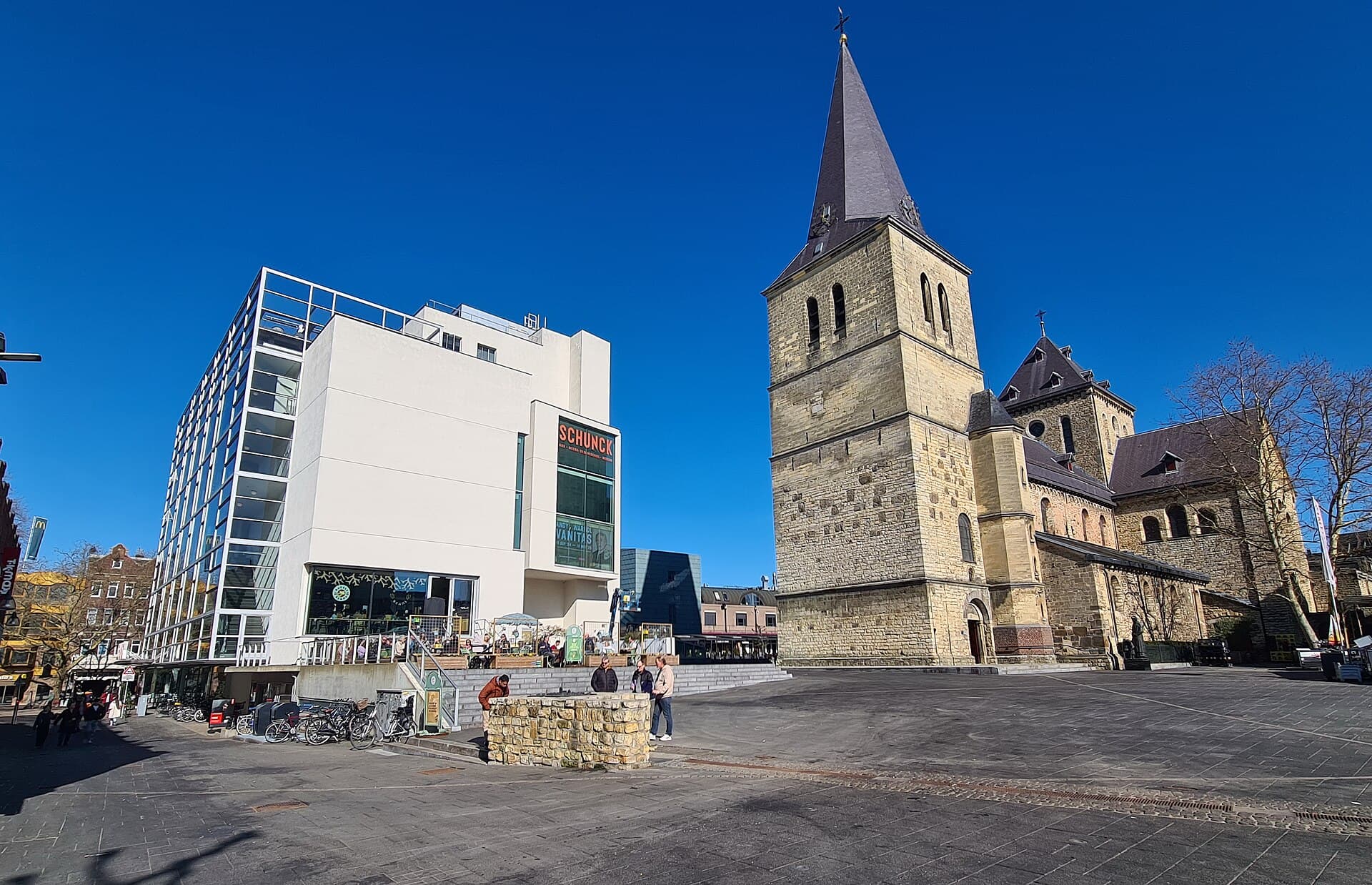
Beneath a modern museum in Heerlen rests a Roman secret that tells a surprisingly intimate story.
Full story unlocks in the tour
 Kleon3 / CC BY-SA 4.0, via Wikimedia Commons
Self-guided audio walking tour of Heerlen — GPS route, offline playback, story-driven narration in 32 languages.
“Heerlen: Where Roman Foundations Meet Rebel Art and Industrial Grit.”
Not the postcards. The stories even locals don't know — whispered in your ear, right where they happened.
Beneath a modern museum in Heerlen rests a Roman secret that tells a surprisingly intimate story.
A smiling donkey statue in a city square marks a unique start to a major Dutch celebration.
Heerlen's street art isn't just about large, colorful murals; some of its most intriguing pieces are intentionally concealed.
Discover every secret of Heerlen
Every address, every reveal in full — in your ear, right where it happened.
You pick your stops. You walk. The voice reveals what the others miss.

Your self-guided audio tour of Heerlen is ready — pick your landmarks, choose your language, and start the moment you arrive.
BuyLume has a built-in augmented-reality guide. Hold your phone up and its camera shows the street ahead of you, with a glowing arrow laid over the real view that always points to your next stop — no map to puzzle over, no wrong turns. Like everything in Lume, it works fully offline.
Heerlen, in the southern province of Limburg, is a city that defies easy categorization. It is a place where Roman foundations meet modernist architecture, where a substantial industrial past fuels a contemporary art scene, and where rolling hills offer a surprising contrast to the typical Dutch flatlands. Once a Roman settlement known as Coriovallum, and later a booming coal-mining hub, Heerlen has continually reinvented itself, emerging as a cultural pioneer known for its impressive street art and innovative urban development.
Often overlooked in favor of more famous Dutch destinations, Heerlen offers a refreshing alternative for those seeking a city with a strong identity, shaped by both its historical resilience and modern creativity. From ancient bathhouses to captivating murals, and from historic castles to serene nature reserves, Heerlen promises a journey of unexpected discoveries.
## Roman Foundations and Coriovallum Heerlen's story begins over 2,000 years ago with the arrival of the Romans, who established a settlement called Coriovallum. This military outpost was strategically located at the crossroads of important Roman roads, connecting places like Boulogne-sur-Mer, Cologne, Xanten, Aachen, and Trier. Archaeological excavations in Heerlen and its surroundings have unearthed extensive evidence of Roman life, including numerous Roman villas. The most significant discovery is the remarkably preserved Roman bathhouse, or Thermae, found in 1940. This bath complex, unique in the Netherlands, indicates Coriovallum's importance and is now the centerpiece of the Thermenmuseum.
## Medieval Interlude and Shifting Loyalties After the Roman era, Heerlen experienced a more modest medieval period. The earliest mention of 'Herle' dates back to 1065. By the 10th century, as agriculture flourished, Heerlen developed into a village with farmsteads and mills. The town came under the authority of the dukes of Brabant in 1244, and later, in 1388, gained a separate status alongside Hoensbroek. During the Eighty Years' War (1568–1648), Heerlen was a contested territory, changing hands multiple times between the Spanish and Dutch Protestant rebels. In 1661, it became part of 'Staat-Limburg' under the Dutch Republic, remaining somewhat isolated due to its proximity to the Spanish Netherlands.
## The Coal Boom and Modern Transformation For much of the 19th century, Heerlen remained largely agrarian, missing out on the early Industrial Revolution that swept through other parts of Europe. This changed dramatically in the late 19th century with the discovery of coal. Heerlen rapidly transformed into a major center for the Dutch coal mining industry, experiencing explosive population growth from 6,646 in 1900 to 32,263 by 1930. This boom brought significant wealth and attracted thousands of miners from across Europe, enriching Heerlen's cultural identity. The city became a hub for urban innovation and architectural experimentation, with notable buildings like the Glaspaleis emerging during this period.
## Post-Mining Reinvention The prosperity of the mining era came to an abrupt end in 1965 when the government decided to close the mines. With a mono-economy heavily reliant on coal, Heerlen faced significant economic challenges and a period of decline. However, the city has since embarked on a journey of reinvention, transforming its industrial past into a fertile ground for culture and innovation. Efforts have focused on urban renewal, attracting new businesses, and fostering a thriving arts scene, including its renowned street art.
Heerlen offers a compelling blend of ancient history, industrial heritage, and contemporary culture. Begin your exploration at the Thermenmuseum, built over the remarkably preserved remains of a Roman bathhouse—the largest visible Roman ruin in the Netherlands. Next, immerse yourself in the city's recent past at the Nederlands Mijnmuseum (Dutch Mining Museum), housed in the original shaft building of the former Oranje-Nassau Mine, offering insights into the lives of miners and the region's industrial legacy.
Heerlen is known as the Street Art Capital of the Netherlands. Take a self-guided tour or join a guided walk to discover dozens of murals and smaller artworks by national and international artists that adorn building facades and corners throughout the city. Do not miss the iconic Glaspaleis (Glass Palace), a modernist architectural masterpiece that now serves as a cultural hub, housing SCHUNCK, a museum of contemporary art, a library, and a music venue. For a glimpse into medieval times, visit Kasteel Hoensbroek, one of the largest and most beautiful castles in the Netherlands, with parts dating back to 1380. Also, explore the Schelmentoren, a national monument from the 12th century that once served as a prison.
Beyond the city center, enjoy the natural beauty of the Brunssummerheide nature reserve, offering heathlands, woodlands, and ponds ideal for hiking and cycling. The Maankwartier, a striking new urban development around the train station, showcases modern architecture and connects previously divided parts of the city.
The best time to visit Heerlen for pleasant weather and outdoor activities is from late June to early September, with a peak in the first week of August. During these months, temperatures are warm, and there is less cloud cover. Spring (April and May) and early autumn (September and early October) also offer mild temperatures and comfortable conditions for walking and cycling, with fewer crowds. Heerlen also hosts various events throughout the year, including the International Breakdance Event (IBE) and Cultura Nova, so check the local event calendar for specific dates.
Heerlen is conveniently located in the province of South Limburg, easily accessible by car or train. From Maastricht, it is a short 23-minute drive or 28-minute train journey. Major highways connect Heerlen to other Dutch cities like Eindhoven and to nearby German cities like Aachen. The city center is largely car-free, making it ideal for exploring on foot. Ample parking garages are available on the periphery of the center.
For those relying on public transport, Heerlen has three train stations, and a local bus network serves the city and the wider Parkstad Limburg region. Bicycle rentals are available at the train stations, offering a great way to explore the city and its surrounding natural areas. The local tourist office provides maps for walking and cycling routes, often with clear markings. While Dutch is the primary language, English is widely understood in tourist-oriented areas.
Heerlen in Korean, in Chinese or in Hebrew — and 29 more languages, every stop narrated by a native voice. The widest language range of any self-guided audio tour.
Available in: