Le plan original de la ville
Les pères fondateurs de Hermann avaient une grande vision pour leur nouvelle colonie allemande, mais ils ont oublié un détail crucial lors de l'élaboration des plans.
L'histoire complète se débloque dans le tour
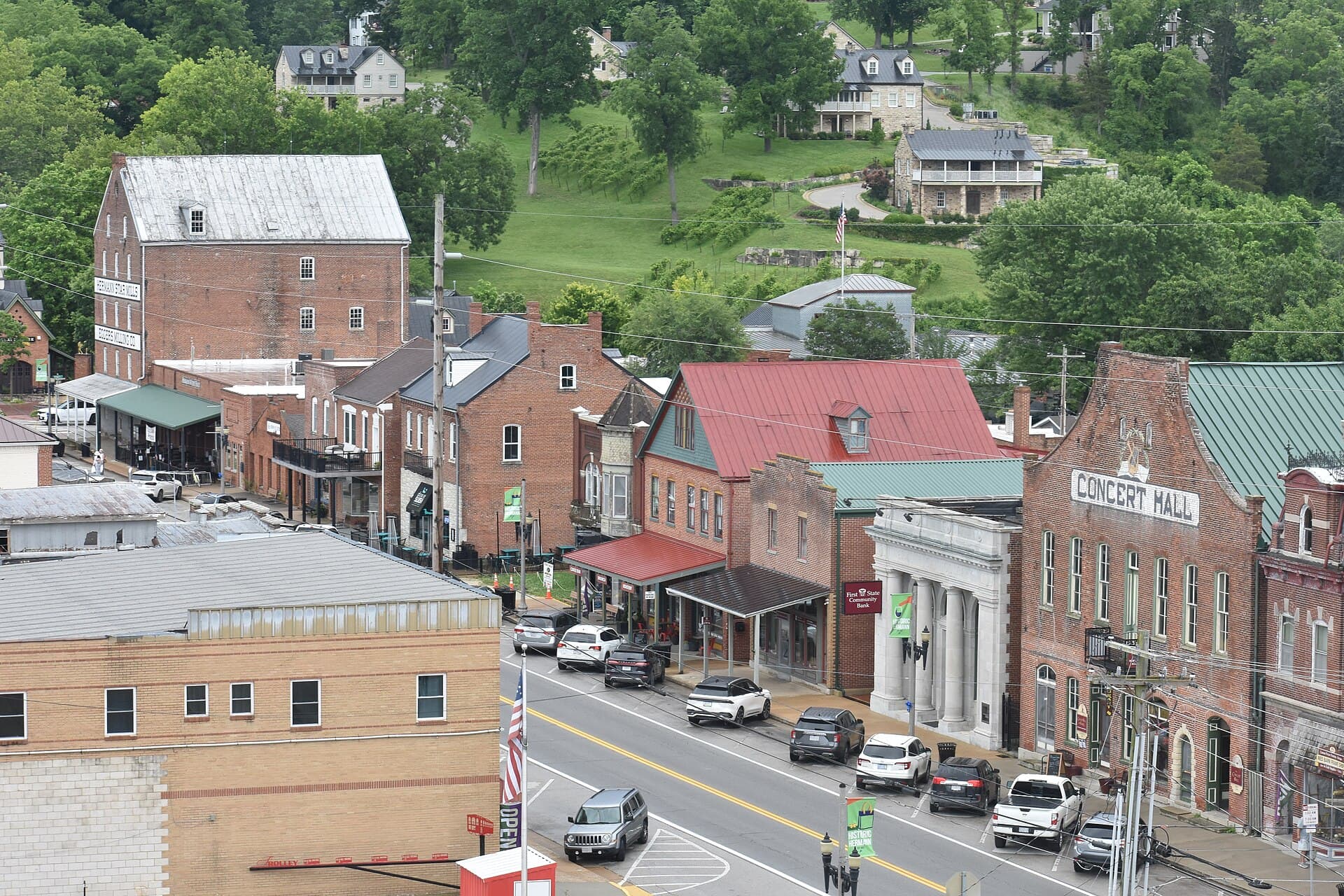 TCP04 / CC BY 4.0, via Wikimedia Commons
Visite audio autoguidée de Hermann — parcours GPS à pied, lecture hors ligne, narration en 32 langues.
“Là où l'héritage allemand coule aussi librement que le vin de la rivière Missouri.”
Pas les cartes postales. Les histoires que même les habitants ignorent — soufflées à l'oreille, là où elles se sont passées.
Les pères fondateurs de Hermann avaient une grande vision pour leur nouvelle colonie allemande, mais ils ont oublié un détail crucial lors de l'élaboration des plans.
Pendant la Prohibition, la plus ancienne cave de Hermann a découvert une nouvelle culture inattendue prospérant dans ses caves voûtées souterraines.
Une cave de Hermann revendique une distinction unique en tant que plus ancienne cave familiale en activité de toute la nation, même pendant la période sèche de la Prohibition.
Découvrez tous les secrets de Hermann
Chaque adresse, chaque révélation en entier — dans ton oreille, là où elle s'est passée.
Tu choisis tes lieux. Tu marches. La voix te révèle ce que les autres ignorent.
Votre visite audioguidée de Hermann vous attend — choisissez vos lieux, votre langue, et lancez-vous dès votre arrivée.
AcheterHermann, Missouri, souvent appelée « Deutschheim » ou « Petite Allemagne », est une ville où l'héritage allemand n'est pas seulement un souvenir, mais une réalité vécue. Fondée en 1837 par la German Settlement Society de Philadelphie, qui cherchait à préserver sa culture dans l'Ouest américain, le caractère distinctif de Hermann est immédiatement apparent dans son architecture, ses festivals et, bien sûr, son vin. Située le long de la rivière Missouri, le paysage de la ville, avec ses vignobles vallonnés et ses bâtiments en briques rouges, évoque la vallée du Rhin, un choix délibéré de ses fondateurs.
Aujourd'hui, Hermann est le cœur de la Rhénanie du Missouri et un pôle majeur de l'industrie viticole de l'État, produisant environ un tiers du vin du Missouri. Au-delà de ses caves réputées, la ville offre un mélange de charme historique, de cuisine d'inspiration allemande et d'activités de plein air. Que vous exploriez son quartier historique, que vous fassiez du vélo sur le Katy Trail ou que vous vous régaliez de saucisses locales et de vins primés, Hermann offre une escapade authentique et mémorable.
L'histoire de Hermann commence en 1836, lorsque la German Settlement Society de Philadelphie a cherché à établir une colonie dans le « Far West » qui resterait « allemande à tous égards ». Attristés par l'assimilation rapide de leurs compatriotes dans la société américaine, ils ont envisagé une nouvelle ville où leurs traditions pourraient s'épanouir. En 1837, leur agent, George Bayer, a acheté plus de 4 450 hectares le long de la rivière Missouri, un site choisi pour sa ressemblance avec la vallée du Rhin en Allemagne. Cependant, le terrain s'est avéré beaucoup plus accidenté et vallonné que les plans de ville plats et grandioses dessinés à Philadelphie.
Lorsque les 17 premiers colons sont arrivés en décembre 1837, ils ont été accueillis par ce qu'un écrivain a décrit comme un « désert hurlant ». Malgré la consternation initiale face au terrain difficile, leur détermination allemande a prévalu. S'inspirant des vignes sauvages poussant sur les coteaux rocheux, ils ont commencé à planter des vignobles. En une décennie, Hermann a accueilli son premier Weinfest, attirant des visiteurs de St. Louis pour admirer les collines couvertes de vignes et déguster du doux vin Catawba.
Au tournant du XXe siècle, les vignerons de Hermann connaissaient un immense succès. Stone Hill Winery, par exemple, est devenue la deuxième plus grande cave du pays, remportant des médailles d'or lors de concours d'expositions universelles. Les nombreux vignerons de la ville produisaient collectivement une quantité étonnante de trois millions de gallons de vin par an. Cette prospérité, cependant, a pris fin brusquement avec le début de la Prohibition en 1919 et le sentiment anti-allemand suite à la Première Guerre mondiale. La Prohibition a plongé Hermann dans la ruine économique une décennie avant le reste du pays. Le bon côté des choses est que ce ralentissement économique a préservé le caractère du XIXe siècle de la ville, la plaçant effectivement dans une machine à remonter le temps.
L'industrie du vin a commencé sa lente renaissance dans les années 1960, en grande partie grâce à des pionniers comme Jim et Betty Held, qui ont rouvert Stone Hill Winery. Aujourd'hui, Hermann est à nouveau une région viticole florissante, avec sa désignation de zone viticole américaine (AVA) en 1983 reconnaissant la renaissance de ses vignobles et de ses caves.
Commencez votre exploration au Deutschheim State Historic Site, où cinq structures préservées offrent un aperçu de la vie quotidienne des immigrants allemands du XIXe siècle. Les visites guidées incluent la maison Pommer de 1840 et la maison Strehly de 1842, où un ancien journal de langue allemande était produit. Pour une immersion plus profonde dans le patrimoine agricole, visitez le Hermann Farm Museum, une attraction de 80 hectares présentant les pratiques agricoles du XIXe siècle et de majestueux chevaux Shire noirs.
Aucune visite à Hermann n'est complète sans l'expérience de ses célèbres caves. Faites une visite de Stone Hill Winery, la plus ancienne de l'État, et explorez ses caves voûtées souterraines. Adam Puchta Winery, la plus ancienne cave familiale en activité du pays, propose des millésimes primés. Le Hermann Wine Trail relie sept caves familiales, offrant des dégustations et des vues panoramiques. Pour une expérience unique, descendez dans les caves de réserve de Hermannhof Winery pour une dégustation aux chandelles de vins en production limitée.
Au-delà du vin, explorez le centre-ville historique avec ses boutiques, ses galeries et son architecture d'inspiration allemande. Envisagez une promenade en Hermann Trolley pour un transport pratique vers diverses attractions. Les amateurs de plein air peuvent parcourir une section du Katy Trail State Park, l'un des plus longs sentiers de rails-à-sentiers du pays, qui traverse Hermann et offre des vues panoramiques sur les vignobles et les falaises le long de la rivière Missouri.
Hermann offre des charmes distincts tout au long de l'année. Les périodes les plus populaires pour visiter sont le printemps et l'automne, lorsque le temps est doux, les vignobles sont luxuriants et les festivals de la ville battent leur plein. Le printemps apporte des fleurs sauvages et des foules moins nombreuses, tandis que la saison des récoltes d'automne (fin de l'été à mi-automne) est particulièrement énergique, avec des foulages de raisins et des dégustations spéciales.
L'été (fin mai à fin septembre) offre de longues journées chaudes parfaites pour les visites de vignobles, la détente en terrasse et les activités de plein air comme le vélo sur le Katy Trail. Bien que l'hiver soit la saison la plus calme, de nombreuses caves restent ouvertes, offrant une expérience de dégustation plus intime et une atmosphère contemplative. Les ciels les plus clairs sont généralement en août, le mois le plus chaud étant juillet et le plus froid janvier.
Hermann est à environ 1h30 de route (130 km) à l'ouest de St. Louis et à 2h30 de route (240 km) de Kansas City. La ville est accessible via l'autoroute 19 sud à travers la rivière Missouri ou en voyageant vers l'ouest sur l'autoroute 100. Amtrak dessert également Hermann, offrant un moyen sans stress d'arriver, de nombreux hôtels locaux proposant des services de navette vers les caves.
Les options d'hébergement sont nombreuses, avec plus de 150 établissements allant des chambres d'hôtes traditionnelles aux maisons d'hôtes, en passant par les suites de luxe et même les cabanes dans les arbres. Le quartier historique (à l'est de Market, au nord de la 5e rue) est recommandé pour son emplacement central et sa proximité des attractions. Bien que de nombreuses caves soient ouvertes toute l'année, il est judicieux de réserver votre hébergement à l'avance, surtout pendant les saisons de festivals de pointe comme l'Oktoberfest et le Maifest. Sachez que la police de Hermann est stricte en ce qui concerne les lois sur les contenants ouverts.
Hermann en coréen, en chinois ou en hébreu — et dans 29 autres langues, chaque étape narrée par une voix native. La plus large gamme de langues de tous les audioguides autoguidés.
Disponible en :