Heusden's grand 13th-century castle, once among Western Europe's largest, met a dramatic end, not by siege, but by a singular bolt from the sky.
arch / Public domain, via Wikimedia CommonsHeusden
Self-guided audio walking tour of Heusden — GPS route, offline playback, story-driven narration in 32 languages.
“Where history is not merely kept, but breathes a living story through worn streets and star-shaped ramparts.”
Heusden, as no one tells it.
Not the postcards. The stories even locals don't know — whispered in your ear, right where they happened.
The exquisite Gothic town hall, a symbol of Heusden for centuries, suffered a grievous fate, not once, but twice.
The elegant Visbank, with its Doric columns, served many purposes beyond the simple sale of fish.
Discover every secret of Heusden
Every address, every reveal in full — in your ear, right where it happened.
You pick your stops. You walk. The voice reveals what the others miss.
How long do you have in Heusden?
Your self-guided audio tour of Heusden is ready — pick your landmarks, choose your language, and start the moment you arrive.
BuyThe story of Heusden
Heusden, a star-shaped fortress town in the province of North Brabant, Netherlands, feels less like a destination and more like a carefully preserved journey into the past. Encircled by a wide moat and formidable ramparts, its historic core stands as a testament to centuries of resilience and meticulous restoration. With worn streets, ancient buildings, and picturesque waterways, Heusden offers a singular blend of history, culture, and tranquil Dutch character.
From above, the town's distinctive star shape, a hallmark of 17th-century military engineering, becomes clear. This small town, with a population of only around 1,250, contains 122 buildings on the Rijksmonument List of national heritage sites, reflecting its profound historical significance. Heusden invites visitors to move slowly, explore its deep past, and uncover the stories etched into its very foundations.
## From Swamp to Star Fortress Heusden's story began in a swampy area along a bend in the Maas River, a strategic location that would shape its destiny. The first mention of a settlement dates back to 722, and by the 12th century, a castle, one of the oldest moated castles in northwestern Europe, formed its nucleus. The town was granted city rights in 1318, enabling it to flourish, particularly through the lucrative fish trade.
Its strategic position, however, also made Heusden a valuable prize and a frequent battleground. It saw conflicts between the Counts of Holland, Guelders, and the Dukes of Brabant. During the Eighty Years' War, Heusden sided with the Dutch rebels, and William, Prince of Orange, ordered the strengthening of its defenses. Work on the cutting-edge star-shaped fortifications, designed by master Jacob Kemp, began in 1579 and was completed in 1597, transforming Heusden into a crucial military outpost.
## Explosions, Occupations, and a Near Demise Heusden's history is marked by dramatic events. A major fire in 1572 destroyed a third of the town, including its original town hall. A century later, in 1680, disaster struck again when lightning ignited the castle's gunpowder magazine, causing a massive explosion that destroyed the castle and a significant portion of the town. The town was rebuilt following modern military design principles.
Heusden endured occupations by the French from 1794-1813 and suffered greatly during World War II. In a tragic event on November 4, 1944, retreating German forces blew up the town hall, killing 134 civilians sheltering inside. Following the war, the town faced another threat: a plan to demolish much of its historic fabric for modern development. Fortunately, local protests prevailed, leading to an extensive and acclaimed restoration project that began in 1968. Based on a 1649 map, this meticulous effort earned Heusden the prestigious Europa Nostra cultural heritage award in 1980, recognizing its successful resurrection as a beautifully preserved fortified town.
Begin your exploration by walking or cycling along Heusden's impressive star-shaped fortifications. These ramparts offer wide views of the surrounding countryside and the Bergsche Maas river, with small steps providing access to elevated viewpoints.
Delve into the town's past at the Heusden Castle ruins, where the remnants of the once-mighty 13th-century fortress stand. The Governor's House, a beautiful 16th-century building that now houses the city museum, provides historical insights and artifacts. Do not overlook the small building within its complex, which once served as a soup kitchen for the poor.
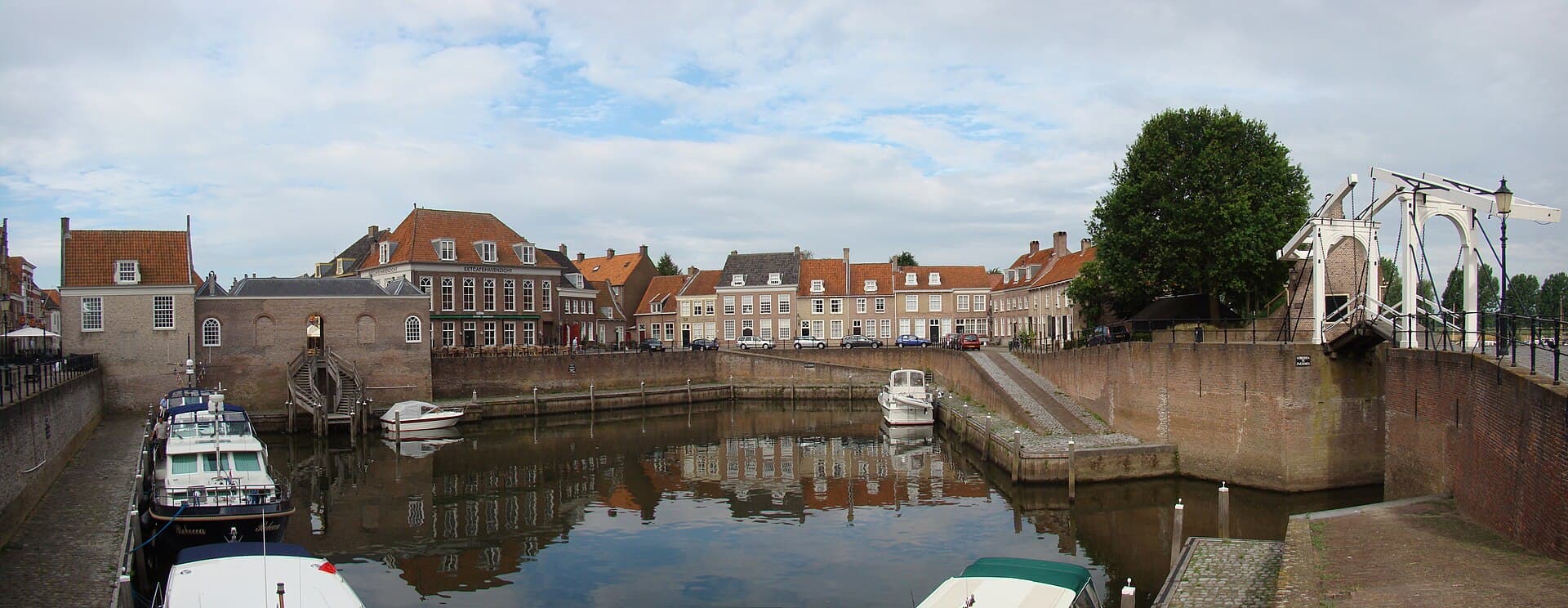
The Visbank, a neoclassical former fish auction house with 12 Doric columns, is a picturesque spot, ideal for photographs, offering framed views of the inner harbor and a windmill. Stroll through the charming streets, where you will find over 100 Dutch heritage sites, art galleries, and distinctive boutiques. The inner harbor, restored in 1974, is now a lively hub for pleasure boats.
For a deeper understanding, visit the Tourist Information Point in the 'new' town hall. Here, you can watch an informative film about Heusden's history and view impressive replicas of the fortress city. You can also spot the three reconstructed windmills on the ramparts, which, while not original, contribute to the quintessential Dutch skyline.
Heusden is a charming destination year-round, each season offering a different ambiance. The best time for warm-weather activities is from late June to early September, when temperatures are comfortable and skies are clearer. During summer, you might encounter a 17th-century traditional market and festival.
Spring brings sheep grazing on the dikes, while autumn transforms the channels with yellow and red leaves, creating a picturesque scene. December offers a festive atmosphere with Christmas decorations and the possibility of snow, turning Heusden into a winter wonderland. Weekday afternoons are generally quieter, allowing for a more peaceful exploration of the town.
Heusden is easily accessible by car, with free parking available just outside the town walls at locations like Vestingstraat, Mastdijk, and Tramhaven. Parking within the historic center is restricted and paid due to tiny streets and limited spaces. For those relying on public transport, Heusden can be reached as a day trip from larger cities like Den Bosch, Utrecht, Eindhoven, or Breda.
The town is best explored on foot or by bicycle. Cycling paths are abundant, and the tourist office offers leaflets for routes like the 35.5-kilometer Ringdijk trail. Boat trips on the River Meuse are available from April to September; inquire at the Tourist Office for more information. While Heusden is popular with locals, it remains somewhat off the usual path for international tourists, offering a less crowded experience. Accommodation within the town is limited, especially in spring and summer, so booking in advance is recommended. Nearby cities like Den Bosch offer more options.
- Is Heusden suitable for a day trip?
- Absolutely! Heusden is an ideal destination for a day trip, offering a deep historical experience, charming streets, and plenty to see and do within its compact fortified walls.
- Are the fortifications accessible for walking?
- Yes, the well-preserved ramparts are perfect for a stroll, offering scenic views and a singular perspective of the town and its surroundings. Small steps lead up to the pathways along the top.
- Is there a cost to enter Heusden?
- No, there is no general entrance fee to the town of Heusden. Many attractions, like walking the fortifications and visiting the museum at the Governor's House, are free.
- Can I find art galleries in Heusden?
- Yes, Heusden is known for its many small galleries and artist studios scattered throughout the historic center, showcasing paintings, ceramics, and photography by Dutch artists.
- What local specialties should I try?
- While in Heusden, consider trying Dutch pancakes and visiting Bakkertje Deeg for delicious apple beignets. You can also sample local liquor at De Waterdrager.
- Is Heusden child-friendly?
- Heusden's car-free historic center, ramparts for exploring, and picturesque setting make it a pleasant place for families to visit. The town's history can be engaging for all ages.