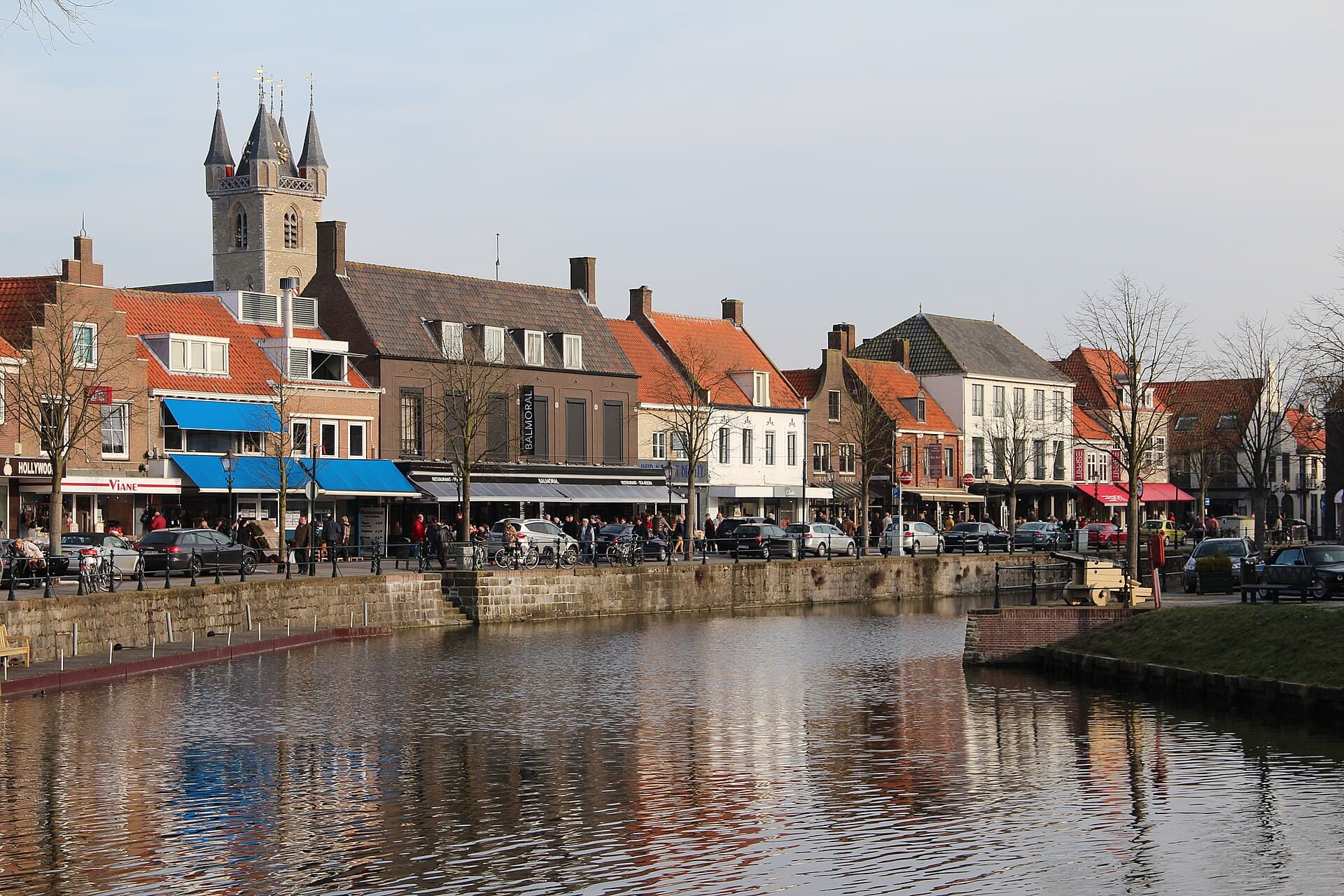
The Belfry of Sluis
Sluis possesses an architectural distinction within the Netherlands, a structure that speaks volumes about its historical ties beyond modern borders.
Full story unlocks in the tour
 Jean-Pol GRANDMONT / CC BY-SA 3.0 nl, via Wikimedia Commons
Self-guided audio walking tour of Sluis — GPS route, offline playback, story-driven narration in 32 languages.
“Where Dutch pragmatism meets Flemish grace, and history resonates through every ancient stone.”
Not the postcards. The stories even locals don't know — whispered in your ear, right where they happened.
Sluis possesses an architectural distinction within the Netherlands, a structure that speaks volumes about its historical ties beyond modern borders.
A local story recounts how a drowsy bell-ringer inadvertently saved Sluis from capture.
Napoleon Bonaparte left an unfinished mark on the landscape between Sluis and Bruges, a testament to his grand ambition.
Discover every secret of Sluis
Every address, every reveal in full — in your ear, right where it happened.
You pick your stops. You walk. The voice reveals what the others miss.


Your self-guided audio tour of Sluis is ready — pick your landmarks, choose your language, and start the moment you arrive.
BuyLume has a built-in augmented-reality guide. Hold your phone up and its camera shows the street ahead of you, with a glowing arrow laid over the real view that always points to your next stop — no map to puzzle over, no wrong turns. Like everything in Lume, it works fully offline.
Sluis, a fortified town in the far southwest of the Netherlands, resides in the province of Zeeland, mere kilometers from the Belgian border. This intimate corner exudes a unique blend of Dutch reliability and Flemish lightness, creating an inviting atmosphere for visitors. With a population of approximately 23,000, Sluis maintains a friendly feel, even as it draws numerous tourists, particularly on weekends.
The town is known for its lively ambiance, historic architecture, and a surprising number of shops that open seven days a week, a tradition that makes it a popular destination for cross-border shoppers. Walk along its ancient streets, explore old city gates, and absorb the history that permeates this border town. Sluis offers an authentic European experience, perfect for those seeking relaxation, local culture, and a delightful shopping excursion away from the bustling metropolises.
Sluis is more than just a shopping destination; it is a living historical monument, where well-preserved buildings and fragments of former fortifications narrate its past as a vital port and strategic stronghold. From its distinctive belfry to its working windmill, De Brak, Sluis invites you to discover the Netherlands from an unexpected and captivating perspective.
## From Lamminsvliet to Sluis: A Port's Rise and Decline Sluis, initially known as 'Lamminsvliet' until 1324, emerged in the latter half of the 13th century. Its very name, translating to 'sluice' or 'lock,' reflects its foundational purpose: regulating waterways. The town officially gained city rights in 1290, granted by Count Guy de Dampierre of Flanders, a testament to its growing importance.
Sluis's destiny was deeply intertwined with the Zwin inlet, a crucial waterway connecting inland territories to the North Sea. As the powerful trading hub of Bruges saw its direct sea access diminish due to the Zwin's silting, Sluis stepped in as its vital outport. Here, goods were transferred from larger seagoing vessels to smaller river barges, fueling Sluis's early economic prosperity and fostering a cosmopolitan atmosphere with merchants from various nations.
## Fortifications and Conflicts: A Strategic Stronghold Recognizing its strategic value, the Counts of Flanders significantly invested in fortifying Sluis. By 1382, the town was reinforced, and in 1385, construction began on a substantial castle. The town's defensive capabilities were further enhanced during the Eighty Years' War (1568–1648), when it became a fortified city (vestingstad) on the frontline between Spanish and Dutch republican forces. This period saw the erection of robust fortress walls and ramparts, transforming Sluis into an impregnable stronghold, elements of which, like the star-shaped system of earthen ramparts and canals, are still visible today.
Sluis was no stranger to conflict. In 1340, the celebrated naval Battle of Sluys, a pivotal engagement in the Hundred Years' War, unfolded at the mouth of the Zwin River. The town was occupied by the Duke of Parma in 1587 but was recaptured by Prince Maurits of Nassau in 1604, solidifying its place as part of the Northern Netherlands. The frontline of this conflict largely mirrors the current Dutch-Belgian border.
## Rebirth from Rubble: Modern Sluis The town faced its most devastating blow during World War II, specifically in late 1944. Allied forces, mistakenly believing Germans were using Sluis as a stronghold, conducted an air raid that reduced much of the historic center to rubble. Fortunately, Sluis was rebuilt after the war, carefully preserving its historical character. Today, Sluis thrives as a lively shopping destination, drawing millions of visitors annually who come to explore its blend of history, culture, and commerce.
Begin your exploration of Sluis at its most distinctive landmark: the Belfry of Sluis. This impressive 14th-century tower is the only medieval belfry in the entire Netherlands and now houses an interactive museum that delves into the town's fascinating past. A climb to the top offers sweeping views of the town and the surrounding Zeelandic landscape.
Next, take a leisurely stroll along the ancient city walls and ramparts. These well-preserved fortifications, initially constructed in 1394 and updated in 1702, offer a tangible connection to Sluis's history as a strategic border town. You can still discern remnants of the old city gates, such as the Stenen Beer or Westpoort.
Do not overlook Molen De Brak, an 18th-century working windmill. Here, you can learn about traditional milling techniques and even purchase freshly milled flour. The mill also features a brasserie and tea room, perfect for a pause.
For a dose of local culture, explore the town's compact historic center, with its many boutiques, fashion stores, and specialty shops. The main shopping streets include Oude Kerkstraat, Nieuwstraat, Kapellestraat, and the Kaai embankment. If you appreciate good food, Sluis offers a diverse culinary scene, particularly known for fresh seafood and traditional Dutch and Flemish dishes. You can also visit the weekly market every Friday for local delicacies.
Consider a visit to the nearby Bizarium Museum for an unusual and inventive experience, or venture to the quaint village of Sint Anna ter Muiden, a popular spot for artists, just a short distance away.
Sluis experiences a temperate maritime climate, making it a pleasant destination throughout the year. Summers (July and August) are comfortably warm, with average temperatures around 18-19°C, and highs reaching 21-22°C. Winters are mild and damp, with an average January temperature of about 5.6°C. While precipitation is relatively low, the autumn and winter months see more rainy days. Weekends, especially Sundays, are particularly lively due to the shops being open, attracting many visitors from Belgium. For a quieter experience, consider visiting on a weekday.
Sluis is a small town, easily explored on foot. Bicycles are also a popular mode of transport and can be rented for longer excursions into the surrounding Zeelandic Flanders region. Regional buses connect Sluis to other towns. If you plan to explore the wider Zeeland province, renting a car is an option, though parking in the town center can be limited.
The official currency is the Euro (EUR). While Sluis is considered safe, standard precautions are always advisable. When entering shops or cafes, a simple 'Hallo' or 'Goedendag' is customary. It is polite to ask permission before photographing locals.
For dining, Sluis offers a wide array of restaurants, from cozy family establishments to more refined options, with a strong emphasis on fresh seafood. Many shops are open on Sundays, which can lead to larger gatherings, particularly from Belgium.
Sluis in Korean, in Chinese or in Hebrew — and 29 more languages, every stop narrated by a native voice. The widest language range of any self-guided audio tour.
Available in: