Beneath the active Indianapolis City Market, a forgotten city of brick arches and limestone reveals a past essential to the city's sustenance.
Carol M. Highsmith / Public domain, via Wikimedia CommonsIndianapolis
Self-guided audio walking tour of Indianapolis — GPS route, offline playback, story-driven narration in 32 languages.
“Where the pulse of innovation meets the enduring spirit of the Midwest.”
Indianapolis, as no one tells it.
Not the postcards. The stories even locals don't know — whispered in your ear, right where they happened.
One of Indiana's most venerable establishments, The Slippery Noodle Inn, carries a narrative far more intricate than its current role as a lively bar.
The 'Racing Capital of the World' inaugurated its grounds with an unexpected event, predating the roar of engines.
Discover every secret of Indianapolis
Every address, every reveal in full — in your ear, right where it happened.
You pick your stops. You walk. The voice reveals what the others miss.


How long do you have in Indianapolis?
Your self-guided audio tour of Indianapolis is ready — pick your landmarks, choose your language, and start the moment you arrive.
BuyThe story of Indianapolis
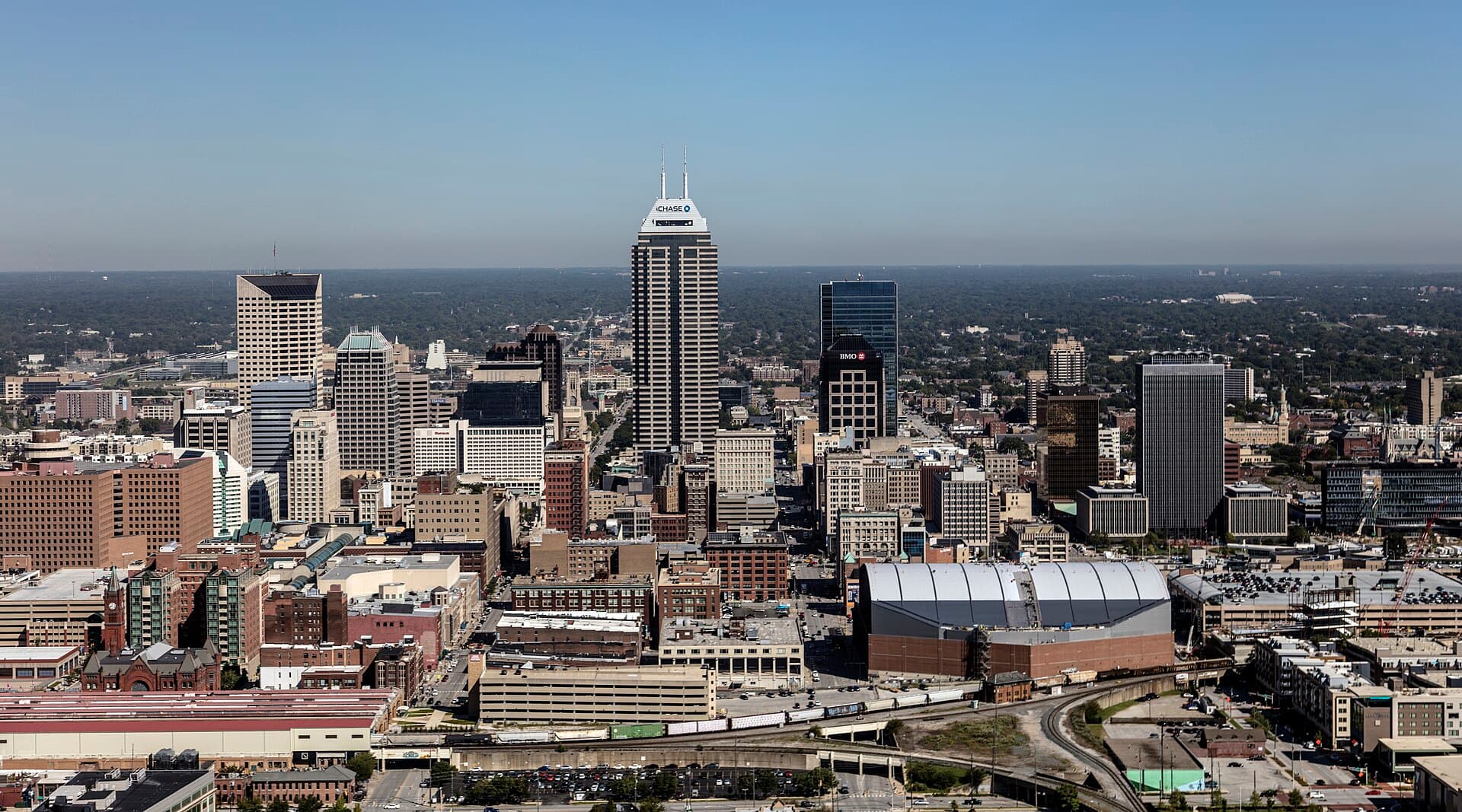
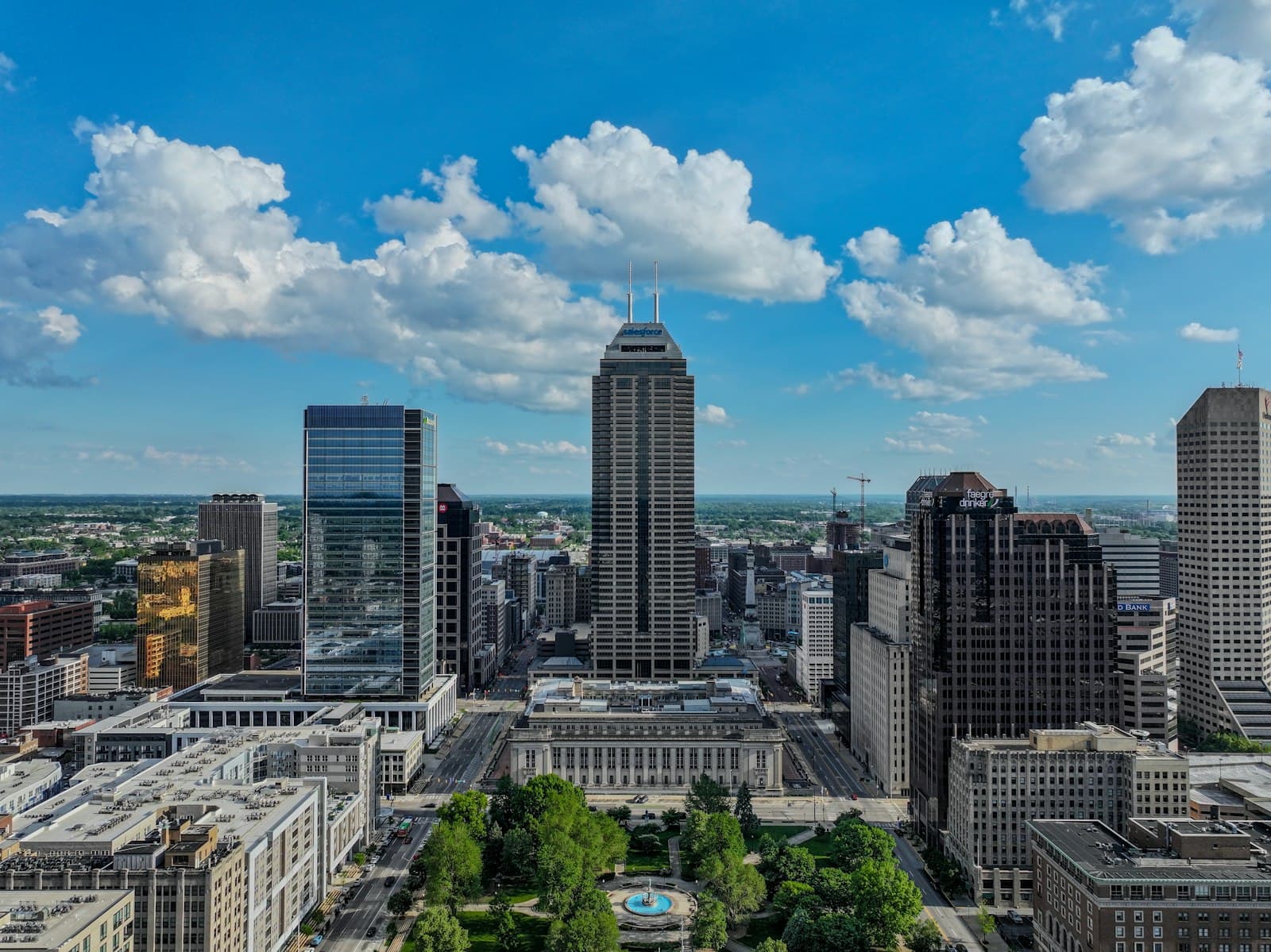
Indianapolis, affectionately known as 'Indy,' 'Circle City,' and the 'Crossroads of America,' stands as Indiana's capital and most populous urban center. Situated within the state's central till plain region alongside the White River, Indianapolis was conceived as a planned city in 1820, meticulously designed by Alexander Ralston, who also contributed to the layout of Washington D.C. Its central location and a grid plan converging on a prominent traffic circle bestowed upon it the 'Circle City' designation.
Beyond its deliberate urban design, Indianapolis has blossomed into a dynamic center recognized for its diverse cultural offerings, a flourishing downtown, and significant contributions to sports and industry. The city's official slogan, 'Crossroads of America,' reflects its enduring importance as a transportation nexus, particularly due to the numerous intersecting railroads that defined the late 19th century and its current proximity to major highways. This convergence of history, forward-thinking innovation, and Midwestern hospitality renders Indianapolis a compelling destination to uncover.
From Planned Capital to Modern Metropolis
The story of Indianapolis unfolds over two centuries, with the Lenape (Delaware Nation) inhabiting the area as early as 10,000 BC. Under the Treaty of St. Mary's in 1818, the Lenape and Miami Nation ceded their ancestral lands in central Indiana. In 1820, the Indiana General Assembly authorized a committee to select a site for the new state capital, settling on a location near the confluence of the White River and Fall Creek. The state legislature officially adopted the name Indianapolis on January 6, 1821, and the city was subsequently platted by Alexander Ralston and Elias Pym Fordham on a one-square-mile grid. The seat of state government relocated from Corydon to Indianapolis on January 1, 1825.
Indianapolis's expansion was profoundly shaped by its strategic central location and flat, fertile soil, initially establishing it as an agricultural hub. The White River powered early mills throughout the 1820s and 1830s, and the advent of railroads, beginning in 1847, transformed Indianapolis into a significant manufacturing and transportation center. The completion of the Union Station railway hub in 1888 further propelled the city's economy, population, and reputation, solidifying its moniker, 'Crossroads of America.'
The dawn of the 20th century saw the dedication of prominent architectural features like the Soldiers' and Sailors' Monument in 1902, which became an unofficial emblem of the city. The inaugural Indianapolis 500 race took place at the Indianapolis Motor Speedway on May 30, 1911, an event that would become a defining characteristic of the city. Despite challenges such as the Great Flood of 1913, Indianapolis continued its development, even competing with Detroit as a center of automobile manufacturing, once hosting 60 automakers. Today, Indianapolis continues to evolve, embracing high-tech industries while carefully preserving its heritage and diverse cultural identity.
Indianapolis presents a varied collection of attractions, appealing to many interests. For those drawn to sports, the Indianapolis Motor Speedway is an essential visit, home to the celebrated Indy 500 race and a museum chronicling American motor racing history. Downtown, the Soldiers' and Sailors' Monument stands as a prominent landmark and an unofficial city symbol. Those interested in the past can delve into history at the Indiana State Museum and the Indiana Historical Society.
Families will delight in the Children's Museum of Indianapolis, recognized as the world's largest children's museum. For a distinctive urban green space, White River State Park offers pathways along the river, pedal-boats on the Central Canal, and bicycle rentals. The Indianapolis City Market provides a historic setting for local food, and beneath it lie the intriguing Catacombs, offering a glimpse into the city's earlier days. Art and culture flourish with institutions like the Indianapolis Museum of Art and the Madame Walker Theatre, which continues to serve the community as it has for over a century.
The most agreeable time to experience Indianapolis for outdoor pursuits and events is from May to October. During these months, temperatures remain moderate and pleasant for exploring the urban landscape. May is particularly popular due to the Indianapolis 500, though this also brings larger crowds and increased hotel prices. Early autumn, specifically September and October, offers comfortable weather with average highs in the 70s and fewer visitors as the tourist season wanes. Summer (June-August) also draws many, with average highs in the mid-80s, but can be humid. For those seeking value or who appreciate cooler weather and holiday decorations, visiting between December and February is suitable, as crowds lessen and accommodation prices may decrease. Winters can be cold, with average lows in January around 23°F and the possibility of snow.
Indianapolis International Airport (IND) serves as the primary air travel hub, situated seven miles southwest of Downtown Indianapolis. It offers connections to over 50 non-stop destinations across North America, the Caribbean, and Europe. For traversing the city, IndyGo provides public bus transit services with over 30 fixed routes originating from its downtown transportation hub. This network includes the Red Line, Indy's inaugural bus rapid transit line featuring electric buses and frequent service, and the Purple Line, linking Indianapolis and Lawrence.
Indianapolis is known as the 'Crossroads of America' for good reason; it lies within a day's drive for over half of the U.S. population, and the city's grid layout is straightforward for drivers. There are more than 73,000 parking spots available downtown. Ridesharing services such as Uber and Lyft are easily accessible. For a more active way to explore, Pacers Bikeshare offers 50 stations and 525 bicycles for rent, with options for 24-hour, monthly, or annual passes.
- What is Indianapolis's official slogan?
- Indianapolis's official slogan is 'Crossroads of America,' reflecting its enduring importance as a transportation hub.
- What is the largest sporting event held in Indianapolis?
- The Indianapolis 500, held at the Indianapolis Motor Speedway, is the largest single-day sporting event globally.
- What is the IATA code for Indianapolis International Airport?
- The IATA code for Indianapolis International Airport is IND.
- Are there any famous foods associated with Indianapolis?
- Indianapolis is recognized for several iconic foods, including the deep-fried breaded pork tenderloin sandwich, St. Elmo Steak House's fiery shrimp cocktail, and sugar cream pie.
- Is public transportation available in Indianapolis?
- Yes, IndyGo provides public bus transit services throughout Marion County, including fixed routes and bus rapid transit lines like the Red and Purple Lines.
- What is the Children's Museum of Indianapolis known for?
- The Children's Museum of Indianapolis is the largest children's museum in the world.
Indianapolis in your own language — all 32· 32
Indianapolis in Korean, in Chinese or in Hebrew — and 29 more languages, every stop narrated by a native voice. The widest language range of any self-guided audio tour.
Available in:
- English
- FrenchFrançais
- SpanishEspañol
- GermanDeutsch
- ItalianItaliano
- PortuguesePortuguês
- DutchNederlands
- PolishPolski
- SwedishSvenska
- DanishDansk
- NorwegianNorsk
- FinnishSuomi
- RussianРусский
- UkrainianУкраїнська
- TurkishTürkçe
- CzechČeština
- HungarianMagyar
- RomanianRomână
- BulgarianБългарски
- GreekΕλληνικά
- Japanese日本語
- Korean한국어
- Chinese中文
- Arabicالعربية
- Hebrewעברית
- Hindiहिन्दी
- Thaiไทย
- VietnameseTiếng Việt
- IndonesianBahasa Indonesia
- MalayBahasa Melayu
- CatalanCatalà
- BasqueEuskara