The Roofless Church
This sanctuary invites worship under the grandest dome of all, a literal sky-canopy.
Full story unlocks in the tour
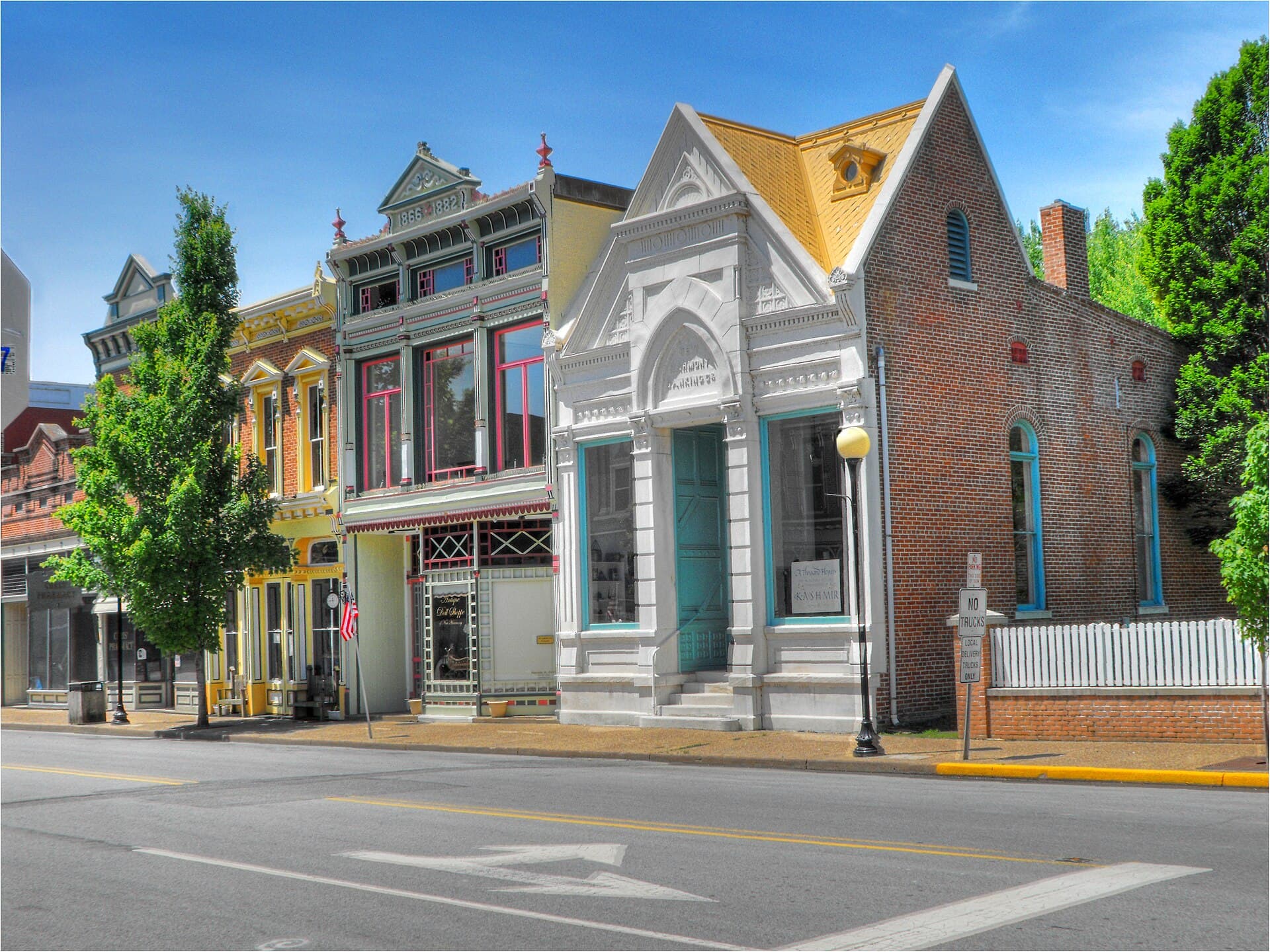 Timothy K Hamilton Creativity+ Photography / CC BY 3.0, via Wikimedia Commons
Self-guided audio walking tour of New Harmony — GPS route, offline playback, story-driven narration in 32 languages.
“Where visionary ideals bloom, shaping a landscape of historic aspiration and modern design.”
Not the postcards. The stories even locals don't know — whispered in your ear, right where they happened.
This sanctuary invites worship under the grandest dome of all, a literal sky-canopy.
One of New Harmony's winding paths isn't merely a garden feature; it's a spiritual journey, centuries old, brought back to life.
New Harmony's welcome center offers more than just maps; it's an architectural declaration, guiding visitors into the town's very spirit.
Discover every secret of New Harmony
Every address, every reveal in full — in your ear, right where it happened.
You pick your stops. You walk. The voice reveals what the others miss.


Your self-guided audio tour of New Harmony is ready — pick your landmarks, choose your language, and start the moment you arrive.
BuyNew Harmony, Indiana, is a small town with a grand past, a place where visionary ideals took root and blossomed into two distinct utopian experiments. Situated on a graceful bend of the Wabash River, this National Historic Landmark District offers a unique blend of 19th-century communal living and striking modernist architecture. It is a destination that invites contemplation, creativity, and a deep immersion into the aspirations of early American reformers.
From its founding in 1814 by German religious separatists known as the Harmonists, to its transformation into a secular intellectual center by Scottish industrialist Robert Owen, New Harmony has consistently served as a crucible for innovative thought and social change. Today, the town's walkable streets reveal a captivating conversation between its preserved historic buildings and contemporary artistic installations, making it a truly distinctive place to explore.
New Harmony's narrative begins in 1814 with the arrival of the Harmony Society, a group of German Lutheran separatists led by George Rapp. Seeking Christian perfection, the Harmonists established a highly ordered and productive community, constructing over 180 log, frame, and brick structures. They were entirely self-sufficient, producing goods that were traded as far away as New Orleans and overseas. The Harmonists believed in the imminent second coming of Christ and practiced celibacy, which, while contributing to their spiritual focus, also limited the community's long-term growth. After a decade of remarkable economic success, Rapp sold the entire town in 1824 to relocate his community back to Pennsylvania.
The town's second chapter commenced in 1825 when it was acquired by Robert Owen, a wealthy Welsh industrialist and social reformer. Owen, alongside his business partner William Maclure, envisioned New Harmony as a model community centered on education, social equality, and cooperative labor. This attracted a diverse group of intellectuals, scientists, and educators, famously arriving on the "Boatload of Knowledge." Prominent figures like American naturalist Thomas Say and French naturalist Charles-Alexandre Lesueur were drawn to Owen's "Community of Equality." While Owen's experiment ultimately dissolved by 1827 due to internal conflicts and logistical challenges, it had a profound impact on American society, influencing public education, women's suffrage, and scientific development. Many of Owen's children remained in New Harmony, contributing significantly to American scientific and educational theory and practice.
In the mid-20th century, New Harmony experienced another resurgence, largely through the efforts of Jane Blaffer Owen, the wife of a descendant of Robert Owen. She initiated the construction of several modernist buildings, including the iconic Roofless Church by Philip Johnson, thoughtfully blending the town's historical foundations with contemporary architectural vision. Today, New Harmony stands as a multi-resource historic site and a living community, continuing to inspire with its legacy of bold ideas and enduring spirit of inquiry.
Begin your exploration at the Atheneum, the town's striking Richard Meier-designed visitor center, which offers an orientation film and exhibits on New Harmony's unique past. From there, embark on a guided tour to uncover the layers of its history. Key historic sites include the Rapp-Owen Granary, a testament to Harmonist industry and later a scientific laboratory, and Thrall's Opera House, which once served as a dormitory. The Workingmen's Institute, Indiana's oldest continuously operating library and museum, provides a window into the intellectual pursuits of the Owenite community.
Beyond its historical structures, New Harmony is known for its contemplative spaces and modern architecture. Experience the profound simplicity of the Roofless Church, an open-air sanctuary designed by Philip Johnson, or wander through the Harmonist Labyrinth, a hedge maze crafted for meditation. Another labyrinth, the Cathedral Labyrinth, replicates the design of the one at Chartres Cathedral. The town is entirely walkable, allowing visitors to discover intriguing shops, art galleries, and public gardens at their own pace. Consider renting a golf cart or borrowing a bike from your accommodation for a leisurely exploration.
New Harmony welcomes visitors throughout the year, but the most pleasant times to experience its allure are mid-April to mid-June and September to mid-October, when the weather is most agreeable. Spring brings flourishing landscapes, while fall offers brilliant foliage, making these seasons ideal for leisurely walks and outdoor activities. Many local shops and restaurants are typically open on weekends, so planning a weekend trip is recommended to experience the full spectrum of what New Harmony offers.
New Harmony is located in the Central Time Zone. It is easily reached by car, approximately a 30-minute drive from Evansville, 2.5 hours from St. Louis and Louisville, and 3 hours from Indianapolis and Nashville. The town is very walkable, with most attractions within easy reach. However, golf cart rentals are available at the New Harmony Inn Resort & Conference Center for broader exploration. The Atheneum Visitor Center serves as the best starting point for tours, maps, and information. Guided tours of historic sites require tickets, which can be purchased at the Atheneum Museum Shop. Several dining options are available, including The Main Cafe for breakfast, Black Lodge Coffee Roasters, Yellow Tavern for lunch, and the Red Geranium for dinner. It is advisable to fill up on gas and acquire any necessary provisions before arriving, as amenities can be sparse in the hour leading up to New Harmony.
New Harmony in Korean, in Chinese or in Hebrew — and 29 more languages, every stop narrated by a native voice. The widest language range of any self-guided audio tour.
Available in: