Stör Loop
Before 1974, the Stör River traced a different path through Itzehoe. What significant alteration reshaped the city's connection to its primary waterway?
Full story unlocks in the tour
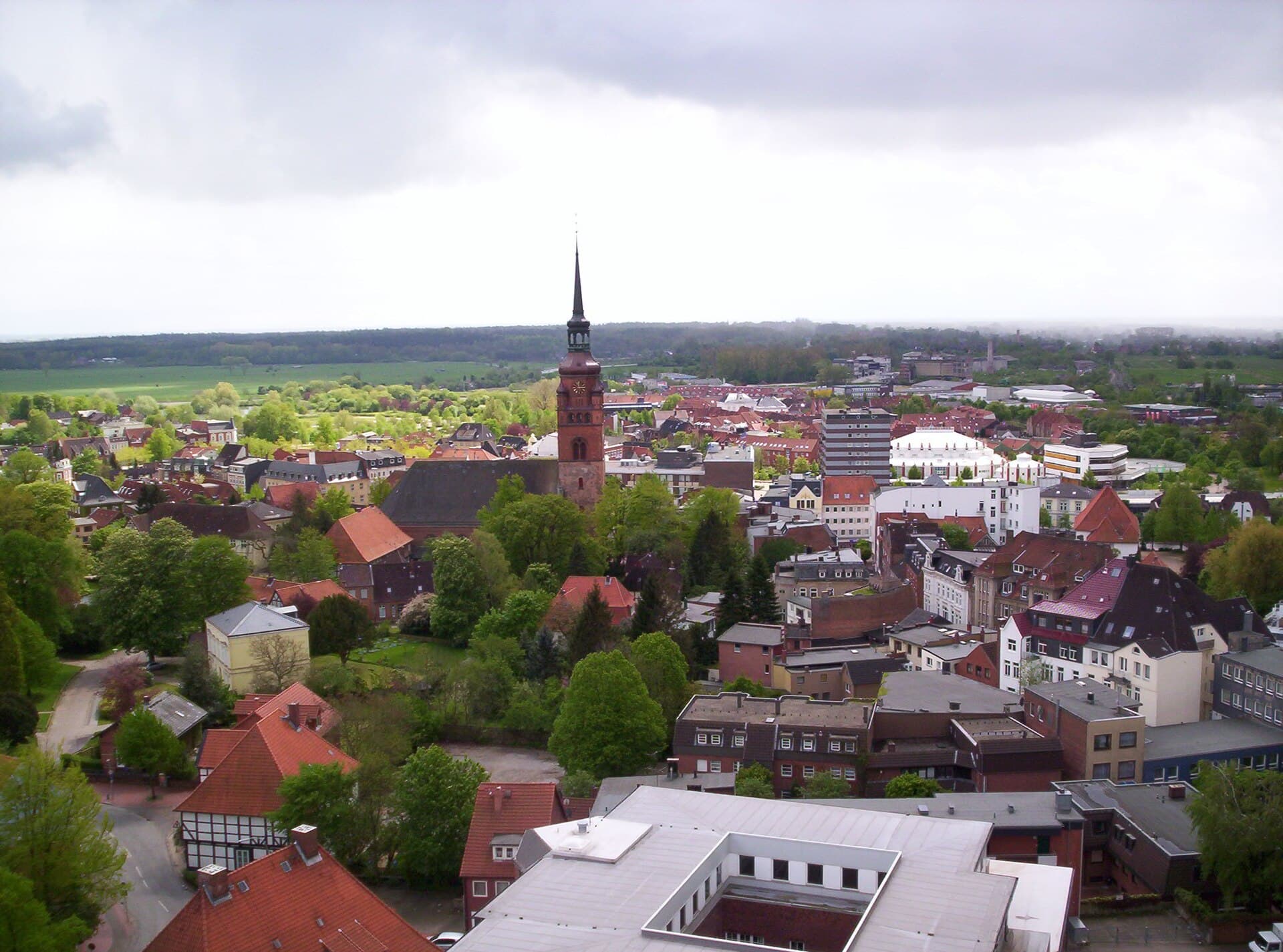 Unknown author / Public domain, via Wikimedia Commons
Self-guided audio walking tour of Itzehoe — GPS route, offline playback, story-driven narration in 32 languages.
“Where ancient currents meet modern aspirations along the Stör River.”
Not the postcards. The stories even locals don't know — whispered in your ear, right where they happened.
Before 1974, the Stör River traced a different path through Itzehoe. What significant alteration reshaped the city's connection to its primary waterway?
A short journey from Itzehoe reveals a remarkable geographical anomaly. What makes this nearby expanse a singular point of interest in Germany?
Imagine a desert-like expanse in northern Germany. What unusual natural phenomenon exists near Itzehoe, and what intriguing past does it hold?
Discover every secret of Itzehoe
Every address, every reveal in full — in your ear, right where it happened.
You pick your stops. You walk. The voice reveals what the others miss.
Your self-guided audio tour of Itzehoe is ready — pick your landmarks, choose your language, and start the moment you arrive.
BuyLume has a built-in augmented-reality guide. Hold your phone up and its camera shows the street ahead of you, with a glowing arrow laid over the real view that always points to your next stop — no map to puzzle over, no wrong turns. Like everything in Lume, it works fully offline.
Itzehoe, a city etched into the landscape of Schleswig-Holstein, Germany, offers a compelling fusion of ancient roots and contemporary life. Situated along the Stör River, a navigable artery flowing into the Elbe, the city is cradled by verdant marshes and gently undulating geest landscapes. With a population of approximately 32,000 residents, Itzehoe maintains a welcoming, intimate atmosphere while serving as an important cultural and economic focal point for the Steinburg district.
Visitors can wander through a well-preserved old town, where timber-framed houses stand beside historical landmarks. Beyond its architectural heritage, the city unfolds into diverse natural settings. From medieval structures and museums to bathing lakes and nature paths, Itzehoe invites exploration into its past and engagement with its natural surroundings. It is a place where the echoes of Charlemagne's era resonate alongside the inventive spirit of a modern high-tech center.
## From Frankish Fortress to Hanseatic Crossroads Itzehoe's narrative begins remarkably early, placing it among Holstein's most ancient towns. Its origins can be traced to 809 AD, when Charlemagne commissioned the Esesfeld fortress, a defensive bulwark against Danish incursions. While this initial fortification stood two kilometers from the later town, it laid the foundation for subsequent settlement. Under its protection, Archbishop Ebbo of Reims established a modest monastery or prayer house, the 'cella Welanao,' in 823, serving as a base for Christian missions into Denmark.
Across the centuries, the settlement shifted, and the town of Itzehoe first appeared in written records as 'Echeho' in 1168, and then 'Opidium Ekeho' in 1196 by Saxo Grammaticus. Its name has evolved through various spellings, including Esseveldoburg, Eselsfleth, and Ezeho, with its current form likely signifying 'mouth of the Itze' in Low German. In 1238, Count Adolf IV of Holstein formally bestowed municipal rights upon Itzehoe under 'Lübeck Law,' a pivotal moment that fostered commerce and crafts and solidified its urban status.
## Resilience Through Strife and Expansion Itzehoe's strategic placement on the navigable Stör River, which connects to the Elbe and the North Sea, established it as a significant port and a crucial trading post for agricultural goods. The historic overland route 'Ochsenweg' (Oxen Way), utilized for driving livestock from Denmark to southern Europe, also traversed the city. A Cistercian convent, established in 1256, grew into a significant spiritual and economic institution, possessing extensive lands and influencing the region. This convent, later transformed into a noble convent during the Reformation in 1533, continues its operations today.
The city confronted numerous adversities, including destruction in 1201 and repeated plundering during the Thirty Years' War, particularly by the Swedes in 1644 and 1657. The 1657 devastation was especially severe, leaving the cloister of St. Laurentii Church as the only medieval building to survive. Despite these reversals, Itzehoe consistently rebuilt and maintained its importance. From 1460 until 1864, it remained under the dominion of the Danish crown as part of the Duchy of Holstein. In 1867, it came under Prussian governance, becoming an administrative center.
## Modernity and Ingenuity The 19th and 20th centuries brought industrial growth, marked by the opening of the 'Alsen' cement factory in 1863. Following World War II, the city's population doubled due to an influx of refugees, leading to considerable urban expansion. Today, Itzehoe takes pride not only in its historical legacy but also in its role as a high-tech center, home to the Fraunhofer Institute for Silicon Technology (ISIT), drawing scientists and investment in microelectronics. The city also embraces a lively cultural scene, recognized for its diverse musical genres and as a crucial transit point for the globally renowned Wacken Open Air festival.
Begin your exploration at the Klosterhof (Convent Courtyard), the historical pulse of Itzehoe. Here, you will discover the Kloster Itzehoe, a noble convent founded in the Middle Ages that remains active today. Appreciate the tranquil grounds and the exteriors of its historical structures, including the grand St. Laurentii Church, celebrated for its impressive Baroque interior and elaborate abbesses' loges.
For those drawn to art, the Wenzel Hablik Museum is an essential stop. Housed within the former merchant's villa of the Hablik family, it safeguards the legacy of Wenzel Hablik, a versatile Expressionist artist. The museum displays his visionary architectural sketches, oil paintings, handcrafted furniture, and personal collections of rocks, crystals, and minerals.
Those who cherish nature can journey to Deckmann's Ponds, a lake with a sandy shoreline ideal for summer swimming, encircled by walking paths. Alternatively, explore the Nordoe Inland Dunes Nature Reserve, a natural monument featuring open sand plains, pine-covered dunes, grasslands, and oak forests, offering sanctuary for rare plant and animal species. Do not overlook the Delftor Bridge, which provides expansive views of the Stör River.
Other notable sites include the Bismarckturm and the Prinzesshof. For a distinctive cultural experience, consider visiting during the Wacken Open Air festival in early August, when Itzehoe transforms into a bustling hub for metal music aficionados.
The most favorable period to visit Itzehoe for warm-weather activities extends from late June to late August, when temperatures are agreeable, averaging around 71°F (22°C) in July. May and September also offer comfortable conditions with fewer crowds. If you intend to attend the Wacken Open Air festival, which typically occurs in early August, be aware that accommodations are reserved months in advance. Winters are long and cold, with average lows around 30°F (-1°C) in January and February.
Itzehoe is well-connected and straightforward to navigate. It lies approximately 51 km northwest of Hamburg, accessible via the A23 motorway. You can reach Itzehoe by train from Hamburg Hauptbahnhof in about one hour. Within the city, public transport includes buses and trains from Itzehoe Station. Rideshare services like Uber are also available. If driving, traffic is generally light, and parking is available in lots and garages, often utilizing a 'pay and display' system.
German is the official language, and while English may be spoken in areas catering to visitors, knowing some basic German phrases is beneficial. The local currency is the Euro (€). While credit cards are widely accepted, carrying some cash is advisable, especially for smaller establishments or parking meters. The climate can be variable, so dressing in layers and carrying rain gear is suggested, even in summer. Most shops operate from 9 or 10 AM to 6 PM on weekdays, with earlier closures on Saturdays and nearly all shops closed on Sundays.
Itzehoe in Korean, in Chinese or in Hebrew — and 29 more languages, every stop narrated by a native voice. The widest language range of any self-guided audio tour.
Available in: