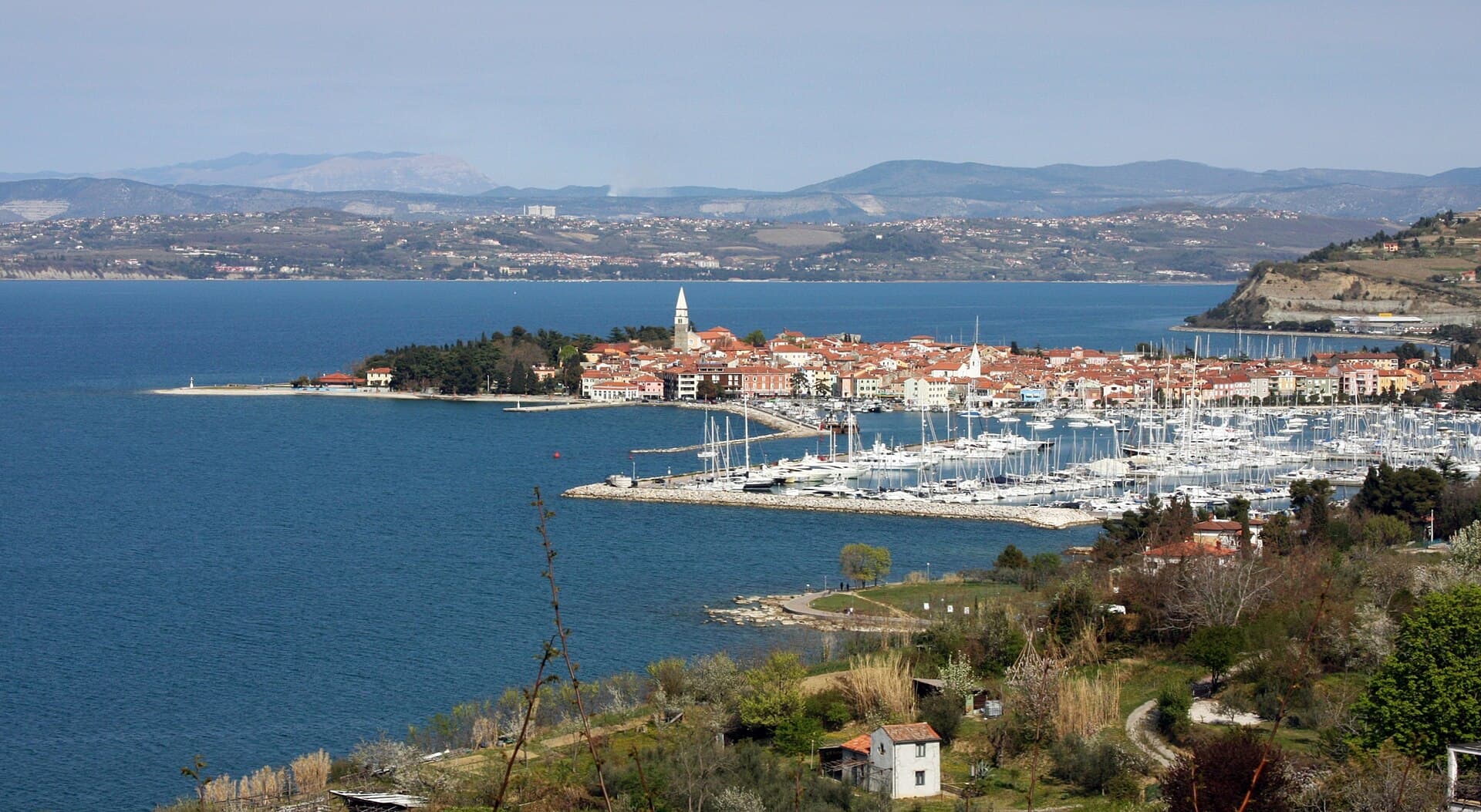
IzolaBryan Pocius from New York, USA / cc by 2.0, via Wikimedia Commons
SI

Izola

Self-guided audio walking tour of Izola — GPS route, offline playback, story-driven narration in 32 languages.

Where Venetian charm meets Adriatic calm, and every narrow street holds a whisper of the past.

The secrets of Izola

Izola, as no one tells it.

Not the postcards. The stories even locals don't know — whispered in your ear, right where they happened.

3 secrets below. Many more wait inside the tour.
Church of St. Maurus Bell Tower

The bell tower of Izola's main church offers more than just a wide view; it guards a miraculous tale of divine intervention that saved the town from invaders.

Full story unlocks in the tour
The Old Town Walls

Izola's current connection to the mainland wasn't always there; the very stones that once defended the town helped bridge the gap.

Full story unlocks in the tour
Izolana – The House of Sea

Beyond its exhibits, this museum holds the key to a fascinating maritime disaster involving a grand ocean liner right off Izola's coast.

Full story unlocks in the tour
The full tour

Discover every secret of Izola

Every address, every reveal in full — in your ear, right where it happened.

Get the key to Izola

You pick your stops. You walk. The voice reveals what the others miss.

Izola — island surrounded by water and mountains at daytime
Photo: Neven Krcmarek / Unsplash
Izola — green trees near lake under blue sky during daytime
Photo: Hasmik Ghazaryan Olson / Unsplash
Izola — green trees and mountains under blue sky and white clouds during daytime
Photo: Cristian Vieriu / Unsplash
Choose your time

How long do you have in Izola?

Your self-guided audio tour of Izola is ready — pick your landmarks, choose your language, and start the moment you arrive.

Buy
About Izola

The story of Izola

Izola, a captivating coastal town on Slovenia's Adriatic shore, offers a slower, more authentic pace than some of its more famous neighbors. Once an island, its name, derived from the Italian 'isola' meaning island, hints at its origins before it was connected to the mainland in the 19th century. Today, Izola enchants with its Venetian-influenced architecture, a lively marina, and a genuine Mediterranean spirit that permeates its narrow, winding streets.

Often described as a place of quiet discovery and even named Europe's most underrated travel destination for 2026 by Time Out, Izola invites visitors to discover its deep maritime heritage and lively local culture. From exploring colorful old townhouses and strolling along the palm-lined promenade to savoring fresh seafood and local wines, Izola provides a tranquil and rewarding escape.

History

From Island Refuge to Coastal Haven

Izola's story begins in the 7th century when refugees from Aquileia established a settlement on a small island. This strategic location in the Gulf of Trieste quickly drew attention, and by the 9th century, it fell under Venetian influence. The town was first documented in 932 AD as 'Insula' in a Venetian record, solidifying its early ties to the powerful Republic of Venice, which officially claimed it in 1267. Venetian rule, lasting for centuries, left an indelible mark on Izola's architecture and culture, evident in the colorful buildings and Mediterranean flair seen today.

Throughout the medieval period, Izola was known as a 'city of rebels,' even declaring independence in 1253 and briefly operating with its own laws and government. The 13th and 14th centuries saw conflicts, or 'city wars,' with neighboring towns like Piran and Koper. A significant transformation occurred in the early 19th century when the town's defensive walls were dismantled, and the stone was used to create a land bridge, connecting the former island to the mainland. This period also saw Izola briefly become part of the Napoleonic Empire (1805-1813) before joining the Austro-Hungarian Monarchy until World War I.

After World War I, under the Treaty of Saint-Germain, Izola was assigned to Italy. The town had an overwhelming Italian majority in the early 20th century, a demographic that shifted significantly after World War II when Izola became part of Zone B of the Free Territory of Trieste and was assigned to Yugoslavia in 1954. This transition led to the emigration of many Italian speakers and the influx of Slovene-speaking people from nearby villages. Today, Izola is officially bilingual, recognizing both Slovene and Italian, a testament to its deep and complex history. The discovery of a thermal spring in 1820 also marked the early beginnings of tourism, further diversifying the town's identity beyond its strong fishing tradition, which saw the first fishing factory on the Adriatic built here in the 19th century.

What to see

Wandering through Izola's old town is a journey through its past, with pedestrian stone walkways revealing colorful, Venetian-influenced architecture. Don't miss Manzioli Square and the Church of St. Maurus, a 16th-century Gothic tower built of Istrian stone. You can climb its approximately 100 steps for wide views of the town and the Adriatic Sea. The church itself, dedicated to the town's patron saint, features Renaissance and Baroque elements and a collection of art.

Stroll along the Izola Promenade, a mile-long stretch lined with palm trees, inviting cafes, and the old fisherman's port, leading to the large Izola Marina. At the tip of the peninsula, you'll find Svetilnik Beach, a rocky spot popular for sunbathing, offering clear views of the Julian Alps on a clear day. For a deeper dive into Izola's maritime history, visit Izolana – The House of Sea, an interactive museum showcasing the town's fishing and fish-processing traditions. Explore Ljubljanska Street, also known as the 'street of artists,' where galleries, studios, and cafes await. For a glimpse into Roman history, the Simonov zaliv Archaeological Park features the remains of a 2000-year-old Roman maritime villa and port.

When to visit

The most pleasant months to visit Izola are from May to September, when the Adriatic coast offers warm weather and calm seas, ideal for swimming and waterfront strolls. Spring (May-June) and early autumn (September-October) provide milder temperatures and fewer crowds, with temperatures ranging comfortably between 20°C and 25°C. July and August are the warmest months, with daytime temperatures often reaching around 30°C and abundant sunshine, though the town can be busier. The sea remains warm enough for swimming well into October.

Practical

Izola is a compact town, easily explored on foot, with its coastline, beaches, and historic areas all within walking distance. For venturing to nearby towns like Piran, Koper, or Trieste, a car or public transport is convenient. Tap water in Izola is safe and excellent to drink. The town is generally peaceful and safe, but visitors should be mindful of local etiquette, respecting beach areas and private property. Izola offers a wide range of accommodation, including private rooms and apartments, and a variety of high-quality restaurants serving Slovenian and Mediterranean cuisine, with fresh seafood being a highlight. The region is also known for its strong wine tradition and olive oil.

Good to know
What languages are spoken in Izola?
Izola is officially bilingual, with both Slovene and Italian recognized as official languages.
Is Izola a good base for exploring the Slovenian coast?
Yes, Izola serves as an excellent base for exploring the coastal towns and villages of Slovenian Istria, including Piran and Koper, and even venturing inland to the Karst region.
What local dishes should I try in Izola?
In Izola, you should try local dishes such as seafood risotto, grilled fish, traditional Istrian dishes like fuži, truffles, and enjoy the high-quality olive oil and local wines.
How do I get to Izola?
Izola is accessible by car, bus, or train from major Slovenian cities like Ljubljana. The nearest international airport is in Trieste, Italy, approximately 70 km away.
Are there beaches in Izola?
Yes, Izola has several beaches along its coastline, including rocky shores, a dog beach, and a wheelchair-friendly beach. Svetilnik Beach is a popular rocky beach at the tip of the peninsula.
What are some unique activities to do in Izola?
Beyond traditional sightseeing, you can participate in an outdoor adventure game to uncover 'The Forgotten Secret of Izola,' take a tourist train ride, or explore the countryside with a local to discover authentic stories and flavors.
On the map
Izola
€9.90
No booking · activate anytime · 12h to walk it
Load on Wi-Fi, then walk offline — no roaming abroad
Get the key to Izola