El Lago Sagrado
Este sereno cuerpo de agua dentro del complejo del templo no era solo para la reflexión; tenía un propósito más profundo y místico.
La historia completa se desbloquea en el tour
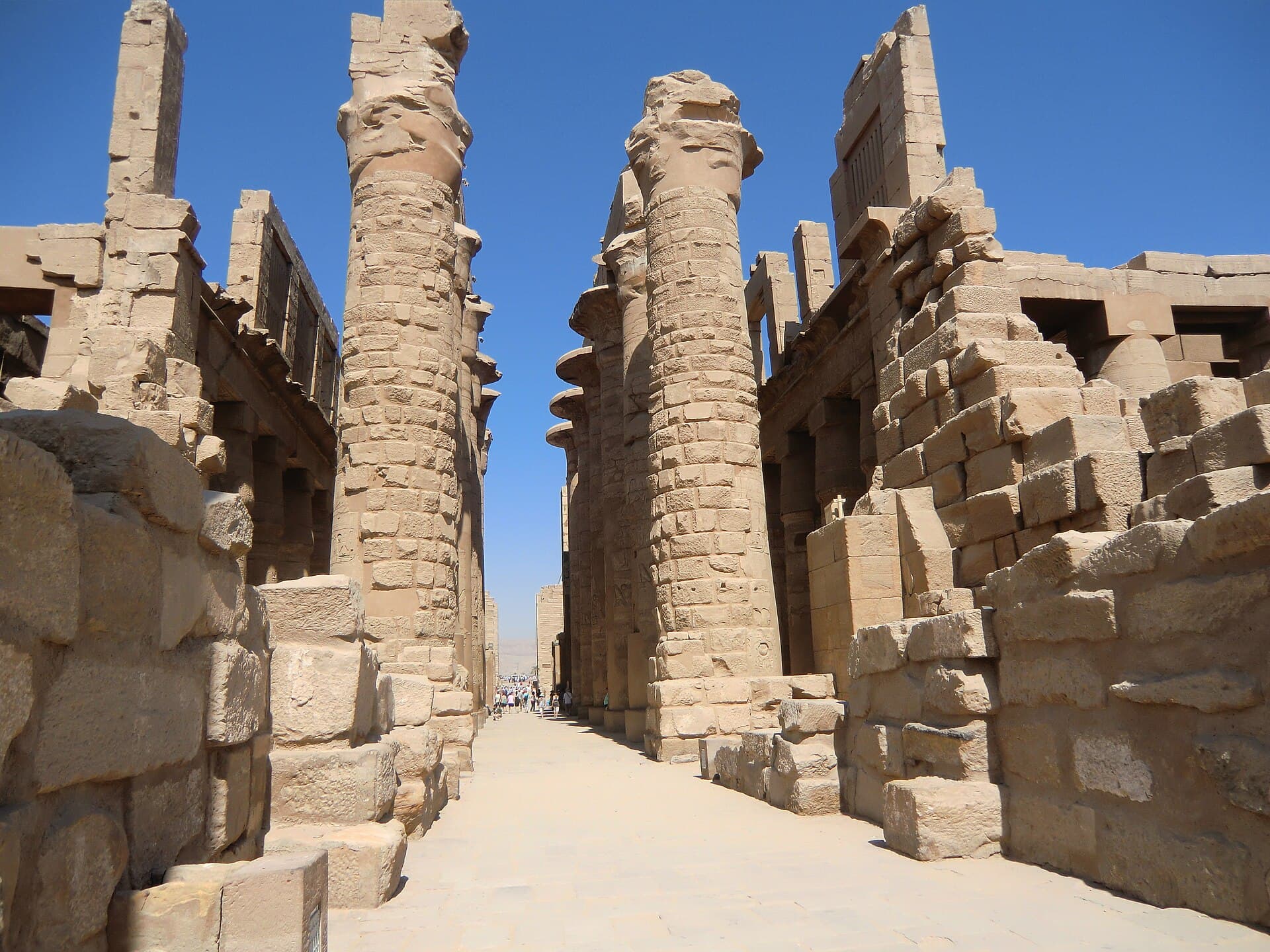 René Hourdry / CC BY-SA 4.0, via Wikimedia Commons
Tour de audio autoguiado de Karnak — ruta GPS a pie, reproducción offline, narración en 32 idiomas.
“Camina entre gigantes, donde los faraones grabaron su poder en piedra.”
No las postales. Las historias que ni los locales conocen — al oído, justo donde ocurrieron.
Este sereno cuerpo de agua dentro del complejo del templo no era solo para la reflexión; tenía un propósito más profundo y místico.
Más allá de las avenidas principales, un área más tranquila y enigmática alberga una peculiar abundancia de una feroz diosa.
Beyond the main avenues, a quieter, more enigmatic area holds a peculiar abundance of a fierce goddess.
Descubre todos los secretos de Karnak
Cada dirección, cada revelación al completo — a tu oído, justo donde ocurrió.
Eliges tus paradas. Caminas. La voz te revela lo que los demás ignoran.


Tu tour de audioguía por Karnak te espera — elige tus lugares, tu idioma y empieza al llegar.
ComprarLume incluye una guía de realidad aumentada. Levanta el móvil y su cámara muestra la calle que tienes delante, con una flecha luminosa sobre la imagen real que siempre apunta a tu próxima parada — sin mapas que descifrar, sin giros equivocados. Como todo en Lume, funciona completamente sin conexión.
Karnak, conocido por los antiguos egipcios como Ipet-Isut, o 'El Más Selecto de los Lugares', no es meramente un templo, sino un extenso complejo que sirvió como el principal centro religioso de Tebas y el culto al dios Amón-Ra durante más de 2.000 años. Situado en la Orilla Este del Nilo en la moderna Luxor, este sitio monumental cubre más de 80 hectáreas, mostrando los logros combinados de numerosos faraones que lo expandieron y embellecieron continuamente desde el Reino Medio hasta la era Ptolemaica.
Entrar en Karnak es adentrarse en una ciudad de templos, obeliscos, estatuas colosales y capillas, cada elemento contribuyendo a una gran narrativa de adoración divina, poder político e innovación arquitectónica. Es el sitio religioso antiguo más grande jamás construido, un testimonio del poder duradero y el arte de la civilización egipcia antigua. La magnitud y los intrincados detalles aquí son capaces de eclipsar muchas maravillas del mundo moderno, ofreciendo una profunda visión de una civilización que veneraba a sus dioses e inmortalizó a sus gobernantes en piedra.
La historia de Karnak es una narrativa tejida a lo largo de casi dos milenios, comenzando con modestas construcciones y evolucionando hasta convertirse en el complejo religioso más grande jamás construido. La construcción real más antigua conocida data del reinado de Wahankh Intef II (2112-2063 a. C.) de la 11ª Dinastía, con una construcción significativa que comenzó bajo Senusret I alrededor del 1971 a. C. durante el Reino Medio.
Sin embargo, fue durante el Nuevo Reino (1550–1069 a. C.), cuando Tebas (la moderna Luxor) se convirtió en la capital imperial de Egipto, que Karnak realmente se expandió en escala. El dios local Amón-Ra ascendió para convertirse en el rey de los dioses, y los faraones sucesivos buscaron honrarlo y afirmar su propia autoridad divina a través de adiciones monumentales. Más de 30 faraones contribuyeron al complejo, cada uno dejando su marca indeleble.
Entre los contribuyentes notables se encuentran Tutmosis I, quien erigió obeliscos, y la Reina Hatshepsut, quien, a pesar de gobernar en un papel tradicionalmente masculino, encargó dos imponentes obeliscos de granito, uno de los cuales aún se mantiene en pie con casi 30 metros y un peso estimado de 343 toneladas. La Gran Sala Hipóstila, una característica central e impresionante, fue iniciada en gran parte por Seti I y completada por su hijo, Ramsés II, con 134 columnas masivas. Los reyes ptolemaicos (305–30 a. C.) añadieron los pilones exteriores y el recinto alrededor del Lago Sagrado, con emperadores romanos realizando modificaciones menores hasta el siglo II d. C. Para el siglo IV d. C., bajo los decretos antipaganos de Teodosio I, Karnak finalmente dejó de tener uso religioso.
Karnak también estaba ceremonialmente vinculado al Templo de Luxor por la Avenida de las Esfinges, un camino procesional de 2,7 km bordeado de esfinges con cabeza de carnero, utilizado durante el importante Festival de Opet. Esta avenida, reabierta por completo en 2021 después de décadas de excavación, proporciona una conexión tangible entre estos dos importantes sitios religiosos.
Comience su exploración en la Avenida de las Esfinges, un camino ceremonial bordeado de esfinges con cabeza de carnero que conecta Karnak con el Templo de Luxor. La Gran Sala Hipóstila es un punto culminante inmediato, un espacio colosal con 134 columnas masivas, algunas de hasta 23 metros de altura, creando un bosque de piedra tallado con intrincados jeroglíficos. Deje tiempo suficiente para pasear por esta impresionante área, observando los detallados grabados.
No pase por alto el Obelisco de Hatshepsut, un monolito imponente de granito rosa que se eleva casi 30 metros. El sereno Lago Sagrado, una gran cuenca rectangular, se utilizaba para la purificación ritual y ofrece hermosos reflejos de las estructuras circundantes. Cerca del lago, descubrirá una gran estatua de escarabajo de piedra de Khepri, el dios del renacimiento, que los visitantes a menudo rodean para la buena fortuna. El Museo al Aire Libre, a menudo pasado por alto, presenta capillas y artefactos reconstruidos, incluida la exquisita Capilla Blanca de Senusret I. El Recinto de Mut, al sur del templo principal, ofrece una experiencia más tranquila con su lago sagrado en forma de media luna y numerosas estatuas de Sekhmet de granito negro.
El momento ideal para visitar Karnak es durante los meses más frescos de invierno, de noviembre a febrero, cuando las temperaturas diurnas promedian alrededor de 25°C (77°F). Para evitar los grupos más grandes de visitantes y el intenso sol egipcio, planifique su visita para temprano en la mañana (entre las 6:00 AM y las 8:00 AM) o al final de la tarde (después de las 3:00 PM). Las mañanas tempranas ofrecen una luz más suave, menos visitantes y excelentes condiciones para la fotografía, particularmente en la Gran Sala Hipóstila. Considere una visita completa de 2-3 horas para el complejo principal, o 4-5 horas para incluir el Museo al Aire Libre y otros recintos.
El Templo de Karnak se encuentra en la Ribera Este del río Nilo en Luxor, aproximadamente a 3 kilómetros (1.8 millas) al norte del centro de la ciudad. Los taxis o servicios de transporte compartido están fácilmente disponibles desde el centro de Luxor, con un tiempo de viaje de aproximadamente 10-15 minutos. Para un enfoque más pintoresco, considere un paseo en faluca (velero tradicional) por el Nilo hasta un muelle cercano.
Las tarifas de entrada para adultos extranjeros son aproximadamente EGP 600 (alrededor de $12-12.50 USD) a partir de 2026, con descuentos para estudiantes disponibles. Se requiere una entrada adicional (alrededor de EGP 100) para el Museo al Aire Libre. Las entradas se compran en la entrada; no se suele requerir reserva anticipada en línea. Se recomienda ropa modesta que cubra hombros y rodillas por respeto al patrimonio religioso del sitio. Zapatos cómodos para caminar, un sombrero de ala ancha, protector solar y mucha agua son esenciales debido a la extensa caminata y el intenso sol.
La fotografía está permitida en todo el complejo para uso personal, aunque generalmente se desaconseja el flash y los trípodes pueden tener algunas restricciones en los espacios interiores. Los drones están estrictamente prohibidos sin autorización militar. Hay baños públicos disponibles cerca de la entrada principal y dentro del complejo. Aunque en gran parte accesible, algunas áreas tienen terreno irregular y escalones, por lo que los visitantes con limitaciones de movilidad deben planificar en consecuencia, centrándose en los caminos principales.
Karnak en coreano, en chino o en hebreo — y 29 idiomas más, cada parada narrada por una voz nativa. La mayor variedad de idiomas de cualquier audioguía autoguiada.
Disponible en: