Sources chaudes de Katherine
Le nom « sources chaudes » pourrait vous faire imaginer de l'eau fumante, mais les bassins thermaux de Katherine offrent un autre type de chaleur.
L'histoire complète se débloque dans le tour
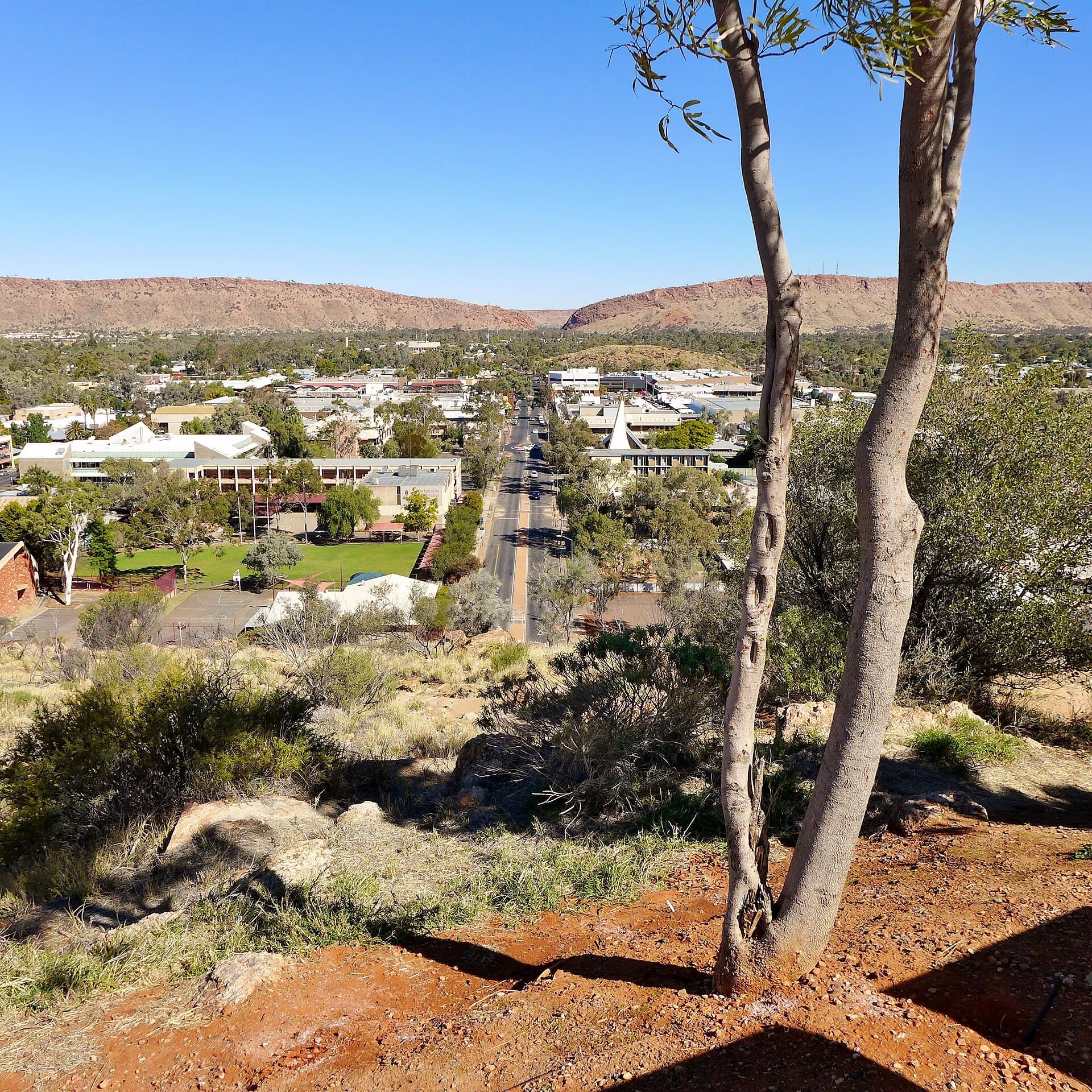 Photo of Alice Springs, via Wikimedia Commons
Visite audio autoguidée de Katherine — parcours GPS à pied, lecture hors ligne, narration en 32 langues.
“Là où l'outback rencontre les tropiques, Katherine est une porte d'entrée vers des paysages anciens et des récits culturels profonds.”
Pas les cartes postales. Les histoires que même les habitants ignorent — soufflées à l'oreille, là où elles se sont passées.
Le nom « sources chaudes » pourrait vous faire imaginer de l'eau fumante, mais les bassins thermaux de Katherine offrent un autre type de chaleur.
Katherine a joué un rôle crucial dans la défense de l'Australie pendant la Seconde Guerre mondiale, un fait marqué par un événement unique et percutant.
La ville et la rivière partagent un nom, mais l'inspiration derrière celui-ci contient une petite faute d'orthographe tenace.
Découvrez tous les secrets de Katherine
Chaque adresse, chaque révélation en entier — dans ton oreille, là où elle s'est passée.
Tu choisis tes lieux. Tu marches. La voix te révèle ce que les autres ignorent.


Votre visite audioguidée de Katherine vous attend — choisissez vos lieux, votre langue, et lancez-vous dès votre arrivée.
AcheterLume intègre un guide en réalité augmentée. Levez votre téléphone : sa caméra montre la rue devant vous, avec une flèche lumineuse posée sur l'image réelle qui pointe toujours vers votre prochain arrêt — aucune carte à déchiffrer, aucun mauvais virage. Comme tout dans Lume, ça fonctionne entièrement hors-ligne.
Katherine, la quatrième plus grande agglomération du Territoire du Nord de l'Australie, est un carrefour dynamique où le vaste outback australien fait la transition vers les tropiques luxuriants. Située sur la rivière Katherine, à environ 320 kilomètres au sud-est de Darwin, elle sert de carrefour crucial pour les voyageurs traversant les autoroutes Stuart et Victoria. Ce centre régional fournit des services essentiels aux communautés environnantes, y compris celles s'étendant de la frontière de l'Australie-Occidentale au golfe de Carpentarie.
Au-delà de son importance logistique, Katherine est une porte d'entrée vers certaines des attractions naturelles les plus extraordinaires du Top End. La ville est reconnue pour sa proximité avec le parc national de Nitmiluk, abritant l'emblématique gorge de Katherine, une série de treize gorges interconnectées sculptées par la rivière Katherine sur des millions d'années. La région est également riche en culture indigène, étant un lieu de rassemblement traditionnel pour les peuples aborigènes Jawoyn, Dagoman et Wardaman depuis des milliers d'années.
Les visiteurs de Katherine découvriront un mélange d'aventure, de détente et d'immersion culturelle, de l'exploration de sites d'art rupestre anciens à la baignade dans des sources thermales et à l'expérience de la vie authentique de l'outback. La ville elle-même offre une gamme de commodités, y compris des centres commerciaux modernes, diverses options de restauration et divers choix d'hébergement, ce qui en fait une base confortable pour explorer la région plus vaste.
La région de Katherine est un lieu de rassemblement important pour les Aborigènes australiens depuis des milliers d'années, principalement pour les peuples Jawoyn, Dagoman et Wardaman. Leur lien profond avec la terre est évident dans l'art rupestre ancien disséminé dans des zones comme la gorge de Nitmiluk, certaines pièces vieilles de dizaines de milliers d'années, représentant des histoires et des cérémonies du Temps du rêve.
L'exploration européenne de la région a commencé en 1862 lorsque John McDouall Stuart a traversé la région et a nommé la rivière Katherine. Les origines de la ville remontent à un avant-poste établi avec la ligne télégraphique transaustralienne, qui a atteint le site en 1871. La colonie originale était située à Knott's Crossing, et en 1888, elle s'était développée pour inclure un magasin et un hôtel.
Entre 1914 et 1917, une deuxième colonie, Emungalan, s'est développée quelques kilomètres en aval, servant de terminus ferroviaire pour le chemin de fer du Nord de l'Australie. La construction du chemin de fer a attiré de nombreux immigrants, y compris des Russes blancs qui avaient fui la guerre civile russe. Le site actuel de la ville de Katherine a été officiellement décrété en 1926, après l'achèvement du pont ferroviaire, choisi pour son risque d'inondation supposé plus faible. Cependant, Katherine a une histoire d'inondations importantes, avec des événements notables en 1957, 1974 et une inondation dévastatrice en 1998 causée par le cyclone Les.
Pendant la Seconde Guerre mondiale, Katherine est devenue une zone de rassemblement militaire cruciale, avec jusqu'à 100 000 militaires y passant. La piste d'atterrissage de la ville a servi de base subsidiaire pour Darwin, et des installations militaires comme des abattoirs, des usines de glace et des boulangeries ont été établies. Le 22 mars 1942, Katherine a subi un raid aérien japonais, marquant le point le plus méridional de telles attaques dans le Territoire du Nord. Après la guerre, Katherine a continué de croître, avec des industries comprenant l'élevage bovin, l'agriculture (sorgho, autres céréales et mangues) et l'exploitation minière, bien que l'extraction d'or ait décliné après la fermeture de la mine de Mount Todd en 2000. Aujourd'hui, le tourisme est la plus grande industrie de Katherine, stimulée par ses attractions naturelles et ses expériences culturelles.
Katherine offre un large éventail d'attractions, mêlant merveilles naturelles et aperçus culturels. La pièce maîtresse est le Parc National de Nitmiluk, abritant la majestueuse Gorge de Katherine. Vous pouvez explorer les treize gorges en croisière, en canoë ou en kayak, en admirant les imposantes falaises de grès et l'ancien art rupestre aborigène. Pour une perspective différente, envisagez un vol panoramique en hélicoptère au-dessus des gorges.
Raffraîchissez-vous aux Sources chaudes de Katherine, des piscines thermales naturelles à une courte distance du centre-ville, idéales pour un bain relaxant. Un autre endroit rafraîchissant est Leliyn (Edith Falls), offrant des piscines inférieures et supérieures pour la baignade et des sentiers de randonnée. Aventurez-vous sous terre au Parc Naturel des Grottes de Cutta Cutta pour explorer d'impressionnantes stalactites et stalagmites calcaires formées il y a des millions d'années.
Pour un avant-goût de la vie authentique de l'outback, le Katherine Outback Experience propose des démonstrations de dressage de chevaux et de chiens de travail, des récits de brousse et de la musique live. Imprégnez-vous de la culture aborigène dans les galeries d'art et les centres culturels locaux, tels que la Top Didj Art Gallery, le Godinymayin Yijard Rivers Art & Cultural Centre et le Mimi Aboriginal Art & Craft. Visitez le Musée de Katherine pour plonger dans l'histoire de la ville, y compris son rôle important pendant la Seconde Guerre mondiale.
Le meilleur moment pour visiter Katherine est pendant la saison sèche, qui s'étend de mai à septembre. Pendant ces mois, vous pouvez vous attendre à des journées chaudes et ensoleillées avec une humidité plus faible et des nuits plus fraîches, ce qui est idéal pour les activités de plein air comme la randonnée, la natation et l'exploration des parcs nationaux. De nombreux voyagistes sont pleinement opérationnels et le risque de fermeture de routes due aux inondations est minime. Les mois intermédiaires de fin avril et début mai peuvent également être enrichissants, avec une verdure luxuriante après la saison humide et moins de foules, bien que certains points d'eau puissent encore faire l'objet de vérifications de sécurité contre les crocodiles.
Katherine est à environ trois heures de route au sud-est de Darwin. Vous pouvez rejoindre Katherine par des services de bus comme Greyhound Australia, qui exploite des liaisons depuis Darwin, Alice Springs et Broome. Le train Ghan s'arrête également à Katherine, offrant un voyage ferroviaire unique depuis Adélaïde ou Alice Springs. Bien qu'il n'y ait pas de vols directs vers Katherine, la ville est bien desservie par la route via les autoroutes Stuart et Victoria.
Se déplacer à Katherine même est préférable en voiture, surtout pour explorer le parc national de Nitmiluk et les autres attractions environnantes. La ville dispose de motels modernes, d'hôtels et de parcs de caravanes pour l'hébergement. Le Centre d'information touristique de Katherine est une ressource précieuse pour les cartes, les réservations de visites et les informations locales, ouvert tous les jours pendant la saison sèche. N'oubliez pas d'emporter beaucoup d'eau, surtout lors de la randonnée, et de vérifier auprès des gardes forestiers locaux les avertissements de sécurité, en particulier concernant les conditions de baignade pendant la saison humide.
Katherine en coréen, en chinois ou en hébreu — et dans 29 autres langues, chaque étape narrée par une voix native. La plus large gamme de langues de tous les audioguides autoguidés.
Disponible en :