El Nombre de Kearney
El nombre de la ciudad lleva una letra extra en comparación con el fuerte al que debe su nombre. ¿Por qué la discrepancia?
La historia completa se desbloquea en el tour
 MMarshall at English Wikipedia / Public domain, via Wikimedia Commons
Tour de audio autoguiado de Kearney — ruta GPS a pie, reproducción offline, narración en 32 idiomas.
“Donde el río Platte susurra historias de pioneros y grullas, una ciudad moldeada por una 'e' accidental.”
No las postales. Las historias que ni los locales conocen — al oído, justo donde ocurrieron.
El nombre de la ciudad lleva una letra extra en comparación con el fuerte al que debe su nombre. ¿Por qué la discrepancia?
Antes de Kearney, existía un asentamiento rústico cercano, con un nombre único y una reputación ruidosa.
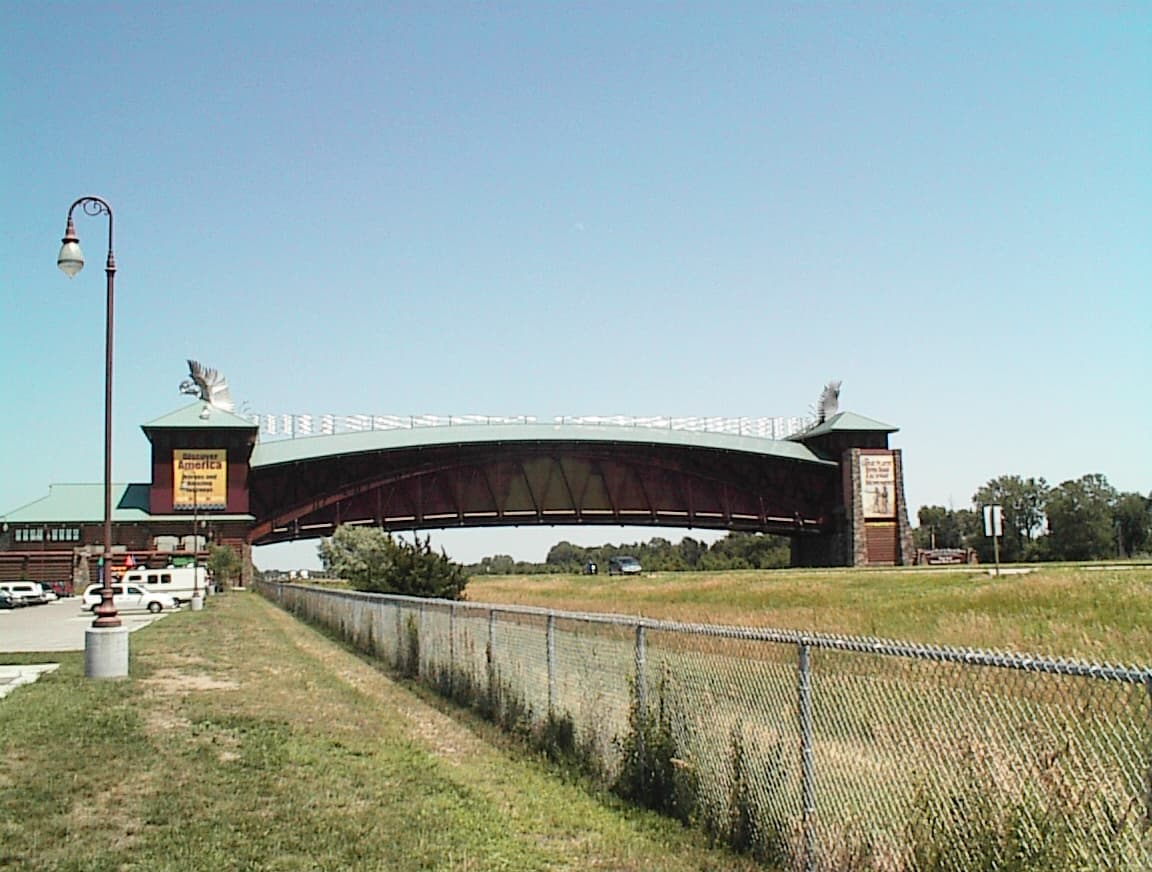
Un monumento sustancial se extiende sobre la Interestatal 80, pero llegar a él no siempre es sencillo para los viajeros.
Descubre todos los secretos de Kearney
Cada dirección, cada revelación al completo — a tu oído, justo donde ocurrió.
Eliges tus paradas. Caminas. La voz te revela lo que los demás ignoran.
Tu tour de audioguía por Kearney te espera — elige tus lugares, tu idioma y empieza al llegar.
ComprarKearney, Nebraska, una ciudad de aproximadamente 33,000 residentes, ocupa una posición distintiva en el corazón de las Grandes Llanuras. Situada casi exactamente a mitad de camino entre los océanos Atlántico y Pacífico, lleva con orgullo la designación de la 'Ciudad del Medio'. Más que un simple marcador geográfico, Kearney sirve como un centro dinámico de cultura, educación y maravilla natural, particularmente reconocida como la 'Capital Mundial de la Grulla Canadiense'. Cada primavera, el Valle del Río Platte, adyacente a Kearney, se convierte en un hogar temporal para más de medio millón de grullas canadienses, un evento natural impresionante que atrae a visitantes de todo el mundo.
El carácter de la ciudad es una fusión de su pasado pionero y su presente con visión de futuro. Desde sus orígenes como una parada crucial en las rutas hacia el oeste y un cruce ferroviario, Kearney se ha desarrollado hasta convertirse en un centro regional de comercio, educación superior y transporte. Su centro, frecuentemente conocido como 'On the Bricks', exhibe arquitectura histórica junto con comodidades modernas, fomentando un ambiente acogedor donde florecen los restaurantes locales, las cervecerías y los lugares culturales.
La narrativa de Kearney comienza no con la ciudad misma, sino con un puesto militar fundamental. En 1848, el Ejército de los EE. UU. estableció Fort Kearny (sin la segunda 'e') a varias millas al sureste de la ciudad actual. Este fuerte actuó como un protector vital y un punto de descanso para los miles de pioneros, jinetes del Pony Express y buscadores de oro que atravesaban los senderos de Oregón, Mormón y Overland. El área era tradicionalmente tierra Pawnee, con su territorio extendiéndose al norte del río Platte durante 700 años antes de su desplazamiento en la década de 1870.
El verdadero comienzo de la ciudad moderna se remonta a la expansión hacia el oeste del ferrocarril después de la Guerra Civil. En 1871, los ferrocarriles Union Pacific y Burlington & Missouri River convergieron, formando un cruce que se convertiría en Kearney Junction. La ciudad se incorporó oficialmente el 3 de diciembre de 1873, con una población de 245 residentes. Un curioso error postal llevó a la adición de una 'e' en el nombre de la ciudad, diferenciándola de su homónimo militar, Fort Kearny, una ortografía que finalmente perduró.
Finales del siglo XIX fue un período de ambicioso crecimiento y empresas especulativas para Kearney. Para la década de 1880, la población superó los 10,000 habitantes. La finalización del Canal de Kearney en 1886, destinado a riego y energía, impulsó el desarrollo industrial, lo que llevó al establecimiento de una fábrica de algodón, una fábrica de papel e incluso un tranvía eléctrico. Esta era vio a Kearney presentada como una de las ciudades pequeñas más progresistas al oeste del río Misuri, con algunos residentes incluso imaginando trasladar la capital de la nación aquí. Sin embargo, este período de rápida expansión fue breve, ya que una depresión agrícola y una crisis económica a principios de la década de 1890 provocaron el cierre de la fábrica, la disminución de los valores inmobiliarios y una significativa partida de población.
La resiliencia de Kearney fue evidente en su recuperación. En 1902, la legislatura estatal aprobó fondos para una universidad, que Kearney adquirió con éxito, sentando las bases de lo que ahora es la Universidad de Nebraska en Kearney en 1904. Esta institución, junto con el papel continuo de la ciudad como centro agrícola y de transporte, solidificó su futuro. La conexión con la Interestatal 80 en 1964 impulsó aún más el turismo y el desarrollo. Hoy, Kearney sigue siendo una ciudad vital y en crecimiento, equilibrando su carácter histórico en capas con una atmósfera moderna y acogedora.
Comience su exploración en el Monumento Archway de Great Platte River Road, una impresionante estructura que literalmente atraviesa la Interestatal 80, ofreciendo una experiencia de museo de varios niveles que detalla la historia de la migración hacia el oeste. Para una inmersión más profunda en la historia local, visite el Parque Histórico Estatal Fort Kearny, que conserva el sitio del fuerte original de 1848 que protegía a los pioneros. El parque cuenta con empalizadas, cuarteles y una herrería reconstruidos, ofreciendo un vistazo a la vida fronteriza.
Los entusiastas del arte deben explorar el Museo de Arte de Nebraska (MONA), ubicado en un edificio bellamente renovado que combina elementos históricos de una antigua oficina de correos con un diseño moderno. MONA exhibe arte de Nebraska y más allá, con diversas exposiciones. Si su visita coincide con finales del invierno o principios de la primavera (mediados de febrero a mediados de abril), observar la migración de la Grulla Canadiense es una experiencia inolvidable. Más de medio millón de grullas se reúnen en el Valle del Río Platte, y Kearney ofrece varias oportunidades de observación, incluyendo visitas guiadas en el cercano Santuario Rowe.
Más allá de estas atracciones principales, explore el Centro de Kearney, conocido como 'On the Bricks', por sus distintivos restaurantes locales, cervecerías y tiendas. El Museo Trails and Rails ofrece información sobre la historia del transporte de Kearney. Para la recreación al aire libre, Kearney ofrece 15 parques públicos, campos de golf y complejos para diversos deportes.
El momento ideal para visitar Kearney depende en gran medida de sus intereses. Para un clima cómodo adecuado para actividades al aire libre, considere de mayo a junio y de mediados de agosto a mediados de octubre. Durante estos meses, las temperaturas son suaves, oscilando entre 18°C y 30°C (65°F y 86°F), con menor humedad. Si observar la espectacular migración de la Grulla Canadiense es su objetivo principal, planifique su viaje entre mediados de febrero y mediados de abril, siendo finales de marzo a menudo considerado óptimo. Los veranos (de junio a agosto) son cálidos, siendo julio el mes más caluroso, con un promedio de 31°C (87°F), y pueden ser los más concurridos para el turismo. Los inviernos (de diciembre a febrero) son fríos con nevadas, ofreciendo una visita tranquila para aquellos que disfrutan de las temperaturas más frías.
El Aeropuerto Regional de Kearney (EAR) ofrece viajes aéreos, y las opciones de transporte terrestre incluyen taxis, lanzaderas, limusinas y autobuses chárter. Para moverse por la ciudad, hay servicios de taxi locales como Catch a Ride Taxi y Transportation. El Trolley de Kearney ofrece una forma encantadora de explorar para diversos eventos y tours. Si bien Amtrak tiene una estación en la cercana Holdrege, a aproximadamente 30 millas de distancia, Kearney es en sí mismo un importante centro de carga ferroviaria para Union Pacific. El departamento de mantenimiento de calles de la ciudad supervisa 203 millas de calles, lo que hace que los viajes dentro de la ciudad sean generalmente fáciles, con la mayoría de los destinos accesibles en 10 minutos.
Kearney está bien equipada con servicios, incluyendo una amplia gama de hoteles y restaurantes. Para necesidades médicas, la ciudad cuenta con numerosos médicos y hospitales en un radio de 60 millas. La Oficina de Visitantes y el Centro de Bienvenida de Kearney pueden proporcionar consejos de viaje e información sobre atracciones locales, incluido el programa Nebraska Passport para explorar paradas en todo el estado.
Kearney en coreano, en chino o en hebreo — y 29 idiomas más, cada parada narrada por una voz nativa. La mayor variedad de idiomas de cualquier audioguía autoguiada.
Disponible en: