Beli Lena Cave, Kitulgala
Deep within the rainforest, a cave holds secrets of humanity's distant past, far older than written history.
Full story unlocks in the tour
 Uvindus / cc by-sa 3.0, via Wikimedia Commons
Self-guided audio walking tour of Kegalle — GPS route, offline playback, story-driven narration in 32 languages.
“Where ancient whispers meet emerald hills and gentle giants.”
Not the postcards. The stories even locals don't know — whispered in your ear, right where they happened.
Deep within the rainforest, a cave holds secrets of humanity's distant past, far older than written history.
A rocky outcrop near Kegalle was once the stronghold of a legendary bandit who challenged British colonial rule.
Beneath Kegalle's fertile surface lies a resource that once powered a significant portion of the island's exports.
Discover every secret of Kegalle
Every address, every reveal in full — in your ear, right where it happened.
You pick your stops. You walk. The voice reveals what the others miss.


Your self-guided audio tour of Kegalle is ready — pick your landmarks, choose your language, and start the moment you arrive.
BuyLume has a built-in augmented-reality guide. Hold your phone up and its camera shows the street ahead of you, with a glowing arrow laid over the real view that always points to your next stop — no map to puzzle over, no wrong turns. Like everything in Lume, it works fully offline.
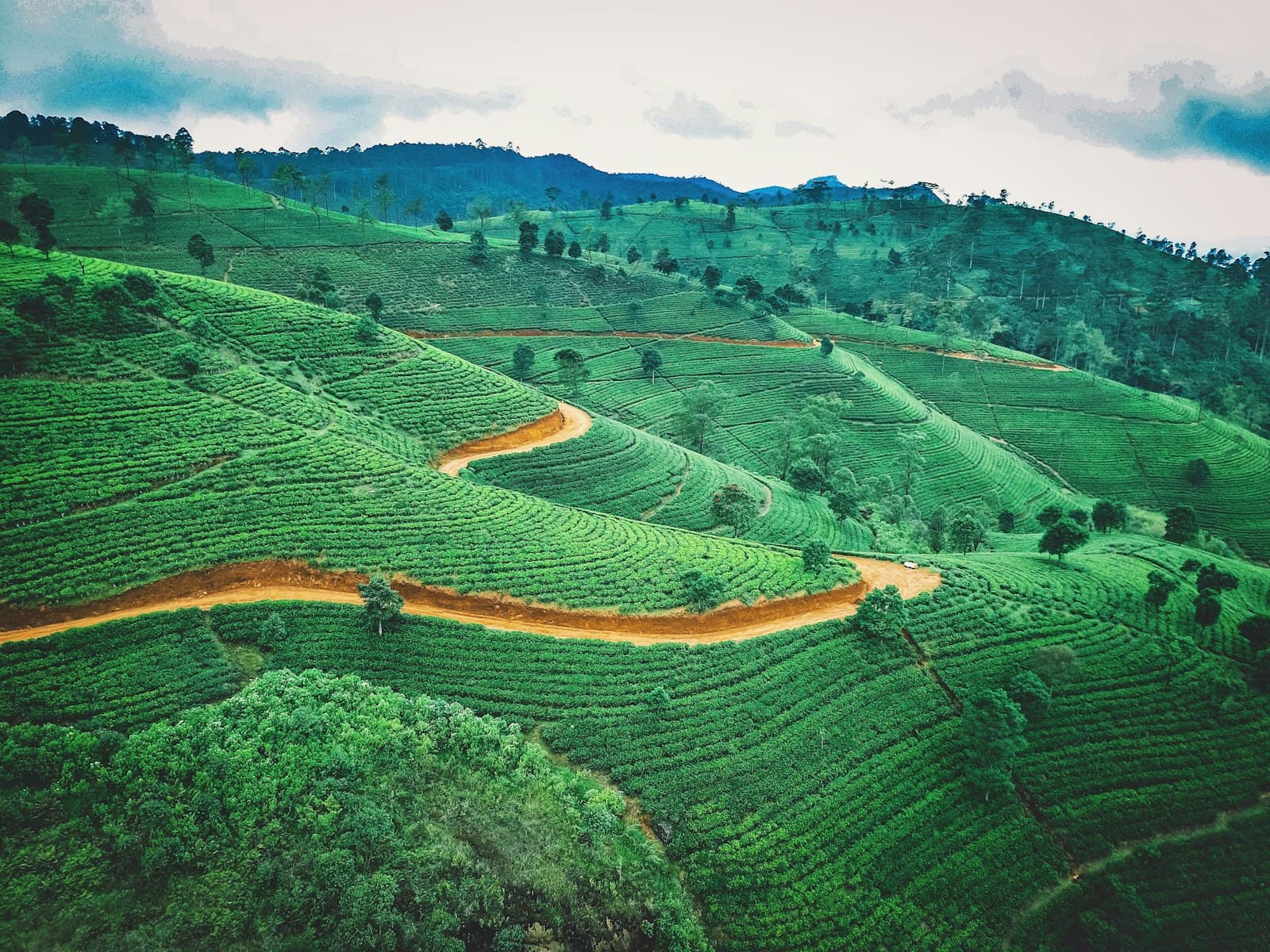
Kegalle, a significant town in Sri Lanka's Sabaragamuwa Province, forms a vital connection between the lively capital of Colombo and the cultural heartland of Kandy. The town unfolds across a landscape of gentle undulations, where tea plantations, rubber estates, and rice paddies drape the hills, threaded by the famous Kelani River. Kegalle offers a deep immersion into Sri Lanka's plantation economy and the verdant beauty of its tropical interior.
More than simply a point of passage, Kegalle functions as an administrative and commercial hub with an economy rooted in agriculture, primarily rubber production, alongside graphite mining and the extraction of precious stones. Its strategic position and natural endowments make it a portal to both ecological adventures and the enduring heritage of central Sri Lanka.
The history of the Kegalle area reaches back to the Stone Age, with evidence suggesting a thriving civilization existed here over 28,000 years ago. Caves such as Beli Lena, Dorawaka Lena, and Alu Lena offer archaeological confirmation of early human habitation, with discoveries of geometric microlithic stone tools dating back 30,000 years.
Historically, the Kegalle District was part of Maya Rata, one of the three ancient divisions of Sri Lanka. During the latter half of the Sinhalese kingdom and under British administration, the region was further segmented into 'Satara Koralaya,' 'Thun Koralaya,' and 'Patha Bulathgama.'
Kegalle played a considerable role in the 19th-century uprisings against British colonial rule, becoming a focal point of resistance and witnessing several confrontations. The district's economy expanded in the 20th century, particularly within the agricultural sector, as rubber and tea plantations became prominent, contributing substantially to the country's export industry. Today, Kegalle is a flourishing district that weaves its enduring heritage with contemporary developments, drawing visitors with its historical locations, scenic vistas, and cultural importance.
The Pinnawala Elephant Orphanage, situated about 13 km northeast of Kegalle, draws many visitors. It serves as a sanctuary for orphaned and rescued elephants, providing a unique chance to observe and engage with these magnificent creatures, particularly during their river bathing rituals. Nearby, the Millennium Elephant Foundation also offers intimate encounters with elephants through educational programs and river bathing experiences.
For those who love the natural world, Bible Rock (Bathalegala) presents a grand spectacle and expansive views for hikers. The Alagalla Mountain Range is another destination for nature lovers and hikers, recognized for its rugged terrain and diverse wildlife. The Udawattekele Sanctuary, also known as the Royal Forest Park, provides a peaceful retreat with its abundant greenery, nature trails, and scenic outlooks. Kegalle also encompasses many picturesque waterfalls, such as Ramboda Falls and Kadiyanlena Falls.
Beyond wildlife and natural landscapes, delve into the region's agricultural heritage by visiting cinnamon plantations to learn about spice cultivation and processing. The Rambukkana Railway Station, a colonial-era station, merits a visit for its historical character and distinctive architecture. For those intrigued by ancient craftsmanship, the Embekka Devalaya, a historic temple near Kegalle, displays intricate 14th-century woodwork and carvings.
Kegalle experiences a tropical rainforest climate, with warm temperatures and high humidity throughout the year. The most pleasant times to visit are during the drier periods, from December to March and from June to September. These months offer a reduced chance of rain, making outdoor activities and exploration more agreeable. Temperatures typically range between 24°C and 30°C (75°F and 86°F).
Kegalle is approximately 78 km from Colombo and 40 km from Kandy, readily accessible via the main A1 road. The closest major airport is Bandaranaike International Airport (CMB), about 85 km away, a 2 to 3-hour journey by car or taxi. The town is a significant stop on the national bus network, and the rail line connecting Colombo and Kandy passes nearby, offering a scenic train travel option. Within Kegalle, navigating often requires a vehicle due to its spread-out nature and limited pedestrian paths. While the city center offers some walkability, sidewalks can be uneven or absent. Taxis are widely available and can be reserved for city tours, airport transfers, or longer excursions. Accommodation options span from charming guesthouses and boutique hotels to larger resorts. Local cuisine emphasizes rice and curry, with popular dishes like Kiribath (Milk Rice), Samosas, Roti, and Kottu Roti widely available.
Kegalle in Korean, in Chinese or in Hebrew — and 29 more languages, every stop narrated by a native voice. The widest language range of any self-guided audio tour.
Available in: