Aluvihare Rock Temple
Imagine a time before printing presses, when sacred words were etched onto fragile leaves. Matale holds the very place where this monumental task began, a quiet revolution in preservation.
Full story unlocks in the tour
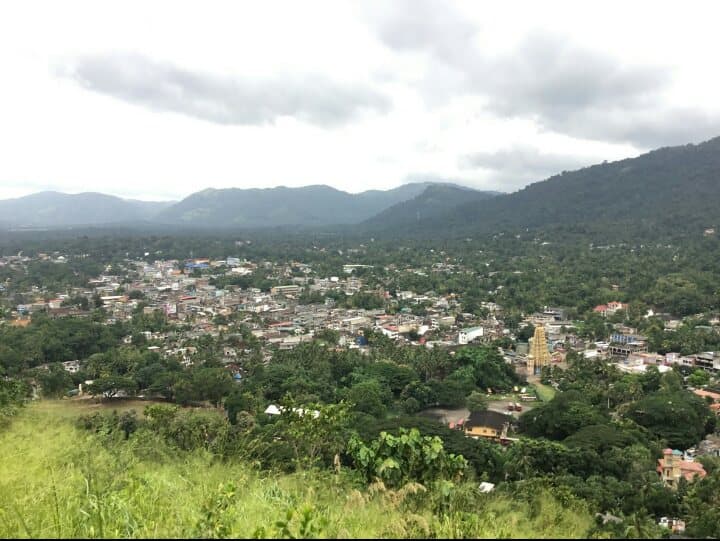 Yoyohoney / cc by-sa 4.0, via Wikimedia Commons
Self-guided audio walking tour of Matale — GPS route, offline playback, story-driven narration in 32 languages.
“Matale: Where the scent of cinnamon drifts through valleys, carrying echoes of ancient trade and defiance.”
Not the postcards. The stories even locals don't know — whispered in your ear, right where they happened.
Imagine a time before printing presses, when sacred words were etched onto fragile leaves. Matale holds the very place where this monumental task began, a quiet revolution in preservation.
The railway line running through Matale wasn't just for passengers; it was built with a very specific, aromatic purpose in mind, its construction surprisingly swift.
To truly understand Matale's rhythm, you need to visit its central market, but there's a particular time of day when its energy peaks, offering a glimpse into local life that guidebooks often overlook.
Discover every secret of Matale
Every address, every reveal in full — in your ear, right where it happened.
You pick your stops. You walk. The voice reveals what the others miss.


Your self-guided audio tour of Matale is ready — pick your landmarks, choose your language, and start the moment you arrive.
BuyLume has a built-in augmented-reality guide. Hold your phone up and its camera shows the street ahead of you, with a glowing arrow laid over the real view that always points to your next stop — no map to puzzle over, no wrong turns. Like everything in Lume, it works fully offline.
Matale, a city in Sri Lanka's Central Province, is a place where the air is often fragrant with spices and the landscape recounts ancient kingdoms and colonial encounters. Situated in a broad, fertile valley, it serves as the administrative capital of the Matale District and is surrounded by lush plantations and the dramatic Knuckles Mountain Range to the east. While often considered a low-key destination compared to its more famous neighbors like Kandy and Dambulla, Matale offers a distinct and authentic Sri Lankan experience, acting as a strategic base for exploring the island's cultural triangle.
This region is a living testament to Sri Lanka's agricultural heritage, particularly its spice cultivation, which has drawn traders from across the globe for centuries. Beyond its aromatic allure, Matale is a nexus of history, culture, and nature, with ancient temples, lively markets, and striking natural attractions. It's a place where Buddhist and Hindu influences harmoniously intertwine, evident in its diverse religious sites.
Matale's history stretches back to prehistoric times, with archaeological findings indicating early human settlements in the region. Its fertile valleys, supported by the Knuckles Mountain Range and rivers, provided ideal conditions for early agriculture. The area was an integral part of the ancient Anuradhapura and Polonnaruwa Kingdoms, strategically important for trade and as a gateway between the central highlands and northern lowlands.
One of the most significant events in Buddhist history unfolded in Matale in the 1st century BCE at the Aluvihare Rock Temple. It was here, during the reign of King Valagamba, that the Pali Canon—the foundational scriptures of Buddhism—was first committed to writing on palm leaves, a monumental effort that preserved these teachings for posterity. Hindu influence also became prominent during the Polonnaruwa period, with Tamil communities settling in the area, leading to the establishment of temples like the Muthumariamman Temple, which reflects this cultural blend.
During the Kandyan Era, Matale served as a vital buffer zone for the Kandyan Kingdom against invasions, with its rugged terrain offering natural defenses. Spice cultivation, especially cinnamon, was a significant economic contributor during this time. The arrival of European colonial powers, particularly the British, profoundly impacted Matale. While initially under Kandyan control, the region experienced indirect influences from the Portuguese and Dutch due to their interest in Sri Lanka's lucrative spice trade. The British gained full control in 1815, transforming Matale into a center for plantation agriculture, with tea, coffee, and rubber estates flourishing. This era also saw infrastructural development, including roads and railways, to support the burgeoning plantation economy.
Matale became a focal point of resistance against British rule, culminating in the Matale Rebellion of 1848. This significant anti-colonial uprising, led by national heroes like Puran Appu and Gongalegoda Banda, was fueled by oppressive taxation and land displacement. Although suppressed, the rebellion marked a crucial shift from feudal revolts to a broader popular resistance movement against colonial powers.
Matale offers a blend of cultural landmarks and natural beauty. The Aluvihare Rock Temple is a place to visit, an ancient Buddhist monastery where the Pali Canon was first written down. Its caves house statues of Buddha, pagodas, and ancient frescoes, some depicting Himalayan landscapes and others illustrating hellish torments.
For a lively cultural experience, visit the Sri Muthumariamman Kovil Temple, one of Sri Lanka's most colorful Hindu temples. Dedicated to the goddess Mariamman, its sculpted gopuram (tower) and daily pujas offer a window into Tamil Hindu life.
Explore the Matale Central Market, especially in the early morning, to witness the bustling local trade of fresh produce and spices. Just outside the city, the Matale Spice Gardens provide an immersive experience, showcasing the cultivation and processing of spices like cinnamon, pepper, cardamom, and nutmeg. Many offer guided tours and demonstrations of traditional Ayurvedic practices.
Another intriguing site is Nalanda Gedige, an ancient stone temple believed to have been built between the 8th and 10th centuries, notable for its unique fusion of Buddhist and Hindu architectural styles. For nature lovers, Sembuwatta Lake, a man-made lake surrounded by pine trees and green hills within a tea estate, offers a serene picnic spot with options for swimming, boating, and zip-lining. The nearby Knuckles Mountain Range, a UNESCO World Heritage Site, provides opportunities for trekking and exploring diverse ecosystems.
The best time to visit Matale is generally during the dry season, which runs from December to March. During these months, the weather is typically dry and sunny, making it ideal for outdoor activities and exploring the region's attractions. While the monsoon season from October to January brings heavier rains, it also transforms the landscape into a lush, green, appealing to nature enthusiasts who don't mind wet conditions. Matale experiences relatively consistent temperatures throughout the year, with March, April, and May being the warmest, and June, July, and September offering a pleasant, windy climate.
Matale is approximately 160 kilometers from Colombo and Bandaranaike International Airport (CMB), and about 30 kilometers from Kandy. You can reach Matale by train from Colombo Fort Railway Station, a scenic journey taking about 4 hours and 50 minutes, or by bus from Colombo and Kandy. Taxis are also available, though they are a more expensive option.
When visiting temples and religious sites, remember to dress modestly, covering your shoulders and knees. The local currency is the Sri Lankan Rupee (LKR); while credit cards are accepted in larger establishments, it's advisable to carry cash for smaller shops and local markets. Sinhala and Tamil are the primary languages, but English is widely understood in tourist areas. Matale is generally safe during the day, though traffic can be chaotic.
Matale in Korean, in Chinese or in Hebrew — and 29 more languages, every stop narrated by a native voice. The widest language range of any self-guided audio tour.
Available in: