Former Konstancja Sugar Factory
Within the walls of an abandoned sugar factory, Kutno holds a harrowing secret.
Full story unlocks in the tour
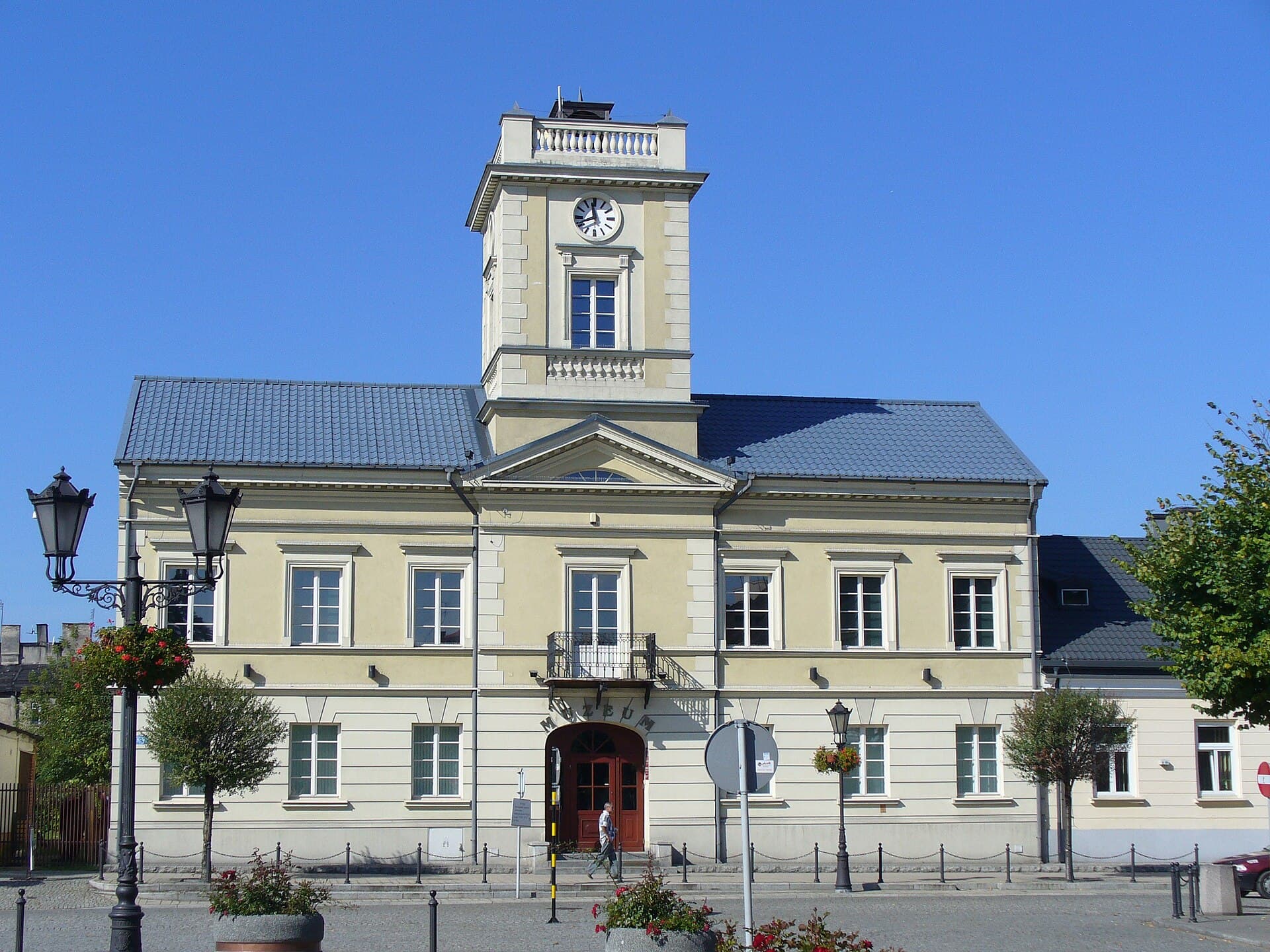 Bakel2006 / CC BY-SA 3.0 pl, via Wikimedia Commons
Self-guided audio walking tour of Kutno — GPS route, offline playback, story-driven narration in 32 languages.
“Where the scent of roses mingles with echoes of history.”
Not the postcards. The stories even locals don't know — whispered in your ear, right where they happened.
Within the walls of an abandoned sugar factory, Kutno holds a harrowing secret.
A quiet plot of land in Kutno bears witness to a tragic, almost erased history.
Kutno's celebrated Rose Festival began not as a grand affair, but as a simple community gathering.
Discover every secret of Kutno
Every address, every reveal in full — in your ear, right where it happened.
You pick your stops. You walk. The voice reveals what the others miss.
Your self-guided audio tour of Kutno is ready — pick your landmarks, choose your language, and start the moment you arrive.
BuyLume has a built-in augmented-reality guide. Hold your phone up and its camera shows the street ahead of you, with a glowing arrow laid over the real view that always points to your next stop — no map to puzzle over, no wrong turns. Like everything in Lume, it works fully offline.
Kutno, a city in central Poland, offers a compelling blend of historical depth and contemporary life. Situated on the Ochnia River, it is known as a significant railway junction, connecting major lines between Łódź, Toruń, Warsaw, and Berlin. While often seen as a transit point, Kutno holds a distinct charm, inviting those who appreciate a slower pace and a poignant past.
The city carries the motto "Kutno – Miasto Róż" (Kutno – City of Roses), a testament to its long-standing tradition of rose cultivation and its annual Rose Festival. Beyond its floral identity, Kutno's streets and squares reveal layers of history, from medieval origins to its pivotal role in World War II. Visitors will discover a city that, despite facing numerous challenges throughout its existence, has preserved its unique character and continues to evolve.
## From Medieval Crossroads to Modern Hub Kutno's origins trace back to the medieval period, with its first historical record appearing in 1386. It was initially a private town, a local center for crafts and trade, benefiting from its strategic location on the Royal Route connecting Warsaw with Poznań and Dresden in the 18th century. The town received city rights in 1386, though it was degraded and re-located multiple times throughout its early history.
The 18th century brought both prosperity and hardship. In 1701, the Kucieński family, who had long owned Kutno, sold it to the Zamoyski family. The town experienced a period of significant growth under Andrzej Hieronim Zamoyski, but a devastating fire in 1753 destroyed much of the city, including many historical documents. A new location privilege granted by King Stanisław August Poniatowski in 1766 helped stimulate its redevelopment.
The 19th century marked a turning point for Kutno with the opening of the Warsaw-Bydgoszcz railway line in 1862. This transformed the town into a vital railway junction and an industrial center, leading to rapid urban development and population growth. By 1890, Kutno was one of 30 municipal centers in the Kingdom of Poland with a population exceeding 10,000.
## World War II and Beyond The 20th century cast a long shadow over Kutno. In September 1939, it became the site of the Battle of the Bzura, also known as the Battle of Kutno, the largest battle of the German invasion of Poland. During the German occupation, the Jewish population of Kutno faced horrific persecution. In June 1940, a ghetto was established within the former 'Konstancja' sugar factory, where approximately 8,000 Jews were confined in appalling conditions. The ghetto was emptied in March 1942, and its inhabitants were deported to the Chełmno extermination camp.
After World War II, Kutno became a county seat within the Łódź Voivodeship. The political transformations of 1989 paved the way for economic reconstruction, and the city has since re-emerged as a center of trade, industry, culture, and education. Today, Kutno continues to honor its past while embracing its future, particularly through its strong cultural initiatives and its identity as the "City of Roses."
Kutno offers a variety of attractions that blend history, culture, and nature. Start your exploration at the Saxon Palace Museum, a restored 18th-century palace that once hosted Napoleon Bonaparte and now houses a museum. The Regional Museum in Kutno, located in the 19th-century town hall, provides a comprehensive overview of the city's history. A branch of this museum, the Museum of the Battle of the Bzura River, is dedicated to the largest battle of the 1939 German invasion of Poland, displaying artifacts and documents from this pivotal event.
For a breath of fresh air, stroll through City Park Traugutt, a central green space featuring a monument to a local rose breeder and another commemorating soldiers from the 1939 battle. The park also includes a fountain and pathways suitable for walking or cycling. Kutno's identity as the "City of Roses" is evident throughout its urban landscape, with over 100,000 roses planted in parks, on roundabouts, and in various public spaces. Do not miss the Kutno Train Station, a historically significant railway hub since the 19th century, with modern elements like Corten steel. While the former 'Konstancja' sugar factory, site of the WWII ghetto, is a somber place, efforts are underway to create a memorial garden there.
The most pleasant time to visit Kutno, and Poland in general, is during the late spring and early autumn months, specifically May, June, and September. During these months, you can expect mild to warm temperatures, ranging from 15-25°C (59-77°F), comfortable for exploring the city and its outdoor attractions. There are also fewer crowds compared to the peak summer months of July and August. The annual Kutno Rose Festival typically takes place on the first or second weekend of September, offering a lively cultural experience. While July and August are the warmest, they can also bring occasional showers. Winters are cold and snowy, with temperatures often dropping below freezing.
Kutno is a mid-sized city in central Poland, offering a functional and manageable environment. The official language is Polish. The local currency is the Polish Złoty (PLN). Public transport is reliable, making it easy to navigate the city. Accommodation options include hotels and guesthouses, particularly around the city center. For dining, you will find a range of local Polish cuisine. Kutno is approximately 120 km west of Warsaw and 50 km north of Łódź, making it accessible by road and especially by train, given its status as a major railway junction. The city is generally considered safe, with a quiet rhythm of daily life. While there is not a large international expat community, locals are generally welcoming.
Kutno in Korean, in Chinese or in Hebrew — and 29 more languages, every stop narrated by a native voice. The widest language range of any self-guided audio tour.
Available in: