New Market Square
Most European market squares are square or rectangular. Łowicz, however, presents a triangular one, and this is not merely a design quirk.
Full story unlocks in the tour
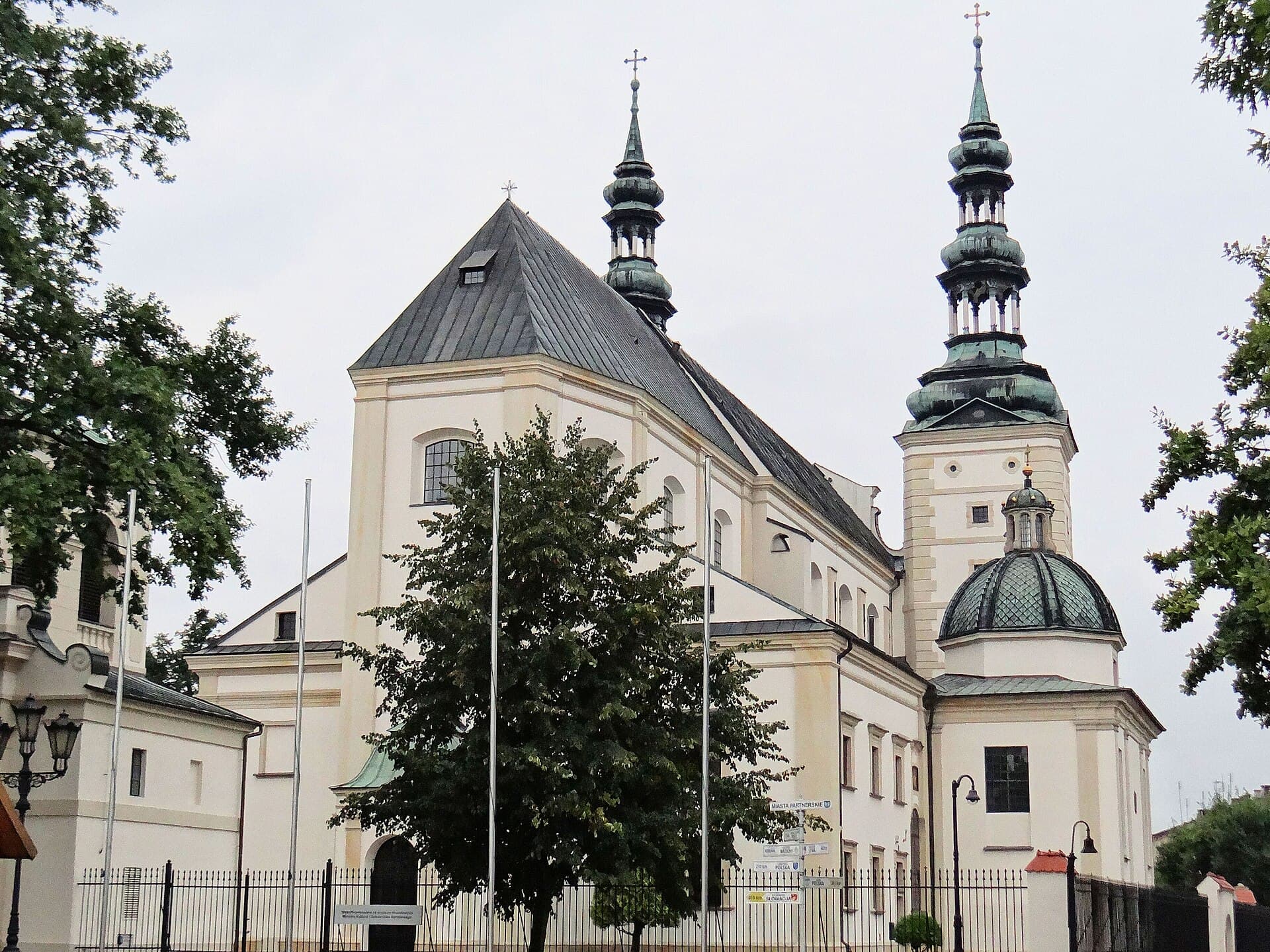 Jolanta Dyr / CC BY-SA 3.0, via Wikimedia Commons
Self-guided audio walking tour of Łowicz — GPS route, offline playback, story-driven narration in 32 languages.
“Where ancient folklore dances with a history of primates and uncovered treasures.”
Not the postcards. The stories even locals don't know — whispered in your ear, right where they happened.
Most European market squares are square or rectangular. Łowicz, however, presents a triangular one, and this is not merely a design quirk.
Beneath the 'Wawel of Mazovia,' archaeologists recently brought to light a collection of artifacts undisturbed for centuries.
Just beyond Łowicz, an open-air museum preserves traditional village life, yet it also holds a secret of modern engineering.
Discover every secret of Łowicz
Every address, every reveal in full — in your ear, right where it happened.
You pick your stops. You walk. The voice reveals what the others miss.
Your self-guided audio tour of Łowicz is ready — pick your landmarks, choose your language, and start the moment you arrive.
BuyLume has a built-in augmented-reality guide. Hold your phone up and its camera shows the street ahead of you, with a glowing arrow laid over the real view that always points to your next stop — no map to puzzle over, no wrong turns. Like everything in Lume, it works fully offline.
Łowicz, a town in central Poland, offers a captivating journey through centuries of Polish history and expressive folk culture. Situated on the gentle banks of the Bzura River in the Łódź Voivodeship, it is a place where tradition is not merely preserved but actively lived. From its distinctive triangular market square to its colorful Corpus Christi processions, Łowicz provides a unique experience that sets it apart from more frequently visited Polish destinations.
Often referred to as the 'Wawel of Mazovia' due to its historical importance as a residence for Polish primates, Łowicz served as a temporary capital during interregnums, playing a crucial role in the nation's political landscape. Today, it is celebrated for its ethnographic wealth, particularly its intricate paper cut-outs (wycinanki) and the striking striped folk costumes that are instantly recognizable as symbols of Polish heritage.
## From Princely Estate to Folkloric Heart Łowicz's story begins in the early Middle Ages as a fortified settlement, documented in a papal bull as early as 1136. For centuries, it was the property of the Archbishops of Gniezno, who wielded significant power and influence. By the 15th century, Łowicz had blossomed into a vital administrative and trade center, its prosperity fueled by its convenient location, royal privileges, and lively fairs.
The town's unique status as a residence of Polish primates meant that during periods when Poland was without a monarch, Łowicz effectively became the temporary capital, with the primates acting as heads of state. This era saw Polish kings like Kazimierz the Great and Jan III Sobieski visit the primate's castle. However, this flourishing period was abruptly halted by the devastating Swedish invasion in the mid-17th century, which left much of the town, including the castle, in ruins.
Following the partitions of Poland, Łowicz came under Prussian and then Russian rule, eventually regaining independence with the rest of Poland in 1918. The 19th century also saw the formal establishment of the Duchy of Łowicz, a distinct territorial entity granted to Grand Duke Constantine and his wife, Joanna Grudzińska, who became the Duchess of Łowicz. This period further solidified the unique cultural identity of the local 'Księżaks' (Łowiczans).
The 20th century brought further hardship, with Łowicz becoming the epicenter of the Battle of Bzura during the German invasion of Poland in World War II. The town endured immense destruction, and its Jewish community, which had flourished for centuries, was tragically eradicated. Despite these challenges, Łowicz has preserved its extensive heritage, becoming a diocese in recent years and continuing to celebrate its distinctive traditions and history.
Begin your exploration at the Old Market Square, leading to the Cathedral Basilica of the Assumption of the Blessed Virgin Mary and St. Nicholas, often called the 'Masovian Wawel.' This monumental Baroque temple contains the tombs of Poland's primates and recently revealed centuries-old treasures in its crypts. Adjacent to the basilica is the former Bishop's Palace, now home to the Diocesan Museum, displaying sacred art.
Walk to the New Market Square, a truly unique sight with its triangular layout, one of only three in Europe. Observe the colorful 18th and 19th-century tenement houses that define its edges. The Museum in Łowicz, situated in a former seminary, offers a comprehensive look into the region's history, Baroque art, and the expressive folk culture of the Łowiczans, including their celebrated costumes and paper cut-outs.
For a deeper immersion into rural traditions, visit the Łowicz Ethnographic Park in Maurzyce, an open-air museum located a short drive away. Here, you can wander among relocated 19th and 20th-century wooden cottages, a church, and farm buildings, experiencing the authentic daily life of a traditional Łowicz village. Do not overlook the nearby Maurzyce Bridge, a pioneering feat of engineering as the world's first welded road bridge. Consider a visit to the Romantic Garden in Arkadia and the Radziwiłł Palace in Nieborów, both short distances from Łowicz, offering further historical and natural beauty.
The ideal time to visit Łowicz is in late spring or early autumn, when the weather is mild and suitable for exploration. If you wish to experience Łowicz's most celebrated cultural event, plan your trip around the Corpus Christi procession, typically held in late May or early June. This public holiday brings the town to life with participants in traditional Łowicz costumes, flower-strewn routes, and folk music, creating a truly picturesque and immersive experience.
Łowicz is conveniently located in central Poland, approximately 80 kilometers west of Warsaw and 50 kilometers from Łódź. It is easily accessible by train or car, with regular services connecting it to major Polish cities. The town is situated close to a free highway linking Warsaw and Łódź. Once in Łowicz, you will find parking available near the market, museum, and cathedral. While Łowicz is not a city for extended sightseeing tours, it is perfect for a relaxed day trip or a leisurely weekend, offering a blend of history, culture, and a peaceful atmosphere. Local transportation within the town is manageable on foot, especially around the main attractions.
Łowicz in Korean, in Chinese or in Hebrew — and 29 more languages, every stop narrated by a native voice. The widest language range of any self-guided audio tour.
Available in: