Great Ocean Road
Cette route emblématique sert de mémorial, mais sa construction a impliqué une main-d'œuvre inattendue.
L'histoire complète se débloque dans le tour
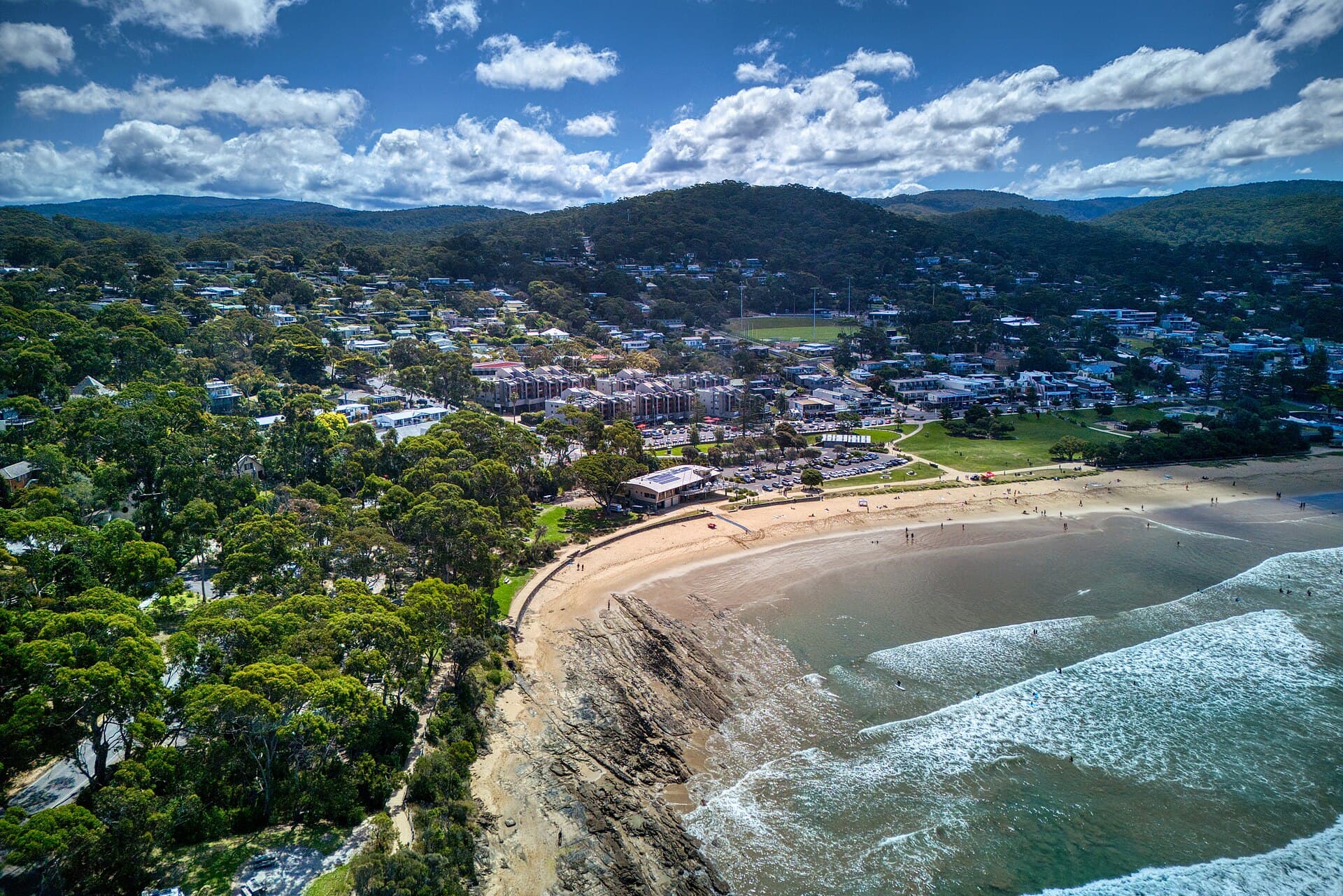 Hagai Agmon-Snir حچاي اچمون-سنير חגי אגמון-שניר / CC BY-SA 4.0, via Wikimedia Commons
Visite audio autoguidée de Lorne — parcours GPS à pied, lecture hors ligne, narration en 32 langues.
“Là où les Otways rencontrent l'océan, Lorne offre une évasion côtière à l'esprit créatif.”
Pas les cartes postales. Les histoires que même les habitants ignorent — soufflées à l'oreille, là où elles se sont passées.
Cette route emblématique sert de mémorial, mais sa construction a impliqué une main-d'œuvre inattendue.
Le nom original de Lorne fait allusion à une découverte inhabituelle par un capitaine de navire.
Lorne's original name hints at an unusual discovery by a sea captain.
Découvrez tous les secrets de Lorne
Chaque adresse, chaque révélation en entier — dans ton oreille, là où elle s'est passée.
Tu choisis tes lieux. Tu marches. La voix te révèle ce que les autres ignorent.


Votre visite audioguidée de Lorne vous attend — choisissez vos lieux, votre langue, et lancez-vous dès votre arrivée.
AcheterLume intègre un guide en réalité augmentée. Levez votre téléphone : sa caméra montre la rue devant vous, avec une flèche lumineuse posée sur l'image réelle qui pointe toujours vers votre prochain arrêt — aucune carte à déchiffrer, aucun mauvais virage. Comme tout dans Lume, ça fonctionne entièrement hors-ligne.
Lorne est une ville côtière du comté de Surf Coast, dans l'État de Victoria, à environ 140 kilomètres au sud-ouest de Melbourne, en Australie. Elle repose sur la baie de Louttit et la rivière Erskine, une destination prisée le long de la Great Ocean Road. La population permanente de la ville avoisine les 1 300 habitants, bien que ce nombre puisse atteindre plus de 15 000 au plus fort de l'été. Depuis plus d'un siècle, Lorne est un lieu de vacances chéri, connu pour ses plages de sable pâle, sa communauté artistique active et son accès direct aux Otway Ranges.
L'atmosphère de la ville mêle une culture de plage décontractée à la nature et aux arts. Son artère principale, Mountjoy Parade, est bordée de cafés, de boutiques et de restaurants, conférant à la région une ambiance méditerranéenne. Au-delà de la plage principale, Lorne sert de point d'entrée au Great Otway National Park, offrant des promenades dans la forêt tropicale et de nombreuses cascades.
Avant la colonisation européenne, la région aujourd'hui connue sous le nom de Lorne faisait partie des terres traditionnelles des Gadubanud (également connus sous le nom de peuple King Parrot) de la côte de Cape Otway. Le peuple Gadubanud utilisait habilement des canoës en écorce pour les rivières, les lacs, les estuaires et la côte, et leur régime alimentaire comprenait une variété de fruits de mer, de phoques, d'oiseaux et de plantes indigènes. Des preuves de leur longue occupation peuvent être observées dans les nombreux amas coquilliers le long du littoral.
L'interaction européenne a commencé en 1841 lorsque le capitaine Louttit, supervisant la récupération de cargaisons d'un naufrage, a trouvé refuge dans la baie, qui a ensuite été nommée Louttit Bay. Cinq ans plus tard, la côte a été arpentée. Le premier colon européen, le bûcheron William Lindsay, a commencé à abattre des arbres dans la région en 1849. La première ligne télégraphique est arrivée en 1859.
La subdivision des terres a commencé vers 1869, et en 1871, la ville a été renommée Lorne. Ce renommage a honoré le marquis de Lorne d'Argyleshire, en Écosse, à l'occasion de son mariage avec la princesse Louise, fille de la reine Victoria. Le bureau de poste a ouvert ses portes en 1874. En 1922, la Great Ocean Road a été prolongée jusqu'à Lorne, améliorant considérablement l'accès, et des pensions ont commencé à apparaître après 1930. La ville a connu une croissance rapide avec l'ajout d'une école, d'un hôtel, d'une salle et d'une bibliothèque entre 1870 et 1890.
L'attrait de Lorne en tant que destination de vacances s'est accru, en particulier après la Seconde Guerre mondiale, avec la popularité croissante du camping et du surf. La ville a traversé des épreuves, notamment les dévastateurs feux de brousse du Mercredi des Cendres en 1983, qui ont détruit des dizaines de maisons. Malgré cela, Lorne a continué à se développer, avec des constructions à grande échelle comme le Cumberland Resort dans les années 1980. Aujourd'hui, Lorne conserve sa réputation de ville balnéaire prisée.
Lorne offre un mélange de détente côtière et d'exploration naturelle. Commencez par la plage de Lorne, une étendue de sable surveillée dans la baie de Louttit, parfaite pour la baignade, le surf pour débutants ou simplement la détente. Une promenade le long de la jetée de Lorne offre des opportunités de pêche à la carangue, au barracuda et au merlan, et constitue un excellent point d'observation des baleines en migration entre mai et septembre. Pour des vues côtières étendues, montez au Teddy's Lookout, qui offre des panoramas imprenables sur la Great Ocean Road et la rivière Saint George.
À l'intérieur des terres, le Great Otway National Park offre un changement de décor avec ses forêts tropicales et ses cascades. Les chutes d'Erskine sont une caractéristique proéminente, descendant de 30 mètres dans une gorge remplie de fougères. Vous pouvez l'observer depuis une plate-forme ou descendre 222 marches jusqu'à la base pour une perspective plus rapprochée. D'autres cascades à proximité incluent Sheoak Falls, Phantom Falls et Henderson Falls, dont beaucoup sont accessibles via des sentiers de randonnée. Pour ceux qui s'intéressent à l'art, Qdos Fine Arts est une galerie notable. La rue principale, Mountjoy Parade, est bordée de boutiques, de cafés et de restaurants.
Lorne accueille les visiteurs toute l'année, chaque saison offrant des expériences distinctes. Les mois les plus chauds, de novembre à avril, sont idéaux pour profiter des plages, des festivals et des activités de plein air. L'été, en particulier du 26 décembre à fin janvier, est la période la plus chargée en raison des vacances scolaires australiennes. Le printemps apporte des cascades abondantes, une verdure luxuriante et des fleurs sauvages. Pour observer les baleines, visitez entre mai et septembre. De juin à août sont les mois les plus froids et les plus pluvieux.
Lorne est à environ deux heures de route de Melbourne et à environ une heure de Geelong, ce qui en fait une étape pratique sur un itinéraire de la Great Ocean Road. La Great Ocean Road elle-même est une route panoramique mais sinueuse, alors prévoyez suffisamment de temps pour le trajet. La ville propose une gamme d'hébergements, des hôtels de charme et maisons de vacances aux campings attrayants. Lorne est bien équipée en commodités, y compris des cafés, des restaurants, des boulangeries et des boutiques le long de Mountjoy Parade.
Pour ceux qui s'intéressent aux activités nautiques, la plage de Lorne est surveillée pendant l'été. Si vous envisagez des cours de surf, les combinaisons de plongée sont généralement fournies et sont recommandées pour la chaleur et la sécurité. L'hôpital communautaire de Lorne fournit des services d'urgence et de consultation externe 24 heures sur 24, situé à moins d'un kilomètre du centre-ville.
Lorne en coréen, en chinois ou en hébreu — et dans 29 autres langues, chaque étape narrée par une voix native. La plus large gamme de langues de tous les audioguides autoguidés.
Disponible en :