Campos de Té Yannanfei
Más allá de las hileras de arbustos de té verde, otro tipo de flor atrae a los visitantes.
La historia completa se desbloquea en el tour
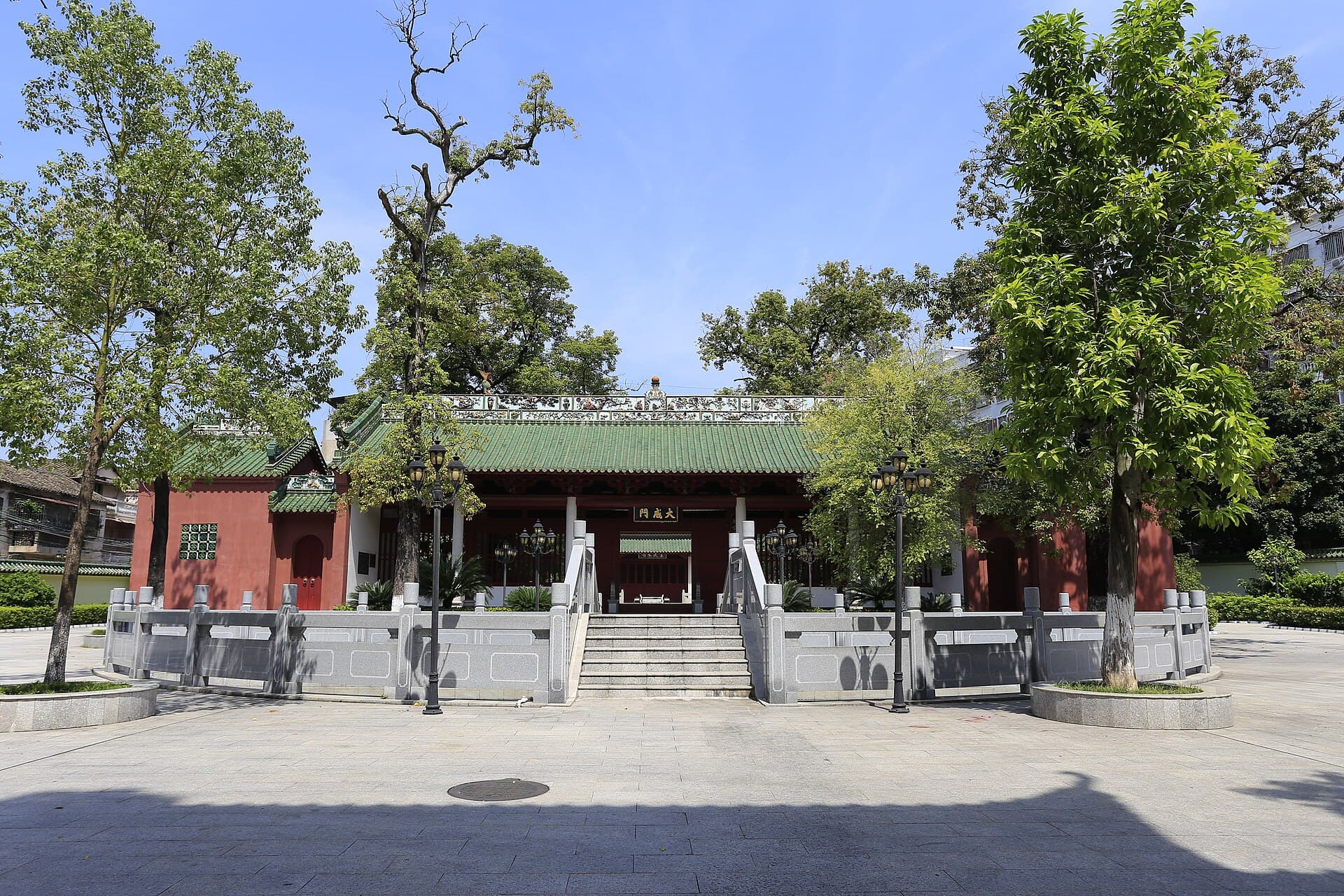 Zhangzhugang / CC BY-SA 3.0, via Wikimedia Commons
Tour de audio autoguiado de Meizhou — ruta GPS a pie, reproducción offline, narración en 32 idiomas.
“Meizhou: Donde los ecos ancestrales Hakka se encuentran con sueños de flor de ciruelo.”
No las postales. Las historias que ni los locales conocen — al oído, justo donde ocurrieron.
Más allá de las hileras de arbustos de té verde, otro tipo de flor atrae a los visitantes.
Transitar por las principales vías de la ciudad puede ser una aventura inesperada.
Un antiguo templo guarda un secreto en su patio que desafía al tiempo.
Descubre todos los secretos de Meizhou
Cada dirección, cada revelación al completo — a tu oído, justo donde ocurrió.
Eliges tus paradas. Caminas. La voz te revela lo que los demás ignoran.


Tu tour de audioguía por Meizhou te espera — elige tus lugares, tu idioma y empieza al llegar.
ComprarLume incluye una guía de realidad aumentada. Levanta el móvil y su cámara muestra la calle que tienes delante, con una flecha luminosa sobre la imagen real que siempre apunta a tu próxima parada — sin mapas que descifrar, sin giros equivocados. Como todo en Lume, funciona completamente sin conexión.
Meizhou, una ciudad a nivel de prefectura en la provincia de Guangdong, China, es ampliamente reconocida como la 'Capital Mundial Hakka'. Se encuentra en la confluencia de las provincias de Guangdong, Fujian y Jiangxi, rodeada de terreno montañoso. Esta ubicación estratégica la convirtió en un centro crucial para el pueblo Hakka, un grupo distintivo de chinos Han que migraron hacia el sur desde la zona del Río Amarillo hace siglos para escapar de los conflictos. El nombre de la ciudad, 'Meizhou', se deriva del río Mei y del carácter chino para la flor de ciruelo, 'Meihua'.
Meizhou es un testimonio vivo de la herencia Hakka, evidente en su dialecto, cocina y tradiciones únicas, así como en su distintivo estilo arquitectónico, que incluye las viviendas fortificadas conocidas como weilongwu (aldeas amuralladas Hakka). Con una población de más de 4 millones, Meizhou sirve como un centro principal para el estudio y la preservación de la cultura Hakka. La profunda importancia histórica y cultural de la ciudad se subraya aún más por los hallazgos arqueológicos, con 398 sitios de reliquias del Período Neolítico descubiertos dentro de sus límites.
## Asentamientos Tempranos y la Migración Hakka La historia de Meizhou se remonta al Período Neolítico, con evidencia arqueológica de 398 sitios de reliquias encontrados en toda la región. Antes de la Dinastía Qin, el área estaba bajo el dominio de Nanyue. Durante la Dinastía Han del Sur (917-971 EC), se estableció como Jingzhou, marcando el comienzo de su importancia administrativa. El nombre Meizhou se le dio por primera vez durante la Dinastía Song (960-1279 EC), inspirado en el río Mei y la flor de ciruelo.
La característica definitoria de la historia de Meizhou es su papel como un importante asentamiento para el pueblo Hakka. Los Hakka, que significa 'familias invitadas', son chinos Han que emprendieron varias grandes migraciones desde el norte de China hacia el sur, principalmente para escapar de la guerra y la agitación social, comenzando ya en el siglo IV. El paisaje montañoso de Meizhou ofreció un refugio natural, permitiendo a los Hakka preservar su identidad cultural, dialecto y costumbres únicos. A diferencia de otras poblaciones chinas, los Hakka mantuvieron prácticas distintas, como evitar el vendaje de pies, que era común antes del siglo XX.
## Cambios Administrativos y Conexiones en el Extranjero A lo largo de los siglos, Meizhou experimentó varias transformaciones administrativas. En 1733, durante la Dinastía Qing, fue elevada a una prefectura directamente gobernada llamada Jiaying, un nombre que significa 'respuesta auspiciosa y favorable'. La Prefectura de Jiaying gobernaba cinco condados, conocidos colectivamente como los 'Cinco Condados de Jiaying'. El siglo XIX vio una ola significativa de emigración de Meizhou, con muchos residentes Hakka buscando nuevas oportunidades en el sudeste asiático y otras partes del mundo. Estos chinos de ultramar, o Huaqiao, a menudo invertían en sus ciudades natales al regresar, contribuyendo al desarrollo de Meizhou y construyendo residencias distintivas. Esta diáspora ha llevado a que Meizhou sea conocida como la 'Ciudad Natal de los Chinos Hakka de Ultramar', con más de 2 millones de personas en todo el mundo que rastrean sus raíces hasta la ciudad.
## Desarrollo Moderno y Preservación Cultural Meizhou recibió oficialmente su nombre actual en 1988, convirtiéndose en una ciudad a nivel de prefectura. Hoy en día, sigue siendo un centro vital para la cultura Hakka, con sus estilos arquitectónicos únicos, como los weilongwu (aldeas amuralladas Hakka) y tulou (viviendas fortificadas), que sirven como prominentes hitos culturales. El compromiso de la ciudad con la preservación de su patrimonio también es evidente en su patrimonio cultural inmaterial, que incluye canciones de montaña Hakka, la Ópera Han de Guangdong y danzas tradicionales.
Meizhou ofrece una diversa gama de atracciones que profundizan en la cultura Hakka y la belleza natural. El Museo Hakka de China es un punto de partida esencial, proporcionando una visión completa de los orígenes, migración, arquitectura, costumbres y cocina Hakka. Alberga una colección de artefactos folclóricos, libros antiguos y cerámicas. Cerca, la Pagoda de los Mil Budas ofrece una experiencia serena con sus paredes rojas y tejas amarillas de estilo palacio real.
Para una inmersión más profunda en la vida tradicional Hakka, explore los Weilongwu (aldeas amuralladas Hakka), como la Casa Redonda Hua'e en el condado de Dabu. Este edificio de tierra circular único, construido en 1608, se considera una de las estructuras residenciales antiguas más grandes y mejor conservadas de Guangdong. La Ciudad Antigua de Songkou conserva la arquitectura de las dinastías Ming y Qing y el Muelle de los Barcos de Fuego, un histórico punto de partida para los Hakkas que migraban al sudeste asiático.
Los entusiastas de la naturaleza apreciarán los Campos de Té Yannanfei, un extenso parque ecológico que combina plantaciones de té en terrazas con arquitectura tradicional Hakka. Aquí, los visitantes pueden aprender sobre la cultura local del té y disfrutar de vistas panorámicas. El Templo Lingguang, un templo milenario al pie de la montaña Yinna, es otro sitio significativo, conocido por su atmósfera tranquila. Para aquellos interesados en la historia moderna, el Parque Conmemorativo Ye Jianying honra al influyente líder político y militar chino del siglo XX.
Meizhou experimenta un clima monzónico subtropical con veranos largos y calurosos e inviernos suaves y cortos. El mes más caluroso es julio, con máximas promedio de alrededor de 33°C (92°F), mientras que enero es el más frío, con mínimas promedio de alrededor de 9°C (48°F). La temporada de lluvias se extiende de abril a septiembre, siendo junio el mes más húmedo. Para actividades de clima cálido y condiciones cómodas, la mejor época para visitar Meizhou es generalmente desde principios de octubre hasta mediados de noviembre, o durante la primavera (febrero a abril). Estas temporadas intermedias ofrecen un clima agradable y menos multitudes.
La moneda local de Meizhou es el Renminbi (RMB). Si bien algunos hoteles importantes pueden aceptar tarjetas de crédito internacionales, las transacciones diarias se basan principalmente en pagos digitales como WeChat Pay o Alipay. Para moverse, Meizhou no tiene un sistema de metro. Las opciones más convenientes son las aplicaciones de transporte (como DiDi) o los taxis, que generalmente son asequibles. Los autobuses públicos cubren la ciudad extensamente, pero las rutas pueden ser un desafío para quienes no hablan chino; se recomiendan encarecidamente aplicaciones de mapas digitales como Baidu Maps o Gaode Maps para la navegación. El alquiler de coches generalmente no es una opción para los turistas sin una licencia de conducir china. Para distancias más largas, los trenes de alta velocidad conectan la estación oeste de Meizhou con ciudades importantes como Guangzhou y Shenzhen, con viajes que suelen durar de 3 a 4 horas. El aeropuerto de Meixian (MXZ) se encuentra a pocos kilómetros del centro de la ciudad, ofreciendo vuelos directos desde las principales ciudades chinas.
Meizhou en coreano, en chino o en hebreo — y 29 idiomas más, cada parada narrada por una voz nativa. La mayor variedad de idiomas de cualquier audioguía autoguiada.
Disponible en: