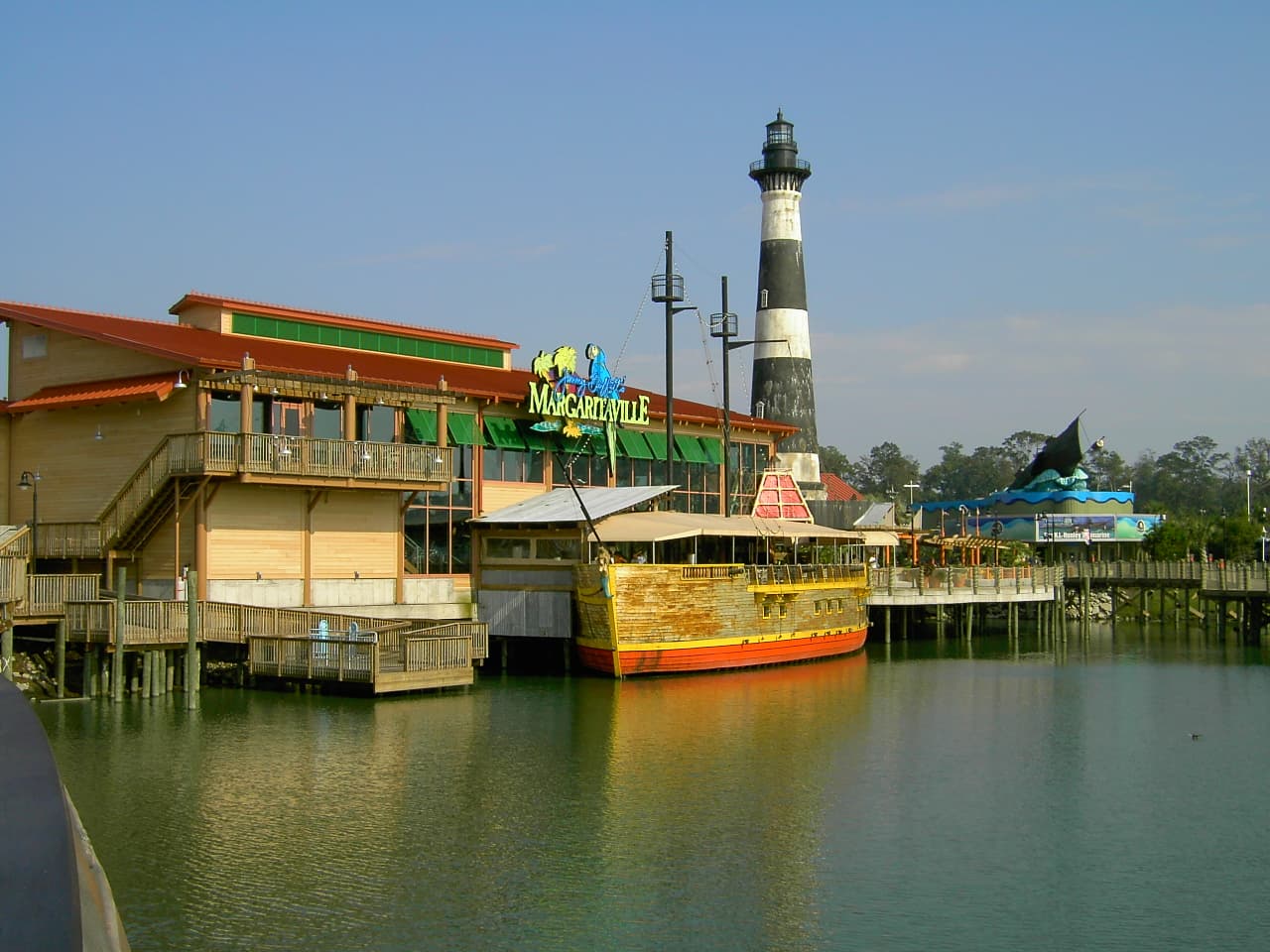
Myrtle Beach, United Statesw:User:Isipeoria / CC BY-SA 3.0, via Wikimedia Commons
US

Myrtle Beach

Self-guided audio walking tour of Myrtle Beach — GPS route, offline playback, story-driven narration in 32 languages.

Beyond the neon glow, the ocean breathes secrets into the sand.

The secrets of Myrtle Beach

Myrtle Beach, as no one tells it.

Not the postcards. The stories even locals don't know — whispered in your ear, right where they happened.

3 secrets below. Many more wait inside the tour.
The Bowery

This lively bar, once a launching pad for a country music supergroup, holds a spectral secret.

Full story unlocks in the tour
Pawleys Island

Before the fiercest hurricanes, a shadowy figure appears on this nearby island.

Full story unlocks in the tour
Gilbert Road (formerly Lucas Bay Road)

Deep in the swamp, a mysterious light has captivated locals for generations.

Full story unlocks in the tour
The full tour

Discover every secret of Myrtle Beach

Every address, every reveal in full — in your ear, right where it happened.

Get the key to Myrtle Beach

You pick your stops. You walk. The voice reveals what the others miss.

Myrtle Beach — a view of a body of water from a deck
Photo: Nocturne / Unsplash
Myrtle Beach — a wooden bridge over a grassy field with trees in the background
Photo: Mandy Emory / Unsplash
Choose your time

How long do you have in Myrtle Beach?

Your self-guided audio tour of Myrtle Beach is ready — pick your landmarks, choose your language, and start the moment you arrive.

Buy
About Myrtle Beach

The story of Myrtle Beach

Myrtle Beach, South Carolina, is more than just a coastline; it's the heart of the Grand Strand, a 60-mile stretch of natural beauty along the Atlantic. While often associated with its active boardwalk, amusement parks, and endless entertainment, this coastal city offers a unique blend of spirited energy and quiet allure. Millions of visitors are drawn to its wide beaches and warm weather each year, making it one of the fastest-growing metropolitan areas in the United States.

Beyond the popular attractions, Myrtle Beach holds a deeper narrative, one shaped by indigenous peoples, early European settlers, and visionary developers. It's a place where the echoes of maritime history linger, and local legends add a touch of intrigue to the salty air. Whether you're seeking lively diversions or a peaceful sunrise stroll along the shore, Myrtle Beach promises an experience that resonates long after the sand leaves your shoes.

History

From Chicora to Myrtle Beach: A Timeline

The area now known as Myrtle Beach was originally inhabited by the Waccamaw and Winyah indigenous peoples, who called the region "Chicora," meaning "the land." European exploration began in the early 16th century, with a Spanish settlement established briefly about 30 miles south in 1526. However, the region remained largely undeveloped for centuries, serving primarily as hunting and fishing grounds for scattered settlers.

One of the earliest European families to settle the area was the Withers family, who received land grants along the coast. A prominent waterway, Withers Swash, still bears their name. In 1822, a devastating hurricane swept R.F. Withers' house into the ocean, resulting in 18 drownings and prompting the family to abandon their coastal plots. The land gradually returned to forest until 1881, when the Burroughs and Collins Company, a timber and turpentine firm, acquired much of the Withers family's property.

At the turn of the 20th century, the growing community was known as "New Town." Franklin Burroughs, one of the company's founders, envisioned transforming it into a resort destination. Though he passed away in 1897, his sons continued his vision, extending a railroad to the beach and opening the Seaside Inn in 1901. Around 1900, a contest was held to officially name the area. Franklin's widow, Addie Burroughs, suggested "Myrtle Beach," inspired by the abundant wax myrtle shrubs growing wild along the shore. The Withers post office was soon replaced by the first Myrtle Beach post office.

Myrtle Beach was incorporated as a town in 1938 and became a city in 1957 when its permanent population exceeded 5,000. The 1920s saw further development with the construction of upscale resorts like Arcady and the grand Ocean Forest Hotel, which became a social hub for nearly 30 years before its demolition in 1974. The Intracoastal Waterway opened in 1936, further improving accessibility, and the Myrtle Beach Air Force Base was established in the 1940s, serving as a military town for almost 50 years. The opening of the Myrtle Beach Pavilion in 1949 and the formalization of golf packages in 1967 solidified its reputation as a premier vacation spot, eventually earning it the title of "Golf Capital of the World." In 2010, the Myrtle Beach Boardwalk opened, quickly gaining recognition as one of the best boardwalks in the U.S.

What to see

Myrtle Beach offers a diverse range of experiences, from its expansive shoreline to unique attractions. The Myrtle Beach Boardwalk and Promenade stretches 1.2 miles along the oceanfront, featuring the iconic Myrtle Beach SkyWheel, arcades, and shops like the legendary Gay Dolphin Gift Cove. For those seeking natural beauty, Myrtle Beach State Park, one of South Carolina's first state parks, provides miles of trails, fishing piers, and beach access. Just a short drive away, the Murrells Inlet MarshWalk offers waterfront dining with views of a saltwater estuary, often accompanied by live music.

Beyond the main strip, explore Brookgreen Gardens, a sculpture garden and wildlife preserve located between Murrells Inlet and Pawleys Island. Your admission ticket is valid for seven consecutive days, allowing ample time to explore its sculpture gardens, native wildlife zoo, and Lowcountry trail. The area is also renowned as the "Mini-Golf Capital of the World," with over fifty courses, and is the birthplace of the Carolina Shag dance. For a quieter experience, consider a sunrise walk on the beach or hunting for shark teeth while shelling.

When to visit

The best time to visit Myrtle Beach depends on your preferences. For warm, sunny beach days and swimming, the peak summer months of June through August are ideal, with temperatures often reaching into the 80s and 90s. Expect larger crowds and higher hotel rates during this period. If you prefer milder temperatures and fewer crowds, the spring (March through May) and fall (September through November) are excellent choices. Spring offers comfortable weather in the mid-70s to low 80s, while fall sees temperatures in the mid-70s and upper 60s, perfect for beach walks, golfing, and festivals. Even winter (December through February) can be a good option for a quieter, more relaxed vacation with lower hotel rates, though temperatures are cooler.

Practical

Myrtle Beach is a highly accessible destination, with Myrtle Beach International Airport (MYR) offering domestic and international air travel. The area is also easily reachable by car, particularly from cities like Atlanta, Raleigh, Charlotte, and Jacksonville. The region, known as the Grand Strand, stretches for 60 miles, so understanding the layout can be helpful. U.S. Route 17 has both a Bypass and a Business route; 17 Business, also known as King's Highway, runs closer to the beach. The city is committed to accessibility, having been designated an "autism-friendly" city and destination in 2018 by the Champion Autism Network (CAN), offering sensory-friendly experiences and training for city employees. Accommodations are plentiful, ranging from beachfront hotels and high-rise condos to beach homes and campgrounds, with a lodging capacity comparable to Las Vegas.

Good to know
What is the Grand Strand?
The Grand Strand is a 60-mile stretch of coastline in northeastern South Carolina, extending from Little River to Georgetown, with Myrtle Beach at its center.
How did Myrtle Beach get its name?
Myrtle Beach was named after the abundant wax myrtle shrubs that grow along the coast. The name was chosen in a contest around 1900, with Addie Burroughs, wife of one of the area's developers, suggesting it.
Is Myrtle Beach good for families?
Yes, Myrtle Beach is widely considered a family-friendly destination, offering a variety of attractions, beaches, and activities suitable for all ages. It was also designated an "autism-friendly" city in 2018.
When is hurricane season in Myrtle Beach?
Hurricane season in the Atlantic typically runs from June 1 to November 30. While fall is generally considered a great time to visit, it is also the tail end of hurricane season.
What is the Carolina Shag?
The Carolina Shag is South Carolina's official state dance, a smooth, laid-back partner dance that originated in the 1930s-1940s along the Grand Strand beaches.
Is Myrtle Beach good for golf?
Myrtle Beach is known as the "Golf Capital of the World," with around 100 golf courses across the Grand Strand and once holding the record for the most rounds of golf played annually anywhere in the world.
On the map
Myrtle Beach
€9.90
No booking · activate anytime · 12h to walk it
Get the key to Myrtle Beach