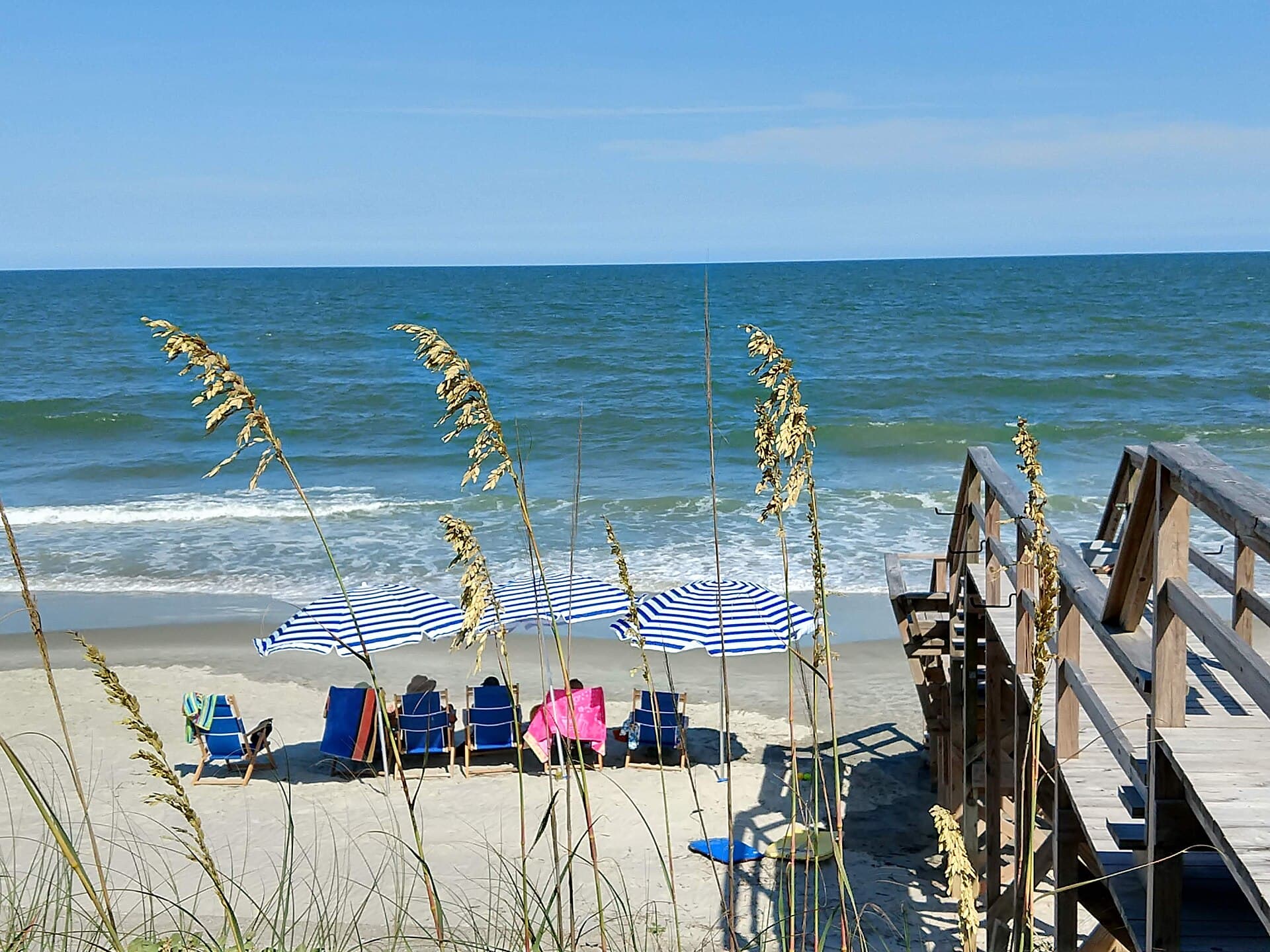
Playa de Pawleys Island
Antes de que un huracán toque tierra, los lugareños a veces hablan de una figura solitaria que aparece en la playa.
La historia completa se desbloquea en el tour
 Phoebe / CC BY-SA 4.0, via Wikimedia Commons
Tour de audio autoguiado de Pawleys Island — ruta GPS a pie, reproducción offline, narración en 32 idiomas.
“Donde la brisa marina trae el aroma a sal y el ritmo de la vida se ralentiza hasta un suave vaivén.”
No las postales. Las historias que ni los locales conocen — al oído, justo donde ocurrieron.
Antes de que un huracán toque tierra, los lugareños a veces hablan de una figura solitaria que aparece en la playa.
Los visitantes de una lápida específica en este histórico cementerio a veces reportan una extraña sensación con sus propios anillos.
Esta isla alberga una de las oficinas de correos más pequeñas de los Estados Unidos.
Descubre todos los secretos de Pawleys Island
Cada dirección, cada revelación al completo — a tu oído, justo donde ocurrió.
Eliges tus paradas. Caminas. La voz te revela lo que los demás ignoran.
Tu tour de audioguía por Pawleys Island te espera — elige tus lugares, tu idioma y empieza al llegar.
ComprarPawleys Island, una esbelta isla barrera frente a la costa de Carolina del Sur, es un destino donde el ritmo de vida realmente se ralentiza. Conocida por su carácter "arrogantemente desaliñado", esta isla de cuatro millas de largo, en su mayoría de una casa de ancho, está separada del continente por una tranquila marisma salada y es accesible por dos cortas calzadas. Es un lugar al que generaciones han regresado, atraídas por la sensación de que su "presión arterial baja cuando cruzan la calzada".
Este paraíso costero ofrece playas limpias, un ambiente relajado y una larga historia y folclore local. Desde paseos tranquilos por la playa en busca de dientes de tiburón hasta la exploración de casas históricas y el disfrute de la serena marisma, Pawleys Island ofrece una experiencia única de Lowcountry. Es un lugar popular para la relajación, las actividades al aire libre y un vistazo a una forma de vida más lenta y tradicional a lo largo de la costa de Carolina del Sur.
La historia de Pawleys Island se remonta a más de 10,000 años con la presencia de tribus nativas americanas, principalmente los waccamaw y winyah. Estas tribus sioux orientales vivían en comunidades a lo largo del río Waccamaw, dedicándose a la agricultura y la pesca, con sitios arqueológicos que revelan su dieta de almejas y ostras.
El contacto europeo comenzó en 1521 con la llegada de los españoles. Sin embargo, la colonización tuvo un impacto devastador en las poblaciones indígenas, lo que llevó a la esclavitud, el hambre y la muerte por enfermedades introducidas. Mientras que el pueblo winyah desapareció en 1720, la cultura waccamaw continúa hoy con el pueblo indígena waccamaw de Conway, Carolina del Sur.
En 1711, Percival Pawley, el primer colono europeo en desarrollar plantaciones en la zona, recibió concesiones de tierras. La isla misma fue nombrada más tarde en honor a sus hijos, George, Anthony y Percival Jr. A principios del siglo XVIII, Pawleys Island comenzó su transformación en uno de los centros turísticos de verano más antiguos de América. Los ricos plantadores de arroz de las plantaciones cercanas buscaban refugio en la costa de la humedad y los mosquitos portadores de malaria prevalentes en las regiones fluviales. Trasladaban sus hogares completos, incluidos los animales, a la isla desde mayo hasta la primera helada en noviembre.
Muchos registros de propiedades de los primeros días se perdieron durante la Guerra Civil, que, junto con los huracanes, trajo cambios significativos a Pawleys Island en el siglo XIX. La isla incluso fue utilizada como base estratégica por los ejércitos de la Unión y la Confederación. Después de la Guerra Civil, algunos plantadores adinerados, ahora empobrecidos, vendieron sus casas de playa, mientras que otros acogieron huéspedes para llegar a fin de mes. La madera reemplazó al arroz como el principal producto comercial de Waccamaw Neck.
En 1886, la finalización de uno de los primeros puentes a Pawleys Island abrió el área a un mayor desarrollo y atrajo a más veraneantes. Fue alrededor de esta época cuando el Capitán Joshua John Ward diseñó la famosa hamaca de cuerda de Pawleys Island, un producto que sigue siendo popular hoy en día y ha contribuido a que la región sea conocida como la "Costa de las Hamacas".
Hoy en día, Pawleys Island mantiene su carácter "arrogantemente desaliñado", con muchas casas originales del siglo XVIII aún en pie. A pesar de su pequeña población durante todo el año de alrededor de 110 residentes, sigue siendo un destino de vacaciones muy querido, que ofrece un escape tranquilo con sus playas limpias, carácter histórico y un enfoque en un estilo de vida relajado y al aire libre.
Pawleys Island ofrece una mezcla de belleza natural, sitios históricos y experiencias locales únicas. El Distrito Histórico de Pawleys Island cuenta con doce casas antebellum conservadas que datan de finales del siglo XVIII a mediados del XIX, mostrando el patrimonio arquitectónico de la isla.
Para los entusiastas del aire libre, la playa es fundamental para la vida aquí, perfecta para nadar, tomar el sol, buscar conchas e incluso buscar dientes de tiburón. También puedes explorar las tranquilas marismas saladas y los arroyos en kayak o tabla de remo, ofreciendo un encuentro cercano con la vida silvestre local. La pesca y la captura de cangrejos son actividades populares, tanto en la orilla como desde los puentes de la marisma.
Justo fuera de la isla, el Pawleys Island Hammock Shops Village es una colección de tiendas únicas y artesanías, destacando la Original Hammock Shop, donde puedes ver cómo se tejen a mano las famosas hamacas de cuerda de Pawleys Island. Cerca, los Brookgreen Gardens ofrecen exuberantes jardines botánicos y de esculturas, mostrando escultura figurativa americana y flora y fauna nativas de Lowcountry. Adyacente a Brookgreen, el Huntington Beach State Park ofrece millas de playas limpias, marismas saladas y el impresionante Castillo de Atalaya, la antigua residencia de invierno de Archer y Anna Hyatt Huntington. El parque también es un excelente lugar para la observación de aves y la observación de caimanes en su hábitat natural. Para aquellos interesados en la historia local, una visita a la Histórica Georgetown, a solo 15 minutos al sur, ofrece el Harborwalk, museos como el Rice Museum y cruceros por el faro.
Los mejores momentos para visitar Pawleys Island son de mediados de marzo a mayo y de octubre a mediados de noviembre. Durante estos meses de primavera y otoño, el clima es templado y agradable, con temperaturas que oscilan entre los 15 y 27 grados Celsius, menor humedad y abundante sol, lo que lo hace ideal para actividades al aire libre como paseos por la playa, kayak y golf. Estas temporadas intermedias también ofrecen menos multitudes, lo que permite una experiencia más tranquila en las playas y en las atracciones populares. Aunque el verano es popular, trae mayor humedad y más gente. Los inviernos son generalmente templados y en su mayoría sin nieve.
Pawleys Island es una pequeña isla barrera, de aproximadamente cuatro millas de largo y en su mayoría de una casa de ancho. El límite de velocidad en la isla se aplica estrictamente a 40 km/h. El acceso público a la playa está disponible en varios puntos, incluyendo First Street, Second Street, Third Street, Shell Road, Hazard Street y Pritchard Street. El estacionamiento público gratuito más grande del condado de Georgetown se encuentra en el extremo sur de la isla. El estacionamiento está permitido de 6 AM a 11 PM, y todas las ruedas del vehículo deben estar fuera del pavimento para evitar multas.
Se permiten perros en las playas de Pawleys Island durante todo el año. Sin embargo, del 1 de mayo al 30 de septiembre, entre las 8:00 AM y las 8:00 PM, los perros deben ir con correa y bajo control total, incluso en el agua. Los dueños siempre deben llevar una correa en la mano y recoger los excrementos de sus perros. No hay socorristas en las playas de Pawleys Island, por lo que nadar es bajo su propio riesgo; tenga cuidado con las corrientes de resaca. Hay aros salvavidas disponibles en varios accesos públicos a la playa. Las hogueras requieren permisos del Ayuntamiento, y los fuegos artificiales no están permitidos en la isla. Para proteger a las tortugas marinas anidantes, todas las tiendas de campaña, sillas, sombrillas, juguetes y basura deben retirarse de la playa al final de cada día, y las luces que dan a la playa deben apagarse antes de las 10 PM.
Pawleys Island en coreano, en chino o en hebreo — y 29 idiomas más, cada parada narrada por una voz nativa. La mayor variedad de idiomas de cualquier audioguía autoguiada.
Disponible en: